Quick Answer: Is an Electric Mercedes-Benz Worth It?
An electric Mercedes-Benz makes financial and practical sense if you have reliable Level 2 home charging, drive under 300 miles daily, and live in a moderate climate. The 2026 lineup spans the compact EQB (EPA 243 miles, from ~$47,000) to the flagship EQS sedan (EPA 390 miles, from ~$105,000). Real-world highway range drops 15–25% below EPA estimates, and cold weather can shave another 20–30%. Federal tax credit eligibility under IRS §30D is limited for most Mercedes EVs due to MSRP caps ($55,000 for sedans, $80,000 for SUVs) and battery-sourcing rules — expect most models to exceed price caps, though the point-of-sale lease credit (§45W) may apply.
The 2026 Electric Mercedes-Benz Lineup at a Glance
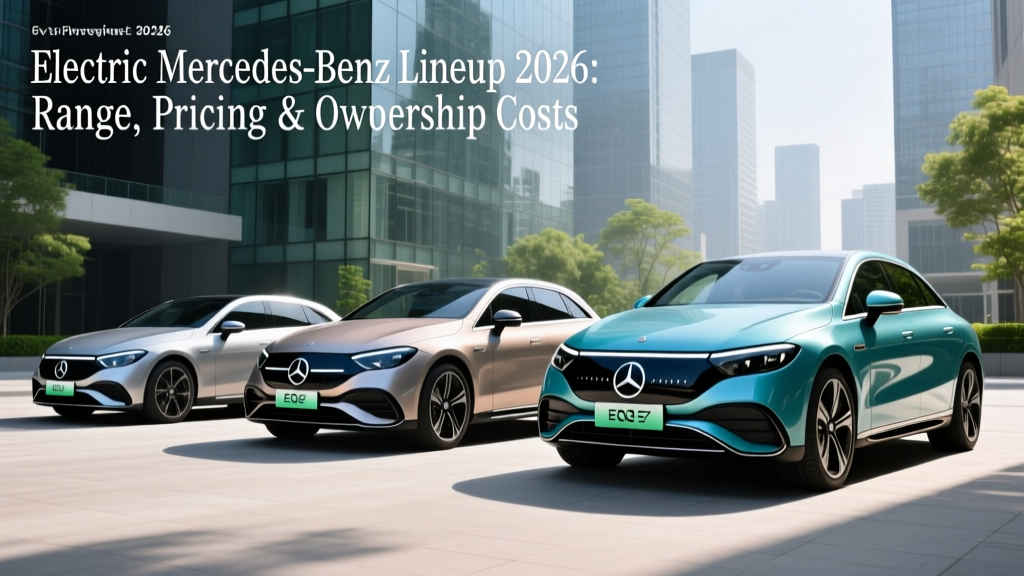
Mercedes-Benz has consolidated its EV strategy around the EVA and MMA platforms. Here is every current-production battery-electric model available in the US market for the 2026 model year, with official EPA data and manufacturer specifications.
| Model | Body Style | Battery (kWh usable) | Chemistry | EPA Range | Peak DC Charge | 10–80% Time | 0–60 mph | Base MSRP |
|---|---|---|---|---|---|---|---|---|
| EQB 300 4MATIC | Compact SUV | 66.5 | NMC | 243 mi | 100 kW | ~32 min | 7.7 sec | $47,100 |
| EQE 350+ | Midsize Sedan | 90.6 | NMC | 305 mi | 170 kW | ~31 min | 6.2 sec | $75,950 |
| EQE 350 4MATIC SUV | Midsize SUV | 90.6 | NMC | 279 mi | 170 kW | ~31 min | 6.4 sec | $78,950 |
| EQS 450+ | Full-Size Sedan | 118.0 | NMC | 390 mi | 200 kW | ~31 min | 5.9 sec | $105,550 |
| EQS 450 4MATIC SUV | Full-Size SUV | 118.0 | NMC | 330 mi | 200 kW | ~31 min | 5.8 sec | $110,550 |
Sources: fueleconomy.gov, Mercedes-Benz USA press specifications. Range figures are EPA combined estimates.
Real-World Range vs. EPA Sticker
EPA range is measured under controlled lab conditions. In real-world ownership, expect the following adjustments:
- Highway driving (70+ mph): Subtract 15–20%. The EQS 450+ sticker at 390 miles but delivers roughly 310–330 miles at sustained interstate speeds.
- Cold weather (below 32°F): Subtract 20–30% due to battery heating demands and cabin HVAC. An EQE 350+ rated at 305 miles may deliver 215–245 miles in sub-freezing conditions.
- DC fast charging taper: All models slow charging significantly above 80% State of Charge (SoC). The "10–80% in ~31 minutes" spec reflects the useful fast-charging window; 80–100% can add another 25–40 minutes.
Electric Mercedes-Benz vs. Gas Equivalent: Cost Comparison
The most common cross-shopping scenario: EQE 350+ vs. the gasoline E 350 sedan. Both are midsize luxury sedans with similar interior volume and feature content. Here is a five-year ownership projection assuming 15,000 miles/year, national average electricity at $0.16/kWh, and premium gasoline at $4.20/gallon.
| Cost Category | 2026 EQE 350+ (EV) | 2026 E 350 (Gas) | 5-Year Difference |
|---|---|---|---|
| Base MSRP | $75,950 | $62,550 | EV +$13,400 |
| Fuel / Energy (75,000 mi) | $3,648 (3.2 mi/kWh avg) | $10,500 (25 MPG combined) | EV saves $6,852 |
| Maintenance | $1,800 (cabin filter, wipers, tire rotation) | $4,200 (oil, brakes, filters, spark plugs) | EV saves $2,400 |
| Insurance (avg) | $12,600 ($2,520/yr) | $10,200 ($2,040/yr) | EV +$2,400 |
| Federal Tax Credit | $0 (MSRP exceeds $55K sedan cap) | $0 | — |
| 5-Year Total Cost | $93,998 | $87,450 | EV +$6,548 |
Insurance estimates based on national luxury-sedan averages. Actual rates vary by ZIP code, driving record, and carrier. Federal tax credit analysis based on current IRS §30D rules — the EQE's MSRP exceeds the $55,000 sedan cap, making it ineligible for purchase credit. Leased vehicles may qualify for the $7,500 §45W commercial credit passed through by the lessor.
Charging an Electric Mercedes-Benz: What You Actually Need
Mercedes-Benz EVs use the NACS (North American Charging Standard) connector for 2026 models, granting native access to Tesla Supercharger stations via the included adapter or built-in port depending on production date. This is a significant advantage over the CCS1 connector used on 2022–2024 models.
| Charging Level | Power (kW) | Miles Added per Hour | Typical Use Case |
|---|---|---|---|
| Level 1 (120V household) | 1.4 kW | 3–5 mi/hr | Overnight trickle; emergency only |
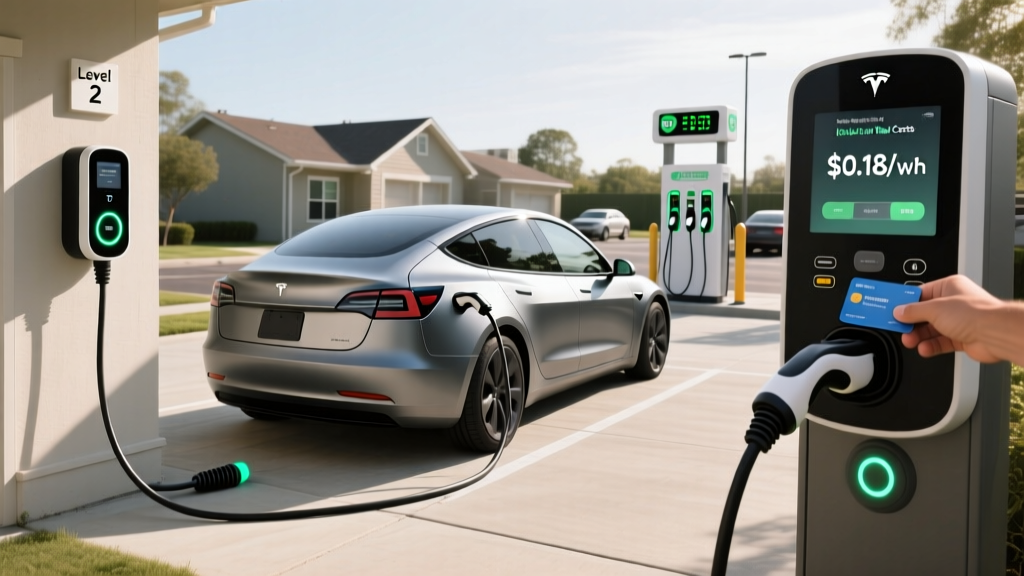
| Level 2 (240V home/public) | 7.2–11.5 kW | 20–35 mi/hr | Daily home charging; full overnight replenishment |
| DC Fast Charging | 100–200 kW (peak) | 150–400 mi/hr (tapering) | Road trips; 10–80% in ~31 minutes |
Home Level 2 Installation: Real Costs
Most electric Mercedes-Benz owners need a 48-amp Level 2 wallbox on a dedicated 60-amp circuit. Here is a realistic cost breakdown based on national electrician averages:
| Component | Low Estimate | High Estimate | Notes |
|---|---|---|---|
| Level 2 charger (48A) | $400 | $750 | Mercedes Wallbox or ChargePoint Home Flex |
| Electrician labor | $500 | $2,000 | Varies by panel distance, conduit run |
| Permit & inspection | $100 | $400 | Required in most jurisdictions |
| Panel upgrade (if needed) | $1,500 | $4,000 | Older homes with 100A service may need 200A upgrade |
| Total | $1,000 | $7,150 | Most homes with 200A panels: $1,000–$2,500 |
Have a licensed electrician evaluate your panel capacity before purchasing a charger. A 200-amp panel with available headroom makes installation straightforward; a 100-amp panel in an older home may require a costly service upgrade.
Federal Tax Credits and Incentives: What Actually Applies
Most electric Mercedes-Benz models face a tax-credit problem under current IRS §30D rules:
§30D Purchase Credit Requirements
- MSRP cap: $55,000 for sedans (EQE, EQS) — virtually no Mercedes EV qualifies
- MSRP cap: $80,000 for SUVs/vans/pickups — only base EQB 300 ($47,100) and possibly base EQE 350 SUV ($78,950) may qualify
- Buyer income cap: $150,000 single / $225,000 head of household / $300,000 joint MAGI
- Battery sourcing: Critical minerals and battery components must meet escalating domestic-content thresholds — check the latest DOE qualifying vehicle list before purchasing
- Point-of-sale transfer: Eligible buyers can transfer the credit to the dealer at purchase for an immediate price reduction
The lease loophole: Vehicles leased (not purchased) may qualify for the §45W commercial clean vehicle credit of up to $7,500, which the leasing company can pass through as a capitalized-cost reduction. This has no MSRP cap, no income cap, and no battery-sourcing requirements. Many Mercedes-Benz Financial Services leases include this credit — confirm with your dealer before signing.
Common Misconceptions About Electric Mercedes-Benz Ownership
| Myth | Fact |
|---|---|
| "The battery will need replacing in 5 years." | Mercedes covers the high-voltage battery for 8 years / 100,000 miles against capacity loss below 70% of original. NMC chemistry in these models typically degrades 10–15% over 150,000 miles based on fleet data. Full replacement costs $15,000–$25,000 out of warranty, but is rarely needed. |
| "I can fast-charge to 100% in 30 minutes." | The published 10–80% time is ~31 minutes for most models. The final 20% (80–100%) uses drastically reduced power to protect battery health, adding 25–40 additional minutes. Plan road trips around 80% charge stops. |
| "EVs cost more to insure because of battery fires." | Insurance premiums are higher primarily due to elevated repair costs after collisions (specialized labor, battery-pack inspection protocols), not fire risk. NHTSA data shows EV battery fire incidence is lower than ICE vehicle fire rates per 100,000 vehicles. |
| "Regenerative braking means I never need brake service." | One-pedal driving and regen significantly reduce brake-pad wear, but rotors still require periodic inspection for corrosion (especially in humid climates where friction brakes are used infrequently). Budget $200–$400 for brake fluid flushes every 2–3 years. |
| "The EQS has 390 miles of range on the highway." | The 390-mile EPA figure is a combined city/highway cycle. Sustained 75 mph highway driving typically yields 310–330 miles. At 85 mph or in headwinds, expect closer to 280–300 miles. |
Decision Framework: Which Electric Mercedes-Benz Fits You?
Choose Based on Your Situation
Choose the EQB 300 4MATIC if:
- You need a compact luxury EV SUV with three rows (tight, but available)
- Your daily commute is under 120 miles round-trip
- You want the lowest entry price and potential §30D eligibility (MSRP under $80K SUV cap)
- You accept 100 kW peak DC charging as adequate for occasional road trips
Choose the EQE 350+ sedan if:
- You prioritize range and efficiency over ride height
- You want over 300 EPA miles and a sub-$80K price point
- Most of your driving is commuting with 1–2 road trips per month
- You'll lease to capture the §45W credit (since purchase §30D is blocked by the $55K sedan MSRP cap)
Choose the EQE 350 4MATIC SUV if:
- You need SUV cargo volume and all-wheel drive for snow/rain
- You accept ~25 miles less range than the sedan for the higher driving position
- You'll lease to capture the commercial credit pass-through
Choose the EQS 450+ sedan if:
- Maximum range is your top priority (390 EPA miles is the lineup leader)
- You value the flagship interior, rear-seat comfort, and MBUX Hyperscreen
- Budget is flexible above $100K and you understand the luxury depreciation curve (expect 40–50% value loss at 3 years)
Choose the EQS 450 4MATIC SUV if:
- You need three-row luxury EV space with 330 EPA miles
- You tow occasionally (rated up to 3,500 lbs with factory hitch)
- You have a three-car garage or large charging setup at home
Do NOT buy any electric Mercedes-Benz if:
- You cannot install Level 2 charging at home or at work — relying solely on public DC fast charging is expensive ($0.35–$0.55/kWh) and time-consuming
- You regularly drive 350+ miles in a single day in cold climates — no model in the lineup reliably covers this without a 30-minute charging stop
- You plan to keep the vehicle 10+ years and are risk-averse about out-of-warranty battery or power-electronics repairs
Ownership Practicalities: What First-Time EV Buyers Should Know
Driving Patterns and Charging Cadence
If your daily driving is 40–60 miles, any model in the lineup requires home charging only every 3–5 days. Plug in each evening and start each morning with a full battery — the equivalent of a gas car that refuels itself overnight. For road trips, use the Mercedes me Charge app or the in-dash navigation's route planner, which preconditions the battery for optimal DC charging speed at your next stop.
Tire Costs Are Higher
EVs are heavier than gas equivalents (the EQS 450+ weighs ~5,600 lbs) and deliver instant torque. Expect tire wear 15–25% faster than on a comparable gas sedan. Budget $1,200–$2,000 for a set of premium touring tires every 25,000–35,000 miles. Mercedes specifies EV-optimized tires with foam-lined cavities for noise reduction — standard tires will increase cabin noise noticeably.
Software Updates and Feature Changes
Mercedes delivers over-the-air (OTA) updates that can modify acceleration profiles, charging curves, and MBUX behavior. Some features (like rear-axle steering angle increases or acceleration boosts) have been offered as paid annual subscriptions. Factor in potential subscription costs of $300–$800/year for features you may expect to be included.
Depreciation Reality
Luxury EVs have depreciated faster than luxury gas cars in the 2023–2025 market. The EQS sedan has seen 45–55% depreciation at 36 months in industry data. If residual value matters to your purchase decision, lease rather than buy — the lessor absorbs the depreciation risk, and you capture the $7,500 lease credit.
Frequently Asked Questions
Can I charge a 2026 electric Mercedes-Benz at a Tesla Supercharger?
Yes. 2026 Mercedes-Benz EVs sold in North America are equipped with NACS charge ports or include a CCS-to-NACS adapter, granting access to Tesla's Supercharger network (15,000+ stalls). Charging speed is limited to the vehicle's peak acceptance rate (100–200 kW depending on model), not the Supercharger's maximum output.
What happens if the battery degrades past 70% capacity?
Mercedes-Benz's high-voltage battery warranty covers capacity below 70% of original for 8 years or 100,000 miles, whichever comes first. If degradation crosses that threshold within the warranty period, Mercedes will repair or replace modules to restore capacity above 70%. Out-of-warranty replacement costs $15,000–$25,000 depending on model, but data from high-mileage EV fleets suggests most NMC packs retain 85–90% capacity at 100,000 miles under normal use.
Is an electric Mercedes-Benz cheaper to own than a gas Mercedes?
Over five years, the EV saves $6,000–$9,000 in fuel and maintenance, but costs $10,000–$20,000 more upfront and $1,500–$3,000 more in insurance. Without a tax credit, the gas model typically wins on pure 5-year total cost. With the $7,500 lease credit applied, the EV approaches cost parity — especially if your electricity rate is below $0.12/kWh (common with time-of-use plans and home solar).
Do I need to precondition the battery before fast charging?
Yes, and the car does it automatically when you navigate to a DC fast charger using the built-in route planner. Preconditioning warms the battery to the optimal temperature window (roughly 85–105°F) so it can accept peak charge rates. Without preconditioning — for example, arriving at a charger without navigation guidance — peak charge power may be 30–50% lower, especially in cold weather.
What is the real-world MPGe of these models?
The EQE 350+ achieves an EPA-rated 95 MPGe combined (35 kWh/100mi). In real-world mixed driving, expect 80–90 MPGe. The heavier EQS 450 SUV returns approximately 75–82 MPGe in practice. For context, the gas E 350 achieves 25 MPG combined, making the EV roughly 3.5× more energy-efficient per mile.