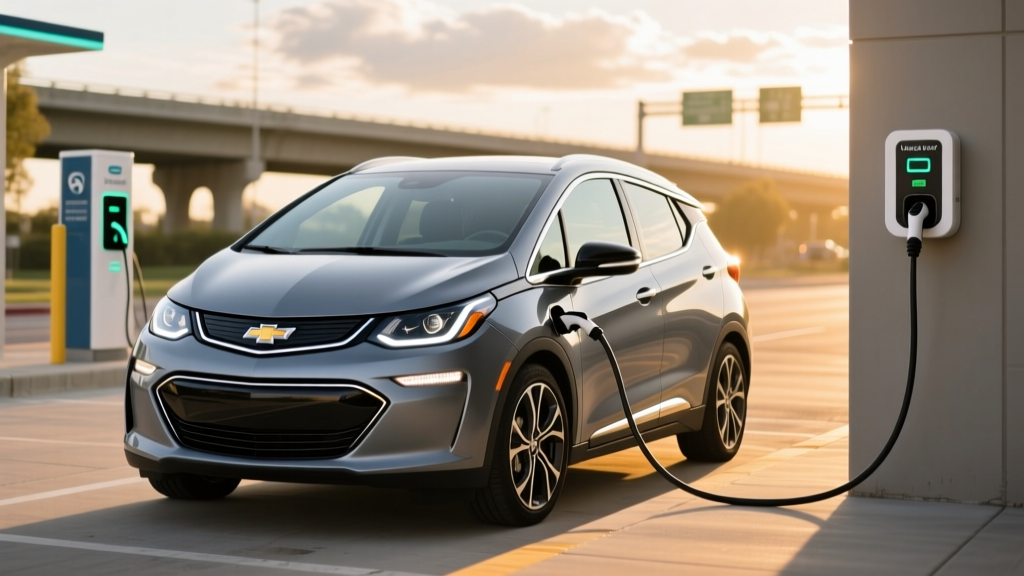
The 2017 Chevrolet Bolt EV Premier was a watershed moment for affordable electric vehicles. When it launched, no other mass-market EV offered more than 200 miles of EPA-estimated range at a sub-$40,000 price point. Nearly a decade later, the Bolt EV remains one of the most compelling used EVs on the market — a practical, efficient hatchback that still holds up for daily commuting and city driving. This review breaks down exactly what you get with the top-trim Premier, what to watch for as a used buyer in 2026, and how the Bolt EV stacks up against newer competition.
Quick Verdict: The 2017 Bolt EV Premier in 2026
The 2017 Bolt EV Premier is a smart used-EV buy for budget-conscious commuters who need real range without a real budget. Its 238-mile EPA estimate still outdistances many newer affordable EVs, and the Premier trim adds leather, heated seats, and a suite of driver-assist features that were rare at this price point when new. The caveats are real, though: DC fast charging peaks at just 55 kW (slow by modern standards), rear legroom is tight, and the infotainment system shows its age. If you can charge at home and your daily driving stays under 100 miles round-trip, this car is a proven workhorse.
Range, Battery, and Real-World Efficiency
| Spec | Value |
|---|---|
| EPA Range | 238 miles |
| Battery Capacity (usable) | 60 kWh |
| Battery Chemistry | NMC (Nickel Manganese Cobalt) — LG Chem |
| Combined MPGe | 119 MPGe |
| Energy Consumption | 28 kWh / 100 mi |
| Motor Output | 200 hp / 266 lb-ft torque |
| Drivetrain | FWD (single motor, front-wheel drive) |
| 0-60 mph | 6.5 seconds |
| Battery Warranty (original) | 8 years / 100,000 miles |
| Cargo Volume (rear seats up) | 16.9 cu ft |
| Cargo Volume (rear seats folded) | 56.6 cu ft |
| Rear Legroom | 36.5 inches |
The Bolt EV's 60 kWh NMC lithium-ion battery pack, supplied by LG Chem, was one of the largest in its class in 2017. The EPA rates the 2017 Bolt EV at 238 miles of combined range with an efficiency of 119 MPGe (28 kWh per 100 miles). That efficiency figure remains excellent even by 2026 standards — the Bolt sips electrons thanks to its relatively light 3,563-pound curb weight and low-drag hatchback profile.
EPA sticker: 238 miles. In mixed city/highway driving at moderate temperatures, expect 210–230 miles. On sustained highway runs at 70+ mph, range drops to roughly 190–210 miles due to aerodynamic drag. In freezing weather (below 32°F), cabin heating and battery thermal management can cut range by 20–35%, bringing realistic winter range to 155–190 miles. The Bolt EV lacks a heat pump (it uses resistive PTC heating), which is a significant efficiency penalty in cold climates.
One factor working in the Bolt's favor is its relatively conservative battery management system (BMS). GM built in a generous buffer above and below the usable 60 kWh, which has helped long-term degradation stay manageable. Many 2017 Bolt EVs with 80,000+ miles still report State of Health (SoH) readings above 85–90%, though individual results vary based on charging habits and climate exposure.
Charging Speed: DC Fast, Level 2, and Level 1
This is where the 2017 Bolt EV shows its age most clearly. GM equipped the car with a CCS1 DC fast-charge port rated at a peak of 55 kW. That was respectable in 2017 but is painfully slow compared to modern EVs pulling 150–350 kW at DC fast chargers.
| Charging Level | Power | Speed | Notes |
|---|---|---|---|
| Level 1 (120V household) | ~1.4 kW | ~4 miles per hour | Emergency/trickle only; 60+ hours for full charge |
| Level 2 (240V, 32A) | 7.2 kW | ~25 miles per hour | Full charge in ~9 hours; onboard charger max |
| Level 2 (240V, 40A) | 7.2 kW (capped) | ~25 miles per hour | Bolt's onboard charger caps at 7.2 kW regardless of supply |
| DC Fast Charge (CCS1) | 55 kW peak | 10–80% in ~55 minutes | Peak rate only below ~50% SoC; tapers significantly above 80% |
The Bolt EV's onboard Level 2 charger is limited to 7.2 kW (32 amps), meaning even if you install a 48-amp home charger, the car will only draw 7.2 kW. A full 0–100% Level 2 charge takes roughly 9 hours — fine for overnight charging but slower than competitors like the Tesla Model 3 (11.5 kW onboard).
On DC fast charging, the 55 kW peak rate means a 10–80% session takes roughly 55 minutes under ideal conditions. The charge curve is relatively flat below 50% State of Charge (SoC) but tapers hard above 80%, where speeds can drop below 20 kW. For road trips, plan on 45–60 minute stops every 150–180 miles. This is the Bolt EV's biggest limitation for anyone who regularly drives long distances.
One important note: some 2017 Bolt EVs were originally sold with an optional DC fast-charge package. If you're buying used, verify the car actually has the CCS DC charge port — a small number of base LT trims were sold without it, though the Premier trim included it as standard.
Performance and Driving Impressions
The Bolt EV's single front-mounted permanent-magnet electric motor produces 200 horsepower and 266 lb-ft of torque, delivered instantly to the front wheels. The 0–60 mph sprint takes 6.5 seconds, which feels brisk in daily driving. Electric torque delivery makes the Bolt surprisingly quick off the line, and it merges onto highways with confidence.
Ride quality is firm but compliant — the heavy battery pack sits low in the chassis, giving the Bolt a planted feel with minimal body roll. The steering is light and numb, typical of GM's electric power steering calibration from this era, but perfectly adequate for a commuter hatchback. Regenerative braking offers two modes: a standard "Drive" mode with mild regen and a "Low" mode with aggressive regen that enables near one-pedal driving in city traffic. There's also a steering-wheel paddle ("Regen on Demand") that temporarily maxes out regen for quick deceleration — a feature many owners love.
NVH (noise, vibration, harshness) is a weak point. Without a traditional engine masking road noise, the Bolt's cabin lets in noticeable tire and wind noise at highway speeds. The Michelin Energy Saver tires prioritize efficiency over grip and quietness, and many owners upgrade to quieter all-season rubber.
Interior, Tech, and the Premier Trim Advantage
The Premier trim was the top of the Bolt EV lineup in 2017, and it adds meaningful content over the base LT:
- Perforated leather-appointed seating surfaces
- Heated front and rear seats
- Heated leather-wrapped steering wheel
- Bose premium 7-speaker audio system
- Wireless phone charging pad
- Surround Vision 360-degree camera system
- Rear Cross Traffic Alert and Lane Change Alert
- Side Blind Zone Alert
- Forward Collision Alert with Automatic Emergency Braking
- Lane Keep Assist
The infotainment system is Chevrolet's MyLink with a 10.2-inch touchscreen — large for 2017 and still usable today. It supports Apple CarPlay and Android Auto (wired only), which is essential because the native navigation and app interface feel dated. Bluetooth, two USB-A ports, and a Wi-Fi hotspot round out connectivity. There is no USB-C, no wireless CarPlay/Android Auto, and no over-the-air software updates.
The driver-assist suite on the Premier was forward-looking for a sub-$40,000 car in 2017. However, these are basic SAE Level 0–1 features — lane-keep assist, automatic emergency braking, blind-spot monitoring. There is no adaptive cruise control, no hands-free driving system (GM's Super Cruise was not offered on the Bolt EV), and no semi-autonomous steering capability.
Interior materials are a mixed bag. The Premier's leather seats are comfortable and well-bolstered, but the dashboard and door panels use hard, scratchy plastics that feel budget-tier. The center console is narrow, storage cubbies are limited, and the shifter is a conventional mechanical lever (not the electronic toggle GM later adopted). Rear seat space is the most common complaint: at 36.5 inches of legroom, tall adults will feel cramped on longer trips. The 16.9 cu ft cargo area behind the rear seats is generous for a hatchback, and folding the 60/40 split rear bench opens up 56.6 cu ft — enough for a weekend's worth of gear or a small furniture haul.
Pricing, Used Market Value, and Tax Credit Eligibility
When new, the 2017 Bolt EV Premier carried an MSRP of approximately $43,995 (including destination), before the $7,500 federal tax credit that was available at the time. The base LT started around $37,495.
In the 2026 used market, a 2017 Bolt EV Premier in good condition with 60,000–90,000 miles typically sells for $12,000–$17,000, depending on mileage, condition, region, and battery health. Low-mileage examples (under 40,000 miles) can command up to $19,000.
Under the current IRS §25E Used Clean Vehicle Credit, you may qualify for up to $4,000 (or 30% of the sale price, whichever is less) when purchasing a qualifying used EV from a licensed dealer. Key requirements:
- Vehicle must be at least 2 model years old (the 2017 Bolt qualifies)
- Sale price must be $25,000 or less (most 2017 Bolt EVs qualify)
- Buyer income caps: $75,000 single / $112,500 head of household / $150,000 joint (modified AGI)
- Credit can be transferred to the dealer at point of sale as a price reduction
- Vehicle must have a battery capacity of at least 7 kWh (Bolt's 60 kWh qualifies)
- Must purchase from a licensed dealer (private-party sales do not qualify)
At a $14,000 purchase price, the 30% calculation yields $4,200, but the credit caps at $4,000 — bringing your effective cost down to ~$10,000. That makes the 2017 Bolt EV one of the cheapest ways to get 200+ miles of real EV range in 2026.
Note: The §25E used-vehicle credit is separate from the §30D new-vehicle credit. If you're buying new, different MSRP caps, income limits, and battery-sourcing requirements apply. Always consult IRS guidance or a tax professional to confirm your eligibility.
Battery Health, Warranty, and Long-Term Ownership
GM warranted the 2017 Bolt EV's battery pack for 8 years or 100,000 miles (whichever comes first) against defects and excessive capacity loss — defined as dropping below 60% of original capacity. For a 2017 model, that 8-year window closed in 2025, meaning most 2017 Bolts are now out of battery warranty unless they haven't yet hit 100,000 miles.
The battery recall history is important context. In 2021–2022, GM recalled all 2017–2019 Bolt EVs due to a manufacturing defect in certain LG Chem battery cells that could cause fires. GM replaced affected battery modules under warranty and updated the BMS software. If you're buying a used 2017 Bolt EV, verify the recall repair was completed — request documentation from the seller or check the VIN at NHTSA's recall lookup. Cars that received the module replacement and software update should have normal battery health and no charging restrictions.
Post-recall, GM removed the earlier charge-limitation workarounds (which had capped charge to 80% and advised parking away from structures). A properly repaired 2017 Bolt EV charges to 100% normally and has no outstanding safety advisories.
For battery longevity, follow standard NMC best practices: avoid routinely charging to 100% unless you need the full range, minimize DC fast charging when Level 2 is available, and try not to let the pack sit at very low SoC in extreme heat. With reasonable care, these packs are proving durable well past 100,000 miles.
Pros, Cons, and Who Should Buy
- 238-mile EPA range still competitive for the price
- Excellent efficiency (28 kWh/100 mi)
- Peppy 200 hp motor with instant torque
- Generous cargo space (56.6 cu ft seats folded)
- Premier trim loaded with heated seats, Bose audio, driver assists
- Extremely low used prices — under $15K after tax credit
- Proven battery durability post-recall repair
- CCS1 connector compatible with most public networks
- DC fast charging capped at 55 kW — 55 min for 10–80%
- No heat pump — significant winter range loss (20–35%)
- Cramped rear legroom (36.5 in) for taller passengers
- Hard plastics and dated infotainment throughout cabin
- No adaptive cruise control or hands-free driving
- Level 2 onboard charger limited to 7.2 kW
- No wireless CarPlay/Android Auto or OTA updates
- Battery warranty expired for most 2017 examples
Best for: Budget-minded commuters, apartment dwellers who can install a Level 2 charger, second-car households needing an efficient daily driver, and new-to-EV buyers who want to try electric without a major financial commitment. The Bolt EV excels as a city and suburban runabout where its range is more than sufficient and its low operating costs shine.
Not ideal for: Frequent road-trippers (the 55 kW charging speed adds significant time), families who regularly carry rear-seat passengers (tight legroom), or cold-climate buyers without garage parking (the lack of a heat pump is a real winter penalty).
How the 2017 Bolt EV Premier Compares
The used-EV market in 2026 offers several alternatives in a similar price range:
- 2018–2019 Nissan Leaf Plus (62 kWh): Comparable range (~226 mi EPA) but uses CHAdeMO DC charging (a fading standard) and has passive air-cooled battery — worse for longevity in hot climates. The Bolt's liquid-cooled NMC pack is the better long-term bet.
- 2018–2020 Tesla Model 3 Standard Range: Faster charging (up to 170 kW on V2 Superchargers), better Supercharger network access, and more modern tech — but used prices run $18,000–$24,000, significantly more than the Bolt.
- 2020–2021 Hyundai Kona Electric: Similar range (258 mi EPA) and slightly faster DC charging (75 kW), but higher used prices ($17,000–$22,000) and less cargo space.
For pure value per mile of range, the 2017 Bolt EV Premier is hard to beat. You sacrifice charging speed and some tech polish, but the fundamentals — range, efficiency, practicality — remain solid.
Frequently Asked Questions
What is the real-world range of the 2017 Chevrolet Bolt EV Premier?
The EPA rates it at 238 miles combined. In real-world mixed driving at moderate temperatures, expect 210–230 miles. Highway-only driving at 70+ mph drops that to roughly 190–210 miles, and freezing winter conditions can reduce range to 155–190 miles due to the resistive cabin heater and battery thermal demands.
How fast does the 2017 Bolt EV charge?
DC fast charging peaks at 55 kW, taking roughly 55 minutes from 10–80% SoC. Level 2 home charging maxes out at 7.2 kW, adding about 25 miles of range per hour and requiring about 9 hours for a full charge. Level 1 (120V) trickle charging adds about 4 miles per hour.
Does the 2017 Bolt EV qualify for any tax credit in 2026?
Not the §30D new-vehicle credit (that applies to new purchases only). However, it may qualify for the §25E Used Clean Vehicle Credit of up to $4,000, provided the sale price is $25,000 or less, you buy from a licensed dealer, and your income falls below the IRS caps ($75K single / $150K joint). Check current IRS §25E rules before purchasing.
Is the 2017 Bolt EV safe?
The NHTSA gave the Bolt EV a 5-star overall safety rating. The Premier trim includes Forward Collision Alert, Automatic Emergency Braking, Lane Keep Assist, and a 360-degree camera. However, it lacks modern features like rear automatic braking and adaptive cruise control.
Should I worry about the battery recall?
The 2021–2022 battery recall was serious, but GM addressed it by replacing affected modules and updating software. The critical step is verifying the recall repair was completed on any used 2017 Bolt you're considering. Check the VIN at NHTSA.gov and request service records from the seller. A properly repaired Bolt has no outstanding battery safety concerns.
Is the 2017 Bolt EV Premier worth buying vs. newer EVs?
If your budget is under $15,000 and you primarily commute or drive locally, yes — the Bolt EV Premier delivers more range and practicality per dollar than almost any other used EV. If you regularly road-trip, need rear-seat space, or want the latest tech and faster charging, you'll be better served spending $20,000+ on a newer Model 3, Ioniq 5, or Mach-E.