Quick Answer: Is an Electric Mazda SUV Right for You?
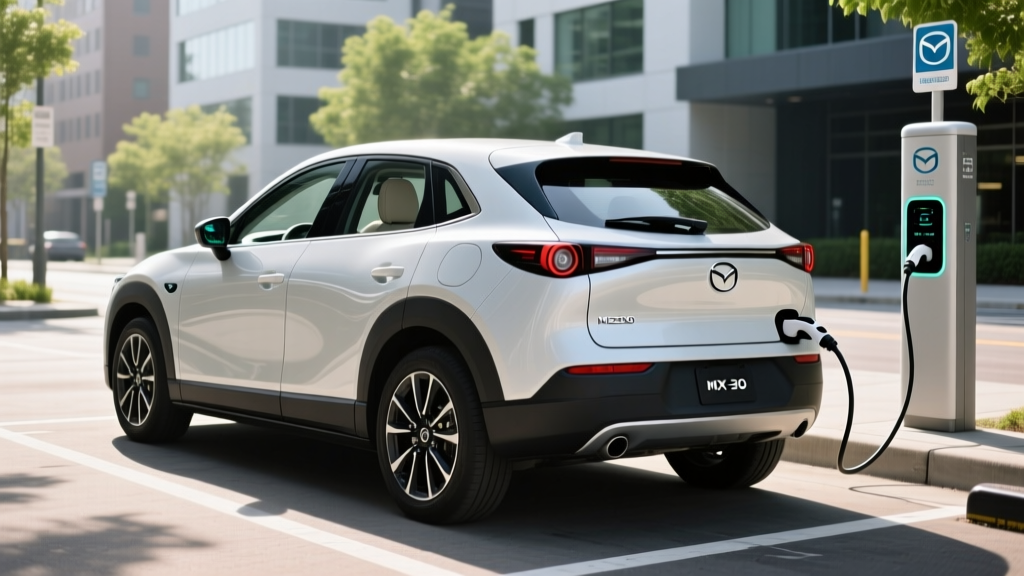
The Mazda MX-30 is currently Mazda's only fully electric SUV sold in the U.S., and it's a niche pick. With an EPA-estimated 100 miles of range and a 35.5 kWh battery, it's built for short commutes and city driving — not road trips. Starting around $34,000 MSRP, it may qualify for federal incentives depending on sourcing and income rules. If you drive under 70 miles round-trip daily, can charge at home, and want Mazda's premium interior feel, it works. If you need 250+ miles of range or take frequent highway trips, look at the Hyundai Ioniq 5, Tesla Model Y, or Mazda's own CX-70 PHEV instead.
The 2026 Mazda MX-30: What You're Actually Getting
Mazda entered the EV space cautiously with the MX-30, and that caution defines the ownership experience. Unlike competitors packing 75–100 kWh batteries, the MX-30 uses a compact 35.5 kWh lithium-ion (NMC chemistry) pack. Mazda deliberately chose a smaller battery to reduce weight and environmental impact from mineral extraction — a philosophy that makes sense for urban commuters but limits versatility.
Here's what the spec sheet looks like for the current model year:
| Specification | 2026 Mazda MX-30 EV |
|---|---|
| EPA Range | 100 miles |
| Real-World Range (highway, 70 mph) | ~75–85 miles |
| Real-World Range (cold weather, 30°F) | ~65–75 miles |
| Battery Capacity (usable) | 35.5 kWh (NMC) |
| Motor Output | 143 hp / 200 lb-ft torque |
| 0–60 mph | ~8.7 seconds |
| DC Fast Charge (peak) | 50 kW |
| 10–80% DC Charge Time | ~36 minutes |
| Level 2 Charge Rate | 6.6 kW |
| Level 2 Full Charge Time (0–100%) | ~5.5 hours |
| Connector | CCS1 (J1772 + DC combo) |
| EPA Efficiency | 92 MPGe combined |
| Base MSRP | ~$34,000 (before incentives) |
| Battery/Powertrain Warranty | 8 years / 100,000 miles |
The 50 kW peak DC charge rate is the MX-30's biggest road-trip bottleneck. Modern competitors hit 150–250 kW, meaning a 10–80% charge in 15–20 minutes. The MX-30 takes nearly twice that. Combined with its short range, this makes intercity travel impractical — you'd stop every 60–70 real-world highway miles and wait 35+ minutes.
MX-30 EV vs. Gas Mazda CX-5 vs. Mazda CX-70 PHEV: The Real Comparison
Most shoppers cross-shopping an electric Mazda SUV are also considering the CX-5 (gas) or the CX-70 PHEV. Here's how the numbers stack up on an annual basis, assuming 12,000 miles/year, $3.50/gallon gas, and $0.14/kWh home electricity:
| Metric | MX-30 EV | CX-5 (2.5T AWD) | CX-70 PHEV |
|---|---|---|---|
| EPA Combined | 92 MPGe | 26 MPG | 25 MPG (hybrid) / 56 MPGe (electric) |
| Electric-Only Range | 100 mi | N/A | ~26 mi |
| Annual Fuel/Energy Cost | ~$550 | ~$1,615 | ~$950 (mixed driving) |
| Annual Maintenance | ~$300 | ~$650 | ~$500 |
| Estimated Insurance (yr) | ~$1,700 | ~$1,400 | ~$1,600 |
| Base MSRP | ~$34,000 | ~$31,000 | ~$55,000 |
| Federal Tax Credit Eligibility | Check §30D rules | None | Check §30D rules |
The MX-30 saves roughly $1,000–$1,200/year in fuel and maintenance compared to the CX-5 gas model. Over five years, that's $5,000–$6,000 in savings — enough to offset a slightly higher purchase price if you qualify for incentives. However, the CX-70 PHEV offers far more versatility with 26 miles of electric-only range for short commutes and a gas engine for longer trips, though at a significantly higher MSRP.
Sources: EPA fueleconomy.gov for MX-30 efficiency data.
Real Costs of Owning an Electric Mazda SUV
First-time EV buyers often underestimate the total cost picture. Here's a realistic five-year breakdown for the MX-30, assuming home Level 2 charging, 12,000 miles/year, and no major battery issues:
| Cost Category | 5-Year Total (MX-30 EV) | 5-Year Total (CX-5 Gas) |
|---|---|---|
| Purchase Price (base) | $34,000 | $31,000 |
| Federal Tax Credit (§30D, if eligible) | –$3,750 to –$7,500 | $0 |
| Home Level 2 Charger + Install | $1,200–$2,500 | $0 |
| Fuel / Electricity (5 yrs) | $2,750 | $8,075 |
| Maintenance (5 yrs) | $1,500 | $3,250 |
| Insurance (5 yrs) | $8,500 | $7,000 |
| Estimated Depreciation | ~$14,000 | ~$12,000 |
| Net 5-Year Cost | ~$26,000–$30,000 | ~$37,325 |
The EV wins on operating costs but carries higher insurance premiums (typically 15–25% more for EVs) and potentially steeper depreciation due to rapid EV market evolution. The home charger installation is a one-time cost that pays for itself within 18–24 months of fuel savings. Note: if you can't charge at home and must rely on public DC fast charging at $0.35–$0.50/kWh, your fuel costs nearly double, erasing much of the savings advantage.
Federal Tax Credit: What to Know for 2026
The IRS §30D clean vehicle credit offers up to $7,500, but eligibility depends on multiple factors that change yearly:
- MSRP Cap: SUVs must be under $80,000 — the MX-30 qualifies.
- Buyer Income Cap: Modified AGI must not exceed $150,000 (single) / $300,000 (joint).
- Battery Sourcing: Critical minerals and battery components must meet phased-in domestic/free-trade-partner sourcing thresholds that tighten annually.
- Point-of-Sale Transfer: You can transfer the credit to the dealer for an upfront price reduction rather than claiming it at tax time.
- FEOC Exclusion: Vehicles with battery components from a "foreign entity of concern" may lose partial or full credit.
The MX-30's credit eligibility has fluctuated as sourcing rules tighten. Always verify current status on fueleconomy.gov or with your tax professional before purchasing.
Charging the MX-30: Home Setup and Public Realities
With a 35.5 kWh battery, the MX-30 charges relatively quickly at home — but its DC fast charging limitations are a genuine ownership constraint.
| Charging Level | Power | Miles Added per Hour | Use Case |
|---|---|---|---|
| Level 1 (120V outlet) | ~1.4 kW | ~4–5 mi/hr | Emergency/top-up only |
| Level 2 (240V, 32A) | 6.6 kW | ~20–22 mi/hr | Daily home charging |
| DC Fast Charge | 50 kW (peak) | ~100+ mi/hr (brief) | Road trips (limited) |
A full Level 2 charge from empty takes about 5.5 hours, which is practical overnight. Level 1 (standard wall outlet) would take 25+ hours for a full charge — viable only if you drive 15–20 miles per day and plug in every night.
The charge curve matters: the MX-30's 50 kW peak only holds up to roughly 50–60% state of charge, then tapers significantly. That's why the 10–80% time is 36 minutes rather than the theoretical ~25 minutes a flat 50 kW rate would suggest. This is standard lithium-ion behavior, but it's more painful in the MX-30 because you're stopping more often to begin with.
Do You Need a Home Charger?
For MX-30 ownership, home charging is nearly mandatory. With only 100 miles of range, relying on public charging infrastructure means planning your life around charging sessions 3–4 times per week. If you live in an apartment without charging access or park on the street, the MX-30 becomes impractical unless your workplace offers Level 2 charging.
Home Level 2 installation typically costs $1,200–$2,500 if your electrical panel has capacity. If you need a panel upgrade (100A to 200A), add $1,500–$3,000. Always get a quote from a licensed electrician before committing to the vehicle.
Common Misconceptions About the Electric Mazda SUV
| Myth | Fact |
|---|---|
| "100 miles of range is useless." | The average U.S. daily commute is ~35 miles round-trip. The MX-30 covers most daily driving with room to spare — if you charge nightly. |
| "The battery will need expensive replacement soon." | Mazda warranties the battery for 8 years/100,000 miles against defects and excessive degradation. Small batteries experience fewer full cycles for the same mileage, which can aid longevity. |
| "EVs cost more to insure, so it's not worth it." | Insurance is 15–25% higher on average, but the fuel and maintenance savings ($1,000–$1,200/year) typically exceed the insurance premium increase ($200–$400/year). |
| "I can road-trip in it if I plan carefully." | Technically yes, but with 75-mile real-world highway range and 36-minute charge stops, a 300-mile trip takes 6+ hours instead of 4.5. This EV is a commuter, not a tourer. |
| "The MX-30 qualifies for the full $7,500 tax credit." | Credit amount depends on battery sourcing requirements that phase in annually. The MX-30 has historically qualified for partial credit ($3,750). Always verify current status before purchasing. |
Decision Framework: Should You Buy the MX-30?
Choose the Mazda MX-30 EV if:
- Your daily round-trip commute is under 60 miles
- You have reliable home Level 2 charging (garage or driveway)
- You live in a mild climate (limited sub-freezing driving)
- You want a premium-feeling interior at a lower price point than luxury EVs
- This is a second vehicle in your household (paired with a gas/hybrid car for long trips)
- You value Mazda's design and driving dynamics over maximum range
Skip the MX-30 and look elsewhere if:
- Your daily driving exceeds 70 miles regularly
- You take road trips of 150+ miles more than a few times per year
- You live in a cold climate (Upper Midwest, Northeast) where range loss is significant
- You don't have access to home or workplace charging
- This will be your only vehicle
- You need a vehicle with strong resale value in a rapidly evolving EV market
Consider the Mazda CX-70 PHEV instead if:
- You want electric commuting (26 miles) with gas-engine freedom for road trips
- You're not ready to commit to full electric but want lower daily fuel costs
- You need a larger SUV with three-row or more cargo capacity
First-Time EV Buyer Checklist
If the MX-30 (or any EV) is your first electric vehicle, work through these items before signing:
- Measure your real commute: Use Google Maps for your actual door-to-door route, not the straight-line distance. Add 10% for detours and errands.
- Get an electrician quote: Before buying, confirm your panel can handle a 240V/32A circuit. Budget for installation.
- Verify tax credit eligibility: Check IRS.gov and fueleconomy.gov for the specific model year and trim you're buying.
- Test the charging ecosystem: Download ChargePoint, EVgo, and Electrify America apps. Map the chargers near your home, work, and frequent destinations.
- Insurance quote first: Get a binding insurance quote before purchase. EV premiums vary significantly by insurer and region.
- Cold-weather plan: If you live where temperatures drop below freezing, understand that preconditioning (warming the battery while plugged in) is essential for maintaining range and charge speed.
- Resale reality: EVs are depreciating faster than gas cars in the current market due to rapid tech advancement and price wars. Plan to keep the vehicle 5+ years to ride out depreciation.
Frequently Asked Questions
Is Mazda making a longer-range electric SUV?
Mazda has announced plans for additional EVs, including larger models on a dedicated EV platform, but as of 2026, no longer-range electric Mazda SUV is available for purchase in the U.S. The MX-30 remains their sole BEV offering. If range is a priority, Mazda's PHEV lineup (CX-70, CX-90) offers more versatility today.
Can I use a Tesla Supercharger with the MX-30?
The MX-30 uses a CCS1 connector. Tesla's NACS connector is different. While Tesla has opened some Supercharger stations to non-Tesla EVs via built-in adapters at the stall or through a Tesla NACS adapter, availability varies by location. Check the Tesla app for compatible stations near you. The broader public network (Electrify America, EVgo) uses CCS1 natively.
How long will the MX-30 battery last?
Mazda warranties the high-voltage battery for 8 years or 100,000 miles, covering defects and capacity loss below a specified threshold (typically 70% state of health). The 35.5 kWh NMC pack, driven conservatively and charged mostly at Level 2, should last well beyond the warranty period. Replacement cost, if needed out of warranty, is estimated at $8,000–$12,000 based on current NMC pricing — though costs continue to decline.
Is the MX-30 good in snow and cold weather?
The MX-30 has front-wheel drive only (no AWD option in the U.S.), which limits traction in snow compared to AWD competitors. Additionally, expect 15–30% range loss in sub-freezing temperatures, dropping real-world range to 65–75 miles. If you regularly drive in winter conditions, an AWD EV or PHEV is a safer choice.
What's the difference between kW and kWh?
This is the most common EV confusion. kW (kilowatts) measures power — how fast energy flows, like water pressure in a hose. It determines charge speed and motor output. kWh (kilowatt-hours) measures energy — the total amount stored, like the size of a water tank. The MX-30's battery holds 35.5 kWh of energy and can accept up to 50 kW of charging power.