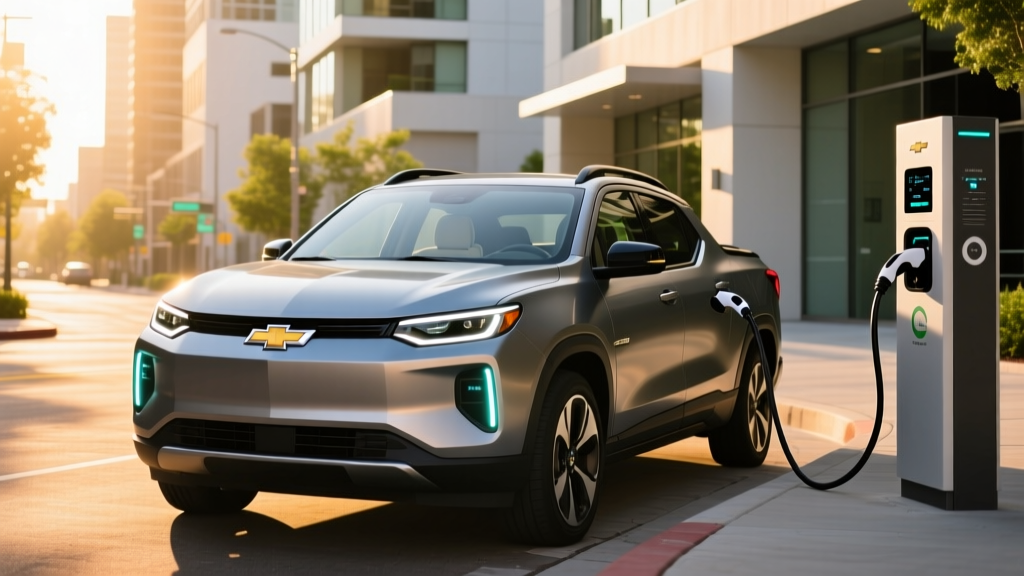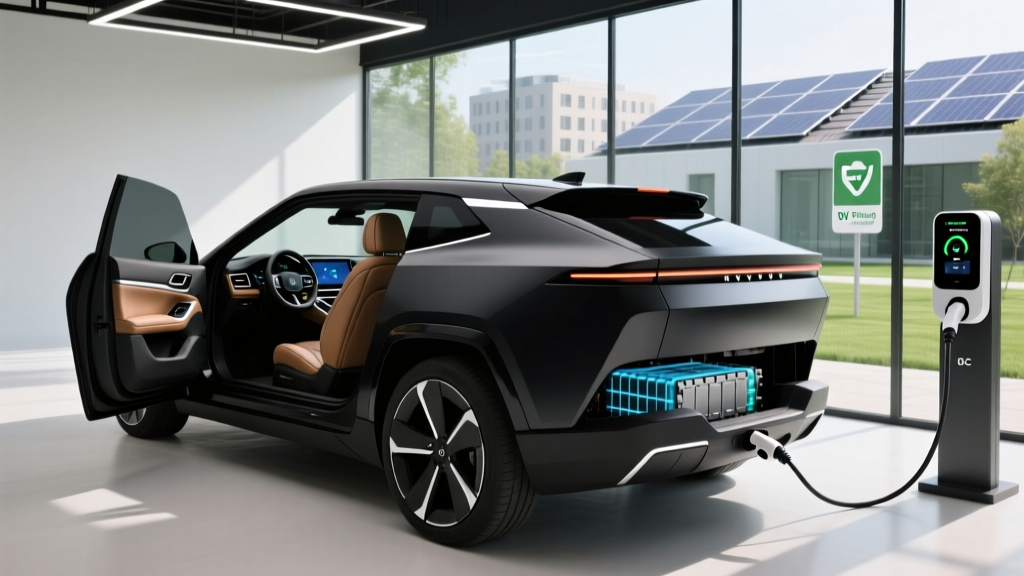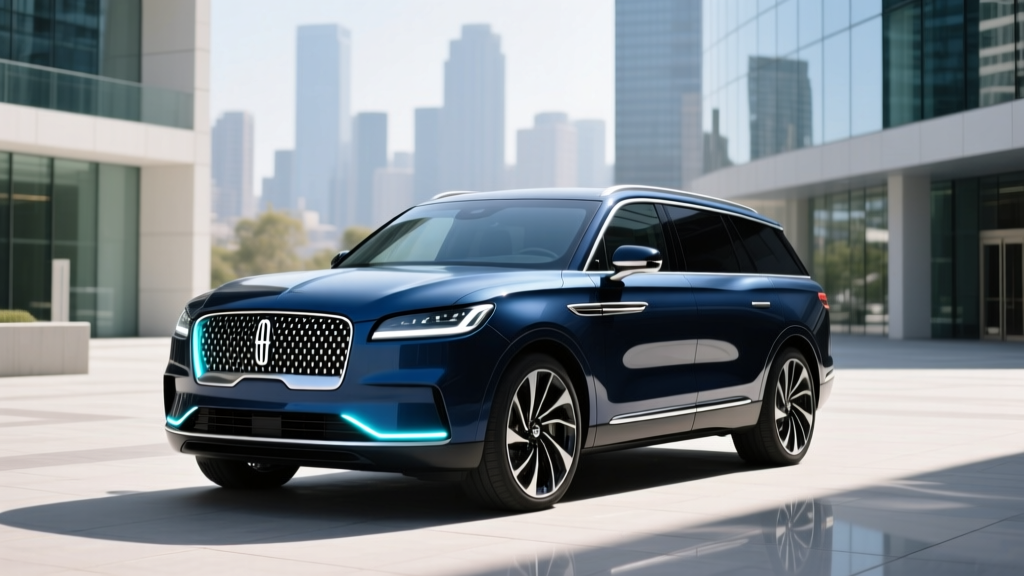
Quick Answer: Is There an Electric Lincoln Navigator?
As of early 2026, Lincoln has not yet released a production electric Navigator. The brand has confirmed an electric full-size SUV is in development, but no official EPA range, battery capacity, pricing, or on-sale date has been published. What we do know: it will ride on a next-generation body-on-frame EV platform shared with Ford's electric truck architecture, target 300+ miles of EPA range, and compete against the Cadillac Escalade IQ and the upcoming electric Chevrolet Tahoe. If you need a three-row luxury EV today, the closest alternatives are the Rivian R1S, the Cadillac Escalade IQ, or the plug-in hybrid Lincoln Aviator.
What We Know About the Electric Navigator So Far
Lincoln's electrification strategy has been cautious compared to rivals. While Cadillac launched the Escalade IQ with a massive 200+ kWh Ultium battery and 450+ miles of estimated range, Lincoln has taken a wait-and-see approach, letting Ford sort out its full-size EV truck and SUV architecture first.
Here is what industry reporting and Ford/Lincoln disclosures indicate about the upcoming electric Navigator:
- Platform: Expected to use a heavily modified version of Ford's next-gen body-on-frame EV skateboard, potentially sharing underpinnings with the electric Ford Expedition.
- Battery chemistry: Likely NMC (nickel-manganese-cobalt) for maximum energy density, given the vehicle's size and luxury positioning. An LFP option is unlikely for a flagship model at this price point.
- Estimated battery capacity: 150–200 kWh usable, based on the Escalade IQ's 200+ kWh pack and the physics of moving a 6,500+ lb vehicle.
- Projected EPA range: 300–400 miles, depending on trim and wheel size. Larger 24-inch wheels and air suspension could reduce range by 15–20 miles versus base 22-inch configurations.
- Charging architecture: Expected 800V system capable of 350+ kW peak DC fast charging, with a NACS connector for native Tesla Supercharger access.
- Performance: Dual-motor AWD with an estimated 600–700 horsepower, targeting a 0–60 mph time in the low 4-second range.
- Pricing: Base MSRP likely starting around $100,000, with top trims (Black Label) pushing past $130,000.
- Expected availability: Late 2026 or 2027 model year — Lincoln has not confirmed a specific date.
Note: All specifications above are preliminary estimates based on platform sharing, competitive positioning, and industry analysis. Final EPA-certified figures may differ. We will update this article when Lincoln publishes official data.
Gas Navigator vs. Electric Navigator: Projected Comparison
For buyers cross-shopping the current gas Navigator against the upcoming electric version, here is how the numbers are likely to stack up. We use the 2026 gas Navigator's published EPA data from fueleconomy.gov as the baseline.
| Specification | 2026 Gas Navigator | Electric Navigator (Projected) |
|---|---|---|
| Powertrain | 3.5L Twin-Turbo V6 + 10-speed auto | Dual-motor AWD (estimated) |
| Horsepower | 440 hp | 600–700 hp (est.) |
| 0–60 mph | ~5.5 seconds | ~4.0–4.5 seconds (est.) |
| EPA Range / Fuel Economy | 18 city / 23 hwy / 20 combined MPG | 300–400 miles (est.) |
| Annual fuel/energy cost* | ~$3,150 (gas at $3.50/gal, 12k mi/yr) | ~$720–$960 (at $0.15/kWh, 12k mi/yr) |
| Starting MSRP | ~$83,265 | ~$100,000 (est.) |
| Federal tax credit (§30D) | None | Up to $7,500 (if eligible — see below) |
| Maintenance (5-year est.) | ~$4,500–$6,000 | ~$1,500–$2,500 |
| Towing capacity | 8,300 lbs | 7,500–8,500 lbs (est.) |
*Fuel cost estimates based on national averages. Your actual costs depend on local gas prices, electricity rates, and driving patterns. Source for gas Navigator MPG: fueleconomy.gov.
Real Ownership Costs: The 5-Year Breakdown
Sticker price tells only part of the story. Here is a projected 5-year total cost of ownership (TCO) comparison assuming 12,000 miles per year, home Level 2 charging, and national-average electricity and fuel prices.
| Cost Category | 2026 Gas Navigator | Electric Navigator (Projected) |
|---|---|---|
| Purchase price (base MSRP) | $83,265 | $100,000 (est.) |
| Federal tax credit | $0 | –$7,500 (if eligible) |
| Fuel / electricity (5 years) | $15,750 | $3,600–$4,800 |
| Maintenance (5 years) | $5,000 | $2,000 |
| Insurance (5 years, est.) | $12,500 | $14,000–$16,000 |
| Home charger install (Level 2) | $0 | $800–$2,500 |
| Estimated 5-year TCO | $116,515 | $112,900–$130,800 |
Key takeaways:
- The electric Navigator's higher purchase price is partially offset by dramatically lower fuel costs (roughly $11,000–$12,000 saved over 5 years) and reduced maintenance.
- Insurance premiums for EVs in this class run 10–25% higher than gas equivalents due to repair cost data on aluminum-intensive platforms and battery replacement risk.
- The §30D federal tax credit of up to $7,500 can be applied at point of sale, but eligibility depends on battery component and critical mineral sourcing, your adjusted gross income, and the vehicle's MSRP falling under the $80,000 SUV/truck cap. However, a projected $100,000+ MSRP would exceed the §30D cap, meaning the electric Navigator may not qualify. Check current rules at IRS.gov.
- Depreciation is the wild card. Luxury EVs have depreciated faster than gas equivalents in recent years, though this gap is narrowing as the market matures.
Charging Reality: What You Need at Home and on the Road
A vehicle with a 150–200 kWh battery is one of the largest energy storage systems you can put in a residential garage. Here is what charging actually looks like.
Home Charging (Level 2)
At a typical 11.5 kW Level 2 home charger (48-amp circuit on a 60-amp breaker), you would add roughly 25–30 miles of range per hour. A full 0–100% charge on a 180 kWh battery would take approximately 16–18 hours. In practice, most owners charge from 20% to 80% daily, which takes about 9–10 hours — easily done overnight.
Electrical panel consideration: A 180+ kWh battery pulling 11.5 kW continuously represents a significant load. Homes with 100-amp electrical panels will almost certainly need a panel upgrade to 200 amps, costing $1,500–$3,500. Homes already on 200-amp service should still have a licensed electrician perform a load calculation before installation.
DC Fast Charging
With an expected 800V architecture and 350+ kW peak rate, the electric Navigator should charge from 10–80% in roughly 20–25 minutes at a compatible 350 kW station. However, real-world charging curves taper significantly above 80% SoC. Expect a 10–90% session to take 35–45 minutes.
With a NACS connector, you would have native access to the Tesla Supercharger network — the most reliable DC fast-charging infrastructure in the US as of 2026, according to multiple reliability surveys.
Cold-Weather Range Loss
Full-size EVs with large battery packs are somewhat insulated from extreme range loss thanks to sophisticated thermal management systems, but physics still applies. In sustained sub-freezing temperatures (below 25°F), expect 15–25% range reduction. A projected 350-mile EPA range could drop to 265–300 miles in January in Minneapolis or Chicago. Preconditioning the battery while plugged in at home mitigates this significantly and is essential for preserving fast-charge speeds in cold weather.
Tax Credit Eligibility: The $80,000 MSRP Problem
This is the single most important financial detail for prospective buyers. Under current IRS §30D rules, the federal clean vehicle credit for new EVs has the following requirements:
- MSRP cap: SUVs, trucks, and vans must have an MSRP at or below $80,000. Sedans: $55,000.
- Buyer income cap: Modified AGI must not exceed $300,000 (joint), $225,000 (head of household), or $150,000 (single).
- Battery sourcing: Increasing percentages of battery components must be manufactured or assembled in North America, and critical minerals must be sourced from the US or FTA partners.
- Point-of-sale transfer: You can transfer the credit to the dealer at purchase, reducing your out-of-pocket cost immediately (rather than waiting to claim it on your tax return).
- Filing requirement: You must file IRS Form 8936 with your tax return and report the vehicle's VIN.
With the electric Navigator's projected base MSRP around $100,000, it is very likely to exceed the $80,000 SUV cap, making it ineligible for the $7,500 federal credit. Some buyers may attempt to structure a lease to access the commercial clean vehicle credit (§45W), which the lessor can pass through as a capitalized cost reduction — but this depends on the leasing company and is not guaranteed.
Always verify current eligibility with a tax professional and the IRS clean vehicle credit page before making a purchase decision.
What If You Need a Three-Row Luxury EV Today?
If you cannot wait for Lincoln to finalize the electric Navigator, here are the closest alternatives available now or taking orders in 2026:
| Vehicle | EPA Range | Battery (kWh) | Peak DC Charge | Starting MSRP | §30D Credit |
|---|---|---|---|---|---|
| Cadillac Escalade IQ | ~450 mi (est.) | ~200+ (NMC) | ~350 kW | ~$130,000 | Likely exceeds cap |
| Rivian R1S (Dual-Motor Max) | ~410 mi | ~149 (NMC) | ~220 kW | ~$84,900 | Eligible (select configs) |
| Kia EV9 (GT-Line AWD) | ~270 mi | 100 (NMC) | ~236 kW | ~$73,900 | Eligible (select configs) |
| Lincoln Aviator PHEV (Grand Touring) | ~21 mi electric-only | ~18.6 (NMC) | N/A (Level 2 only) | ~$70,000 | Up to $3,750 (§30D PHEV) |
The Rivian R1S is the closest functional match — three rows, genuine off-road capability, 410 miles of range on the Max pack, and it qualifies for the federal credit in certain configurations. The Escalade IQ is the direct luxury flagship competitor but starts well above $100,000. The Lincoln Aviator PHEV is a bridge option: a plug-in hybrid with limited electric-only range that buys time until a full electric Lincoln SUV arrives.
Decision Framework: Should You Wait or Buy Now?
Wait for the Electric Navigator if:
- You are a loyal Lincoln/Black Label customer and want the brand's flagship EV experience.
- Your current vehicle has 1–2 years of usable life left and you are not in a rush.
- You want native NACS/Supercharger access on a full-size luxury SUV without adapters.
- You value Lincoln's dealer service experience and want an EV from a brand you already trust for maintenance.
Buy an alternative now if:
- You need a three-row electric SUV within 6 months.
- The $7,500 federal tax credit is important to your budget (the Navigator will likely not qualify).
- You want proven real-world range and charging data before committing $100,000+.
- You live in a region with limited Lincoln dealer EV service infrastructure.
- You want a vehicle with established reliability data and owner community support.
Common Misconceptions Addressed
| Myth | Fact |
|---|---|
| "The electric Navigator is available to order now." | Lincoln has not opened orders. Any dealer taking deposits is doing so unofficially and without guaranteed allocation. |
| "It will definitely get the $7,500 tax credit." | The projected MSRP of $100,000+ exceeds the §30D SUV cap of $80,000. Credit eligibility is unlikely under current rules. |
| "A bigger battery means it charges slower at home." | Charging speed (kW) is independent of battery size (kWh). A larger battery simply takes longer to fill at the same kW rate — but you rarely charge from 0–100% at home. |
| "It will tow just as far as the gas Navigator." | Towing cuts EV range by 30–50%. An 8,000-lb trailer on the highway could reduce a 350-mile range to 175–240 miles. Plan routes accordingly. |
| "EVs don't need any maintenance." | EVs eliminate oil changes, spark plugs, and transmission fluid, but still require tire rotation, brake fluid, cabin air filters, coolant checks, and wiper fluid. Budget ~$400–$600/year. |
Frequently Asked Questions
When will the electric Lincoln Navigator be available?
Lincoln has not announced a firm on-sale date. Industry estimates place it in late 2026 as a 2027 model year vehicle, or potentially the 2028 model year. We will update this article when Lincoln makes an official announcement.
How much will the electric Navigator cost?
Based on the gas Navigator's pricing ($83,265–$115,000+) and the EV premium seen on the Cadillac Escalade IQ (~$130,000 base), expect the electric Navigator to start around $100,000 with Black Label trims reaching $130,000–$140,000.
Will it have three rows of seating?
Yes. The Navigator is Lincoln's flagship three-row SUV, and the electric version is expected to retain seven- or eight-passenger seating. Third-row space will depend on how the battery pack affects floor height — a key engineering challenge on body-on-frame EV platforms.
What connector will it use — NACS or CCS?
Given Ford/Lincoln's commitment to the North American Charging Standard (NACS), the electric Navigator is expected to use a native NACS port, granting direct access to Tesla Superchargers without an adapter.
Is the Lincoln Aviator PHEV a good alternative in the meantime?
The Aviator Grand Touring PHEV offers about 21 miles of electric-only range — enough for short commutes but not a substitute for a full EV. It's a reasonable bridge vehicle if you want the Lincoln brand and three rows while waiting for the electric Navigator, and it can qualify for a partial federal credit of up to $3,750 depending on battery sourcing.
How will cold weather affect the electric Navigator's range?
Expect 15–25% range reduction in sustained below-freezing temperatures. Preconditioning the battery while plugged in is essential — it warms the pack using grid power rather than battery energy, preserving both range and fast-charging speed. Lincoln is expected to include battery preconditioning for DC charging as standard, but we will confirm when specs are released.