The Short Answer on the Electric Land Rover
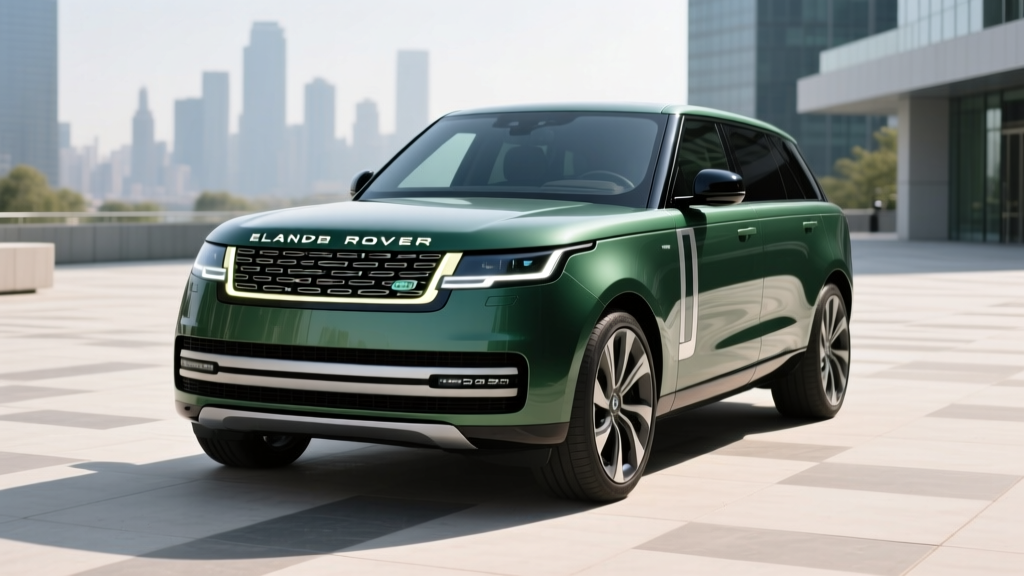
The electric Land Rover Range Rover (officially the Range Rover Electric) is a luxury all-electric SUV built on JLR's MLA-Flex platform, sharing its architecture with the current-generation gas and mild-hybrid Range Rovers. It targets an EPA-estimated range near 300 miles from a ~117 kWh (usable) NMC battery pack, supports up to 200 kW DC fast charging (10–80% in approximately 28 minutes), and is expected to start around $125,000 MSRP. Because its MSRP exceeds the IRS §30D federal tax credit cap of $80,000 for SUVs, the electric Range Rover does not qualify for the $7,500 federal EV credit. It is best suited for buyers with reliable home Level 2 charging, who want silent luxury and off-road capability without tailpipe emissions, and who prioritize prestige and comfort over maximum range-per-dollar.
What the Electric Land Rover Range Rover Actually Is
Land Rover's parent company Jaguar Land Rover (JLR) confirmed the Range Rover Electric as the brand's first fully electric vehicle, entering production in late 2025 at the Solihull, UK plant. Unlike a dedicated EV platform, the Range Rover Electric uses the MLA-Flex (Modular Longitudinal Architecture) that also underpins the inline-six mild-hybrid and V8 Range Rover variants. This means the electric model looks, feels, and packages nearly identically to its combustion siblings — a deliberate choice to preserve the Range Rover's signature proportions, wading depth, and cabin layout.
JLR has confirmed an 800-volt electrical architecture, enabling competitive DC fast-charging speeds, and a dual-motor all-wheel-drive powertrain producing an estimated 543 horsepower. The battery uses nickel-manganese-cobalt (NMC) chemistry for high energy density, critical in a vehicle this large. Land Rover also promises the same wading capability (up to 33.5 inches) and Terrain Response system that define the brand.
Range, Charging, and Efficiency: The Real Numbers
| Spec | Value |
|---|---|
| Battery (usable) | ~117 kWh, NMC chemistry |
| EPA Range (est.) | ~295–310 miles |
| Real-World Highway (70 mph) | ~230–260 miles |
| Cold-Weather Range (20°F) | ~200–230 miles |
| MPGe (est. combined) | ~72–78 MPGe |
| DC Fast Charge Peak | 200 kW (800V architecture) |
| 10–80% DC Charge Time | ~28 minutes |
| Level 2 Charge Rate | 11 kW (48A) |
| Level 2 Full Charge Time | ~11 hours |
| Powertrain | Dual-motor AWD, ~543 HP |
| 0–60 mph (est.) | ~4.5 seconds |
| Starting MSRP (est.) | $125,000 |
| Battery Warranty | 8 years / 100,000 miles |
EPA Range vs. What You'll Actually Get
The Range Rover Electric's boxy shape, 5,800+ lb curb weight, and large frontal area work against highway efficiency. While the EPA sticker may read ~300 miles, plan for 230–260 miles at sustained 70–75 mph highway speeds. In cold weather (below 30°F), expect an additional 15–25% reduction, putting real-world winter range in the 200–230 mile bracket. The heat pump (standard on JLR's 800V platform) helps mitigate cabin-heating energy draw, but physics still governs a heavy luxury SUV at speed. Preconditioning the battery before DC fast charging is essential to hitting peak 200 kW rates — without it, you may see peak rates closer to 80–120 kW, extending your 10–80% stop to 40+ minutes.
Charging at Home and on the Road
At home, the Range Rover Electric accepts up to 11 kW on Level 2 (240V, 48A), which replenishes the ~117 kWh pack from empty in roughly 11 hours. For most owners, a nightly plug-in means waking to a full charge every morning — the single biggest ownership advantage over gas.
| Level | Power (kW) | Miles Added Per Hour | Typical Use |
|---|---|---|---|
| Level 1 (120V) | ~1.4 kW | ~3–4 mi/hr | Emergency / trickle only |
| Level 2 (240V, 48A) | 11 kW | ~28–32 mi/hr | Home / workplace daily |
| DC Fast Charge | Up to 200 kW | ~500+ mi/hr (peak) | Road trips |
On the road, the 800V architecture positions the Range Rover Electric alongside the Hyundai Ioniq 5 and Porsche Taycan in charge-speed capability. However, the massive battery means even at 200 kW peak, a 10–80% session takes ~28 minutes — longer than lighter EVs with smaller packs. The charge curve will taper significantly above 80% SoC to protect the NMC cells, so plan your road-trip stops around the 10–80% sweet spot rather than topping off to full.
Home charging installation reality: A 48A Level 2 charger requires a dedicated 60A circuit. Most homes with a 200A electrical panel can accommodate this, but older 100A panels may need an upgrade ($1,500–$3,000). Budget $800–$2,500 for a professional Level 2 installation including a quality EVSE (ChargePoint Home Flex, Emporia Level 2, or similar), wiring, and permitting. The Department of Energy's home charging guide covers the basics, but always consult a licensed electrician for final specs.
Electric Range Rover vs. Gas Range Rover: Cost & Capability
| Metric | Range Rover Electric | Range Rover P400 (MHEV) |
|---|---|---|
| Base MSRP | ~$125,000 | ~$108,000 |
| Federal Tax Credit (§30D) | $0 (exceeds $80K SUV cap) | $0 (not a plug-in) |
| Fuel / Energy Cost (15K mi/yr) | ~$720/yr (at $0.14/kWh avg) | ~$2,625/yr (at $3.50/gal, 19 MPG) |
| Annual Maintenance (est.) | ~$400–$600 | ~$1,200–$1,800 |
| 0–60 mph | ~4.5 sec | ~5.5 sec |
| EPA Range / Tank Range | ~300 mi | ~450 mi (23.5-gal tank) |
| Towing Capacity | ~7,700 lbs (est.) | 8,200 lbs |
| Wading Depth | 33.5 in | 35.4 in |
The electric Range Rover saves roughly $1,900–$2,100 per year in fuel and maintenance compared to the P400 mild-hybrid. Over five years, that's ~$10,000 in operational savings — meaningful, but not enough to fully offset the ~$17,000 higher starting price. The gas Range Rover also wins on total driving range per fill-up (~450 miles) and slightly better wading depth and towing. Where the electric model excels is refinement: near-silent operation, instant torque, and a lower center of gravity that improves ride composure.
If you drive 15,000 miles or fewer per year and have home charging, the EV's operational savings compound over time. If you regularly tow, take long road trips through charging deserts (rural West, for example), or live in extreme cold without a garage, the mild-hybrid P400 or PHEV variant remains more practical.
Real-World Ownership: What First-Time EV Buyers Must Know
| Myth | Fact |
|---|---|
| "The battery will need replacing in 5 years." | NMC batteries in modern thermal-managed packs typically retain 85–90% capacity at 100,000 miles. JLR's warranty guarantees at least 70% retention at 8 years/100,000 miles. |
| "I'll never find a public charger." | The U.S. now has over 70,000 public charging ports (AFDC data). However, rural stretches of I-70, I-10, and parts of the Dakotas remain sparse. Plan road trips with A Better Routeplanner. |
| "It qualifies for the $7,500 tax credit." | It does not. The IRS §30D credit caps SUVs at $80,000 MSRP. The Range Rover Electric starts around $125,000. |
| "Electric means zero maintenance." | Tires, cabin air filters, brake fluid, wiper fluid, and washer systems still require service. EV tires wear 20–30% faster due to weight and instant torque. Budget for tire replacement every 25,000–35,000 miles. |
| "Cold weather kills the range completely." | Cold reduces range 15–25%, but preconditioning, a heat pump, and garage parking mitigate this significantly. A 300-mile EV with 25% loss still delivers 225 miles — enough for most daily needs. |
Insurance: Luxury EV insurance runs 15–25% higher than comparable gas models due to repair costs and battery replacement values. Expect annual premiums of $3,200–$4,800 depending on your state, driving record, and coverage level. Get quotes before purchasing — this is a cost many first-time EV buyers overlook.
Depreciation: Luxury EVs have historically depreciated faster than luxury gas vehicles, partly due to rapid tech advancement and battery-health concerns among second-hand buyers. Plan for 45–55% depreciation over 5 years, compared to 40–50% for the gas Range Rover. Leasing may be the financially smarter move here, as it transfers residual-value risk to the lessor.
Decision Framework: Should You Buy the Electric Land Rover?
Choose the Range Rover Electric If:
- You have reliable home Level 2 charging (garage or driveway with 240V access)
- Your daily driving is under 150 miles round-trip, with occasional longer trips
- You value silence, instant torque, and a lower center of gravity for on-road refinement
- You live in a metro area with adequate DC fast-charging infrastructure for road trips
- You want a zero-tailpipe-emission luxury SUV and budget is not the primary concern
Choose the Gas/MHEV Range Rover Instead If:
- You regularly tow heavy loads (boats, horse trailers) over 7,000 lbs
- You frequently drive 300+ miles through rural areas with sparse charging
- You live in an apartment or condo without charging access and cannot install a home charger
- You want maximum range per stop (450+ miles on a gas tank) without route planning
- You plan to keep the vehicle 10+ years and want to avoid long-term battery degradation uncertainty
Wait and Reconsider If:
- You're interested in the upcoming electric Range Rover Sport or Defender — JLR has signaled both are in development for the 2027–2028 timeframe
- You want to see real-world owner reports on build quality and software reliability before committing to a first-year EV from the brand
Cost of Ownership: 5-Year Breakdown
| Category | Range Rover Electric | Range Rover P400 MHEV |
|---|---|---|
| Purchase Price (base) | $125,000 | $108,000 |
| Federal Tax Credit | $0 | $0 |
| Fuel / Energy (5 yr) | $3,600 | $13,125 |
| Maintenance (5 yr) | $2,500 | $7,500 |
| Insurance (5 yr) | $20,000 | $15,500 |
| Home Charger Install | $1,800 | $0 |
| Est. Depreciation (5 yr) | $62,500 (50%) | $48,600 (45%) |
| Total Estimated 5-Yr Cost | ~$215,400 | ~$192,725 |
Even with significant fuel and maintenance savings, the electric Range Rover costs roughly $22,000 more to own over five years, driven by the higher purchase price, steeper depreciation, higher insurance, and home charger installation. This is typical of first-generation luxury EVs: you pay a premium for electrification in a segment where operational savings alone cannot bridge the gap. The purchase is an emotional and environmental decision as much as a financial one.
Frequently Asked Questions
When can I actually buy the electric Land Rover Range Rover?
JLR began production of the Range Rover Electric at its Solihull plant in late 2025, with U.S. deliveries starting in early-to-mid 2026. Reservations opened in 2024 and initial allocation is limited. Contact your local Land Rover dealer for availability and wait times.
Does the electric Range Rover qualify for any EV tax credits?
No. The federal §30D new clean vehicle credit caps SUVs at an $80,000 MSRP. The Range Rover Electric starts around $125,000, disqualifying it entirely. Some states (California, Colorado, New York) offer additional rebates or HOV lane access for zero-emission vehicles — check your state's energy office for current programs. Consult a tax professional for your specific situation.
Can the electric Range Rover actually go off-road?
Yes. JLR has confirmed the same Terrain Response 2 system, adaptive air suspension, and 33.5-inch wading depth. Electric motors offer precise low-speed torque control, which can be an advantage in rock-crawling scenarios. However, the battery pack's underbody placement means you'll want to verify skid-plate protection before tackling serious trails.
How long will the battery last?
Modern NMC batteries with active thermal management typically retain 85–92% capacity after 100,000 miles based on industry data from similar platforms. JLR warrants the battery for 8 years or 100,000 miles, covering defects and capacity loss below 70%. Full battery replacement costs are estimated at $18,000–$28,000 out of warranty, though prices are expected to decline as the battery supply chain matures.
What charging network does the Range Rover Electric use?
The Range Rover Electric uses the CCS1 connector standard (common across non-Tesla EVs in North America). This gives access to Electrify America, EVgo, ChargePoint, and the growing network of NACS-equipped stations via CCS adapter. Tesla Supercharger access depends on JLR's network agreements — check JLR's official app for real-time compatibility.
Is leasing the electric Range Rover smarter than buying?
For many luxury EV buyers, yes. Leasing transfers residual-value risk to the lessor, and some lessors pass through commercial EV credits (§45W) as lease incentives — a workaround for vehicles that don't qualify for the consumer §30D credit. Ask the dealer's finance department about current lease structures and whether any pass-through credits apply.