Quick Answer: Is an Electric Kit Car Right for You?
An electric kit car is a vehicle sold as a component package that buyers assemble themselves, powered by a battery-electric drivetrain rather than an internal combustion engine. Expect to invest $15,000–$60,000+ in parts alone (excluding donor chassis, tools, and your own labor), with finished builds delivering 40–200 miles of real-world range depending on battery capacity (typically 20–80 kWh) and vehicle weight. Unlike a turnkey production EV, an electric kit car demands mechanical aptitude, access to a 240V Level 2 home charger, and a willingness to forgo federal §30D tax credits (which apply only to new, manufacturer-certified vehicles). If you want a weekend project with a vintage aesthetic and modern EV drivetrain, a kit is compelling. If you need reliable daily transportation with warranty coverage, a production EV like the Chevrolet Equinox EV or Tesla Model 3 is a far more practical choice.
What Exactly Is an Electric Kit Car?
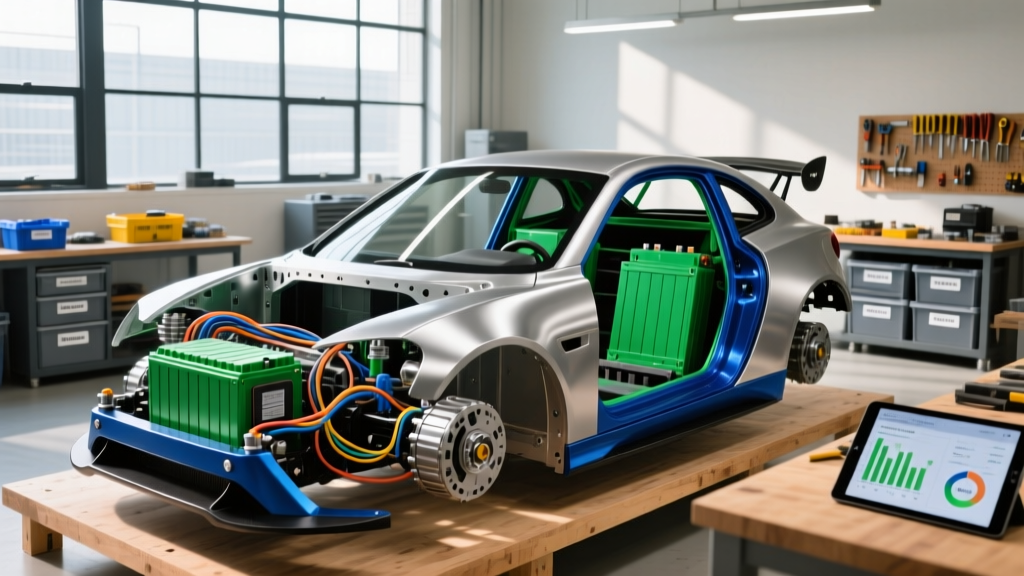
An electric kit car packages the major components of an EV — motor, inverter, battery modules, charger, DC-DC converter, and wiring harness — into a purchasable kit that an individual assembles onto a donor chassis or purpose-built frame. The concept mirrors traditional kit cars (think Factory Five Cobra or Caterham Seven replicas), but swaps the crate engine for an electric powertrain.
There are two primary approaches in 2026:
- EV conversion kits: You supply a donor vehicle (often a classic VW Beetle, Porsche 914, Datsun 240Z, or Ford pickup), and the kit provides the electric drivetrain components to replace the gas engine. Companies like EV West and NetGain have offered conversion-oriented packages for years.
- Purpose-built electric kit cars: The manufacturer supplies a complete rolling chassis or body-on-frame kit designed from the start for electric propulsion. These are less common but emerging as EV components become cheaper and more standardized.
Neither approach produces a vehicle that qualifies for the IRS §30D federal clean vehicle credit. The credit requires a new vehicle assembled by a qualified manufacturer with a valid VIN and specific battery-sourcing documentation — criteria that a homebuilt kit car cannot meet by definition.
Electric Kit Car Cost Breakdown: What You'll Actually Spend
The sticker price of a kit is only the starting point. Here's a realistic cost breakdown based on current 2026 component pricing:
| Component | Budget Build | Mid-Range Build | High-End Build |
|---|---|---|---|
| Electric motor + inverter | $2,500–$4,000 | $4,500–$7,000 | $8,000–$15,000 |
| Battery pack (LFP or salvaged NMC) | $3,000–$6,000 (20–30 kWh) | $7,000–$14,000 (40–60 kWh) | $15,000–$30,000 (60–80+ kWh) |
| Onboard charger (Level 2, 6.6–11.5 kW) | $800–$1,200 | $1,200–$2,000 | $2,000–$3,500 |
| BMS, DC-DC converter, wiring | $1,500–$2,500 | $2,500–$4,000 | $4,000–$7,000 |
| Throttle controller, gauges, accessories | $500–$1,000 | $1,000–$2,000 | $2,000–$4,000 |
| Donor vehicle or chassis | $2,000–$5,000 | $5,000–$15,000 | $15,000–$30,000+ |
| Fabrication, brakes, suspension upgrades | $1,500–$3,000 | $3,000–$6,000 | $6,000–$12,000 |
| Total (parts only, no labor) | $11,800–$22,700 | $27,200–$50,000 | $52,000–$101,500 |
For comparison, a 2026 Chevrolet Equinox EV 2LT starts at approximately $33,000 MSRP with an EPA-estimated 319 miles of range, a factory battery warranty (8 years/100,000 miles), full ADAS suite, and potential §30D credit eligibility. A mid-range kit build at $40,000 will almost certainly deliver less range, no warranty, no crash-test certification, and no tax credit.
Where kits can make financial sense: You want a specific classic car body style that doesn't exist as a production EV, you value the build experience itself, and you already have tools, workspace, and mechanical skills.
Range, Battery Chemistry, and Charging Realities
Range is where electric kit cars diverge most dramatically from production EVs — and where builder decisions have the largest impact.
Battery Chemistry: LFP vs. NMC for Kit Builds
| Factor | LFP (Lithium Iron Phosphate) | NMC (Nickel Manganese Cobalt) |
|---|---|---|
| Energy density | Lower (~140–170 Wh/kg) — heavier for same kWh | Higher (~200–260 Wh/kg) — lighter, more compact |
| Cycle life | 3,000–5,000+ cycles to 80% capacity | 1,000–2,000 cycles to 80% capacity |
| Thermal stability | Excellent — lower fire risk | Good — requires more active thermal management |
| Cost per kWh (2026) | ~$80–$110/kWh at pack level | ~$110–$150/kWh at pack level |
| Best for kit cars? | Ideal for daily-driven builds with space for larger packs | Better for lightweight sports builds where mass matters |
Most kit builders source battery modules from salvaged production EVs (Nissan LEAF, Chevrolet Bolt, Tesla Model S) or purchase new LFP prismatic cells from suppliers like EVE or CATL. A 40 kWh LFP pack using new cells runs roughly $4,000–$5,500 in 2026; a 60 kWh NMC pack from salvaged Tesla modules might cost $7,000–$9,000.
Real-World Range Expectations
EPA-equivalent range doesn't exist for kit cars. Production EVs undergo standardized EPA testing. Kit cars do not. Your actual range depends entirely on pack size, vehicle weight, aerodynamics, and driving style.
Rule of thumb: Expect roughly 3–4 miles per kWh in a lightweight kit car (1,800–2,500 lbs) and 2–3 miles per kWh in a heavier conversion (3,000–4,000 lbs). That means:
- 30 kWh usable pack → ~90–120 miles real-world
- 50 kWh usable pack → ~150–200 miles real-world
- 70 kWh usable pack → ~210–280 miles real-world (rare in kit builds due to weight/space)
Highway driving at 70+ mph reduces these figures by 15–25%. Cold weather (below 32°F) can cut range by 20–40%, especially without a heat pump or battery preconditioning system — features rarely integrated into kit builds.
Charging Speeds
Kit cars are limited by their onboard charger for Level 2 AC charging, and most lack DC fast charging capability entirely.
| Charging Level | Typical Kit Car | Production EV (e.g., 2026 Ioniq 5) |
|---|---|---|
| Level 1 (120V, 1.4 kW) | 3–5 mi/hr added | 3–5 mi/hr added |
| Level 2 (240V, 6.6–11.5 kW) | 20–40 mi/hr added (6–10 hr full charge) | 30–52 mi/hr added (5–7 hr full charge) |
| DC Fast Charge (50–350 kW) | Usually NOT available | 10–80% in ~18 min at 240 kW peak |
The absence of DC fast charging is the single biggest practical limitation of most electric kit cars. A 50 kWh pack charging at 6.6 kW (a common kit onboard charger) requires roughly 7.5 hours for a full charge. That makes road trips impractical and confines most kit cars to local driving within a single-charge radius of home.
Electric Kit Car vs. Gas Kit Car vs. Production EV
If you're weighing an electric kit car against alternatives, here's how the numbers stack up across key ownership dimensions:
| Factor | Electric Kit Car (Mid-Range Build) | Gas Kit Car (e.g., Factory Five w/ crate V8) | Production EV (e.g., 2026 Tesla Model 3 RWD) |
|---|---|---|---|
| Total build/purchase cost | $27,000–$50,000 | $25,000–$45,000 | ~$38,990 MSRP (before credit) |
| Federal tax credit | $0 (not eligible) | $0 | Up to $7,500 (§30D, subject to income/sourcing rules) |
| Range | 100–200 mi (no fast charging) | 300–400 mi (gas station refuel in 5 min) | EPA 363 mi + DCFC network access |
| Fuel/energy cost per mile | ~$0.04–$0.06/mi (home charging at $0.14/kWh) | ~$0.14–$0.18/mi (gas at $3.30/gal, 22 MPG) | ~$0.04–$0.06/mi (home charging) |
| Annual maintenance | $200–$500 (brakes, coolant, cabin filter) | $800–$1,500 (oil, plugs, belts, exhaust) | $300–$600 (factory scheduled) |
| Insurance | Specialty/kit car policy ($1,200–$2,500/yr) | Specialty/kit car policy ($1,000–$2,200/yr) | Standard EV policy ($1,400–$2,200/yr) |
| Warranty | None (self-built) | Component-level only | 4 yr/50K bumper-to-bumper; 8 yr/100K+ battery |
| Safety certification | None (no crash testing) | None (no crash testing) | NHTSA/IIHS tested and rated |
The production EV wins decisively on range, charging infrastructure, warranty, safety, and total cost after incentives. The electric kit car wins only on novelty, customization, and the satisfaction of building it yourself. A gas kit car remains more practical for long-distance drives and events where charging isn't available.
Common Misconceptions About Electric Kit Cars
| Myth | Fact |
|---|---|
| "An EV conversion is cheaper than buying a production EV." | A quality electric kit build typically costs $25,000–$50,000 with far less range, no warranty, and no tax credit. A 2026 Chevy Equinox EV at ~$33K (potentially ~$25.5K after credit) is cheaper and more capable. |
| "I can use DC fast charging on my kit car." | DC fast charging requires CCS or NACS protocol handshaking, high-voltage contactors, liquid-cooled battery thermal management, and certified charge controllers. Very few kit builds integrate this — most are Level 2 AC only. |
| "LFP batteries are too heavy for a lightweight kit car." | LFP packs are ~15–25% heavier than equivalent NMC packs. In a 2,000-lb kit car, a 40 kWh LFP pack adds roughly 550–650 lbs. That's significant but manageable with suspension tuning. The trade-off is longer cycle life and better thermal safety. |
| "I'll save a fortune on fuel." | At $0.04–$0.06/mi home charging vs. $0.15/mi for gas, you save ~$0.10/mi. Over 10,000 annual miles, that's ~$1,000/year. At that rate, it takes 25+ years to recoup a $25K cost premium over a cheap gas donor. The math works better if you drive more or have free/solar charging. |
| "Kit cars are street-legal everywhere." | Registration requirements for kit and converted vehicles vary enormously by state. Some states (e.g., California, Texas) have specific kit-car registration processes with inspections; others make it difficult. Check your state DMV before purchasing any kit. |
Real-World Ownership Considerations
Before committing to an electric kit car, honestly assess these practical factors:
Home Charging Access
You must have access to a 240V Level 2 circuit (ideally a dedicated 50A NEMA 14-50 or hardwired 48A wall connector) to make an electric kit car practical. Without it, Level 1 charging at 1.4 kW would require 20+ hours to refill a 30 kWh pack — essentially unusable. Budget $500–$2,000 for a Level 2 home charger installation (equipment + licensed electrician), or significantly more if your electrical panel needs a 200A upgrade ($1,500–$3,500).
Climate and Driving Patterns
If you live in a region with harsh winters, understand that LFP batteries lose more capacity in cold weather than NMC chemistry, and most kit builds lack active battery thermal management. Expect 20–40% range reduction below freezing. If your daily round-trip commute is 60 miles and your kit car has 100 miles of warm-weather range, you may find yourself range-limited in January.
Insurance and Registration
Kit cars and EV conversions typically require specialty insurance policies from carriers like Hagerty or Grundy, which offer agreed-value coverage. Annual premiums run $1,200–$2,500 depending on stated value and mileage limits. Registration processes vary by state — some require a reconstructed-vehicle inspection, brake and light certifications, and a new VIN assignment.
Maintenance and Support
There is no dealership service department for a kit car. You are the mechanic. When a contactor fails, a BMS throws a fault code, or a cooling loop leaks, you diagnose and fix it yourself — or pay a specialty EV shop $120–$200/hour for labor. Factor this into your ownership plan.
Decision Framework: Should You Build an Electric Kit Car?
Build an electric kit car IF:
- You want a specific classic or replica body style that no production EV offers
- You have mechanical/electrical skills, a garage, tools, and 200+ hours to invest
- You have reliable Level 2 home charging already installed or installable
- Your use case is local driving (under 80 miles round-trip) in moderate climates
- You value the building process as much as the finished product
- You understand and accept zero warranty, no crash-test certification, and no tax credit
Buy a production EV instead IF:
- You need reliable daily transportation with 250+ miles of range
- You want DC fast charging for road trips
- You need a factory warranty, ADAS features, and crash-test safety ratings
- You want to claim the §30D federal tax credit (up to $7,500, subject to IRS income and sourcing requirements)
- You lack the time, skills, or workspace for a multi-month build project
- You live in an apartment or lack home charging access
Consider a gas kit car IF:
- You plan to drive the car to events, car shows, or long-distance tours
- You want 5-minute refueling and 300+ mile range without infrastructure planning
- You prefer the sound, feel, and mechanical simplicity of a traditional powertrain
Frequently Asked Questions
Can I register an electric kit car for street use?
In most US states, yes — but the process varies significantly. Many states have a "specially constructed vehicle" (SPCNS) or "reconstructed vehicle" registration category that requires a state inspection (brakes, lights, VIN verification, sometimes emissions exemption paperwork for EVs). California's SPCNS program, for example, requires a BAR inspection and a CHP VIN assignment. Research your specific state's DMV requirements before starting a build.
How long does it take to build an electric kit car?
For a first-time builder working evenings and weekends, expect 6–18 months and 200–500 hours of labor. Experienced fabricators with dedicated shop time can complete a straightforward conversion in 3–6 months. Complexity scales with battery pack size (more modules = more wiring, BMS configuration, and packaging challenges) and the degree of custom fabrication required.
Is it safe to build your own EV battery pack?
Battery packs store significant energy — a 40 kWh pack at 400V contains enough current to be lethal. Proper builds require understanding of high-voltage safety protocols, correct wire gauge and crimping, fusing, contactors, precharge circuits, and a quality BMS. If you're not comfortable working with high-voltage DC systems, hire a professional or choose a kit that ships with a pre-assembled, tested battery pack.
Do electric kit cars qualify for any tax incentives?
No. The federal §30D clean vehicle credit requires a new vehicle produced by a qualified manufacturer with specific battery critical-mineral and component sourcing documentation, a valid VIN, and MSRP within caps ($55,000 for sedans, $80,000 for SUVs/trucks). A homebuilt kit car meets none of these criteria. Some states or local utilities offer rebates for EV charging equipment installation — those may apply to your Level 2 home charger regardless of what vehicle you plug in.
What's the best donor car for an EV conversion kit?
Popular donor vehicles include the VW Beetle (lightweight, simple, large aftermarket), Porsche 944/924 (good weight distribution, transaxle layout), Datsun 240Z/280Z (lightweight sports car), and older Ford Rangers or S-10 pickups (bed space for batteries). The ideal donor is light (under 2,800 lbs curb weight), has a manual transmission you can adapt to the electric motor, and offers physical space for battery modules. Avoid heavy luxury donors — every extra pound reduces your range per kWh.