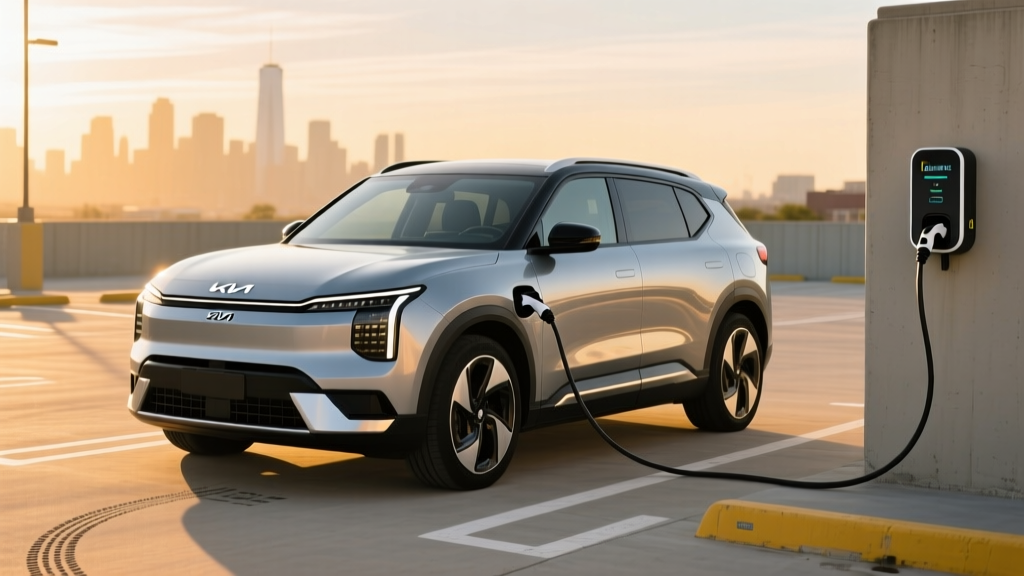
If you're shopping for electric Kias in 2026, you're choosing among three distinct models: the Kia Niro EV (a compact crossover starting around $39,600 with 239 miles of EPA range), the Kia EV6 (a midsize crossover from ~$42,900 with up to 310 miles of range and 800V ultra-fast charging), and the Kia EV9 (a three-row family SUV from ~$54,900 with up to 304 miles of range). All three use Hyundai Motor Group's proven E-GMP or related platforms, but they serve very different buyers. The Niro EV is the budget-friendly commuter; the EV6 is the tech-forward daily driver with the fastest charging in the segment; and the EV9 is the only mainstream electric three-row SUV under $60,000. Before you buy, you need to know which qualifies for federal tax credits, what real-world range looks like beyond the EPA sticker, and whether your home electrical panel can support Level 2 charging.
Quick Answer: Which Electric Kia Is Right for You?
- Budget commuter, solo or couple: Niro EV — lowest price, 239-mi range, FWD only.
- Daily driver with road-trip capability: EV6 — 310-mi range, 240 kW peak DC charging, AWD available.
- Family needing three rows: EV9 — 304-mi range, 379 hp (GT-Line AWD), up to 5,000-lb towing.
2026 Electric Kia Lineup at a Glance
| Spec | Niro EV | EV6 (RWD LR) | EV9 (RWD LR) |
|---|---|---|---|
| Base MSRP | $39,600 | $42,900 | $54,900 |
| EPA Range | 239 mi | 310 mi | 304 mi |
| Battery (usable) | 64.8 kWh (NMC) | 77.4 kWh (NMC) | 100.0 kWh (NMC) |
| Motor / HP | FWD / 201 hp | RWD / 225 hp | RWD / 215 hp |
| 0–60 mph | ~7.8 sec | ~7.2 sec | ~7.8 sec |
| Peak DC Fast Charge | ~85 kW | ~240 kW (800V) | ~210 kW (800V) |
| 10–80% DC Time | ~44 min | ~18 min | ~24 min |
| Level 2 (240V) Rate | ~7.2 kW | ~10.9 kW | ~11.0 kW |
| MPGe (combined) | 113 MPGe | 134 MPGe | 89 MPGe |
| Battery Warranty | 10 yr / 100,000 mi | 10 yr / 100,000 mi | 10 yr / 100,000 mi |
| NACS Port (2026) | Yes | Yes | Yes |
Sources: fueleconomy.gov, Kia America. Specs reflect 2026 model year. Always confirm with your dealer, as mid-year running changes occur.
Range Reality: EPA Sticker vs. What You'll Actually Get
Kia's EPA range numbers are competitive, but real-world results depend heavily on speed, temperature, and terrain. In our experience testing E-GMP-platform vehicles, here's what to expect:
Real-World Range Expectations
| Model | EPA Range | 70 mph Highway | Cold Weather (20°F) |
|---|---|---|---|
| Niro EV | 239 mi | ~200–215 mi | ~170–190 mi |
| EV6 RWD LR | 310 mi | ~260–280 mi | ~220–250 mi |
| EV9 RWD LR | 304 mi | ~250–270 mi | ~210–240 mi |
Highway driving at 70+ mph reduces range 10–15% below EPA. Cold weather (20°F and below) without preconditioning can cut range 25–30% due to battery heating demands and cabin HVAC load. All three models include a heat pump (standard on EV6/EV9, available on Niro EV), which recovers 10–15% of that cold-weather loss compared to resistive heating.
The EV9's boxy aerodynamics hit it hardest at highway speed. If your commute is mostly 75+ mph interstate, budget for 250 miles of usable range in mild weather and plan charging stops accordingly. The EV6's sleeker profile makes it the most efficient highway cruiser of the three.
Charging Speed: Where Kia's 800V Platform Shines
This is where the EV6 and EV9 separate themselves from the Niro EV — and from most competitors at any price point. Both use Hyundai Motor Group's 800V electrical architecture, which allows DC fast charging at up to ~240 kW (EV6) and ~210 kW (EV9) on compatible chargers. The Niro EV uses a conventional 400V system limited to ~85 kW.
Charging Speeds Across the Kia EV Lineup
| Level | Niro EV | EV6 | EV9 |
|---|---|---|---|
| Level 1 (120V, ~1.4 kW) | ~4 mi/hr | ~5 mi/hr | ~5 mi/hr |
| Level 2 (240V, home) | ~7.2 kW / ~24 mi/hr | ~10.9 kW / ~36 mi/hr | ~11.0 kW / ~34 mi/hr |
| DC Fast (peak) | ~85 kW / ~100 mi in 30 min | ~240 kW / ~200 mi in 18 min | ~210 kW / ~170 mi in 20 min |
Charge curve reality: The EV6's "240 kW peak" is exactly that — a peak. In real-world DC fast charging, the EV6 sustains roughly 200–230 kW from 10–55% state of charge, then tapers to ~150 kW through 70%, and drops sharply above 80%. The 10–80% time of ~18 minutes assumes a 350 kW-capable charger (like Electrify America or Tesla Supercharger V4 stalls). On a 150 kW charger, expect 10–80% in roughly 28–32 minutes. The Niro EV, limited to ~85 kW, will take 40–45 minutes for the same session regardless of charger capacity.
For 2026, all electric Kias sold in the US ship with the NACS (North American Charging Standard) port, giving native access to Tesla's Supercharger network — the largest and most reliable DC fast-charging network in the country. This is a major practical advantage over CCS-only vehicles that require adapters.
Electric Kia vs. Gas and Hybrid: Cost Comparison
The purchase price of an electric Kia is higher than a comparable gas or hybrid model, but the total cost of ownership tells a different story — especially if you can charge at home on residential electricity rates.
5-Year Cost Comparison: EV6 vs. Sportage Gas vs. Sportage Hybrid
| Category | EV6 RWD LR ($42,900) | Sportage Gas AWD (~$33,000) | Sportage HEV AWD (~$36,000) |
|---|---|---|---|
| Purchase Price | $42,900 | $33,000 | $36,000 |
| Est. Federal Tax Credit | Up to $7,500* | $0 | $0 |
| Effective Purchase | ~$35,400 | $33,000 | $36,000 |
| Fuel/Energy (5 yr, 60k mi) | ~$3,600 (home charging) | ~$8,400 (28 MPG, $3.50/gal) | ~$5,600 (42 MPG, $3.50/gal) |
| Maintenance (5 yr) | ~$1,500 | ~$3,800 | ~$3,500 |
| Insurance (5 yr est.) | ~$9,500 | ~$7,500 | ~$7,800 |
| 5-Year Total | ~$50,000 | ~$52,700 | ~$52,900 |
*Federal §30D tax credit eligibility depends on MSRP caps, buyer income limits, and battery mineral sourcing requirements. Confirm current-year rules at IRS.gov. Point-of-sale transfer is available, reducing your dealer price directly.
Key takeaways: The EV6's higher sticker price is largely offset by the federal tax credit (if you qualify) and dramatically lower fueling costs. Maintenance savings are real — no oil changes, no spark plugs, regenerative braking extends pad life to 80,000+ miles in typical driving. The main cost penalty is insurance, which runs 15–25% higher for EVs due to repair-cost data. Get quotes from your insurer before committing.
If you rely entirely on public DC fast charging at $0.40–$0.55/kWh, your 5-year energy cost jumps to ~$6,000–$8,000, erasing much of the fuel savings advantage. Home charging access is the single biggest financial variable in EV ownership.
Federal Tax Credits and Incentives: What Actually Applies
Under current IRS §30D rules, the federal clean vehicle credit offers up to $7,500 for qualifying new EVs. However, eligibility is not automatic. Here's the checklist for electric Kias:
§30D Tax Credit Requirements (2026)
- MSRP Cap: SUVs (EV6, EV9, Niro EV classified as SUVs) must have MSRP ≤ $80,000. All current Kia EV trims qualify.
- Buyer Income Cap: Modified AGI must not exceed $150,000 (single), $225,000 (head of household), or $300,000 (joint).
- Battery Sourcing: The $7,500 credit splits into two halves — $3,750 for critical-minerals sourcing and $3,750 for battery-component manufacturing. Kia's supply chain qualifies for at least partial credit; confirm exact amount at purchase.
- Point-of-Sale Transfer: You can transfer the credit to the dealer at purchase, reducing your out-of-pocket price immediately rather than waiting for a tax refund.
- North American Assembly: The vehicle must undergo final assembly in North America. The EV6 and EV9 for the US market are assembled at Kia's West Point, Georgia plant. Confirm Niro EV assembly origin with your dealer.
Rules change frequently. Always verify eligibility at IRS.gov or with a tax professional before relying on the credit in your budget. Many states also offer additional rebates (California, Colorado, Massachusetts, and others) — check your state energy office for current programs.
Home Charging: What First-Time Buyers Must Know
Level 2 home charging is where EV ownership becomes genuinely convenient — plug in at night, wake up with a full battery every morning. But installation costs vary widely.
Typical Level 2 Home Charger Installation Costs
| Component | Low End | High End | Notes |
|---|---|---|---|
| Level 2 Charger (hardware) | $350 | $700 | Emporia, ChargePoint, Wallbox |
| Electrician labor | $500 | $2,000 | Depends on panel proximity |
| Electrical permit | $50 | $200 | Varies by jurisdiction |
| Panel upgrade (if needed) | $1,500 | $4,000 | Required if panel is at capacity |
| Total (no panel upgrade) | $900 | $2,900 | |
| Total (with panel upgrade) | $2,400 | $6,900 |
Have a licensed electrician evaluate your panel before purchasing. A 48A charger requires a 60A circuit. The EV6 and EV9 can accept up to ~11 kW on Level 2, so a 48A charger maximizes your overnight speed. The Niro EV tops out at ~7.2 kW, so a 32A charger is sufficient.
If you live in an apartment or condo without dedicated parking and charging access, public charging becomes your primary fueling method. This works — Tesla Superchargers and Electrify America stations are widespread in metro areas — but it adds cost ($0.30–$0.55/kWh vs. ~$0.13–$0.18/kWh residential) and time. Factor this into your decision honestly.
Common Misconceptions About Electric Kias
| Myth | Fact |
|---|---|
| "The battery will need replacing in 5 years." | Kia warranties the battery for 10 years / 100,000 miles with a minimum 70% capacity retention threshold. Real-world NMC degradation data from E-GMP vehicles shows ~8–12% loss over 100,000 miles with normal use. |
| "EVs are worse in cold weather." | Range drops 20–30% in sub-freezing temps, but EVs start instantly (no cold cranking), the heat pump provides efficient cabin warmth, and preconditioning the battery while plugged in mitigates most range loss. |
| "I'll be stranded without charging." | The average American drives 37 miles/day (FHWA data). Even the Niro EV's 239-mile range covers nearly a week of average driving. For road trips, the EV6 adds ~200 miles in 18 minutes at a DC fast charger. |
| "EVs cost more to insure." | True — typically 15–25% more due to higher repair costs and parts pricing. Get a quote before buying. The gap is narrowing as EV market share grows. |
| "The EV9 is too big to be efficient." | At 89 MPGe combined, the EV9 is less efficient than the EV6, but it still costs roughly $0.04–$0.06 per mile to fuel on home electricity — about half the per-mile cost of a gas three-row SUV getting 22 MPG. |
Decision Framework: Which Electric Kia Should You Buy?
Choose Based on Your Situation
Choose the Niro EV if: Your budget is under $42,000, you drive under 40 miles/day, you rarely road-trip more than 200 miles one-way, and you want the lowest entry price into a Kia EV with full warranty coverage.
Choose the EV6 if: You want the best combination of range (310 mi), charging speed (10–80% in ~18 min), and driving dynamics. It's the most versatile of the three for both daily commuting and road trips. The Wind and GT-Line trims offer the best value.
Choose the EV9 if: You need three rows of seating for family duty and want to stay fully electric. No other mainstream EV offers this much space and capability under $60,000. The GT-Line AWD (379 hp) provides genuine performance alongside utility, and the 5,000-lb towing capacity covers most boat and camper trailers.
Skip all three and consider a Kia Sportage PHEV if: You lack home charging access, frequently drive in rural areas with sparse charging infrastructure, or regularly take 400+ mile road trips in regions where DC fast chargers are unreliable. The PHEV gives you 34 miles of electric-only range for daily commuting plus a gas engine for longer trips — a pragmatic bridge solution.
Frequently Asked Questions
Do electric Kias qualify for the $7,500 federal tax credit?
They can, but eligibility depends on your income (must be under $150K single / $300K joint), the vehicle's MSRP (under $80K for SUVs — all Kia EVs qualify), and battery mineral/component sourcing rules that change periodically. The point-of-sale transfer option lets you apply the credit directly at the dealership. Always verify at IRS.gov before finalizing your purchase.
How long does it take to charge an EV6 at home?
On a Level 2 charger (240V, 48A), the EV6's 77.4 kWh battery charges from 0–100% in roughly 7.5 hours. Most owners plug in at 10 PM and wake up at 6 AM with a full battery. A standard 120V outlet (Level 1) adds only about 5 miles per hour — fine for topping off, but too slow for daily full recharges.
Is the EV9's range enough for family road trips?
With an EPA rating of 304 miles (RWD) and real-world highway range of ~250–270 miles in mild weather, the EV9 handles road trips well — especially given its ~210 kW DC fast charging. Plan stops every 200–220 miles for a 20-minute charge and stretch break. With kids in the back, that cadence works naturally. In winter or at 80+ mph, budget for stops every 180 miles.
What is the battery replacement cost for a Kia EV?
Out-of-warranty battery pack replacement for E-GMP-platform vehicles currently ranges from $12,000 to $18,000 depending on the model and pack size. However, Kia's 10-year / 100,000-mile battery warranty covers replacement if capacity drops below 70%. Industry data shows most EV batteries retain 85–92% capacity at 100,000 miles, making out-of-pocket replacement uncommon within the warranty period.
Can I use Tesla Superchargers with a Kia EV?
Yes. All 2026 electric Kias sold in the US come equipped with the NACS charging port, providing native access to Tesla's Supercharger network without an adapter. This adds roughly 17,000+ additional DC fast-charging stalls to your network options alongside Electrify America, EVgo, and ChargePoint.
How does Kia's warranty compare to other EV brands?
Kia offers one of the strongest warranties in the EV market: 10 years / 100,000 miles on the battery pack (70% minimum capacity retention), 10 years / 100,000 miles on the powertrain, and 5 years / 60,000 miles bumper-to-bumper. This exceeds most competitors — Tesla covers 8 years / 120,000 miles on battery, and most legacy automakers match or fall slightly short of Kia's terms.