Quick Answer: Are Electric Jetboats Worth It in 2026?
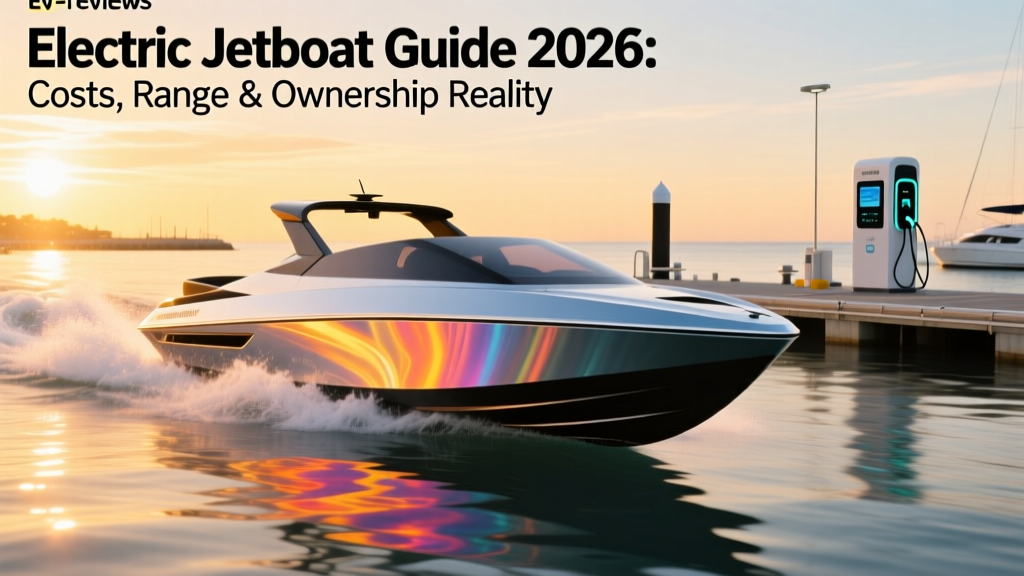
Electric jetboats remain a niche, emerging category in 2026. Models like the Pure Watercraft Pure Jet and early prototypes from Candela (hydrofoiling electric vessels) offer zero-emission watercraft with ranges typically between 25-50 nautical miles depending on speed, battery capacity, and water conditions. However, electric jetboats currently face significant limitations: high upfront costs ($60,000-$150,000+), sparse marine charging infrastructure, and range constraints that make them suitable primarily for day-trip recreation on lakes or coastal areas with shore power access. For most buyers in 2026, electric jetboats are a premium eco-luxury rather than a practical replacement for gas-powered jet boats.
The Current State of Electric Jetboats
Unlike the electric vehicle market, which has matured significantly over the past decade, electric watercraft are still in early adoption phases. The term "electric jetboat" encompasses everything from small personal watercraft to larger passenger vessels using jet propulsion powered by battery-electric drivetrains.
As of 2026, the most notable offerings include:
- Pure Watercraft Pure Jet: A 20-foot electric jet boat with a 150 kW electric motor, 75 kWh battery pack (NMC chemistry), and claimed range of approximately 40 nautical miles at cruising speeds (20-25 knots).
- Candela C-8: While technically a hydrofoiling electric boat rather than a jetboat, Candela's 28-foot vessel uses a 69 kWh battery and electric motor to achieve up to 57 nautical miles at 22 knots, with hydrofoil technology reducing drag by 80%.
- Custom/prototype builds: Several shipyards offer electric conversions or custom electric jetboat builds, but these are low-volume and expensive.
The technology is real, but production volumes remain extremely low compared to electric cars. Most "electric jetboats" available in 2026 are either in limited production runs or available only through pre-order.
Electric Jetboat vs Gas Jet Boat: The Numbers
| Factor | Electric Jetboat (Pure Jet Example) | Gas Jet Boat (Scarab 215 Example) |
|---|---|---|
| Base Price | $89,000 | $52,000 |
| Power Output | 150 kW (~201 HP) | 250 HP (rotax engine) |
| Range (cruising speed) | ~40 nautical miles | ~150-200 nautical miles |
| Fuel/Energy Cost per Hour | $8-12 (electricity at $0.15/kWh) | $35-50 (gas at $4.50/gal, 8-10 GPH) |
| Maintenance (annual) | $500-800 (minimal moving parts) | $1,500-2,500 (engine, impeller, fluids) |
| Noise Level | Near-silent | 75-85 dB |
| Emissions | Zero direct emissions | CO₂, NOx, hydrocarbons |
The cost comparison reveals the core trade-off: electric jetboats command a 70-80% price premium upfront but offer significantly lower operating costs. However, the range gap is substantial. A gas jet boat can cruise 150+ nautical miles on a tank, while electric models max out around 40-50 nautical miles under optimal conditions.
Real-World Range: What the Specs Don't Tell You
Just like electric cars, electric jetboat range claims require real-world context. Several factors dramatically impact actual range:
- Speed sensitivity: Watercraft energy consumption scales with the cube of speed. Running at 30 knots instead of 20 knots can reduce range by 50-60%.
- Water conditions: Choppy water, currents, and wind increase drag and energy consumption by 20-40%.
- Weight load: Passenger count, gear, and fuel/battery weight affect efficiency.
- Battery chemistry and thermal management: Most marine batteries use NMC (nickel manganese cobalt) chemistry for energy density. Cold water temperatures (below 50°F) can reduce usable capacity by 10-15%.
- Regenerative capabilities: Unlike EVs with regenerative braking, watercraft have limited opportunities to recapture energy.
For the Pure Watercraft Pure Jet with a 75 kWh battery, expect 30-35 nautical miles in real-world mixed-speed cruising, dropping to 20-25 nautical miles at sustained high speeds (30+ knots).
Charging Logistics: The Infrastructure Gap
This is where electric jetboat ownership gets complicated. Unlike electric cars, which can leverage a growing network of DC fast chargers and Level 2 stations, electric watercraft face a near-total lack of marine charging infrastructure.
Charging Options in 2026:
- Shore power (Level 2): Most marinas offer 30A or 50A shore power connections (3.6-12 kW). Charging a 75 kWh battery from 20-80% at 7.2 kW takes approximately 6-7 hours.
- DC fast charging: Virtually nonexistent at marinas as of 2026. Some prototype installations exist, but no standardized marine DC fast-charging network is operational.
- Trailer charging: You can charge the boat on its trailer using a home Level 2 charger or EV charger, but this requires hauling the boat out of the water.
For most electric jetboat owners, the practical charging workflow looks like this: use the boat during the day, trailer it home or to a marina with shore power, and charge overnight. This severely limits spontaneous multi-day trips or extended cruising.
Total Cost of Ownership: 5-Year Breakdown
| Cost Factor | Electric Jetboat | Gas Jet Boat |
|---|---|---|
| Purchase Price | $89,000 | $52,000 |
| Energy/Fuel (5 years, 100 hrs/year) | $5,000 | $22,500 |
| Maintenance (5 years) | $3,500 | $10,000 |
| Insurance (5 years) | $7,500 | $6,000 |
| Trailer (if needed) | $8,000 | $8,000 |
| Battery Replacement (if needed) | $15,000-20,000 (after 10+ years) | N/A |
| Total 5-Year Cost | $105,000 | $98,500 |
Over five years, the electric jetboat's operating cost savings ($17,500 in fuel and maintenance) partially offset the higher purchase price, but not enough to break even. The gap narrows with higher usage (200+ hours/year) or if gas prices rise significantly.
Tax incentives: Unlike electric cars, electric boats do not qualify for the federal §30D tax credit (which applies to highway-capable vehicles). Some states offer marine electrification incentives, but these are rare and typically limited to commercial vessels. Check with your state's environmental agency for current programs.
Common Misconceptions About Electric Jetboats
| Myth | Fact |
|---|---|
| "Electric boats are slow" | Modern electric jetboats can reach 30-40 knots (35-46 mph), comparable to gas equivalents. The Pure Jet hits 35 knots. |
| "You can charge at any marina" | Most marinas lack the electrical capacity for fast boat charging. Shore power is slow (6-8 hours for 20-80%). |
| "Electric boats are maintenance-free" | While the drivetrain requires less maintenance, you still need hull cleaning, impeller inspection, electrical system checks, and battery management. |
| "Batteries won't last" | Marine-grade NMC batteries are rated for 2,000-3,000 cycles before 80% capacity retention. With typical use (100 hours/year), that's 15-20 years of service. |
| "Electric boats are silent and therefore unsafe" | While quieter, electric boats are equipped with sound-emitting devices for harbor safety. Operators must remain vigilant for other watercraft. |
Who Should (and Shouldn't) Buy an Electric Jetboat in 2026?
Buy an Electric Jetboat If:
- You primarily boat on lakes or protected coastal areas with shore power access
- Your typical outings are under 30 nautical miles round-trip
- You have home charging capability (garage or driveway with 240V outlet and trailer storage)
- You value silent operation for wildlife observation, fishing, or noise-sensitive areas
- You're willing to pay a $30,000-$40,000 premium for zero-emission boating
- You boat in areas with emissions restrictions (some lakes ban gas-powered watercraft)
Stick With Gas (or Wait) If:
- You need range exceeding 50 nautical miles for cruising or multi-day trips
- You lack reliable shore power or home charging access
- You boat in remote areas with no electrical infrastructure
- You're on a budget under $70,000
- You prioritize resale value (electric boat depreciation is uncertain in this early market)
- You need towing capacity for water sports (electric boats can tow, but range drops significantly under load)
What First-Time Electric Boat Buyers Need to Know
If you're seriously considering an electric jetboat, here's your pre-purchase checklist:
- Audit your charging access: Can you charge at home (trailer + Level 2 charger) or at your marina (shore power)? Without reliable charging, ownership becomes impractical.
- Calculate your realistic range needs: Map your typical routes. If you regularly exceed 25 nautical miles one-way, current electric options won't work.
- Understand battery degradation: Marine batteries degrade similarly to EV batteries. Expect 10-15% capacity loss over 8-10 years. Warranty coverage varies—Pure Watercraft offers 5 years/2,500 hours on the battery pack.
- Factor in trailer costs: You'll likely need a trailer for transport and charging. Budget $7,000-$10,000 for a quality trailer with electric brakes.
- Check local regulations: Some waterways restrict or ban gas-powered watercraft, making electric boats the only option. Others have no specific electric boat infrastructure.
- Test before you buy: Production volumes are low, but some dealers offer demo days. Sea trials are essential to assess handling, noise, and real-world performance.
- Insurance considerations: Electric boats are still novel to insurers. Expect premiums 20-30% higher than equivalent gas boats due to repair complexity and battery replacement costs.
The Future: What's Coming in 2027-2030
Electric jetboat technology is advancing, but slowly. Expect incremental improvements rather than breakthroughs:
- Solid-state batteries: Projected for marine use by 2028-2030, offering 30-40% higher energy density and faster charging.
- Marine charging networks: Companies like Aqua SuperPower are installing DC fast chargers at select marinas, but widespread adoption is 5+ years away.
- Hydrofoil technology: Candela's hydrofoiling approach (lifting the hull above water to reduce drag) may become more common, extending range significantly.
- Price reductions: As battery costs continue declining (projected $100/kWh by 2028 vs. ~$140/kWh in 2026), electric boat prices should drop 15-25%.
For most buyers, waiting 3-5 years will yield better range, faster charging, and lower prices. But if your use case fits current limitations and you value zero-emission boating today, electric jetboats are a viable—if expensive—option.
Frequently Asked Questions
How long does it take to charge an electric jetboat?
Charging time depends on the charger type and battery size. For a 75 kWh battery at a marina with 7.2 kW shore power, expect 6-7 hours for a 20-80% charge. At home with a 11.5 kW Level 2 charger, you can fully charge overnight (8-9 hours). DC fast charging (if available) could reduce this to 1-2 hours, but marine DC fast chargers are extremely rare in 2026.
Can I use my EV home charger for an electric boat?
Yes, if you trailer the boat and park near your charger. Most electric boats use standard J1772 or marine-specific connectors. You may need an adapter. Ensure your home electrical panel can handle the load (typically 40-50A circuit for Level 2 charging).
What's the battery warranty on electric jetboats?
Pure Watercraft offers a 5-year/2,500-hour warranty on the battery pack, covering defects and capacity loss below 70%. Other manufacturers vary. Always review warranty terms carefully, especially capacity retention thresholds and hour limits.
Are electric jetboats allowed on all lakes?
Most lakes allow electric boats, and some (like Lake Tahoe) actually restrict or ban gas-powered watercraft, making electric boats the preferred option. Always check local regulations before purchasing.
How does cold weather affect electric boat range?
Cold water temperatures (below 50°F) reduce battery efficiency by 10-15%. If you boat in northern climates during spring/fall, expect reduced range. Battery thermal management systems help, but they consume energy. Store the boat in a climate-controlled environment when possible to preserve battery health.
Can electric jetboats pull water skiers or tubes?
Yes, but with caveats. The Pure Jet's 150 kW motor provides sufficient torque for towing, but high-load activities like water skiing drain the battery rapidly. Expect range to drop by 40-50% during towing sessions. Plan shorter outings or ensure you have charging access nearby.
What happens if the battery dies on the water?
This is a legitimate concern. Always monitor your state of charge and plan routes with a 20-30% buffer. Some electric boats offer auxiliary power or towing capabilities. Carry a marine radio and know your local towing services. Unlike gas boats, you can't carry a spare fuel can.
Electric jetboats represent a promising but still-maturing technology. For the right use case—short-range, shore-power-accessible, eco-conscious boating—they deliver a unique experience. For everyone else, gas-powered jet boats remain the practical choice in 2026. As battery costs fall and marine charging infrastructure develops, expect electric watercraft to become more viable for mainstream buyers by the early 2030s.