Quick Answer: Electric Jet Boats and the EV Market
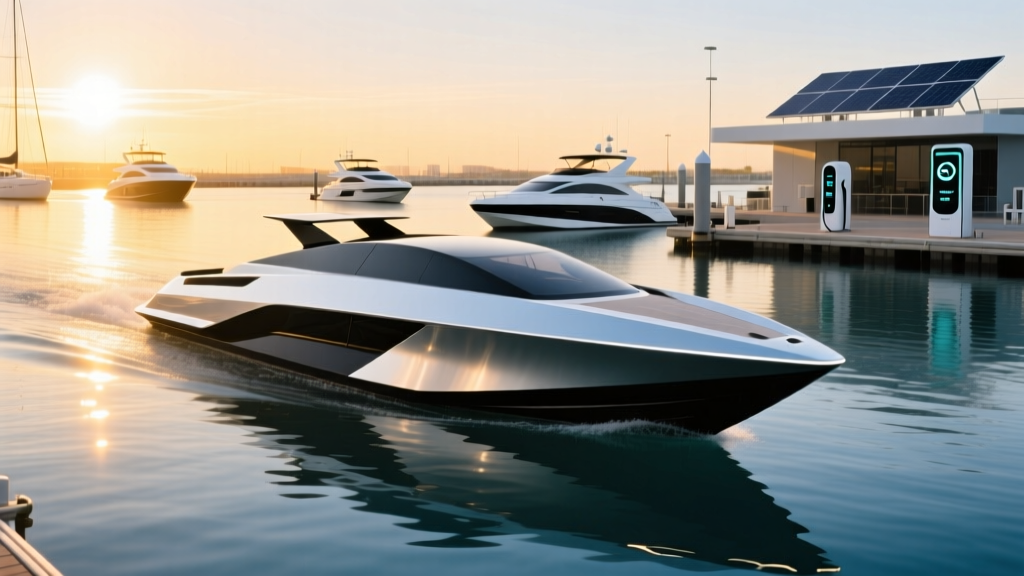
Electric jet boats for sale in 2026 remain a niche, emerging segment — not yet comparable in availability or infrastructure to electric cars. While brands like Navier, Flux Marine, and Edorado offer early electric marine options, most buyers will find limited inventory, prices starting around $80,000–$150,000+, and minimal public charging infrastructure at marinas. If you're an EV car owner exploring electric boats, this guide breaks down what transfers from automotive EV ownership — and what doesn't.
Why Electric Jet Boats Are Trending (But Still Rare)
The phrase "electric jet boats for sale" has seen growing search interest as EV technology expands beyond roads. Jet propulsion — using a water pump instead of an exposed propeller — pairs naturally with electric motors for quiet, shallow-water operation. However, the marine EV market in 2026 is where electric cars were circa 2012: early-adopter territory with premium pricing and incomplete infrastructure.
Unlike the automotive space, where you can choose from dozens of BEVs across every body style, electric jet boat options are limited to a handful of startups and boutique manufacturers. Production volumes are low, waitlists are common, and EPA's green vehicle resources don't yet cover marine applications the way they do cars.
Electric Jet Boat vs. Gas Boat: Cost and Performance Comparison
For buyers cross-shopping electric and gas jet boats, here's how the numbers stack up based on current market offerings:
| Factor | Electric Jet Boat | Gas Jet Boat |
|---|---|---|
| Base Price Range | $80,000–$250,000+ | $35,000–$120,000 |
| Range (typical cruise) | 40–80 nautical miles | 150–300+ nautical miles |
| Top Speed | 25–45 knots | 40–65+ knots |
| "Fuel" Cost per Hour (cruise) | ~$8–$15 (electricity) | ~$40–$80 (gasoline) |
| Annual Maintenance | ~$500–$1,500 | ~$2,000–$5,000 |
| Noise at Cruise | ~55–65 dB | ~80–95 dB |
| Refuel/Recharge Time | 2–6 hours (shore power) | 5–10 minutes |
Key takeaway: Electric jet boats win on noise, vibration, and operating cost — but lose significantly on range, recharge time, and upfront price. This mirrors the early EV car trade-offs, except marine charging infrastructure is far less developed than even rural DC fast-charging networks.
Real Costs of Electric Jet Boat Ownership
Understanding total cost requires looking beyond the sticker price. Here's a 5-year ownership projection for a typical electric jet boat versus a comparable gas model:
| Cost Category | Electric Jet Boat (~$120K) | Gas Jet Boat (~$65K) |
|---|---|---|
| Purchase Price | $120,000 | $65,000 |
| Energy/Fuel (5 years) | $5,500 | $30,000 |
| Maintenance (5 years) | $5,000 | $17,500 |
| Insurance (5 years avg) | $12,500 | $8,500 |
| Slip/Storage (5 years) | $15,000 | $15,000 |
| Total 5-Year | $158,000 | $136,000 |
| Estimated Resale (Year 5) | ~$72,000 (60%) | ~$32,500 (50%) |
| Net Cost After Resale | $86,000 | $103,500 |
Electric boats may retain value better in the near term due to scarcity and early-adopter demand, but depreciation data is thin — most current models haven't existed long enough for robust resale tracking. Insurance tends to run higher due to specialized repair requirements and battery replacement risk.
Charging an Electric Boat: What EV Car Owners Must Unlearn
If you charge an EV at home on a Level 2 (240V, ~11.5 kW) circuit, you might assume similar convenience applies to electric boats. It doesn't — at least not yet.
- Marina shore power typically provides 30A or 50A 120/240V AC — adequate for overnight trickle charging but not fast turnaround.
- DC fast charging for boats is essentially nonexistent at public marinas in 2026. No marine equivalent of Tesla Superchargers or Electrify America exists.
- Battery capacity on electric jet boats typically runs 60–200 kWh (comparable to 1–3 EV batteries), meaning a full recharge from empty can take 6–18 hours on standard shore power.
- No NACS/CCS standard: Marine charging connectors aren't standardized the way automotive connectors are. Each manufacturer may use proprietary systems.
For EV car owners used to 10–80% DC fast charges in 18–25 minutes, the marine reality is a significant adjustment. Plan trips around range, not around charging stops — because charging stops on the water essentially don't exist yet.
Decision Framework: Is an Electric Jet Boat Right for You?
If-Then Guide for Buyers
- If you boat primarily on lakes or protected waters within 30–40 miles of your slip → An electric jet boat's range is workable, and the quiet operation enhances the experience.
- If you need offshore range, high-speed runs, or multi-day trips → Stick with gas or diesel; electric marine tech isn't there yet.
- If you already own an EV and have home solar → Your marginal electricity cost is near zero, making the operating-cost advantage even stronger.
- If your marina lacks shore power or 240V access → Charging logistics will be a serious problem; verify infrastructure before purchasing.
- If you're budget-conscious and need a boat now → The used gas market offers far more inventory and lower entry prices.
- If you value silence, zero exhaust fumes, and minimal vibration → Electric propulsion delivers an experience gas cannot match.
Common Misconceptions About Electric Jet Boats
| Myth | Fact |
|---|---|
| "Electric boats qualify for the $7,500 federal EV tax credit." | The IRS §30D credit applies to qualified on-road vehicles — boats do not qualify. |
| "They're as easy to charge as an electric car." | Marine charging infrastructure lags automotive by over a decade. Shore power is slow; fast charging at marinas is rare to nonexistent. |
| "Electric motors can't match gas boat torque." | Electric motors deliver instant peak torque — acceleration feel is often superior. The limitation is sustained high-speed range, not torque. |
| "Batteries won't last in saltwater environments." | Marine-grade battery enclosures are IP67+ rated and sealed against corrosion. Longevity data is still limited, but engineering standards exist. |
| "You can solar-charge an electric boat fully." | Solar panels on a boat roof might add 1–3 kW — enough to trickle-charge or extend range slightly, not enough for full recharges on a 100+ kWh battery. |
What First-Time Electric Boat Buyers Should Know
Transitioning from a gas boat — or entering boating through the electric door — requires different homework than buying an EV car:
- Verify your marina's electrical capacity. Ask the dockmaster about available amperage (30A/50A/100A) and whether continuous overnight charging is permitted. Some marinas restrict high-draw loads.
- Ask about battery warranty and replacement cost. Marine EV batteries are expensive — $20,000–$50,000+ for replacement. Ensure the warranty covers at least 5–8 years with a stated capacity retention threshold (e.g., 70% at year 8).
- Understand range derating. Just as EV cars lose range in cold weather and at highway speeds, electric boats lose range in rough water, headwinds, and at planing speeds. A 60-mile rated range might drop to 35–40 miles at full throttle in choppy conditions.
- Check for state/local incentives. While federal EV credits don't apply, some states or local clean-water initiatives offer rebates for zero-emission marine vessels. Research your specific jurisdiction.
- Sea trial is mandatory. Range estimates vary wildly based on hull design, weight, and conditions. Always test in conditions similar to your typical use — calm lake mornings don't tell you what happens in afternoon chop.
Frequently Asked Questions
Are there electric jet boats for sale right now, or is it all vaporware?
Some are available for purchase or pre-order in 2026 — brands like Navier (hydrofoiling electric), Flux Marine (outboard electric motors), and a few European builders have deliverable products. However, inventory is extremely limited compared to gas boats, and many "available" listings are pre-order deposits with 6–18 month lead times.
How does electric boat range compare to an EV car's range?
Water resistance is far higher than rolling resistance on asphalt. A 100 kWh battery that gives a Tesla Model Y ~300 EPA miles on the road might deliver only 40–60 nautical miles in a planing hull boat. Efficiency is measured in kWh per nautical mile, not MPGe — and the numbers are much less favorable for marine use.
Can I use my home EV charger to charge an electric boat?
Possibly, if your boat is stored on a trailer at home. A Level 2 home charger (240V, 40–48A, ~11.5 kW) could charge a trailered boat overnight. But if the boat stays in a slip, you depend entirely on marina shore power — which may be limited to 30A or require adapters.
What happens if I run out of battery on the water?
Unlike a gas boat where you can carry spare fuel cans, an electric boat with a depleted battery requires a tow — same as a dead-battery EV car on the highway. Most electric boat manufacturers recommend keeping a 20% reserve, similar to the 80/20 rule for EV road trips. Some models include a small range-extender generator for emergencies.
Will electric jet boats get cheaper and more available?
Likely yes, over the next 5–10 years — following the same trajectory as EV cars. Battery cost per kWh continues to decline (below $100/kWh at the cell level in 2026), and as marine emissions regulations tighten in places like California and the EU, demand will push more builders to electrify. But 2026 buyers are paying early-adopter premiums.