Quick Answer: Is an Electric Jet Boat Right for You?
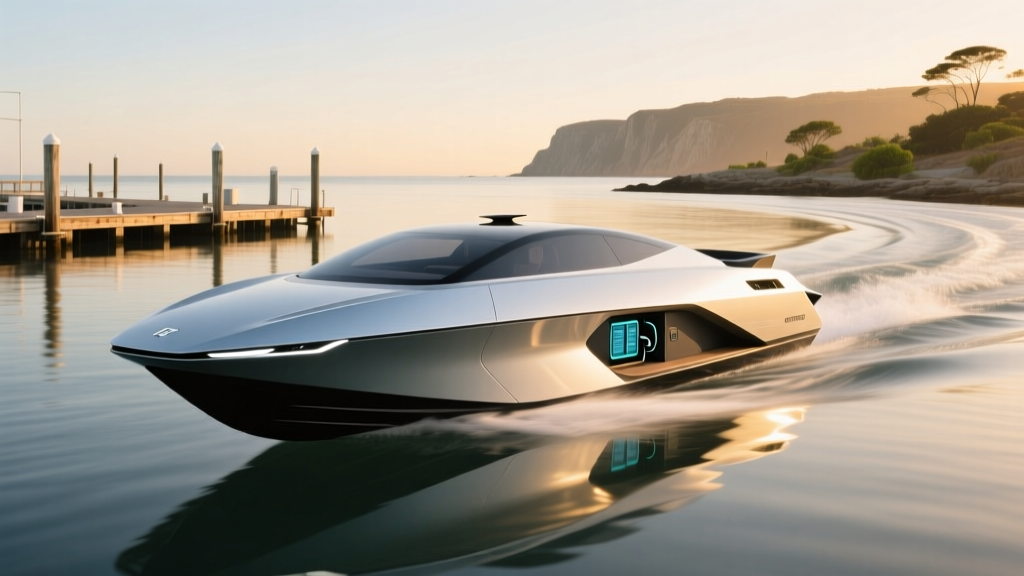
An electric jet boat uses a battery pack and electric motor to drive a waterjet propulsion system, eliminating the propeller and reducing underwater noise. As of 2026, most production electric jet boats offer 1.5 to 3 hours of runtime (roughly 20–50 miles depending on speed), with battery capacities ranging from 40 kWh to 120 kWh. Base prices start around $45,000 for day-cruisers and climb past $150,000 for performance models. They cost significantly less to "fuel" than gas counterparts—roughly $0.15–$0.30 per mile equivalent versus $0.60–$1.20 for gasoline—but require reliable dock or shore-power charging access. If your typical outing is under 3 hours, you have access to 240V shore power or a marina charger, and you value quiet operation and zero on-water exhaust, an electric jet boat is a practical choice. If you need all-day range, boat to remote areas without charging, or trailer long distances to lakes, a gas or hybrid boat remains the better option.
What Is an Electric Jet Boat — and What It Isn't
Before diving into specs, let's clarify what buyers actually get. An electric jet boat replaces the internal combustion engine (ICE) with one or more electric motors that spin a waterjet impeller. The energy comes from a lithium-ion battery bank—typically NMC (nickel manganese cobalt) chemistry in current models for its higher energy density, though some manufacturers are testing LFP (lithium iron phosphate) packs for cost and longevity trade-offs.
Unlike an electric car, an electric boat faces a unique physics problem: water is roughly 800 times denser than air, meaning hull drag is enormous compared to rolling resistance. This is why a 100 kWh battery that delivers 300+ miles in a car might only push a boat for 2–3 hours at cruising speed. Understanding this energy-density reality is the single most important thing a first-time buyer needs to internalize.
2026 Electric Jet Boat Specs: What the Market Actually Offers
The electric boat market in 2026 includes several established players and newer entrants. Here's a snapshot of representative models and their published specifications:
| Model | Battery (kWh) | Motor Power (kW) | Est. Runtime (hrs) | Top Speed (mph) | Base MSRP |
|---|---|---|---|---|---|
| Arc One (24-ft day boat) | 226 kWh | 350 kW | 3–4 (mixed use) | 40 | ~$300,000 |
| Candela C-8 (hydrofoil) | 69 kWh | 55 kW cruise | 2–2.5 | 30 | ~$420,000 |
| X Shore Eelex 8000 | 126 kWh | 225 kW | 2–3 | 35 | ~$340,000 |
| Vita LION (RIB jet) | 40 kWh | 80 kW | 1–1.5 | 28 | ~$95,000 |
| Frauscher x Porsche 850 Fantom Air | 100 kWh | 400 kW peak | 1–2 (performance) | 46 | ~$580,000 |
Note: Runtime varies enormously based on speed. Running at 8 mph (displacement speed) can double or triple the runtime compared to planing at 25+ mph. Manufacturers quote best-case mixed-use figures. Source: manufacturer specifications.
Electric Jet Boat vs. Gas Boat: The Real Cost Comparison
The sticker price of an electric jet boat is typically 2 to 4 times higher than a comparably sized gas-powered boat. The question is whether operating savings close the gap over time. Here's a realistic 5-year breakdown for a 22-foot day boat used 50 hours per year (roughly one outing per week during boating season):
| Cost Category | Electric Jet Boat | Gas Jet Boat |
|---|---|---|
| Purchase Price | $95,000 | $45,000 |
| Fuel/Energy (5 yrs, 250 hrs) | $2,250 (avg $9/hr at 15 kW) | $11,250 (avg $45/hr at 12 GPH × $3.75/gal) |
| Maintenance (5 yrs) | $1,500 (coolant, impeller inspection) | $6,500 (oil, filters, winterization, exhaust, impeller) |
| Insurance (5 yrs avg) | $12,500 | $8,500 |
| Charging Infrastructure | $3,000–$8,000 (dock 240V install) | $0 |
| Estimated Resale (Year 5) | –$57,000 (60% retained) | –$22,500 (50% retained) |
| Total 5-Year Net Cost | $57,250–$62,250 | $48,750 |
The electric boat saves roughly $14,000–$15,000 in fuel and maintenance over five years, but the higher purchase price and insurance premiums mean the gas boat still wins on pure economics for moderate-use owners. The gap narrows for high-use owners (100+ hours/year) or those with access to cheap or free marina electricity.
Charging an Electric Jet Boat: What You Actually Need
This is where many prospective buyers hit a wall. Unlike an EV that charges at home in a garage, a boat lives at a dock, on a lift, or on a trailer. Your charging options depend entirely on your storage situation:
Dock or Slip with Shore Power
If your marina offers 240V/50A shore power (common at modern marinas), you can install a marine-rated Level 2 charger delivering up to 12 kW. Charging a 100 kWh battery from 20% to full takes roughly 7–8 hours—overnight, which works perfectly for next-day use.
Trailer-Stored Boats
If you trailer your boat home, you'll need a dedicated 240V circuit (similar to a home EV charger install). Expect $2,000–$5,000 for a proper outdoor marine-grade charging setup including a GFCI-protected circuit, weatherproof enclosure, and a compatible charger like a 10–19 kW marine EVSE. A standard 120V household outlet will technically charge the boat but at only ~1.4 kW—meaning a full charge on a 100 kWh pack would take over 70 hours. That's not practical.
Remote or Off-Grid Lakes
If you boat at remote lakes without marina infrastructure, charging becomes a serious limitation. Some owners use portable generators as range extenders, but that negates the zero-emission benefit. There is currently no widespread public DC fast-charging network for boats comparable to Tesla Superchargers or Electrify America for cars.
Real-World Range: Why the EPA Sticker Doesn't Apply
Electric boats don't have EPA range stickers like cars, and manufacturers quote runtime in hours rather than miles—because water conditions change the energy equation dramatically. Here's what affects real-world range:
- Speed: This is the dominant factor. Energy consumption roughly follows the cube of speed for planing hulls. Doubling your speed can increase power draw by 6–8×. A boat that runs 4 hours at 8 mph might manage only 45 minutes at 30 mph.
- Hull type: Foiling hulls (like the Candela C-8) lift above the water at speed, cutting drag by up to 80% and dramatically extending range. Conventional planing hulls are far less efficient.
- Water conditions: Choppy water, headwinds, and currents increase energy consumption by 15–30% compared to calm, flat water.
- Payload: Every additional passenger and gear adds weight the hull must push through water. A fully loaded boat may see 10–20% less runtime than a solo operator.
- Temperature: Battery performance drops in cold water (below 50°F/10°C), reducing usable capacity by 5–15%. This matters for spring and fall boating in northern latitudes.
Common Electric Jet Boat Misconceptions
| Myth | Fact |
|---|---|
| "Electric boats are silent and therefore unsafe—other boaters won't hear you." | Electric boats are quiet at idle but produce significant wind and water noise at speed. Most are equipped with sound-signaling devices and horn systems required by the U.S. Coast Guard. |
| "The battery will need replacing every few years, costing a fortune." | Marine-grade NMC packs are rated for 3,000+ charge cycles to 80% capacity. At 50 cycles per year, that's 60+ years of use before significant degradation. Most manufacturers offer 8–10 year battery warranties. |
| "You can't go fast in an electric boat." | The Frauscher x Porsche 850 Fantom Air hits 46 mph on electric power. Electric motors deliver instant torque, making acceleration brisk. Sustained top-speed running drains the battery quickly, however. |
| "Electric boats qualify for the $7,500 federal EV tax credit." | The IRS §30D Clean Vehicle Credit applies to highway-capable motor vehicles, not boats. Electric boats do not qualify for the federal EV tax credit. Some states offer separate incentives for electric marine vessels—check your state's energy office. |
| "Charging a boat is just like charging a car." | Marine charging requires waterproof, GFCI-protected connectors and corrosion-resistant hardware. You cannot plug a standard J1772 EV charger into a boat. Marine-specific EVSEs (like those from NMEA-certified manufacturers) are required. |
Tax Credits, Incentives, and the Electric Boat Buyer's Wallet
Unlike electric cars, electric boats sit outside the IRS §30D federal tax credit framework. That credit is specifically for light-duty highway vehicles meeting MSRP caps ($55,000 for sedans, $80,000 for SUVs/trucks/vans), buyer income limits, and battery-sourcing requirements. A boat does not qualify.
However, some states and localities offer their own incentives:
- California: The Clean Off-Road Equipment Voucher Incentive Project (CORE) has historically included marine vessels, though funding availability varies by fiscal year.
- Washington State: Some utility districts offer rebates for electric marine equipment through their conservation programs.
- Marina incentives: A growing number of marinas offer free or discounted charging for electric boats as a membership perk.
Always verify current incentive availability with your state energy office or local utility before factoring rebates into your purchase decision.
Decision Framework: Should You Buy an Electric Jet Boat?
Choose an Electric Jet Boat If:
- Your typical outing is under 3 hours at mixed speeds
- You have reliable access to 240V shore power at your dock or home
- You boat on lakes with noise restrictions or in no-wake zones where electric silence is an advantage
- You value zero on-water exhaust (no fumes in the cockpit, cleaner for swimming)
- You're willing to pay a premium upfront for lower operating costs and a premium experience
- You use your boat 50+ hours per year, making fuel savings meaningful
Stick With Gas (or Wait) If:
- You regularly boat for 4+ hours without returning to a dock
- You boat at remote lakes without charging infrastructure
- You need to water-ski or wakeboard at sustained high speeds (heavy energy drain)
- Your budget is under $50,000 total
- You trailer your boat to different bodies of water frequently and can't guarantee charging access
- You need a boat for commercial use or charter with unpredictable schedules
What a First-Time Electric Boat Buyer Must Know
If you're crossing over from a gas boat or buying your first boat and considering electric, here are the non-obvious realities that experienced electric boat owners will tell you:
1. Plan your charging before you buy the boat. The boat is only as useful as your ability to recharge it. Confirm your marina allows and supports 240V charging installations. Get a quote from a marine electrician before signing a purchase agreement.
2. Budget for the charger separately. Unlike cars, where home chargers cost $500–$700, marine-grade charging equipment runs $1,500–$4,000 for the hardware alone, plus installation.
3. Understand your battery warranty. Most marine battery warranties guarantee 70–80% capacity retention over 8–10 years or a specific number of cycles. Read the fine print: some warranties are prorated, meaning your replacement reimbursement decreases each year.
4. Factor in insurance premiums. Electric boats are newer to insurers, and repair costs for battery damage or water intrusion into high-voltage systems can be steep. Expect insurance premiums 30–50% higher than an equivalent gas boat. Get quotes before purchasing.
5. Cold-water storage matters. If you boat in a seasonal climate, storing a lithium-ion battery pack over winter requires maintaining a 40–60% state of charge and, ideally, temperature-controlled storage. Leaving a fully charged or fully depleted pack in freezing temperatures can cause permanent degradation.
Frequently Asked Questions
How long does an electric jet boat battery last before replacement?
Marine-grade lithium-ion packs are engineered for 3,000–5,000 charge cycles to 80% capacity. At typical recreational use of 30–60 cycles per year, the battery should outlast the boat's usable life. Full battery replacement, if needed, costs $15,000–$40,000 depending on capacity.
Can I charge an electric boat from a standard household outlet?
Technically yes, but impractically. A 120V/15A outlet delivers about 1.4 kW—meaning a 100 kWh battery would take over 70 hours to charge. You need a 240V circuit (minimum 30A, ideally 50A) for overnight charging.
Are electric jet boats safe in saltwater?
Modern electric boats designed for marine use are built with sealed, IP67-rated battery enclosures and corrosion-resistant wiring. Saltwater use is fine with proper maintenance (freshwater rinsing, anode inspection). However, saltwater environments accelerate corrosion on any electrical connections—factor in slightly higher maintenance vigilance.
Do electric boats qualify for any federal tax incentives?
No. The IRS §30D Clean Vehicle Credit applies only to highway motor vehicles. Electric boats are not eligible. Check your state energy office or local utility for marine-specific rebates.
What happens if I run out of battery on the water?
Unlike a gas boat that can be refueled from a jerry can, a depleted electric boat must be towed back to a charger. Most electric boats have a reserve "limp mode" that limits speed to 3–5 mph to extend the last few percent of charge and allow you to motor slowly back to shore. Carry a marine tow membership (like Sea Tow or BoatUS) as a safety net.
How does electric jet propulsion compare to a propeller?
Jet drives use an impeller to draw water in and expel it through a nozzle, providing thrust. They're safer for swimmers (no exposed propeller), shallower-draft capable, and more maneuverable at low speeds. However, jets are typically 10–15% less efficient than propellers at converting motor power to thrust, which matters when every kWh counts.