The Short Answer: Yes, With Caveats
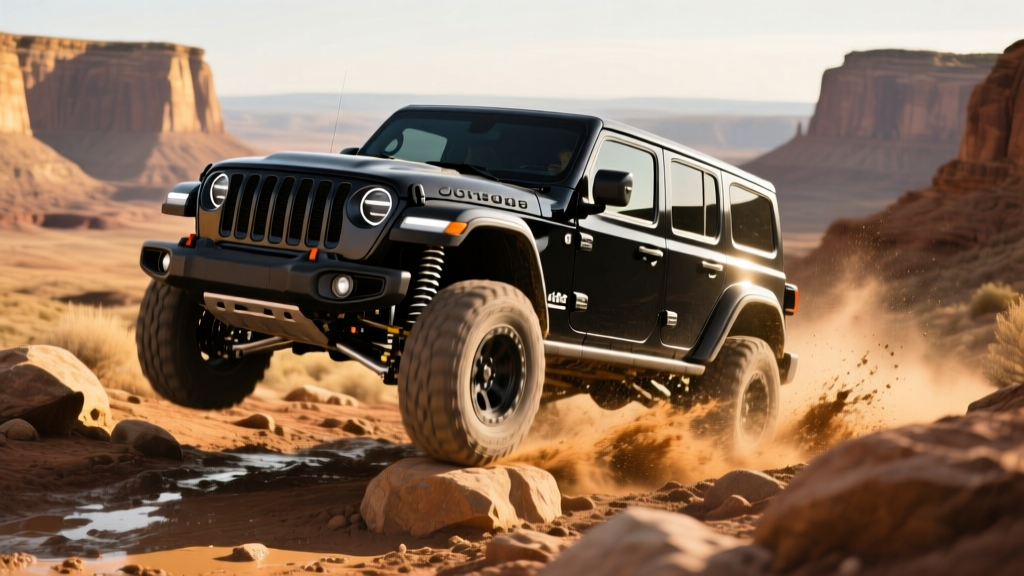
Electric Jeeps can go off-roading, and they bring genuine advantages to the trail — instant torque at low RPMs, precise throttle modulation for rock crawling, and a low center of gravity from the under-floor battery pack. But the real question isn't whether they can; it's whether the current lineup matches your specific use case.
As of 2026, Jeep offers two electrified paths for off-road buyers:
- Wrangler 4xe (PHEV): A plug-in hybrid with ~22 miles of electric-only range, 375 hp, 470 lb-ft of torque, and a conventional gas engine for extended trail days. Base MSRP starts around $51,795.
- Jeep Recon (BEV): A fully electric, body-on-frame SUV with an EPA-estimated range near 300 miles, Selec-Terrain traction management, and electronic locking differentials. Expected base MSRP: ~$52,000–$56,000.
If your off-roading involves day trips within 60–80 miles of home with charging access, either platform works. If you're running multi-day backcountry expeditions in remote areas with zero charging infrastructure, the 4xe's gas backup remains the safer bet.
Which Electric Jeeps Actually Exist in 2026?
Jeep's electrification strategy has produced two distinct off-road-capable vehicles. Understanding the difference is critical before you visit a dealer.
Wrangler 4xe: The Proven Plug-In Hybrid
The Wrangler 4xe pairs a 2.0L turbocharged inline-four with two electric motors and a 17.3 kWh (usable) lithium-ion battery pack. It's been on sale since 2021 and has accumulated real-world trail credentials. Key specs for the 2026 model year:
- Combined output: 375 hp / 470 lb-ft torque
- EPA electric-only range: 22 miles
- EPA combined (gas+electric): ~49 MPGe
- Gas-only fuel economy: ~20 MPG combined
- Ground clearance: 10.8 inches (Rubicon trim)
- Water fording: 31.5 inches
- Battery warranty: 8 years / 100,000 miles
- Level 2 charge time (0–100%): ~2.5 hours at 7.2 kW
Jeep Recon: The All-Electric Trail Rig
The Recon rides on Stellantis' STLA Large platform and is engineered specifically for off-road duty — not just a compliance EV wearing Jeep badges. Confirmed and estimated specifications:
- Estimated output: ~400+ hp (dual-motor AWD)
- EPA-estimated range: ~280–300 miles
- Battery: ~100 kWh (NMC chemistry), estimated
- DC fast charging: Up to 175 kW peak, 10–80% in ~28 minutes (estimated)
- Ground clearance: ~11 inches (estimated)
- Features: Electronic front/rear lockers, Selec-Terrain, one-pedal trail driving mode, removable doors/glass
Source: Jeep Recon official page
Electric Torque vs. Gas Engines on the Trail
This is where electric drivetrains shine — and where the data tells a clear story.
| Factor | Electric / PHEV (4xe or Recon) | Gas-Only (Wrangler 3.6L V6) |
|---|---|---|
| Peak torque availability | Instant from 0 RPM | Requires ~3,000–4,500 RPM |
| Low-speed throttle precision | Excellent — millimeter-level motor control | Good, but requires clutch/brake modulation |
| Engine braking / descent control | Regen braking provides strong, adjustable deceleration | Relies on low-range gearing and hill-descent control |
| Noise on trail | Near-silent in EV mode (4xe) or fully (Recon) — better wildlife awareness | Engine noise constant |
| Weight | Heavier (~5,000–5,500 lbs curb) — affects soft sand/mud flotation | Lighter (~4,400 lbs curb) |
| Extended remote range | 4xe: 300+ miles total (gas+EV). Recon: ~280–300 miles EV only | ~350+ miles on a tank |
The instant torque advantage is not marketing fluff. On technical rock-crawling sections, electric motors deliver full torque without needing to spool up an engine, which means smoother, more controlled climbs. The 4xe's 470 lb-ft hits immediately; the gas V6 Wrangler produces 260 lb-ft and needs revs to get there.
However, the battery pack adds 600–800 pounds. On soft surfaces like deep sand or thick mud, that extra mass works against you. Experienced off-roaders compensate by airing down tires further to increase the contact patch.
Range Reality: What Happens When You Leave the Pavement?
EPA range estimates assume mixed driving on paved roads. Off-road conditions change the math significantly.
Real-World Range Expectations for Off-Road Use
Wrangler 4xe: The 22-mile EV range drops to roughly 14–18 miles on technical trails due to low-speed, high-load motor use. Once the battery depletes, the gas engine takes over — giving you a combined range of 300+ miles regardless of trail conditions.
Jeep Recon (BEV): The ~300-mile EPA estimate assumes highway and city driving. On sustained off-road use (low range, high torque demand, frequent stops/starts), expect a 30–45% range reduction. That translates to roughly 165–210 miles of trail range before you need a charger.
This is the central tension for all-electric off-roading: the harder you work the vehicle, the faster the battery drains. Cold weather (below 40°F) compounds this by another 15–25% due to reduced battery chemistry efficiency and cabin heating demands.
For context, the EPA's fueleconomy.gov listing for the Wrangler 4xe shows 49 MPGe combined — but that figure blends electric and gas operation under ideal conditions.
Charging on the Trail: Infrastructure Reality
This is where most EV off-roading discussions get hand-wavy. Let's be precise.
Trailhead Charging Availability
As of 2026, Level 2 chargers (7–19 kW) exist at some popular trailhead staging areas in states like Colorado, Utah, and California — but coverage is sparse and unreliable. DC fast chargers (50–350 kW) are essentially nonexistent at remote trailheads.
| Charging Method | Speed | Miles Added/Hour | Availability at Trails | Cost |
|---|---|---|---|---|
| Level 1 (120V household outlet) | ~1.4 kW | ~3–5 mi/hr | Anywhere with a standard outlet (campgrounds, cabins) | ~$0.12–0.18/kWh (residential rate) |
| Level 2 (240V portable or wall unit) | 7.2–11.5 kW | ~20–35 mi/hr | Limited — some trailheads, campgrounds, hotels | ~$0.15–0.30/kWh (public) or ~$0.12–0.18 (home) |
| DC Fast Charge | 50–175 kW | ~150–400 mi/hr | Very rare near remote trails; usually 30–60+ miles away | ~$0.30–0.55/kWh (public networks) |
| Portable solar generator / V2L | 0.2–0.4 kW | ~1–2 mi/hr | Self-contained, but extremely slow — emergency trickle only | Equipment cost: $800–$2,500 |
Practical advice: If you're taking the Recon on a trail day, plan to charge fully at home, drive to the trail, wheel all day, and drive home — all within that 165–210 mile trail-adjusted range. For multi-day trips, you need a confirmed Level 2 charging point at your campsite or destination, or you should choose the 4xe.
Total Cost Breakdown: Electric Jeep vs. Gas Wrangler
Let's compare five-year ownership costs for a realistic off-road buyer who drives 12,000 miles/year (including ~2,000 miles of trail use).
| Cost Category | Wrangler 4xe (PHEV) | Wrangler Rubicon (Gas V6) | Jeep Recon (BEV) |
|---|---|---|---|
| Base MSRP (2026) | $51,795 | $47,295 | $54,000 (est.) |
| Federal tax credit (§30D) | Up to $3,750 (partial — battery sourcing dependent) | $0 | Up to $7,500 (if sourcing/income/MSRP rules met) |
| Effective purchase price | ~$48,045 | $47,295 | ~$46,500 |
| Fuel/energy (5 years) | ~$6,800 (mix of electricity and gas) | ~$11,400 (gas at $3.50/gal, 20 MPG) | ~$4,200 (electricity at $0.15/kWh avg) |
| Maintenance (5 years) | ~$2,800 (oil changes + EV system) | ~$3,600 (oil, filters, plugs) | ~$1,500 (no oil, fewer moving parts) |
| Insurance (5 years avg) | ~$9,500 | ~$8,200 | ~$10,000 (est.) |
| Home charger install (Level 2) | $500–$1,500 (if needed) | $0 | $500–$1,500 |
| Estimated 5-year total | ~$68,145 | ~$70,495 | ~$63,700 |
Key takeaway: The Recon's higher MSRP is offset by the federal tax credit, lower fuel costs, and reduced maintenance. Over five years, it can cost $6,000–$7,000 less than a gas Rubicon — but only if you qualify for the full §30D credit and have reliable home charging. Always verify your eligibility against current IRS §30D requirements, including income caps ($150K single / $300K joint), MSRP limits ($80K for SUVs), and battery critical-mineral sourcing rules.
Common Off-Road EV Myths — Busted With Data
| Myth | Fact |
|---|---|
| "The battery will get damaged on rocks." | Both the 4xe and Recon use reinforced skid plates over the battery pack. The 4xe has proven this over 4+ years of real-world trail use. Jeep engineers the underbody for Trail Rated standards. |
| "You'll get stranded with no charging on the trail." | The 4xe has a gas engine — you won't strand. The Recon's ~165–210 mile trail range covers most day-trip trail systems. Planning is required, not impossible. |
| "Electric motors can't handle sustained low-speed crawling." | Electric motors are actually better at sustained low-speed, high-torque output than gas engines. There's no overheating clutch or stalling risk. Thermal management systems monitor motor temps. |
| "Water fording will destroy the battery." | EV battery packs are sealed to IP67 standards (submersion in 1 meter of water for 30 minutes). The 4xe is rated for 31.5 inches of water fording — identical to gas Wranglers. |
| "The extra weight makes it unsafe on steep inclines." | The low-mounted battery lowers the center of gravity compared to a gas Wrangler's higher fuel tank and engine. This improves rollover resistance on side slopes. |
Decision Framework: Which Electric Jeep Fits Your Trail Life?
Choose the Wrangler 4xe If:
- You take multi-day backcountry trips where charging infrastructure is uncertain or nonexistent
- You want a proven platform with years of real-world off-road data and an established aftermarket
- You daily-drive your Jeep and want EV commuting (22 electric miles covers many commutes) with gas-engine flexibility for weekends
- You value removable doors, a fold-down windshield, and the traditional Wrangler experience
- Your budget is $48,000–$60,000 depending on trim (Sahara vs. Rubicon)
Choose the Jeep Recon If:
- Your off-roading is primarily day trips within 80–100 miles of home with reliable charging at both ends
- You want zero tailpipe emissions on the trail and near-silent operation for wildlife awareness
- You prioritize lowest per-mile operating cost and qualify for the full $7,500 federal tax credit
- You're comfortable planning charging logistics and accept the range limitations of pure EV trail use
- You want the latest EV tech: one-pedal trail mode, OTA updates, and modern ADAS features
Stick With a Gas Wrangler If:
- You regularly run remote trails 200+ miles from the nearest charger
- You don't have access to home Level 2 charging (apartment, street parking)
- You tow heavy loads to the trailhead (gas Wrangler tows up to 3,500 lbs; 4xe is similar; Recon specs TBD)
- You want the lightest possible vehicle for sand dune running
First-Time EV Buyer Essentials for Off-Road Use
If the Recon or 4xe will be your first electrified vehicle, here's what you need to set up before your first trail run:
- Install a home Level 2 charger. A 240V / 48-amp hardwired unit (like a ChargePoint Home Flex or Wallbox Pulsar Plus) delivers ~11.5 kW, fully recharging the Recon overnight in ~9 hours. Budget $500–$700 for the unit and $800–$2,000 for electrician installation. A 200-amp electrical panel is usually required — older homes may need a $1,500–$3,000 panel upgrade.
- Download charging apps before you need them. PlugShare, ChargePoint, EVgo, and Electrify America apps show real-time charger status. For remote trail areas, check PlugShare filters for Level 2 availability near your destination before you leave.
- Understand the charge curve. DC fast charging peaks at the advertised kW rate only between ~10–50% state of charge. Above 80%, charging slows dramatically to protect battery chemistry. Plan your road-trip stops to charge from 10–80%, not 0–100%.
- Precondition the battery. If your Jeep offers battery preconditioning (routing the navigation to a DC charger activates it), use it. A warm battery charges faster and delivers more consistent power on cold-weather trail mornings.
- Carry a portable Level 1 charging cord. It's slow (~3–5 miles of range per hour), but a standard 120V outlet at a campground or ranger station can provide emergency range if plans go sideways.
Frequently Asked Questions
Can you rock crawl with an electric Jeep?
Yes. The instant torque delivery and precise throttle modulation of electric motors make them excellent for technical rock crawling. The Wrangler 4xe Rubicon has electronic locking front and rear differentials, a 4:1 low-range gear ratio, and an electronic sway-bar disconnect — identical hardware to the gas Rubicon. The Recon adds a one-pedal trail mode that uses regenerative braking for controlled descents without riding the brake pedal.
How far can an electric Jeep go off-road on a single charge?
For the all-electric Recon, expect 165–210 miles of actual trail use from its ~300-mile EPA rating, due to the high energy demands of low-speed, high-torque off-road driving. The Wrangler 4xe gives you 14–18 electric-only trail miles before the gas engine seamlessly takes over, extending total range to 300+ miles.
Is the Wrangler 4xe a real electric vehicle or just a hybrid?
The 4xe is a plug-in hybrid (PHEV), not a battery-electric vehicle (BEV). It has a 17.3 kWh battery that provides ~22 miles of pure electric driving, after which the 2.0L gas engine operates as a conventional hybrid. You plug it in to recharge the battery for EV mode, but it also runs on gasoline. This gives it flexibility that a pure EV doesn't have in remote areas.
Do electric Jeeps qualify for the federal tax credit?
It depends. Under current IRS §30D rules, the Wrangler 4xe qualifies for a partial credit (up to $3,750) because its battery components and critical minerals must meet specific North American sourcing thresholds. The Recon's credit eligibility (potentially up to $7,500) depends on final battery sourcing certification, your income (capped at $150K single / $300K joint), and the vehicle's MSRP (must be under $80,000 for SUVs). Always confirm eligibility with a tax professional before purchasing, as these rules are subject to legislative changes.
What happens if the battery dies on the trail?
In the 4xe, the gas engine automatically engages when the battery depletes — you won't notice any interruption. In the Recon (or any BEV), a depleted battery means you're stopped. This is why range planning matters: know your trail mileage, carry a satellite communicator for emergencies in areas without cell service, and never cut it close on range when heading into remote terrain.
Are electric Jeeps heavier? Does that matter off-road?
Yes. The 4xe weighs roughly 500–600 lbs more than a comparable gas Wrangler (~5,100 lbs vs. ~4,500 lbs curb weight). The Recon is expected to be similar or slightly heavier. On hard-pack trails and rock crawling, the extra weight is manageable and the low center of gravity actually helps stability. In deep sand or thick mud, extra weight reduces flotation — you'll need to air down tires further and may want to carry traction boards.
Can I install larger tires on an electric Jeep?
The 4xe has a robust aftermarket, and larger tire fitment follows the same principles as gas Wranglers (33s fit stock, 35s may need a lift). However, larger, heavier tires reduce EV range by 8–15% due to increased rolling resistance and rotational mass. The same applies to the Recon. Factor this into your range planning if you modify your vehicle.
Bottom Line: Plan Your Trails, Pick Your Platform
Electric Jeeps are legitimate off-road machines. The instant torque, silent operation, and precise control they offer on technical terrain represent a genuine performance advantage — not a compromise. The Wrangler 4xe has proven this for years, and the Recon extends the capability into a fully electric package.
The constraint isn't capability; it's energy logistics. Match the vehicle to your actual trail habits. Day trips near civilization? The Recon's zero-emission trail experience is compelling. Multi-day expeditions into the backcountry? The 4xe's gas-engine insurance policy is the pragmatic choice. Either way, you're getting Trail Rated hardware with electric drivetrain benefits that gas engines simply can't replicate at low speeds.