The 2026 Jaguar I-TYPE: What You're Actually Leasing
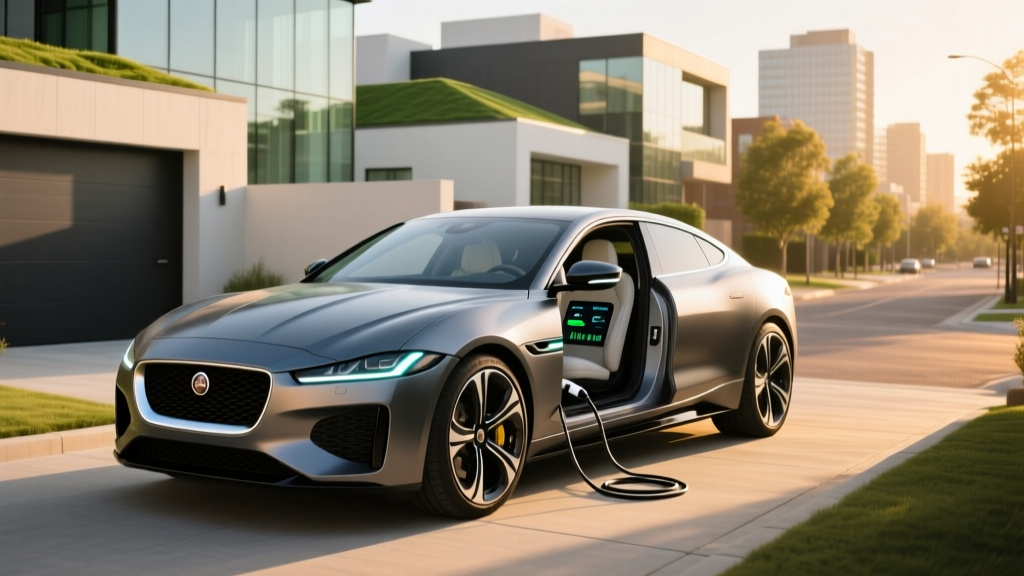
Jaguar's 2026 I-TYPE GT (formerly previewed as the Type 00 concept) marks the brand's full pivot to an all-electric luxury lineup. With a starting MSRP around $109,900, an EPA-estimated 370 miles of range from its ~120 kWh (usable) NMC battery, and a claimed 0–60 mph time under 4.0 seconds, it's a compelling luxury EV. But for buyers considering an electric Jaguar lease, the sticker price is only the starting point. Leasing introduces specific dynamics around tax credits, residual values, and end-of-lease obligations that differ meaningfully from buying.
This guide dissects the real math behind leasing Jaguar's new electric GT in 2026 — from monthly payments and fuel savings to insurance premiums and the federal incentive rules that may or may not apply to your lease.
| Spec | 2026 Jaguar I-TYPE GT (Est.) |
|---|---|
| Base MSRP | $109,900 |
| EPA Range | 370 miles |
| Real-World Range (highway/cold) | ~290–320 miles |
| Battery (usable) | ~120 kWh, NMC |
| Peak DC Fast Charge | ~250 kW |
| 10–80% DC Charge Time | ~25 minutes |
| Level 2 Charge Rate | 11 kW (AC) |
| 0–60 mph | ~3.8 seconds |
| Horsepower | ~550 hp (dual motor AWD) |
| Battery/Powertrain Warranty | 8 years / 100,000 miles |
Real-World Range Reality: The EPA 370-mile estimate assumes mixed driving at moderate temperatures. On sustained 75+ mph highway runs, expect ~310 miles. In sub-freezing winter conditions, that can drop to 260–290 miles depending on cabin heating load and whether the I-TYPE uses a heat pump (confirmed for the 2026 platform). Always precondition the battery before DC fast charging to hit that 250 kW peak — arriving cold will throttle charge speeds significantly.
5-Year Total Cost of Ownership: Lease vs. Buy Breakdown
Leasing an EV changes the cost calculus versus purchasing. When you lease, you don't capture the vehicle's residual value at the end — but you also don't bear the depreciation risk if EV resale values continue to soften. Here's a realistic 5-year comparison for the I-TYPE GT. Note that most Jaguar leases run 36 months, so a 5-year horizon assumes either a lease-then-purchase or two consecutive leases. The figures below model a purchase scenario for TCO baseline, with lease-specific notes called out.
| Cost Category | Purchase (5 Yr) | Lease Notes |
|---|---|---|
| Purchase/Lease Price | $109,900 | ~$1,450–$1,650/mo (36 mo, $10k down) |
| Federal Tax Credit (§30D) | Up to $7,500 (see eligibility) | Credit goes to lessor; may reduce payment |
| Charging (5 yr, 15k mi/yr) | $3,900–$5,100 | Same — lessee pays electricity |
| Insurance (5 yr avg) | $18,000–$22,500 | Same or slightly higher (gap coverage) |
| Maintenance (5 yr) | $1,800–$2,800 | Often included in lease term |
| Depreciation (5 yr) | $49,000–$60,000 | Baked into lease; you don't sell |
| Estimated 5-Year Total | $84,600–$98,200 | Varies by lease structure |
The purchase-side total reflects the federal credit applied, home charging at $0.16/kWh blended with some public DC fast charging at $0.40–$0.55/kWh, and premium-tier insurance. Depreciation remains the largest single cost for any luxury EV — and this is where leasing can insulate you from downside risk.
Federal Tax Credit §30D: Does It Apply to Your Jaguar Lease?
The federal EV tax credit under IRS §30D offers up to $7,500 for qualifying new clean vehicles. However, several rules determine whether you actually receive it — and leasing introduces a structural wrinkle.
- MSRP Cap: Vans, SUVs, and pickups are capped at $80,000 MSRP. Sedans and other body styles are capped at $55,000. The I-TYPE GT at ~$109,900 exceeds both caps for purchase credit eligibility.
- Income Limits: Modified AGI cannot exceed $300,000 (joint), $225,000 (head of household), or $150,000 (single).
- Battery Sourcing: Critical minerals and battery components must meet phased-in domestic/free-trade-partner percentages that tighten annually through 2029.
- Point-of-Sale Transfer: Since 2024, buyers can transfer the credit to the dealer for an immediate price reduction — but only if the vehicle qualifies.
- Commercial Lease Loophole (§45W): Vehicles leased through a qualified lessor may qualify under the separate commercial clean vehicle credit (§45W), which has no MSRP cap and no buyer income limit. The lessor receives the credit and may pass savings through as a reduced lease payment — but is not required to.
The practical reality for an electric Jaguar lease: Because the I-TYPE GT's MSRP exceeds the §30D purchase cap, buying outright will not qualify you for the $7,500 credit. However, leasing through Jaguar Financial may allow the lessor to claim the commercial credit under §45W. Whether that savings reaches your monthly payment depends on the lease offer. Always ask the dealer explicitly whether the lease factors in any federal incentive pass-through.
Charging vs. Gas: The Per-Mile Fuel Cost Reality
The I-TYPE GT's efficiency lands around 2.8–3.2 kWh per mile in mixed driving (roughly 105–115 MPGe). That's heavier and less efficient than a midsize EV sedan due to its 5,500+ lb curb weight and 550 hp output. Here's what that translates to in dollars:
| Scenario | Cost per Mile | Annual (15,000 mi) |
|---|---|---|
| Home charging ($0.16/kWh, 3.0 kWh/mi) | $0.048 | $720 |
| Blended (70% home, 30% DCFC at $0.48/kWh) | $0.076 | $1,140 |
| Premium gas equivalent (25 MPG, $4.20/gal) | $0.168 | $2,520 |
| Annual Savings (home-heavy) | $1,380–$1,800 vs. gas luxury GT | |
Over 5 years at 15,000 miles annually, home-dominant charging saves roughly $7,000–$9,000 versus a comparable gas-powered luxury grand tourer averaging 22–25 MPG on premium fuel. Those savings narrow if you rely heavily on public DC fast charging networks like Electrify America or EVgo, where rates can reach $0.50–$0.60/kWh in urban areas.
Maintenance Savings: Where EVs Actually Win
Electric drivetrains eliminate the most routine ICE service items. Over 5 years and 75,000 miles, the maintenance gap is substantial:
| Service Item | Gas Vehicle (5 yr) | Jaguar I-TYPE EV |
|---|---|---|
| Oil Changes | $750–$1,200 (10–15 changes) | $0 |
| Transmission Fluid | $200–$400 | $0 (single-speed reduction gear) |
| Brake Pads/Rotors | $1,200–$2,000 | $300–$600 (regen extends pad life 2–3×) |
| Spark Plugs | $400–$600 | $0 |
| Coolant Flush | $200–$300 | $150–$200 (battery thermal loop) |
| Cabin Air Filter | $150–$250 | $150–$250 |
| Tire Rotation/Replacement | $2,000–$3,500 | $2,500–$4,000 (EV weight + torque wears tires faster) |
| 5-Year Total | $4,900–$8,250 | $3,100–$5,050 |
Net maintenance savings run $1,500–$3,200 over 5 years. The caveat: EV tires wear faster due to instant torque and heavier curb weight. Budget for premium rubber (the I-TYPE GT likely wears 21–22 inch summer or all-season tires at $350–$500 per corner). Jaguar's included maintenance program during the lease term may cover cabin filters and tire rotations, reducing out-of-pocket costs further.
Insurance Cost Reality: The Uncomfortable Truth
EV insurance premiums run 15–30% higher than comparable gas vehicles, and luxury EVs like the I-TYPE GT sit at the upper end. Expect annual premiums of $3,600–$4,500 depending on your state, driving record, and coverage levels. Several factors drive this:
- Higher repair costs: EV-specific components (battery pack, power electronics, aluminum body structure) are expensive to replace. Minor collision damage near the battery enclosure can trigger full-pack replacements.
- Specialized labor: Fewer body shops have EV-certified technicians, raising labor rates on claims.
- Vehicle value: At $109,900+, comprehensive and collision premiums scale with replacement cost.
- Claims data: Early loss data for high-performance EVs shows higher severity claims, which insurers price in.
When leasing, Jaguar Financial will require full coverage with specific liability minimums and may mandate gap insurance (covering the difference between actual cash value and remaining lease obligation if the vehicle is totaled). Factor $200–$400/year for gap coverage on top of your base premium.
State & Local Incentives: Beyond the federal credit, many states and utilities offer additional EV incentives — but these vary dramatically by jurisdiction. California's CVRP has been restructured; Colorado offers a state tax credit up to $5,000 for qualifying EVs; various utility companies (PG&E, ConEdison, Xcel Energy) provide $500–$1,500 rebates for home Level 2 charger installation. Check your state's energy office and your utility's EV program page for current offers. These change frequently and often have funding caps. Consult a tax professional for your specific situation.
Depreciation & Resale: Why Leasing May Be the Smarter Play
Luxury EVs have faced steeper depreciation than their gas counterparts over the past three years. Data from iSeeCars and Kelley Blue Book shows 3-year EV depreciation averaging 45–55% versus 35–42% for luxury gas vehicles. Several dynamics are at play:
- Rapid tech obsolescence: Newer models with faster charging, longer range, and updated ADAS make 2–3 year-old EVs feel dated quickly.
- Price wars: Tesla's aggressive cuts and new entrants have compressed used EV values since 2023.
- Battery health uncertainty: Second buyers discount used EVs for unknown long-term battery degradation, even though most modern packs retain 85–92% capacity at 100,000 miles.
- Luxury segment volatility: Six-figure luxury cars historically depreciate steeply regardless of powertrain.
For the I-TYPE GT specifically, as a first-generation model from Jaguar's electric reinvention, residual value projections carry extra uncertainty. A 36-month lease with a guaranteed residual shifts that risk to the lessor. If EV values stabilize or Jaguar's brand cachet holds, you walk away cleanly. If they crater, you're not holding a $55,000 asset you paid $110,000 for.
That said, examine the lease's money factor (the interest rate equivalent) and residual percentage carefully. A 55% residual on a $109,900 vehicle means the lease accounts for ~$49,500 in depreciation over 36 months, plus finance charges. Compare this against the vehicle's likely actual market value at term-end.
Decision Framework: Should You Lease or Buy?
Choose an electric Jaguar lease if:
- You want to avoid luxury EV depreciation risk on a first-generation platform
- The dealer passes through a §45W commercial credit into the lease payment
- You prefer predictable monthly costs and plan to upgrade every 3 years
- Your annual mileage fits within typical lease limits (10,000–15,000 mi/yr)
Choose to purchase if:
- You find a competitive purchase incentive or dealer discount that offsets the lack of §30D eligibility
- You drive fewer than 10,000 miles/year and plan to keep the vehicle 6+ years
- You want unrestricted modification freedom (wrap, wheels, aftermarket)
- You have a specific state incentive that applies to purchases but not leases
Frequently Asked Questions
How much does a 2026 electric Jaguar lease actually cost per month?
Based on a $109,900 MSRP, a 36-month lease with $10,000 due at signing, a 55% residual, and a typical money factor of 0.0025 (equivalent to ~6% APR), expect monthly payments between $1,450 and $1,650 before taxes and fees. If the lessor passes through a commercial clean vehicle credit, that could reduce the capitalized cost by up to $7,500, lowering payments by roughly $200–$225/month.
Do I qualify for the $7,500 federal tax credit if I lease?
Under §30D purchase rules, the I-TYPE GT's MSRP exceeds the $55,000 sedan cap, so you would not qualify as a buyer. However, under the §45W commercial credit, the leasing company (as the vehicle's legal owner) may qualify. The lessor can — but is not required to — pass those savings to you as a lower lease payment. Always confirm with the dealer whether the advertised lease reflects any federal credit.
How much will I save on fuel versus a gas Jaguar?
If you charge primarily at home at $0.16/kWh, expect to spend roughly $720–$1,140 annually on electricity for 15,000 miles of driving. A comparable gas Jaguar F-Type or similar grand tourer at 22 MPG on $4.20 premium fuel would cost ~$2,860/year. That's $1,700–$2,100 in annual fuel savings, or $8,500–$10,500 over 5 years.
Are electric Jaguars more expensive to insure?
Yes. Expect premiums 15–30% higher than a similarly priced gas Jaguar. For the I-TYPE GT, budget $3,600–$4,500 annually for full coverage. Factors include higher repair costs for EV-specific components, limited EV-certified body shop availability, and the vehicle's high replacement value. Get quotes from at least three insurers before signing the lease.
What happens to the battery at the end of a 3-year lease?
Jaguar's battery warranty covers 8 years/100,000 miles with a minimum 70% capacity retention threshold. At the end of a 36-month lease (typically 30,000–45,000 miles), the battery should retain 93–97% of original capacity based on degradation curves from similar NMC packs. You won't face a battery replacement bill during a standard lease term, and the warranty transfers if you purchase at term-end.
Can I install a home Level 2 charger in my garage for the I-TYPE?
Yes, and you should. The I-TYPE accepts up to 11 kW on Level 2 AC, meaning a 48-amp dedicated circuit on a NEMA 14-50 or hardwired wall connector will add roughly 30–35 miles of range per hour of charging — enough to fully replenish the ~120 kWh battery overnight. Installation costs typically run $800–$2,500 depending on panel capacity and conduit distance. Have a licensed electrician assess your 200-amp service panel; a panel upgrade to 200A or higher can add $1,500–$3,500.