Quick Answer: Should You Buy an Electric Jaguar in 2026?
The 2026 Jaguar I-PACE delivers an EPA-estimated 246 miles of range from its 90 kWh usable battery, peaks at 100 kW DC fast charging (10–80% in approximately 45 minutes), and starts around $73,100. It qualifies for no federal §30D tax credit due to its MSRP exceeding the $55,000 SUV cap and non-compliant battery sourcing. Compared to a gas-powered Jaguar F-PACE (22 MPG combined), the I-PACE saves roughly $1,200–$1,800 annually in fuel at 12,000 miles/year, but higher insurance premiums and steeper upfront cost offset some of that gain. The I-PACE is best suited for luxury buyers who prioritize driving dynamics and design over maximum range or fastest charging speeds.
What Is the Electric Jaguar I-PACE?
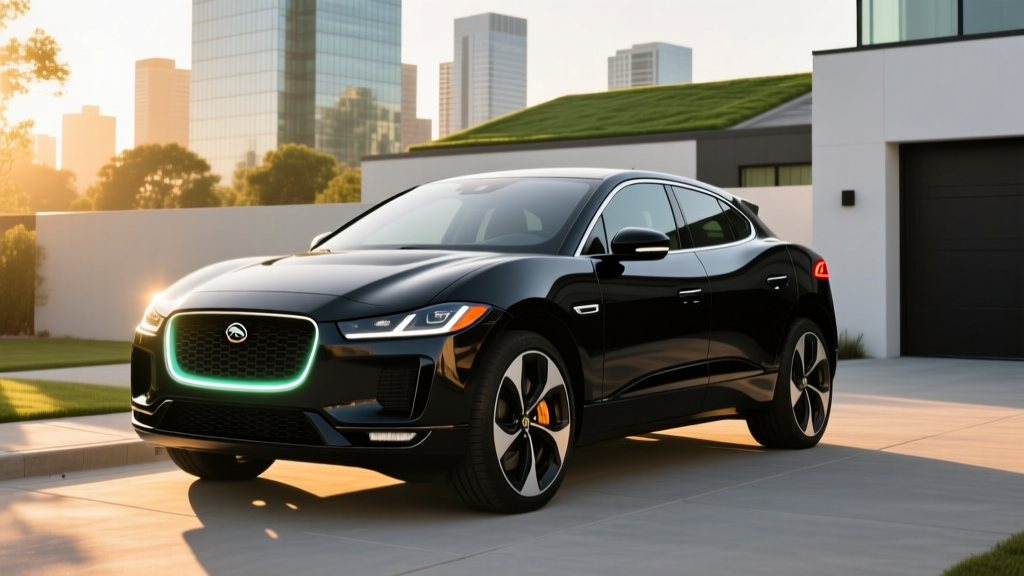
Jaguar's all-electric SUV has been in production since the 2019 model year and remains the brand's sole battery-electric vehicle (BEV) offering as of 2026. The I-PACE uses a dual-motor all-wheel-drive powertrain producing 394 horsepower and 512 lb-ft of torque, delivering a 0–60 mph time of 4.5 seconds. Its 90 kWh lithium-ion battery pack (NMC chemistry) provides the EPA-estimated 246 miles of range, with an efficiency rating of 76 MPGe combined (44 kWh/100 miles).
Unlike newer EV platforms built on dedicated skateboard architectures, the I-PACE uses a bonded aluminum structure adapted for electrification. This gives it excellent torsional rigidity and a low center of gravity, contributing to its reputation as one of the best-handling electric SUVs — but it also means interior packaging and charging speeds lag behind more recent competitors like the BMW iX or Genesis Electrified GV70.
Range, Charging, and Real-World Efficiency
| Specification | 2026 Jaguar I-PACE |
|---|---|
| EPA Range | 246 miles |
| Battery (usable) | 90 kWh, NMC |
| Efficiency | 76 MPGe / 44 kWh/100mi |
| Peak DC Fast Charge | 100 kW |
| 10–80% DC Charge Time | ~45 minutes |
| Level 2 (AC) Charge Rate | 11 kW (~7 hours 0–100%) |
| Connector | CCS1 |
| 0–60 mph | 4.5 seconds |
| Horsepower | 394 hp |
| Drivetrain | Dual-motor AWD |
Real-World Range Expectations
The EPA sticker says 246 miles, but real-world results vary significantly:
- Highway driving (70+ mph): Expect 200–220 miles. The I-PACE's aerodynamic drag and 4,784-lb curb weight reduce efficiency at sustained speeds.
- Cold weather (below 32°F): Range drops 20–30%, yielding approximately 170–195 miles. The I-PACE uses a resistive heater rather than a more efficient heat pump, which increases energy consumption in winter.
- City/mixed driving (moderate temps): 230–250 miles is achievable thanks to regenerative braking recapturing energy in stop-and-go traffic.
Source: EPA fueleconomy.gov
Charging Speed Reality
The I-PACE's 100 kW peak DC charge rate was competitive at its 2019 launch, but it now trails most luxury EV competitors. The Hyundai Ioniq 5 peaks at 240 kW; the BMW iX xDrive50 at 200 kW. On a 150 kW Electrify America or EVgo station, the I-PACE will never draw more than 100 kW, and its charge curve tapers significantly above 80% state of charge (SoC). A 10–80% session takes roughly 45 minutes — adequate for road trips with planned stops, but noticeably slower than the 18–25 minute sessions common in newer 800V-architecture EVs.
For daily use, Level 2 home charging at 11 kW replenishes the full 90 kWh battery in about 7 hours, making overnight charging straightforward for most commutes. A standard 240V/48A Level 2 home charger (such as a ChargePoint Home Flex or Wallbox Pulsar Plus) costs $500–$700 for the unit, plus $800–$2,500 for professional installation depending on your electrical panel's capacity and proximity to the garage.
Electric Jaguar vs. Gas Jaguar: Cost Comparison
| Factor | 2026 I-PACE (Electric) | 2026 F-PACE P250 (Gas) |
|---|---|---|
| Base MSRP | $73,100 | $47,800 |
| Federal Tax Credit (§30D) | $0 (MSRP & sourcing ineligible) | N/A |
| Effective Starting Price | $73,100 | $47,800 |
| Fuel/Energy Cost per Mile | $0.044 (at $0.14/kWh avg) | $0.159 (at $3.50/gal, 22 MPG) |
| Annual Fuel/Energy (12k mi) | $528 | $1,909 |
| Annual Savings vs. Gas | ~$1,381/year | |
| Maintenance (annual avg) | ~$400 (no oil, fewer brake jobs) | ~$850 |
| Insurance (annual avg) | ~$2,800 | ~$2,100 |
| 5-Year Total Energy + Maint. + Ins. | ~$18,640 | ~$24,295 |
The I-PACE saves approximately $1,381 per year in energy costs and $450 per year in maintenance compared to the gas F-PACE. Over five years, that's roughly $9,155 in operational savings. However, the $25,300 higher purchase price and approximately $3,500 in additional insurance costs over five years mean the I-PACE does not break even on total cost of ownership versus its gas sibling within a typical ownership period — unless you factor in intangible value like performance, silence, and home-charging convenience.
Compared to the BMW iX xDrive50 (EPA 324 miles, ~$87,000 MSRP, potentially eligible for partial credits), the I-PACE trades range and charging speed for a lower entry price and sharper handling dynamics. The Genesis Electrified GV70 (EPA 236 miles, ~$67,000) offers similar range at a lower price point but less cargo space.
Federal Tax Credit and Incentive Reality
§30D Federal Tax Credit Eligibility — 2026 Rules
The Jaguar I-PACE does not qualify for the federal EV tax credit under current IRS §30D rules. Here's why:
- MSRP Cap: SUVs must have an MSRP at or below $80,000. The I-PACE base price of $73,100 clears this threshold, but higher trims (HSE at ~$78,000) approach the limit.
- Battery Sourcing: The credit requires a percentage of critical minerals and battery components to be sourced from the U.S. or free-trade-agreement partners. Jaguar Land Rover's supply chain does not currently meet these thresholds for the I-PACE battery pack.
- Buyer Income Cap: Modified adjusted gross income must not exceed $150,000 (single) / $300,000 (joint). This applies to all EVs regardless of model.
- Point-of-Sale Transfer: Even if eligible, the credit can now be transferred to the dealer at purchase for an immediate price reduction — but ineligibility means this option is unavailable.
Some states offer additional rebates or tax credits that may apply. California's Clean Fuel Reward program, Colorado's state EV tax credit, and New York's Drive Clean Rebate are examples — but amounts and eligibility vary by jurisdiction and change frequently. Consult your state's energy or environmental agency, and discuss tax implications with a qualified tax professional before purchasing.
Real-World Ownership Considerations
Home Charging Access
The I-PACE is most practical for owners who can install a Level 2 (240V) home charger. Without home charging, relying solely on public DC fast charging at 100 kW peak means spending 45+ minutes at a station for each significant recharge — a meaningful inconvenience compared to EVs that charge in under 25 minutes. If you live in an apartment or condo without charging access, the I-PACE's slower charging speed makes it a less compelling choice versus a PHEV or a faster-charging BEV.
Climate and Driving Patterns
The I-PACE lacks a heat pump, relying instead on a resistive electric heater for cabin warmth. In sub-freezing climates, this draws heavily from the battery, compounding the natural range loss all EVs experience in cold weather. Owners in northern states (Minnesota, Maine, Colorado winters) should budget for 170–190 miles of real winter range and plan road trips accordingly. In mild climates (California, Texas, Florida), the I-PACE performs close to its EPA rating year-round.
Cargo and Practicality
The I-PACE offers 25.3 cubic feet of cargo space behind the rear seats and 51.0 cubic feet with seats folded — competitive with compact luxury SUVs but less than the BMW iX (35.5 / 77.9 cu ft). There is no front trunk (frunk); the space under the hood houses electronics and the HVAC system. For families needing maximum cargo room, the I-PACE's sporty roofline and packaging compromise utility.
Warranty and Battery Longevity
Jaguar covers the I-PACE battery with an 8-year/100,000-mile warranty guaranteeing at least 70% state of health (capacity retention). Independent long-term data on I-PACE battery degradation is more limited than for high-volume EVs like the Tesla Model Y, but NMC batteries of this generation typically show 10–15% degradation over 100,000 miles. Out-of-warranty battery replacement costs are estimated at $15,000–$22,000 based on current JLR service pricing — a significant financial exposure for second owners or high-mileage drivers.
Common Misconceptions About the Electric Jaguar
| Myth | Fact |
|---|---|
| "The I-PACE gets the $7,500 federal tax credit." | It does not. Battery sourcing and component requirements under §30D are not met for 2026. |
| "246 miles of range means I'll always get 246 miles." | Highway driving, cold weather, and terrain reduce real-world range to 170–230 miles depending on conditions. |
| "It charges as fast as other luxury EVs." | At 100 kW peak, the I-PACE charges roughly half as fast as 800V competitors like the Ioniq 5 or Porsche Taycan. |
| "Electric means zero maintenance." | Tires, cabin air filters, brake fluid, coolant, and wiper blades still require service. Regenerative braking extends pad life but doesn't eliminate it. |
| "The I-PACE is self-driving." | Jaguar's driver-assist features are SAE Level 2 — you must remain engaged and keep hands on the wheel at all times. |
Decision Framework: Is the Electric Jaguar Right for You?
Choose the Jaguar I-PACE If:
- You prioritize driving dynamics and steering feel over maximum range or fastest charging.
- You have reliable Level 2 home charging and a daily commute under 120 miles round-trip.
- You live in a moderate climate where cold-weather range loss is manageable.
- You value Jaguar's design language, interior materials, and brand cachet.
- You plan to keep the vehicle within the battery warranty period (8 years/100k miles).
Look at Alternatives If:
- You need 300+ miles of real-world range for frequent road trips → consider the BMW iX xDrive50 (324 mi EPA) or Tesla Model X (335 mi EPA).
- You want the fastest possible DC charging → the Hyundai Ioniq 5 (240 kW, ~18 min 10–80%) or Kia EV6 (239 kW) charge more than twice as fast.
- You need federal tax credit eligibility → the Tesla Model Y, Ford Mustang Mach-E, and Chevrolet Equinox EV may qualify depending on trim and sourcing.
- You lack home charging access → a PHEV like the Volvo XC60 Recharge (35 miles electric-only + gas backup) eliminates charging dependency.
- Cargo space is a priority → the BMW iX or Rivian R1S offer significantly more volume.
Frequently Asked Questions
Does Jaguar make any other electric vehicles besides the I-PACE?
As of 2026, the I-PACE is Jaguar's only production BEV. Jaguar has announced plans to transition to an all-electric lineup by 2025–2026 under its "Reimagine" strategy, with new models expected on the JEA (Jaguar Electric Architecture) platform, but specific production models, pricing, and availability remain preliminary and subject to change.
What does it cost to charge the I-PACE at home vs. public stations?
At the U.S. average residential electricity rate of approximately $0.14/kWh, a full 90 kWh charge costs about $12.60 — yielding roughly 246 miles for that price. Public DC fast charging networks (Electrify America, EVgo) typically charge $0.35–$0.55/kWh, making a full charge $31.50–$49.50. Home charging is dramatically cheaper, reinforcing the importance of Level 2 access for cost-effective ownership.
Is the I-PACE reliable compared to Tesla or other EVs?
Jaguar's overall brand reliability ratings from J.D. Power and Consumer Reports consistently rank below Tesla, Hyundai/Kia, and BMW. Common I-PACE complaints include software glitches, infotainment responsiveness, and occasional charging-system faults. The 5-year/60,000-mile bumper-to-bumper warranty provides some protection, but long-term ownership beyond the warranty period carries higher risk than with higher-volume manufacturers.
Can I use Tesla Superchargers with the I-PACE?
The I-PACE uses the CCS1 connector. Tesla has begun opening select Supercharger stations to non-Tesla EVs via a built-in CCS adapter (Magic Dock), but availability is limited to specific locations and requires the Tesla app for activation. You cannot use Tesla's NACS connector directly without an adapter, and JLR has not announced a factory NACS port for the I-PACE. For reliable public charging, plan around Electrify America, EVgo, and ChargePoint CCS networks.
What happens if the battery degrades significantly?
Jaguar's battery warranty guarantees at least 70% capacity retention for 8 years or 100,000 miles, whichever comes first. If the battery falls below this threshold within the warranty period, Jaguar will repair or replace it at no cost. Out-of-warranty replacement is estimated at $15,000–$22,000 — a figure that should factor into your ownership horizon and resale-value expectations.
Sources: EPA fueleconomy.gov, IRS §30D Clean Vehicle Credits, Jaguar USA I-PACE