The Quick Answer: GM's First Electric Car
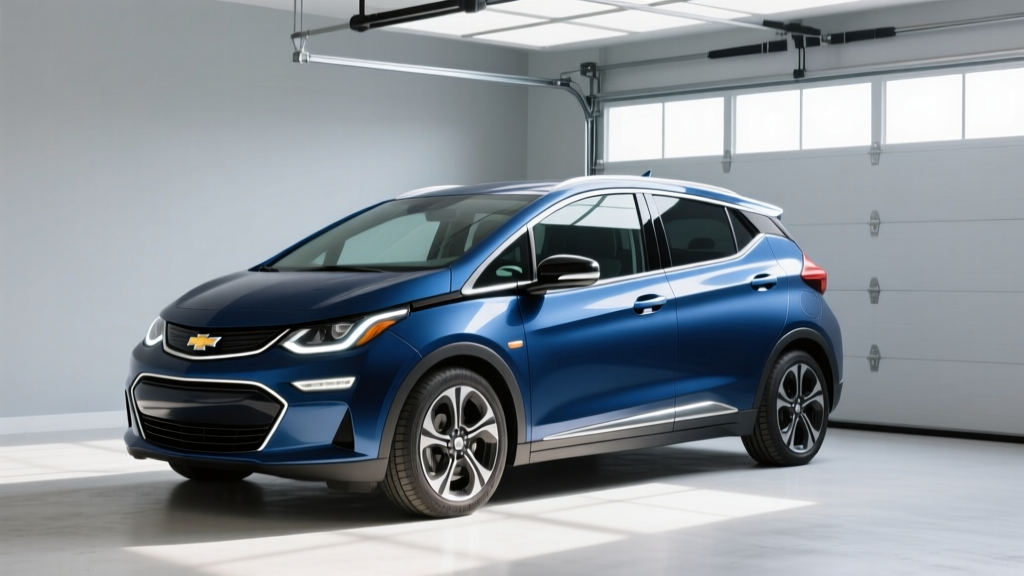
GM's first purpose-built electric car was the EV1, launched in December 1996 as a two-seat, front-wheel-drive coupe with a lead-acid battery (later upgraded to nickel-metal hydride) delivering 70–140 miles of range depending on the pack. It was available only by lease in California and Arizona, never sold outright, and controversially recalled and crushed by 2003. Today, GM's electric lineup has expanded to vehicles like the 2026 Chevy Equinox EV (EPA 319 miles, starting ~$34,600) and 2026 Chevy Blazer EV (EPA 324 miles, ~$44,600) — but the EV1's lessons about range expectations, charging infrastructure, and lease-versus-own dynamics still apply to every first-time EV buyer in 2026.
Why the EV1 Still Matters for Today's Buyers
If you're researching "GM first electric car" before shopping for a modern Chevy, Cadillac, or GMC electric vehicle, understanding the EV1 gives you a sharper lens on what has — and hasn't — changed in three decades of EV ownership.
The EV1 emerged from California's 1990 Zero Emission Vehicle (ZEV) mandate, which required automakers selling in the state to offer a percentage of zero-tailpipe-emission vehicles. GM invested roughly $1 billion in the program, engineering the EV1 from the ground up as a dedicated electric platform rather than a converted gas car. The result was a teardrop-shaped coupe with a drag coefficient of just 0.19 — still one of the most aerodynamic production cars ever built.
But the EV1 also exposed the exact pain points that 2026 buyers still navigate:
- Range limitations: The original lead-acid EV1 managed roughly 70 miles real-world — adequate for commuting, stressful for anything else. Even the later NiMH pack, rated around 140 miles, fell short of the freedom gas cars offered.
- Charging access: EV1 owners relied on a home inductive paddle charger (Magne Charge) and a sparse network of public stations that existed almost exclusively in Southern California.
- Ownership structure: GM only leased the EV1 — never sold it — meaning drivers had no equity, no battery warranty they could transfer, and no say when GM recalled and destroyed most of the fleet.
These aren't just history footnotes. They map directly onto the decisions you'll make buying a 2026 GM electric vehicle.
GM's 2026 Electric Lineup: How Far We've Come
GM's current Ultium-platform vehicles solve most of the EV1's original limitations, though each introduces new trade-offs. Here's how the core 2026 GM electric models stack up against the EV1's specs:
| Spec | EV1 Gen II (1999, NiMH) | 2026 Chevy Equinox EV (3LT AWD) | 2026 Chevy Blazer EV (RS AWD) | 2026 Cadillac Lyriqux (Luxury AWD) |
|---|---|---|---|---|
| Battery chemistry | NiMH (26.4 kWh) | NMC (Ultium, ~85 kWh usable) | NMC (Ultium, ~102 kWh usable) | NMC (Ultium, ~102 kWh usable) |
| EPA range | ~140 mi (est.) | 319 mi | 324 mi | 307 mi |
| Real-world highway range | ~90–110 mi | ~250–275 mi | ~260–280 mi | ~245–265 mi |
| Peak DC fast charge | None (no DC capability) | ~150 kW | ~190 kW | ~190 kW |
| 10–80% DC charge time | N/A | ~28 min | ~24 min | ~24 min |
| Horsepower | 137 hp | 288 hp | 557 hp (SS) | 500 hp |
| 0–60 mph | ~8.0 sec | ~7.5 sec | ~3.8 sec (SS) | ~4.6 sec |
| Starting MSRP | Lease only (~$449/mo) | $34,600 | $44,600 | $62,900 |
| Battery warranty | N/A | 8 yr / 100,000 mi | 8 yr / 100,000 mi | 8 yr / 100,000 mi |
Sources: fueleconomy.gov, Chevrolet EV configurator. Real-world highway range estimates reflect 70–75 mph sustained driving at 65–80°F; subtract 15–30% for cold weather below freezing.
Real Costs: EV vs Gas vs Hybrid in 2026
The EV1's total cost of ownership was opaque — lessees paid a monthly fee and had no fuel-cost benchmark because electricity pricing varied wildly by utility. In 2026, you can model this precisely.
| Cost Category (5 yr / 75,000 mi) | 2026 Equinox EV 3LT AWD | 2026 Equinox Gas (1.5T AWD) | 2026 Toyota RAV4 Hybrid (XLE AWD) |
|---|---|---|---|
| Purchase price (base MSRP) | $34,600 | $31,900 | $35,025 |
| Est. §30D federal credit | $0–$7,500* | $0 | $0 |
| Fuel / energy cost (national avg) | ~$3,750 (home L2, $0.16/kWh) | ~$8,900 ($3.40/gal, 28 MPG comb.) | ~$6,350 ($3.40/gal, 39 MPG comb.) |
| Maintenance (est.) | ~$1,800 | ~$4,200 | ~$3,500 |
| Insurance (est. avg) | ~$9,500 | ~$7,800 | ~$7,600 |
| 5-year depreciation (est.) | ~$18,000 | ~$14,500 | ~$15,000 |
| Est. 5-yr total cost | ~$31,650–$39,150 | ~$37,400 | ~$37,475 |
*§30D credit eligibility depends on buyer income caps ($150k single / $300k joint), MSRP caps ($55k SUVs), battery sourcing requirements, and point-of-sale transfer rules. Verify current-year rules at IRS.gov clean vehicle credits. The Equinox EV's credit status has fluctuated with sourcing rule changes — confirm before purchase.
The EV consistently wins on fuel and maintenance — no oil changes, no transmission fluid, fewer brake replacements thanks to regenerative braking. But insurance premiums for GM Ultium vehicles have run 15–25% higher than gas equivalents due to higher repair costs after collisions, and EV depreciation remains steeper in some segments. The break-even point typically falls between years 3 and 5, depending on your local electricity rates and annual mileage.
What First-Time EV Buyers Must Get Right
The EV1's owners learned these lessons the hard way. You don't have to.
Home Charging Is Non-Negotiable for Most Buyers
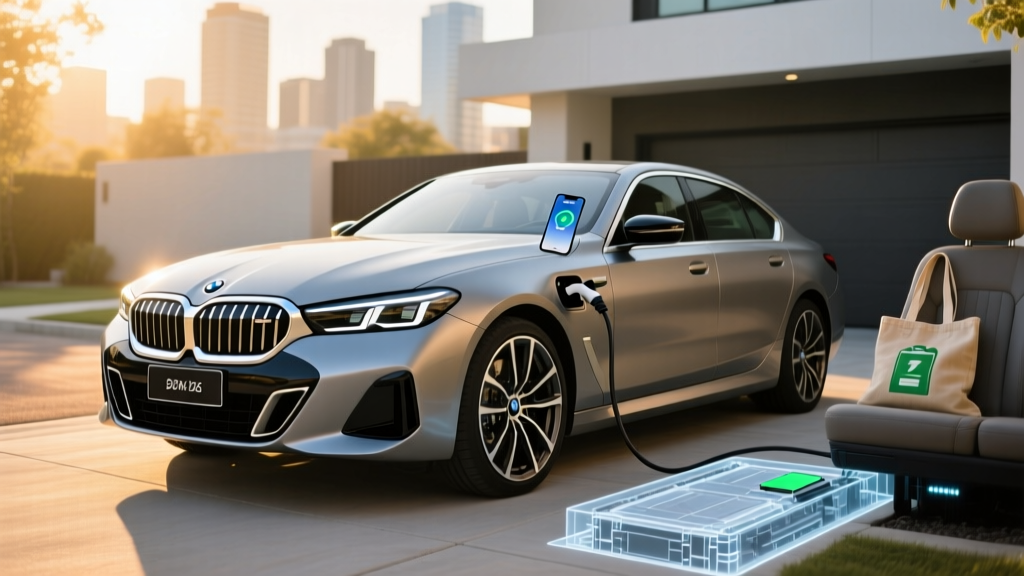
EV1 drivers in 1996 could only charge at home via the Magne Charge paddle or at a handful of public inductive stations. In 2026, public DC fast charging has expanded enormously — GM vehicles now use the NACS (Tesla-style) connector, granting access to the Supercharger network — but daily EV life still depends on home Level 2 charging.
Budget $800–$2,500 for a Level 2 home charger installation (40–48 amp, 240V circuit) if your electrical panel has capacity. If you need a panel upgrade from 100A to 200A, add $1,500–$3,500. Without home charging, you're effectively living the EV1's public-charging-only reality — manageable with planning, but a daily friction point.
Cold Weather Cuts Range 15–30%
The EV1's NiMH pack lost significant capacity in cold temperatures, a problem that shocked early lessees in Arizona's mild winter nights. Modern Ultium batteries use active liquid thermal management, but physics still applies: at 20°F, expect a 15–25% range reduction even with preconditioning. At 0°F, losses can reach 30%. A 319-mile Equinox EV becomes a ~225–250-mile car in deep cold. If you live in the northern tier, size your battery for winter, not summer.
DC Fast Charging Is Not What the Peak Number Suggests
The Equinox EV's "150 kW peak" charge rate applies only between roughly 10–30% state of charge. Above 50%, the charge curve tapers significantly — by 80%, you're pulling perhaps 40–60 kW. This is normal lithium-ion battery behavior to protect cell longevity, but it means a "10–80% in 28 minutes" claim is the realistic metric, not a sustained 150 kW rate. The EV1 never had this problem because it couldn't DC fast charge at all — but the lesson is the same: plan your road-trip stops around the 10–80% window, not 0–100%.
Common EV1-Era Misconceptions Still Circulating in 2026
| Myth | Fact |
|---|---|
| "GM killed the EV1 because EVs don't work." | GM recalled the EV1 primarily due to low lease volume, the cost of maintaining a niche support infrastructure, the impending relaxation of California's ZEV mandate, and parts-liability concerns. The technology worked — range and charging infrastructure were the real bottlenecks. |
| "EV batteries need replacement every few years." | The EV1's NiMH packs degraded, but modern NMC Ultium batteries carry an 8-year / 100,000-mile warranty against capacity loss below 60–70% of original. Real-world data from high-mileage Teslas and GM Ultium fleet vehicles shows typical degradation of 8–15% over 5 years. |
| "EVs are worse for the environment because of battery mining." | Lifecycle analyses from Argonne National Laboratory show that even on today's US grid mix, a midsize EV produces 50–70% fewer lifetime greenhouse gas emissions than a comparable gas car. As the grid decarbonizes, that gap widens further. |
| "You can't take an EV on a road trip." | With the NACS/Supercharger network, a 2026 Blazer EV can add ~200 miles of range in a 25-minute stop. A 600-mile trip that takes 9 hours in a gas car might take 10–10.5 hours in an EV — a meaningful but manageable difference. |
Your Decision Framework: Should Your Next Car Be a GM EV?
Choose a GM EV (Equinox EV, Blazer EV, Lyriq) if:
- You have access to home Level 2 charging (garage, driveway, or workplace charger)
- Your daily commute is under 80 miles round-trip (covers 90%+ of US drivers)
- You drive 12,000+ miles annually — the fuel savings compound with higher mileage
- You live in a region with moderate winters or can precondition while plugged in
- You qualify for the §30D credit, bringing effective Equinox EV pricing below $28,000
- You want Supercharger network access via NACS without an adapter
Choose a hybrid (RAV4 Hybrid, CR-V Hybrid, Equinox gas) if:
- You rely on street parking with no charging access
- You regularly drive 400+ miles in rural areas with sparse DC fast chargers
- You live in extreme cold (below 0°F regularly) and cannot garage your vehicle
- Your annual mileage is under 8,000 miles — the fuel-cost savings won't offset the EV price premium within 5 years
- You need maximum towing capacity (Silverado EV tows 10,000 lb but costs $60,000+; a gas Silverado 1500 is cheaper upfront for occasional towing)
Choose a PHEV (RAV4 Prime, Tucson PHEV) if:
- You want 30–42 miles of electric-only commuting but need gas flexibility for road trips
- You have home charging but also take frequent 300+ mile trips in charging-desert regions
- You want EV-like daily driving without any range or infrastructure anxiety
Frequently Asked Questions
What was GM's first electric car?
GM's first purpose-built electric car was the EV1, introduced in December 1996 as a 1997 model. It was a two-seat coupe available only by lease in California and Arizona. Approximately 1,117 units were produced across two generations (Gen I with lead-acid batteries, Gen II with nickel-metal hydride). GM discontinued and recalled the fleet by 2003.
Did any GM EV1s survive?
GM crushed or recycled most EV1s. A small number were donated to museums and universities with disabled powertrains — roughly 40 are known to exist in institutional collections. The Smithsonian holds one. No EV1s remain in drivable private ownership, making it one of the most controversial product discontinuations in automotive history.
Does the 2026 Chevy Equinox EV qualify for the $7,500 federal tax credit?
It depends. Under current IRS §30D rules, eligibility requires the buyer to meet income caps ($150,000 single / $300,000 joint AGI), the vehicle MSRP to stay under $55,000 (SUV classification), and the battery to meet critical-mineral and battery-component sourcing thresholds that change annually. The credit can be transferred to the dealer at point of sale as a price reduction. Check the latest eligibility list at fueleconomy.gov before purchasing, as sourcing compliance can shift model year to model year.
How does the NACS connector benefit GM EV owners?
Starting with the 2025 model year, GM adopted the North American Charging Standard (NACS) port natively on all Ultium EVs. This means 2026 Equinox EV, Blazer EV, and Lyriq owners can plug directly into Tesla Superchargers — the largest and most reliable DC fast-charging network in the US — without using a CCS-to-NACS adapter. This is a significant practical advantage over CCS-equipped competitors.
What is the real-world range of the 2026 Chevy Blazer EV?
The EPA rates the Blazer EV RS AWD at 324 miles. In real-world highway driving at 70–75 mph in moderate temperatures (65–80°F), expect approximately 260–280 miles. In cold weather (below 32°F), plan for 220–250 miles. For road-trip planning, use a conservative 250-mile figure and charge at 20% remaining — this gives you ~200 miles of practical range between stops.
Will GM's Ultium battery last the life of the car?
GM warranties the Ultium battery for 8 years or 100,000 miles against capacity loss below approximately 60–70% of original. Industry data from similar NMC chemistries suggests typical degradation of 10–15% over 150,000 miles. At that rate, a 324-mile Blazer EV would still offer roughly 275–290 miles of range at 150,000 miles — well within usable territory. Full battery replacement costs remain high ($12,000–$20,000 out of warranty), but complete failure before 200,000 miles is statistically rare in liquid-cooled packs.
Ownership costs and tax-credit figures reflect 2026 model-year data available at time of publication. Verify incentive eligibility with a tax professional and confirm current MSRP with your local GM dealer. Range and efficiency data sourced from EPA fueleconomy.gov.