The Short Answer on the Electric Infiniti Car
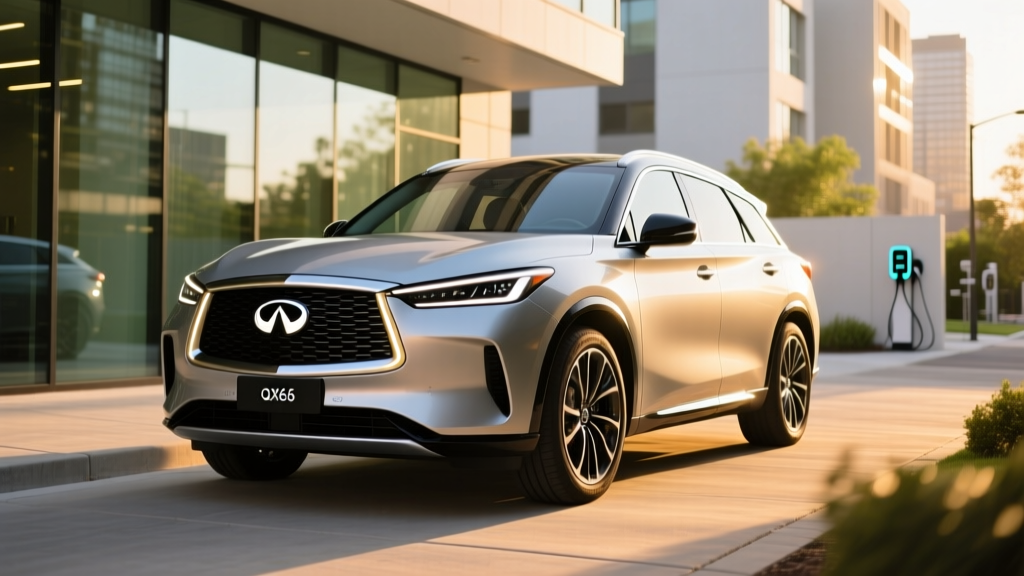
As of early 2026, Infiniti has not yet released a production electric vehicle for the U.S. market. The brand's first dedicated EV, the Infiniti QX60 EV (badged in some previews as the QX Inspiration successor), remains in announced/preliminary status with an expected on-sale window in late 2026 or 2027. Infiniti's parent company Nissan has confirmed an electrified product offensive, but buyers shopping for an electric Infiniti car today will need to wait or consider alternatives like the Genesis Electrified GV70, BMW iX, or Tesla Model X. Below, we break down everything confirmed so far about Infiniti's EV plans, projected specs, realistic ownership costs, and how to decide whether to wait or buy now.
What Infiniti Has Confirmed About Its EV Roadmap
Infiniti's electric ambitions trace back to the QX Inspiration concept (debuted 2019) and the Vision Qe sedan concept (2024). Nissan's broader "Ambition 2030" plan calls for 27 new models by fiscal 2030, including multiple EVs under the Infiniti luxury badge. The most likely first production electric Infiniti car for North America is a midsize luxury SUV built on the same platform as the next-generation Nissan Leaf and Ariya — potentially sharing Nissan's e-4ORCE dual-motor all-wheel-drive architecture.
However, Infiniti has been notably slow compared to luxury rivals. While Genesis, BMW, Mercedes-Benz, and Cadillac all have production EVs on sale, Infiniti's only electrified offering to date was the discontinued Q50 hybrid. If you need an electric luxury SUV today, Infiniti is not yet an option.
Projected 2026–2027 Infiniti QX60 EV Specs
Based on Nissan's announced platform details, supplier filings, and the Ariya's proven architecture, here are the estimated preliminary specifications for the first electric Infiniti SUV. These are not confirmed by Infiniti and should be treated as projections.
| Specification | Estimated (Preliminary) |
|---|---|
| Battery Capacity | ~91 kWh usable (NMC chemistry, based on Ariya e-4ORCE) |
| EPA Range (est.) | ~280–320 miles |
| Drivetrain | Dual-motor AWD (e-4ORCE) |
| Horsepower | ~389 hp (est., matching Ariya e-4ORCE) |
| 0–60 mph | ~5.0 seconds (est.) |
| DC Fast Charge (peak) | ~130 kW (CCS1, 10–80% in ~35 min est.) |
| Level 2 AC Charging | ~7.2 kW onboard charger |
| Connector | CCS1 (NACS adapter expected) |
| Estimated Base MSRP | $58,000–$65,000 |
| Battery/Powertrain Warranty | 8 years / 100,000 miles (est., per Nissan standard) |
Real-World Range Reality Check
If the QX60 EV lands near a 300-mile EPA estimate, expect ~240–260 miles on highway road trips at 70+ mph, and potentially ~200–220 miles in sub-freezing winter conditions. Cold weather reduces battery efficiency by 20–30% due to cabin heating demand and slower electrochemistry. The Ariya e-4ORCE, which shares similar hardware, is EPA-rated at 272 miles but averages closer to 230–250 miles in mixed real-world driving, per independent testing.
How an Electric Infiniti Would Compare to Gas and Hybrid SUVs
The current gasoline Infiniti QX60 starts around $51,000 and is EPA-rated at 20 city / 25 highway / 22 combined MPG. Let's compare the projected ownership economics of an electric Infiniti against the gas QX60 over five years and 75,000 miles.
| Cost Category | Gas QX60 (AWD) | Projected QX60 EV |
|---|---|---|
| Purchase Price (MSRP) | ~$53,000 | ~$62,000 (est.) |
| Federal Tax Credit (§30D) | $0 | $0–$7,500 (eligibility uncertain — see below) |
| Fuel / Electricity (75k mi) | ~$9,800 (at $3.60/gal, 22 MPG) | ~$3,400 (at $0.14/kWh, 3.0 mi/kWh) |
| Maintenance (5 years) | ~$3,200 | ~$1,200 (no oil, fewer brake jobs) |
| Insurance (est. avg/yr) | ~$1,900/yr | ~$2,200/yr (EV premium ~15%) |
| 5-Year Total Cost | ~$75,500 | ~$76,300 (before credit) |
| 5-Year Total (with max credit) | — | ~$68,800 |
Key takeaway: Without the federal tax credit, the EV and gas versions are nearly cost-neutral over five years. With the full §30D credit, the EV saves roughly $6,700. However, tax credit eligibility depends on battery sourcing, critical-mineral requirements, MSRP caps (under $80,000 for SUVs), and buyer income limits. Check current rules at IRS.gov §30D before counting on this savings.
Charging Speed: The Real Bottleneck for Infiniti's EV
Based on the Ariya platform's 130 kW peak DC fast-charge rate, an electric Infiniti would trail luxury competitors significantly:
| Vehicle | Peak DC kW | 10–80% Time | Connector |
|---|---|---|---|
| Projected Infiniti QX60 EV | ~130 kW | ~35 min | CCS1 (NACS adapter) |
| Genesis Electrified GV70 | 240 kW | ~18 min | CCS1 |
| BMW iX xDrive50 | 200 kW | ~31 min | CCS1 |
| Cadillac Lyriq | 190 kW | ~30 min | CCS1 |
| Tesla Model X | 250 kW | ~25 min | NACS (native) |
The Ariya's charging curve is conservative — it peaks near 130 kW only between 15–40% state of charge, then tapers significantly above 60%. On a road trip, this means 20–25 minute stops for meaningful range, versus 15–18 minutes in the Genesis or Tesla. If Infiniti adopts a newer platform with 800V architecture (as Nissan has hinted for future models), charging speeds could reach 200+ kW — but that's speculative for now.
Tax Credit Eligibility: What We Know and Don't Know
The federal §30D clean vehicle credit offers up to $7,500 for qualifying new EVs, available as a point-of-sale transfer since 2024. However, eligibility hinges on strict requirements:
- MSRP cap: SUVs must be under $80,000 (likely met by the QX60 EV)
- Buyer income limits: AGI under $150,000 (single), $225,000 (head of household), $300,000 (joint)
- Battery component sourcing: Increasingly strict North American assembly requirements phase in annually through 2029
- Critical minerals: Percentage thresholds for U.S.-sourced or FTA-partner minerals increase yearly
- Final assembly: Vehicle must undergo final assembly in North America
If Infiniti builds the QX60 EV at Nissan's Smyrna, Tennessee plant (where the Leaf and Ariya are produced), it would likely satisfy the final-assembly requirement. But battery cell sourcing — currently dependent on Envision AESC cells that may not meet critical-mineral thresholds — is the wildcard. Many Nissan EVs have seen their credit eligibility fluctuate quarter to quarter. Budget conservatively and verify at the point of sale.
Real-World Ownership Considerations
Before waiting for an electric Infiniti car, honestly assess your situation:
Home Charging Access
Level 2 home charging (240V, 32–48A) adds roughly 25–35 miles of range per hour and is essential for convenient daily ownership. Expect $800–$2,500 for a quality Level 2 charger plus professional installation, with potential panel-upgrade costs of $1,500–$3,000 if your home's electrical service is under 200A. If you lack a garage or dedicated parking, public charging dependency will add friction and cost.
Driving Patterns
If your daily commute is under 60 miles round-trip, even a conservative 250-mile real-world range covers days between charges. Frequent road-trippers covering 400+ miles in a day should weigh the ~35-minute charging stops against the convenience of a gas QX60's 470-mile tank range and 5-minute fill-ups.
Climate Impact
Owners in northern states (Minnesota, Michigan, Maine) should plan for 25–35% range reduction in sustained sub-30°F weather. A heat pump — standard on the Ariya and likely on the Infiniti — mitigates this somewhat but doesn't eliminate it.
Decision Framework: Should You Wait for Infiniti or Buy Now?
Choose to WAIT for the electric Infiniti if:
- You're loyal to the Infiniti brand and dealer network
- You don't need a new vehicle within the next 12–18 months
- Infiniti confirms competitive charging speeds (175+ kW) and a 300+ mile range
- The Smyrna-built model qualifies for the §30D credit at time of purchase
Choose to BUY NOW from a competitor if:
- You need a luxury electric SUV within 6 months
- Fast DC charging (sub-20 min 10–80%) is a priority for road trips
- You want proven reliability data and real-world owner reviews
- You want guaranteed access to Tesla Superchargers without an adapter
Best Alternatives Available Today
If you're shopping in the $55,000–$70,000 luxury electric SUV segment right now, these are the strongest options with confirmed specs and EPA data:
- Genesis Electrified GV70: 236 mi EPA, 240 kW charging, ~$66K, strong luxury interior
- Cadillac Lyriq: 314 mi EPA, 190 kW charging, ~$58K, excellent ride quality
- BMW iX xDrive50: 324 mi EPA, 200 kW charging, ~$87K, premium benchmark
- Tesla Model X: 335 mi EPA, 250 kW charging, ~$80K, best Supercharger network access
FAQ: Electric Infiniti Car Questions
Does Infiniti currently sell any electric car?
No. As of 2026, Infiniti has no production EV on sale in the United States. The Q50 hybrid was discontinued. The first electric Infiniti is expected in late 2026 or 2027.
Will the electric Infiniti qualify for the $7,500 federal tax credit?
It's possible but unconfirmed. Eligibility depends on final assembly location, battery sourcing, and critical-mineral requirements at the time of purchase. Always verify current rules at IRS.gov before committing.
What platform will the electric Infiniti SUV use?
The most likely candidate is a version of Nissan's CMF-EV platform, shared with the Ariya, featuring e-4ORCE dual-motor AWD. A newer 800V platform is possible if the launch timeline extends to 2027–2028.
How does the projected Infiniti EV compare to the Nissan Ariya?
Expect similar powertrain hardware (~389 hp, ~91 kWh battery, ~130 kW peak charging) but with a more premium interior, adaptive air suspension, additional sound insulation, and a higher starting price ($58K+ vs. the Ariya's ~$43K).
Is it worth waiting for Infiniti's EV instead of buying a Genesis or BMW?
Only if you strongly prefer the Infiniti brand experience and dealer network. Competitors like the Genesis Electrified GV70 and Cadillac Lyriq offer confirmed specs, proven charging speeds, and available tax credits today — with no wait.