Why EV Owners Are Reaching for Electric Impact Drills in 2026
Quick Answer: If you're an EV owner setting up a Level 2 home charger (requiring conduit runs, panel-mounting, or NEMA 14-50 outlet installation), an electric impact drill with at least 1,500 in-lbs of torque and a brushless motor is essential. Expect to spend $150–$300 on a quality cordless impact driver that handles masonry anchors, lag bolts into studs, and self-tapping screws into metal electrical boxes. The Milwaukee M18 FUEL and DeWalt 20V MAX XR remain top picks for garage-ready EV owners in 2026.
The rise of EV ownership has quietly transformed home garages into hybrid workshops. Between mounting a Level 2 charger to a concrete or cinder-block wall, running EMT conduit, securing junction boxes, and assembling EV-specific storage solutions, today's electrified driver needs more than a basic cordless drill. An electric impact drill — delivering high rotational torque in short, rapid bursts — handles the fastener demands that EV charging infrastructure installation requires without stripping bolts or stalling under load.
This guide addresses what EV owners specifically need from an electric impact drill, how these tools factor into total home-charging setup costs, and how to choose one based on your actual installation scenario.
How EV Home Charging Setup Drives Tool Requirements
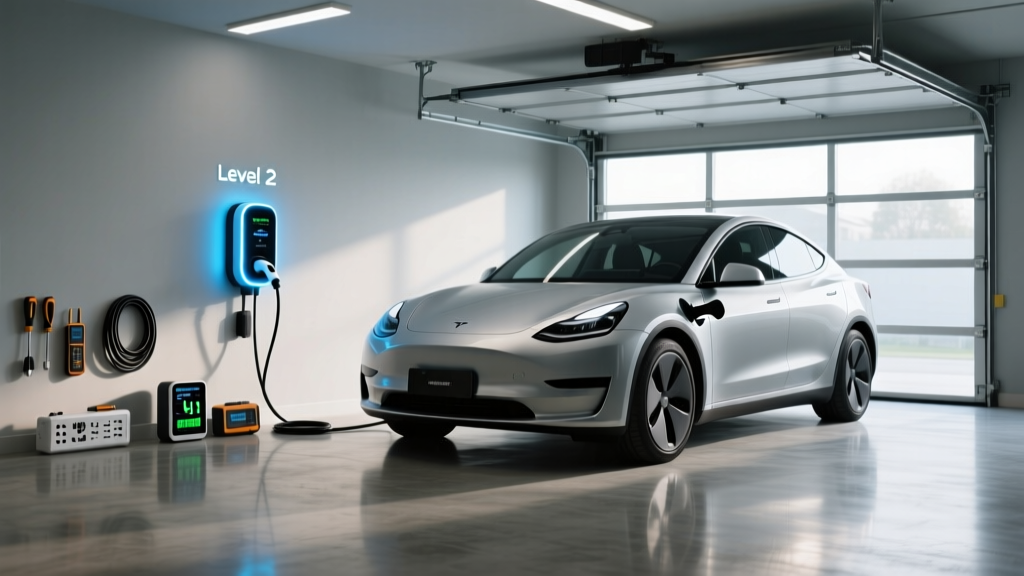
Installing a Level 2 (240V) home charger typically involves one of two paths: a hardwired connection or a NEMA 14-50 receptacle. Both require secure mounting to your garage wall — and that's where electric impact drills earn their keep.
Here's what a typical Level 2 installation demands from your tools:
- Concrete or masonry walls: Drilling 3/8" to 1/2" holes for Tapcon anchors using a hammer-drill function, then driving those anchors with an impact driver.
- Stud mounting: Driving 3" to 4" lag screws (often 5/16" or 3/8" diameter) into wooden studs to secure a charger mounting bracket rated for 15–30 lbs of sustained weight.
- Conduit and junction boxes: Self-tapping sheet-metal screws into steel boxes, plus securing EMT conduit straps with #10 or #12 screws into various substrates.
- EV-specific accessories: Cable management hooks, J-hook organizers, and wall-mounted cord reels all require reliable fastening.
A standard cordless drill delivers constant rotational force — adequate for pilot holes and light fastening. But when you're sinking a 3/8" x 3" lag bolt into a Douglas fir stud or driving masonry anchors into a poured-concrete garage wall, you need the percussive, high-torque action of an impact driver. Most quality electric impact drills in the $150–$300 range deliver 1,500–2,000 in-lbs of torque, which is the threshold for reliable EV charging infrastructure work.
Cost Breakdown: Home Charger Installation and Where Tools Fit In
Before selecting a tool, understand the full cost landscape. Here's a realistic 2026 breakdown for a Level 2 home charging installation, including where an electric impact drill factors into the budget:
| Item | DIY Cost Range | Electrician-Installed Range |
|---|---|---|
| Level 2 EV charger (hardware) | $350–$700 | $350–$700 |
| Electrical panel upgrade (if needed: 100A → 200A) | N/A (licensed work required) | $1,500–$3,500 |
| 240V circuit run (50A, ~40 ft, copper wire) | $150–$300 (materials only) | $800–$2,000 |
| NEMA 14-50 receptacle or hardwire junction box | $20–$50 | $100–$250 |
| Permit and inspection | $50–$200 | $50–$200 |
| Electric impact drill (one-time purchase) | $150–$300 | $0 (electrician brings tools) |
| Masonry bits, lag bolts, anchors (consumables) | $30–$75 | Included in labor |
| Total (typical no panel-upgrade scenario) | $750–$1,625 | $1,300–$3,150 |
For the DIY-inclined EV owner who handles mounting and conduit runs before a licensed electrician makes the final panel connections, the electric impact drill pays for itself on the first job. Even if you hire the entire installation out, owning a capable impact driver supports ongoing EV garage maintenance — tire rotation bolt breaking, skid plate removal for underbody inspection, and accessory mounting.
EV vs Gas Ownership: Where Garage Tools Matter Differently
One of the most-cited EV ownership advantages is reduced maintenance. According to fueleconomy.gov, battery-electric vehicles eliminate oil changes, spark plugs, timing belts, exhaust system repairs, and transmission fluid service. But EV ownership introduces a different set of garage tasks — and the tools required shift accordingly.
| Garage Task | Gas Vehicle | Battery Electric Vehicle |
|---|---|---|
| Home charging infrastructure install | Not applicable | Required — mounting, conduit, outlet |
| Oil changes | Every 5,000–10,000 mi ($40–$80 each) | Not applicable |
| Tire rotations | Every 5,000–7,500 mi | Every 5,000–7,500 mi (EVs wear tires faster due to torque and weight) |
| Brake pad replacement | Every 30,000–70,000 mi | Every 80,000–150,000+ mi (regen braking reduces wear) |
| Coolant service | Every 30,000–60,000 mi | Battery thermal management coolant: every 5 years/100k mi (varies) |
| Cabin air filter | Every 15,000–30,000 mi | Every 15,000–30,000 mi (same) |
| Underbody/skid plate access | Occasional | More frequent for battery inspection, charging port service |
The practical takeaway: EV owners trade fluid-service tools (oil filter wrenches, drain pans, funnel kits) for infrastructure tools — electric impact drills, conduit benders, fish tapes, and torque wrenches rated for electrical connections. Your garage investment shifts from consumables to durable equipment.
Top Electric Impact Drills for EV Owners: What to Look For
Not every impact driver handles EV-specific installation tasks equally. Here's a decision framework based on your likely scenario:
Choose a compact 1/4" hex impact driver (1,500–1,800 in-lbs) if:
- You're mounting a Level 2 charger to wooden studs
- You primarily drive lag bolts up to 3/8" x 3"
- You want a lightweight tool for overhead conduit work
- Budget: $150–$220
Choose a mid-torque 1/2" square-drive impact wrench (250–400 ft-lbs) if:
- You plan to rotate your own EV tires (lug nuts typically require 80–140 ft-lbs to remove, but corrosion can demand more)
- You want one tool for both charger mounting and wheel service
- You need to remove underbody bolts for cabin filter or battery tray access
- Budget: $200–$300
Choose a hammer-drill/driver combo kit if:
- Your garage has concrete, cinder block, or brick walls
- You need to drill masonry anchor holes AND drive fasteners
- You want maximum versatility for ongoing garage projects
- Budget: $250–$400 (kit with two batteries)
Key specifications to verify before purchasing:
- Torque rating: Minimum 1,500 in-lbs for impact drivers; 250 ft-lbs for impact wrenches
- Motor type: Brushless — delivers 30–50% longer runtime and better heat management during extended use
- Battery platform: Choose a system (Milwaukee M18, DeWalt 20V MAX, Makita 18V LXT, Ryobi ONE+) that you'll expand into for other EV garage tools
- Impacts per minute (IPM): 3,000+ IPM ensures smooth driving of large fasteners without excessive vibration
- Weight: Under 3 lbs for overhead conduit and junction box work
Common Misconceptions EV Owners Have About Tools and Maintenance
| Myth | Fact |
|---|---|
| "EVs need zero maintenance, so I don't need any tools." | EVs still require tire rotations, cabin filter changes, wiper blade replacement, brake fluid checks, coolant service for battery thermal management, and 12V battery replacement every 3–5 years. Basic hand tools and a torque wrench remain necessary. |
| "Any cordless drill can handle charger mounting." | Standard drills stall or strip fasteners when driving lag bolts into dense framing lumber or masonry. An impact driver's percussive action delivers 2–3x the effective driving force without reactive torque twisting your wrist. |
| "I should just hire the entire installation — no tools needed." | Even fully contracted installations benefit from owner involvement. Understanding mounting requirements, conduit routing, and clearances helps you verify quality work. And you'll still need tools for cable management, accessory mounting, and basic EV maintenance. |
| "Electric impact drills and cordless impact wrenches are the same thing." | Impact drivers use a 1/4" hex collet for screw-driving and small bolt work. Impact wrenches use a 1/2" (or 3/8") square drive for sockets and larger fasteners like lug nuts. EV owners benefit from understanding which tool fits which task. |
| "Higher voltage battery platforms are always better." | 18V/20V MAX platforms handle 95% of EV garage tasks. 40V+ platforms add weight and cost without meaningful benefit for charger mounting and basic maintenance. Battery Ah (amp-hour) rating matters more for runtime than voltage alone. |
Real-World Ownership: Climate, Driving Patterns, and Garage Readiness
Your EV ownership experience — and by extension, how much you'll use tools like an electric impact drill in your garage — depends heavily on three variables most buying guides gloss over:
Climate and garage environment. If you live in a region with harsh winters (Minnesota, Colorado, New England), your garage likely has concrete or block walls that require masonry-rated hammer drilling for charger mounting. Cold climates also mean you'll access your garage more frequently for pre-conditioning setup, winter tire swaps, and salt-related underbody inspections — all tasks where a reliable impact driver earns its place. In warmer, dry climates with wood-frame garages, a basic impact driver handles most mounting without the hammer function.
Driving patterns and charging frequency. High-mileage EV drivers (40+ miles daily, frequent DC fast charging) put more wear on tires due to instant torque and heavier curb weights (EVs average 500–1,000 lbs more than comparable gas vehicles). If you rotate your own tires every 5,000 miles — recommended for EVs to manage uneven wear from regenerative braking — an impact wrench paired with a torque wrench becomes a regular-use tool, not a shelf item.
Home charging access reality. Not every EV owner has a garage. If you charge via a driveway-mounted pedestal or rely on public charging, your tool needs shift. A portable electric impact drill still supports tasks like assembling a weatherproof charger enclosure, mounting cable organizers to exterior siding, or building a simple protective bollard. Renters who can't hardwire a charger may still use an impact driver to install a NEMA 14-50 outlet adapter bracket or temporary mounting solution.
According to the IRS §30D guidelines, the federal EV tax credit can offset up to $7,500 of a new EV purchase (subject to MSRP caps, buyer income limits, and battery sourcing requirements as of 2026). That credit — potentially applied at point of sale — can free up budget for proper home charging infrastructure, including the tools to install it correctly. Factor your impact drill purchase into your overall EV setup cost rather than treating it as an unrelated expense.
Frequently Asked Questions
Can I use a regular cordless drill instead of an electric impact drill for mounting my EV charger?
For light-duty mounting into drywall with toggle bolts or into softwood studs with small screws, yes. But most Level 2 chargers weigh 15–25 lbs and require secure mounting with lag bolts or masonry anchors. A standard drill lacks the percussive torque to drive these reliably and risks stripping fasteners or stalling mid-drive. The $150–$250 investment in a dedicated impact driver prevents mounting failures that could damage your charger or create a safety hazard.
What size electric impact drill do I need for EV charger installation?
For most residential Level 2 charger installations, a compact 1/4" hex impact driver rated at 1,500–1,800 in-lbs handles all mounting tasks: driving lag bolts into studs, securing conduit straps, and fastening junction boxes. If you also want to handle tire rotations, add a 1/2" square-drive impact wrench rated at 250+ ft-lbs. A two-tool kit from a single battery platform (Milwaukee M18, DeWalt 20V MAX) typically costs $300–$450 and covers all common EV garage tasks.
Do I need a hammer drill function for my EV garage setup?
Only if your garage walls are concrete, cinder block, brick, or stone. Wood-frame garages with drywall or plywood sheathing don't require hammer drilling. If you do have masonry walls, a hammer-drill/driver combo (which combines rotary drilling, hammer-drilling for masonry, and impact driving for fasteners) is the most versatile single-tool solution. Expect to pay $200–$350 for a quality brushless combo from a major brand.
How does an electric impact drill help with ongoing EV maintenance beyond charger installation?
After your charger is mounted, an impact driver supports tire rotation (with a socket adapter), underbody panel removal for cabin air filter access, skid plate bolt service, roof rack or crossbar installation, and accessory mounting. EVs have fewer service intervals than gas vehicles, but the fasteners involved — particularly underbody bolts exposed to road salt and moisture — often require high torque to break free. An impact driver prevents rounded bolt heads that turn simple maintenance into a shop visit.
Is it worth buying a premium brand impact drill if I only use it occasionally?
For EV owners who use tools 5–10 times per year (charger maintenance, tire rotations, seasonal accessory swaps), a mid-tier brand like Ryobi ONE+ or Craftsman V20 delivers adequate performance at $100–$180. The premium brands (Milwaukee, DeWalt, Makita) justify their cost if you plan to expand into additional garage projects, already own tools on the same battery platform, or need professional-grade durability for frequent use. Battery ecosystem compatibility matters more than brand prestige — choose the platform you'll grow into.
Note: Always consult a licensed electrician for final electrical connections, panel upgrades, and permit compliance. Tool recommendations in this guide support DIY mounting and preparation work; electrical code compliance varies by jurisdiction. Refer to your charger manufacturer's installation guide for specific fastener and mounting requirements. For EV tax credit eligibility, consult the IRS §30D page and a qualified tax professional.