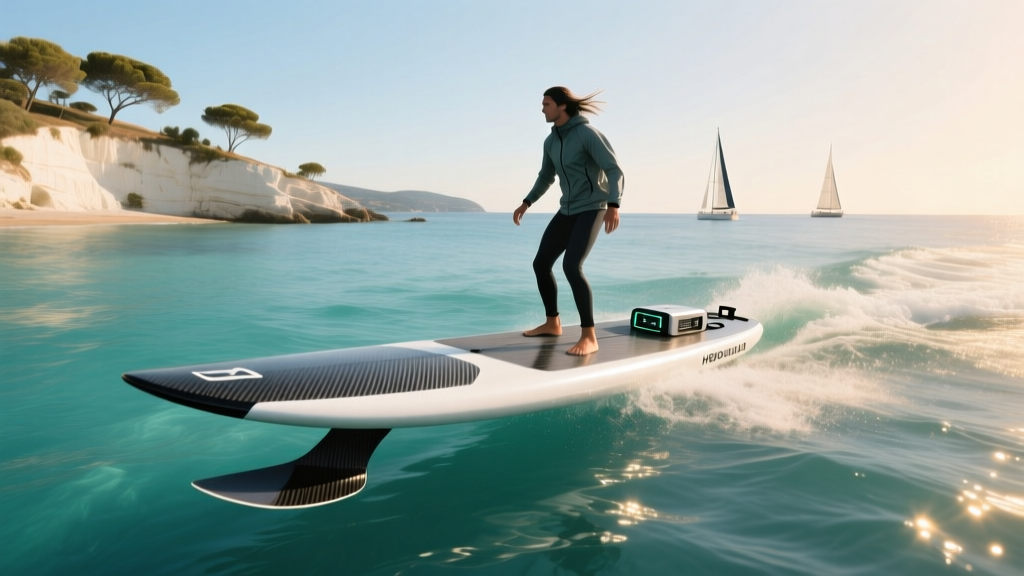
Quick Answer: An electric hydrofoiling surfboard (eFoil) is a battery-powered board that uses a submerged hydrofoil wing and electric motor to lift riders above the water at speeds of 15–30 mph. In 2026, leading models like the Lift eFoil, Fliteboard, and Awake offer usable ride times of 75–120 minutes on a single charge, powered by 1.5–3.5 kWh lithium-ion or LFP battery packs. Expect to spend $4,900–$12,000 for a complete setup, with per-session "fuel" costs of $0.15–$0.45 — essentially eliminating the gas, oil, and winterization costs associated with gas-powered personal watercraft.
Is an electric hydrofoiling surfboard right for you?
Buy one if: You want silent, emission-free water recreation; you ride at lakes, coastal bays, or calm ocean conditions; you have access to a standard 120V outlet for charging; and you value low ongoing maintenance over raw top speed.
Look elsewhere if: You need speeds above 35 mph, you ride in rough open-ocean conditions, you cannot transport 55–75 lbs of gear, or you want multi-hour continuous runtime without carrying a spare battery.
How Electric Hydrofoiling Surfboards Work (and Why They're Replacing Gas Alternatives)
An electric hydrofoiling surfboard replaces the traditional two-stroke or four-stroke engine found on personal watercraft (PWCs) like the Sea-Doo or Jet Ski with a brushless DC motor mounted on a submerged mast and wing assembly. The hydrofoil generates lift at roughly 3–5 mph, raising the board entirely out of the water and eliminating hull drag. This physics advantage is why a 3–5 kW motor can propel a rider at 25 mph while drawing far less energy than a gas PWC needs to push a hull through water at the same speed.
The key components:
- Board: Carbon fiber or composite, 4'6"–5'4" in length, 25–40 liters of volume
- Mast and fuselage: Carbon or aluminum, 24"–35" mast height, front wing area 1,200–2,000 cm²
- Motor: Brushless DC, typically 3–8 kW peak output, direct-drive or belt-driven propeller
- Battery: Removable lithium-ion pack, 1.5–3.5 kWh usable capacity, 20–40 lbs
- Controller: Bluetooth hand remote with trigger or thumbwheel, plus smartphone app for telemetry
Unlike gas PWCs, which require fuel mixing, winterization, impeller maintenance, and produce 70–90 dB of noise, eFoils run silently (typically 40–55 dB at the rider's ear), need no fuel or oil, and can be rinsed with fresh water after saltwater use.
2026 eFoil Comparison: Range, Battery, Speed & Price
The table below captures real-world specs for the most widely available electric hydrofoiling surfboards as of early 2026. All ride-time figures assume a 175-lb rider in flat-water conditions at mixed cruising speeds (12–20 mph). Aggressive riding, heavier riders, or choppy conditions will reduce runtime by 20–35%.
| Model | Battery (kWh) | Chemistry | Ride Time (min) | Top Speed (mph) | Motor Peak (kW) | Charge Time (hrs) | MSRP (Complete) |
|---|---|---|---|---|---|---|---|
| Lift eFoil 5 | 2.25 | NMC Li-ion | 90–120 | 28 | 6.0 | 2.0 (120V) | $7,999–$10,499 |
| Fliteboard Ultra 2 | 1.8 | NMC Li-ion | 75–90 | 30 | 5.5 | 1.5 (120V) | $8,499–$12,395 |
| Awake Ravik 3 | 3.5 | NMC Li-ion | 60–80 | 34 | 8.0 | 2.5 (120V) | $10,900–$13,500 |
| Hydroflyer Cruiser | 2.0 | LFP | 80–100 | 22 | 4.0 | 2.5 (120V) | $4,900–$6,200 |
| SIKFOIL eFoil Pro | 1.5 | NMC Li-ion | 50–70 | 25 | 5.0 | 1.5 (120V) | $3,999–$5,200 |
Key takeaway: The Lift eFoil 5 offers the best balance of ride time and price for most recreational riders. The Fliteboard Ultra 2 wins on build quality and ecosystem (interchangeable wings, boards, and propulsion units). The Hydroflyer Cruiser is the value pick, trading top speed for LFP chemistry that offers longer cycle life and safer thermal characteristics — important if you store the battery in a hot garage or car trunk.
Real-World Range: What to Actually Expect on the Water
Manufacturers advertise ride times based on optimal conditions: a 150-lb rider, flat water, 12–15 mph cruising speed, and a fully new battery. Here's what real-world testing and owner reports reveal:
eFoil Ride Time Reality Check
Sticker claim: 120 minutes (Lift eFoil 5, 2.25 kWh, light rider)
Real-world average: 80–100 minutes at mixed speeds (12–22 mph), 175-lb rider
Cold water/high wind: Expect a 15–25% reduction in ride time due to increased drag from choppy water and higher power demand to maintain foil height
Aggressive carving/jumping: 45–60 minutes — burst acceleration draws 6–8 kW peak, draining the battery roughly 3× faster than cruising
Battery degradation is a real factor. NMC packs in eFoils typically retain 80–85% of original capacity after 500 full charge cycles (roughly 3–5 years of weekly riding). LFP packs, like the one in the Hydroflyer Cruiser, retain 80% capacity after 1,500+ cycles but carry a weight penalty of roughly 3–5 lbs for the same kWh.
Unlike electric cars, eFoils have no regenerative braking to speak of — you're coasting or decelerating when not on the throttle, so energy recovery is negligible.
Charging: What You Need at Home (or the Dock)
Every major eFoil in 2026 ships with a standard 120V AC charger that plugs into any household outlet. There is no "Level 2" equivalent in the eFoil world — the batteries are small enough that Level 1 charging is practical.
| Charging Method | Power (kW) | 0–100% Time | Cost per Full Charge | Setup Required |
|---|---|---|---|---|
| Standard 120V outlet (included charger) | 0.8–1.2 kW | 1.5–3.0 hours | $0.18–$0.42 | None |
| Optional fast charger (Fliteboard, Lift) | 1.5–2.0 kW | 0.75–1.5 hours | $0.18–$0.42 | $300–$500 accessory purchase |
| Spare battery swap | N/A | 30 seconds | $1,200–$2,000 per spare | None |
At the US average electricity rate of $0.16/kWh (EIA, 2025 data), fully charging a 2.25 kWh Lift eFoil battery costs roughly $0.36. For comparison, fueling a Sea-Doo Spark for an equivalent 90-minute session burns approximately 3–4 gallons of premium unleaded at $4.00+/gallon — or $12–$16 per session.
Practical tip: If you ride at a lake house or marina without dedicated electrical access, a portable power station (EcoFlow Delta Pro, Bluetti AC200) with 2 kWh capacity can fully recharge most eFoil batteries once. Budget $1,000–$1,800 for the power station if dockside charging isn't available.
Total Cost of Ownership: eFoil vs. Gas Personal Watercraft
The upfront price of an electric hydrofoiling surfboard is higher than a budget gas PWC, but the operating cost gap is enormous. Here's a 5-year ownership comparison assuming 50 sessions per year:
| Cost Category | Lift eFoil 5 (Electric) | Sea-Doo Spark (Gas PWC) |
|---|---|---|
| Purchase price | $9,499 | $7,599 |
| Fuel/energy (5 yrs × 50 sessions) | $900 ($0.36/session) | $3,750 ($15/session) |
| Insurance (5 yrs) | $1,500 ($300/yr) | $2,250 ($450/yr) |
| Maintenance (5 yrs) | $400 (prop, seals, remote batteries) | $2,500 (oil, impeller, winterization, spark plugs) |
| Trailer/registration | $0 (no trailer or registration required in most states) | $1,800 (trailer + annual registration) |
| Battery replacement (year 5+) | $1,800–$2,500 | $0 |
| 5-Year Total | $14,099–$14,799 | $17,899 |
The eFoil breaks even with a gas PWC around year 3–4 when you factor in fuel and maintenance savings. If you ride more than 50 sessions per year, the payback accelerates. Insurance for eFoils is generally lower because they are classified as recreational equipment rather than registered watercraft in most US states — though you should verify requirements with your state's boating authority and your insurer.
Common Misconceptions About Electric Hydrofoiling Surfboards
| Myth | Fact |
|---|---|
| "eFoils are just toys — they can't handle real conditions" | Modern eFoils are rated for 2–3 ft chop and can be ridden in ocean swell. The Fliteboard and Lift eFoil are used by professional surfers for wave riding in 4–6 ft surf. |
| "The battery will die in 20 minutes" | That was true of first-generation (2018–2019) models. Current 2+ kWh packs deliver 80–120 minutes of real riding at cruising speeds. |
| "You need a special electrical outlet to charge" | All major eFoils charge on a standard 120V household outlet in 1.5–3 hours. No 240V or special wiring needed. |
| "Saltwater destroys the electronics" | 2026 models use IP68-rated motor housings, sealed battery connectors, and corrosion-resistant hardware. A freshwater rinse after saltwater use is sufficient. |
| "It's too hard to learn" | Most first-time riders achieve stable foiling within 1–2 hours of practice. Beginner mode caps speed at 8–10 mph and softens throttle response. |
| "eFoils are illegal on most lakes" | Regulations vary by jurisdiction, but eFoils are legal on most US lakes and coastal waters. Some states require a boating safety certificate. Check local rules before riding. |
Decision Framework: Which Electric Hydrofoiling Surfboard Should You Buy?
Choose the Lift eFoil 5 if:
- You want the longest ride time per charge (90–120 min)
- You prioritize a proven brand with US-based service and parts availability
- Budget is $8,000–$10,500
- You ride mostly flat water (lakes, bays, calm coastal)
Choose the Fliteboard Ultra 2 if:
- You want the most modular system (swap boards, wings, and propulsion units)
- You value premium build quality and the most polished companion app
- Budget is $8,500–$12,500
- You plan to progress into wave riding or racing
Choose the Hydroflyer Cruiser if:
- Budget is under $6,500 and you want the best value
- You prefer LFP battery chemistry for longer lifespan and safer storage
- Top speed is less important than ride time and reliability
- You're a beginner or casual rider (2–3 sessions per month)
Choose the Awake Ravik 3 if:
- You want the highest top speed (34 mph) and most aggressive acceleration
- You're an experienced rider who prioritizes performance over ride time
- Budget is $11,000–$13,500
- You don't mind carrying a heavier battery (40 lbs)
First-Time Buyer Checklist
If this is your first electric hydrofoiling surfboard, here's what to know before you buy:
- Storage: You need a dry, climate-controlled space for the board (6 ft × 2 ft floor area) and a separate cool, dry location for the battery. Never store a fully charged NMC battery in a hot car or garage above 95°F for extended periods — store at 50–60% SoC for longevity.
- Transport: Most eFoils fit in an SUV or truck bed with the mast removed. A board bag ($150–$300) protects the carbon components. You do NOT need a trailer.
- Safety gear: Budget $200–$400 for a helmet, impact vest (not a standard PFD — you need one designed for foil sports), and a leash. The propeller is exposed and spinning at 3,000+ RPM — always shut off the motor before falling and remounting.
- Learning curve: Plan 2–3 sessions of 30–60 minutes each before you're comfortably foiling. Knee-start technique is easier than standing starts for beginners. Many dealers offer 1-hour intro lessons for $100–$200.
- Registration and insurance: Most US states do not require registration for eFoils (they're classified as surfboards, not motorized watercraft). However, a few states — including Florida and California — have specific rules. Check with your state's boating law agency. Homeowner's or renter's insurance may cover eFoil liability; if not, a standalone watercraft policy runs $250–$400/year.
- Warranty: Industry-standard warranties are 1 year on the board and electronics, 1 year or 200 cycles on the battery (whichever comes first). Extended warranties are rarely offered — factor a potential $1,800–$2,500 battery replacement into your 5-year budget.
Frequently Asked Questions
Can I ride an electric hydrofoiling surfboard in the ocean?
Yes. Modern eFoils are built for saltwater use with sealed motors and corrosion-resistant components. Rinse all parts with fresh water after each saltwater session. Larger front wings (1,700–2,000 cm²) provide more stability in chop and small swell. Avoid riding in surf above 4 ft unless you're an experienced foiler.
How long does an eFoil battery last before it needs replacement?
NMC batteries typically last 500–800 full charge cycles before dropping below 80% capacity — roughly 4–6 years at weekly use. LFP batteries last 1,500+ cycles (10+ years at weekly use). Store batteries at 50–60% charge in a cool, dry place to maximize lifespan. Never leave a battery at 100% or 0% for more than a few days.
Do electric hydrofoiling surfboards qualify for any tax credits?
No. The federal §30D clean vehicle tax credit applies only to qualified plug-in electric vehicles with four wheels and a gross vehicle weight rating under 14,000 lbs, per IRS guidelines. eFoils are classified as recreational equipment, not motor vehicles. Some states or local utilities offer rebates for electric recreational equipment — check with your utility provider.
What happens if I fall off? Is the propeller dangerous?
When you release the remote trigger or fall, the motor cuts immediately and the propeller stops within 1–2 seconds. The board will settle onto the water surface. The main risk is the carbon mast and wing striking you during a fall — this is why helmets and impact vests are strongly recommended. Never attempt to remount the board while the motor is active.
How does eFoil speed compare to a gas Jet Ski?
A gas PWC like the Sea-Doo RXT-X reaches 65–70 mph. The fastest eFoils top out at 30–34 mph. However, the eFoil experience is fundamentally different — you're flying above the water in near silence, carving turns with minimal effort, and covering distance with a fraction of the energy. Most riders find 15–22 mph to be the ideal cruising speed on an eFoil, where the ride feels smooth and controlled.
Can kids ride an electric hydrofoiling surfboard?
Most manufacturers recommend a minimum rider age of 16 and a minimum weight of 80–100 lbs for the hydrofoil to generate adequate lift. Some brands offer smaller wing configurations for lighter riders (100–130 lbs). Parental supervision is essential, and all riders should complete a safety briefing covering motor cutoff, fall procedures, and right-of-way rules.