Quick Answer: Is an EV Right for You in 2026?
The "electric horseless carriage" — an old-fashioned name for what we now call a battery-electric vehicle (BEV) — has gone mainstream. In 2026, a typical new EV delivers 270–350 miles of EPA range, charges from 10–80% in 18–28 minutes at a DC fast charger, and costs roughly $0.04–$0.06 per mile to fuel at home versus $0.12–$0.16 per mile for a comparable gas car. If you can install a Level 2 home charger, drive under 300 miles daily, and live in a moderate climate, a modern EV will likely save you $4,000–$9,000 over five years in fuel and maintenance. If you lack home charging access, regularly tow heavy loads, or live where winter temperatures drop below 10°F, a plug-in hybrid (PHEV) may serve you better.
What Exactly Is an Electric Horseless Carriage?
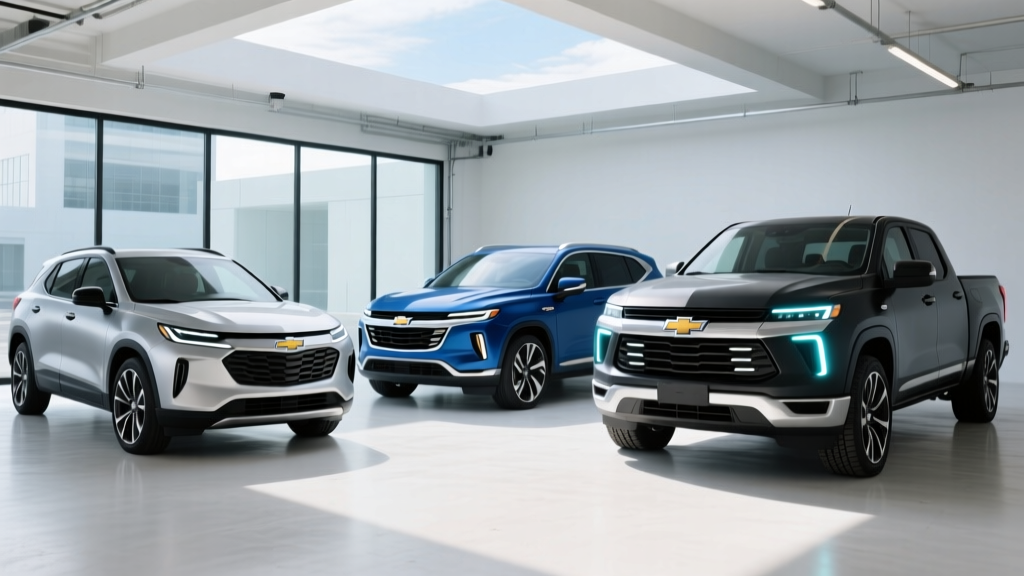
The term "horseless carriage" dates to the 1890s, when motorized vehicles first replaced horse-drawn transport. An electric horseless carriage simply extends that concept: a personal vehicle propelled by an electric motor drawing energy from a rechargeable battery pack rather than an internal-combustion engine burning gasoline. In 2026, the EV market spans sub-$30,000 compacts like the Chevrolet Equinox EV (EPA 319 mi, starting around $33,600 before credits) to luxury SUVs like the Rivian R1S Dual-Motor (EPA 410 mi with the Max Pack, MSRP from ~$83,000).
The fundamental ownership proposition is straightforward: trade a higher upfront purchase price (narrowing every year) for dramatically lower per-mile energy cost, fewer moving parts to maintain, and zero tailpipe emissions. Whether that trade pays off depends on your specific driving profile, electricity rate, and charging access — not on marketing claims.
EV vs Gas vs Hybrid: The Real Numbers
Before committing, compare the three powertrain options across the metrics that matter to your wallet and schedule. The table below uses a midsize crossover baseline — a segment where EVs, PHEVs, and gas models compete directly.
| Metric | BEV (e.g., Hyundai Ioniq 5) | PHEV (e.g., Toyota RAV4 Prime) | Gas (e.g., Toyota RAV4 AWD) |
|---|---|---|---|
| Base MSRP (approx.) | $42,600 | $44,500 | $32,000 |
| Fed. tax credit (est.) | Up to $7,500* | Up to $7,500* | $0 |
| EPA range / efficiency | 318 mi / 114 MPGe | 42 mi EV + 38 MPG gas | 30 MPG combined |
| Fuel cost (5 yr) | ~$3,900 (home L2) | ~$4,800 (mix) | ~$9,400 |
| Maintenance (5 yr) | ~$1,800 | ~$3,200 | ~$4,100 |
| Estimated insurance (5 yr) | ~$11,500 | ~$9,800 | ~$9,200 |
| 5-yr total cost of ownership | ~$52,300 | ~$54,800 | ~$48,700 |
*Per IRS §30D rules, eligibility depends on buyer income caps ($150K single / $300K joint), vehicle MSRP caps ($55K cars / $80K SUVs/trucks), and battery critical-mineral and component sourcing requirements. Credit can be transferred to the dealer at point of sale as a price reduction. Verify current-year rules before purchasing.
The BEV wins on fuel and maintenance but loses ground on insurance premiums (typically 15–25% higher than equivalent gas models, per industry data) and upfront cost. The PHEV splits the difference — excellent if your commute is under 40 miles and you can charge nightly, but you still maintain an engine. The gas model remains cheapest to buy but most expensive to run.
Real-World Range, Charging Speed, and What the Sticker Doesn't Tell You
EPA range estimates assume mixed city/highway driving at moderate temperatures. In practice, three factors shrink that number:
- Highway speeds above 70 mph: Aerodynamic drag rises with the square of velocity. Expect a 318-mile EPA-rated EV to deliver roughly 250–275 real highway miles at 75 mph.
- Cold weather (below 30°F): Battery chemistry slows and cabin heating draws significant energy. Plan on 20–35% range reduction in deep cold; vehicles with a heat pump (standard on most 2026 Hyundai, Kia, Tesla, and BMW EVs) lose closer to 15–25%.
- Battery buffer and aging: Manufacturers lock away 5–10% of the gross battery as a buffer to slow degradation. A 77.4 kWh gross pack (like the Ioniq 5's) yields roughly 72–74 kWh usable. Over 100,000 miles, expect 8–15% capacity loss depending on chemistry — LFP (lithium iron phosphate) degrades more slowly than NMC (nickel manganese cobalt) but weighs more and offers lower energy density.
| Charging Level | Power (kW) | Miles Added per Hour | Typical Use Case |
|---|---|---|---|
| Level 1 (120V household) | 1.0–1.4 kW | 3–5 mi/hr | Overnight top-up, PHEVs |
| Level 2 (240V home/public) | 7.2–11.5 kW | 25–44 mi/hr | Daily home charging |
| DC Fast Charge (peak) | 150–350 kW | N/A — 10–80% in 18–28 min | Road trips |
Charging-curve reality: A vehicle advertising "350 kW peak" only sustains that rate for a narrow state-of-charge window (often 10–30% SoC). Above 80%, the rate tapers sharply to protect battery health — a 10–80% session may take 18 minutes, but 80–100% can add another 20+. For road-trip planning, budget around the 10–80% figure and skip topping off unless you'll be parked overnight. Always precondition the battery (most EVs do this automatically when you navigate to a charger) to hit published charge speeds.
Source: EPA efficiency and range figures from fueleconomy.gov.
The True Cost of Ownership: Where Your Money Actually Goes
Breaking down five-year ownership exposes where EVs save and where they cost more than the sticker suggests.
Purchase Price and Incentives
The federal §30D credit can reduce a qualifying EV's effective price by up to $7,500, transferred at the dealership as a down-payment reduction or cash discount. Many states stack additional rebates — California's CVRP, Colorado's innovative motor vehicle credit, and various utility incentives can push total incentives to $10,000–$14,000 for income-eligible buyers. Check fueleconomy.gov's incentive tool and your state's energy office for current programs.
Home Charging Installation
A Level 2 home charger (240V, 32–48 amp) is where most EV owners do 85–95% of their charging. Budget accordingly:
- Charger hardware: $350–$700 (ChargePoint Home Flex, Emporia Level 2, Wallbox Pulsar Plus)
- Electrician labor (standard install): $600–$1,500 if your panel is close to the garage and has spare capacity
- Panel upgrade (if needed): $1,500–$3,500 to move from a 100-amp to a 200-amp service — common in older homes
- Permit and inspection: $100–$350
Total realistic range: $1,050–$2,550 for a straightforward install; $2,600–$5,000+ if a panel upgrade is required. Always hire a licensed electrician and pull permits — unpermitted work can void homeowner's insurance claims.
Maintenance Savings
BEVs skip oil changes, spark plugs, timing belts, exhaust systems, and transmission fluid. Brake pads last 80,000–150,000 miles thanks to regenerative braking doing most deceleration work. Typical BEV maintenance runs $0.02–$0.03 per mile versus $0.05–$0.07 per mile for a gas car. You will still rotate tires (EVs are heavier and wear tires faster — budget for replacements every 30,000–40,000 miles), replace cabin air filters, and top off washer fluid.
Insurance Reality
EV insurance premiums run 15–25% higher than comparable gas models, driven by higher repair costs, specialized parts, and elevated total-loss rates after battery-damaging collisions. Shop quotes from multiple carriers before buying — some insurers (like Tesla Insurance in eligible states) offer usage-based rates that narrow the gap.
Common EV Misconceptions — Fact-Checked
| Myth | Fact |
|---|---|
| "EV batteries need replacing every few years and cost $20,000." | Federal law mandates 8-year/100,000-mile battery warranties (10 years/150,000 miles in CARB states). Real-world degradation data shows most packs retain 85–92% capacity at 100K miles. Full replacement is rare and typically covered if capacity drops below 60–70% within the warranty window. |
| "The grid can't handle everyone driving EVs." | Most charging happens overnight during off-peak hours when grid capacity is underutilized. A single EV adds roughly the load of a central air conditioner. Utilities manage demand through time-of-use rates and smart-charging programs. |
| "EVs are worse for the environment because of battery mining." | Lifecycle analyses (including manufacturing) consistently show EVs produce 50–70% fewer greenhouse-gas emissions over their lifetime than gas cars, even on coal-heavy grids — and the grid is decarbonizing every year. Battery recycling infrastructure (Redwood Materials, Li-Cycle) is scaling rapidly. |
| "Public charging is unreliable and always broken." | Reliability varies by network. Tesla Superchargers consistently report 95%+ uptime. Electrify America, EVgo, and ChargePoint have improved significantly since 2023, though rural corridors remain spotty. Check PlugShare or A Better Routeplanner before long trips. |
| "I need a 400-mile EV to avoid range anxiety." | The average American drives 37 miles per day (FHWA data). A 270-mile EV with home charging covers 95%+ of driving needs. Range anxiety is mostly a road-trip concern — solved by 18–25 minute DC fast-charge stops every 200–250 miles. |
Decision Framework: Which Electrified Vehicle Fits Your Life?
Choose a BEV if:
- You can install a Level 2 charger at home (garage, driveway, or workplace charging available)
- Your daily driving is under 250 miles round-trip
- You want the lowest per-mile cost and minimal maintenance
- You take road trips 4 or fewer times per year (and can plan DC fast-charge stops)
- You qualify for federal/state incentives that close the upfront price gap
Choose a PHEV if:
- You lack reliable home or workplace charging but want some electric driving
- Your commute is under 40 miles (covering most daily driving on battery alone)
- You regularly tow, haul, or drive in remote areas with sparse charging infrastructure
- You live in a region with extreme cold (below 0°F) where BEV range loss is significant
- You want one vehicle to handle both city errands and cross-country trips without planning
Stick with a Gas/HEV if:
- You have zero access to any charging (no home, no workplace, no reliable public)
- Your annual mileage is very low (under 6,000 miles), making fuel savings negligible
- Your budget is strictly under $28,000 and you're buying used with no credit eligibility
- You frequently tow heavy trailers (5,000+ lbs) over long distances
What First-Time EV Buyers Must Know Before Signing
- Test the actual charging situation at your home. Before buying, have an electrician assess your panel capacity and quote a Level 2 install. A $3,000 panel upgrade surprise after delivery is painful.
- Verify tax-credit eligibility before committing. The §30D credit has moving parts: buyer income caps, vehicle MSRP caps, VIN-specific battery sourcing requirements, and a requirement that the vehicle be assembled in North America for new-vehicle credits. Ask the dealer for the IRS credit-eligibility report for the specific VIN.
- Download the charging apps before delivery. Create accounts with Tesla Supercharger (now open to NACS-equipped non-Tesla EVs), Electrify America, EVgo, and ChargePoint. Pre-load payment methods so your first road trip isn't spent fumbling with sign-ups.
- Understand your warranty. The battery and drive unit are federally mandated at 8 years/100,000 miles minimum. The basic vehicle warranty is typically 3 years/36,000 miles or 5 years/60,000 miles. Read what's covered and what's excluded.
- Plan for tire costs. EVs are 500–1,000 lbs heavier than gas equivalents and deliver instant torque. Expect to replace tires every 30,000–40,000 miles. Budget $800–$1,600 per set depending on size.
- Learn one-pedal driving. Most EVs offer strong regenerative braking that lets you drive without touching the brake pedal in most conditions. It takes a week to adapt and dramatically reduces brake wear.
Frequently Asked Questions
How long does it take to charge an EV at home overnight?
On a Level 2 home charger (typically 7.2–11.5 kW), a fully depleted 75–85 kWh battery pack replenishes in 7–12 hours. Since most drivers arrive home with 30–60% remaining, a typical overnight session adds 150–250 miles of range in 6–8 hours — more than enough for daily needs.
What happens if I run out of charge on the road?
The same thing that happens if you run out of gas: you call roadside assistance. Most EV manufacturers include 3–4 years of complimentary roadside assistance, and services like AAA now offer mobile charging or flatbed towing to the nearest station. Your EV will give multiple low-battery warnings and progressively limit power well before the pack is truly empty.
Do EVs really save money long-term?
Yes, for most drivers — but the timeline matters. With home charging at $0.13/kWh (national average) and a gas car getting 28 MPG at $3.40/gallon, you save roughly $0.08–$0.10 per mile. At 12,000 miles per year, that's $960–$1,200 annually in fuel savings alone, plus $400–$600 in maintenance savings. Factor in the higher purchase price and insurance, and the typical breakeven point is 3–5 years for buyers who qualify for the federal tax credit.
Can I charge an EV from a regular wall outlet?
Yes, but slowly. A standard 120V outlet (Level 1) delivers roughly 1.0–1.4 kW, adding 3–5 miles of range per hour. That's 36–60 miles overnight — adequate for PHEVs and light daily driving in a BEV, but impractical as a primary charging strategy for most EV owners. A 240V Level 2 circuit is strongly recommended.
Will my EV battery need replacing?
Statistically, probably not during typical ownership. Data from Tesla's fleet reports and independent studies of high-mileage EVs show modern battery packs retaining 85–92% of original capacity at 100,000 miles and 80–88% at 150,000 miles. The federal warranty guarantees at least 70% capacity retention for 8 years/100,000 miles. If a pack does fail outside warranty, replacement costs range from $8,000–$18,000 depending on the vehicle, though refurbished and aftermarket options are expanding.
Safety data sourced from NHTSA and IIHS. Always check current crash-test ratings for the specific model year you're considering, as ratings can change with updated test protocols.