Quick Answer: Does an Electric Honda Zoomer Exist?
As of 2026, Honda does not sell a production "electric Honda Zoomer" in the United States. The Zoomer (also known as the Ruckus outside Japan) is a 49cc gasoline scooter that Honda has not electrified for the U.S. market. Honda's current U.S. electric lineup centers on the Prologue SUV (EPA-estimated 296 miles of range, starting around $47,400) and the upcoming Honda 0 Series sedans and SUVs slated for 2026–2027. If you're searching for an electric equivalent to the Zoomer's urban commuter role, you'll need to look at electric scooters from other brands or Honda's four-wheeled EVs.
Why the "Electric Honda Zoomer" Search Keeps Coming Up
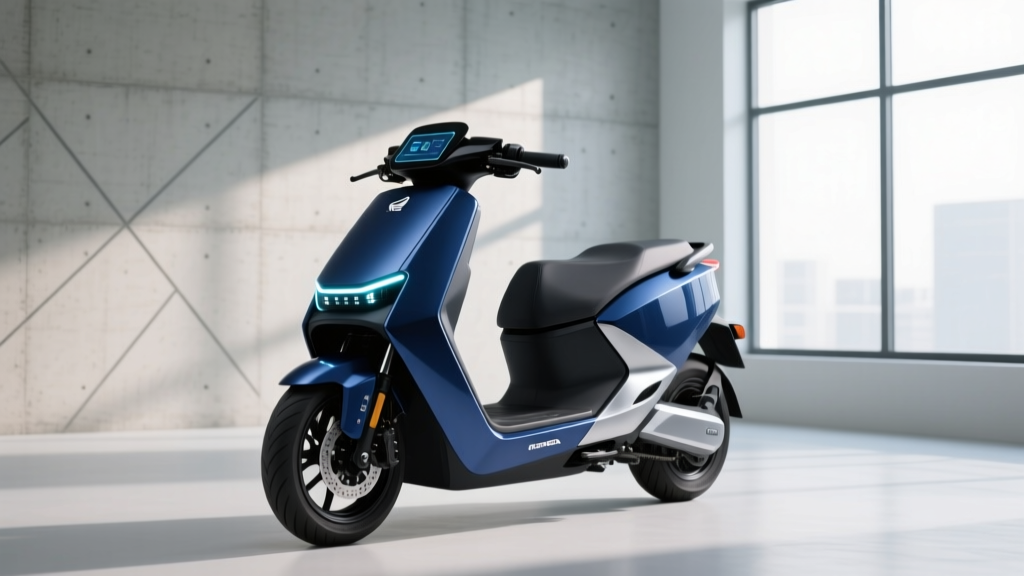
The Honda Zoomer — a rugged, minimalist 50cc scooter popular in Japan and sold as the Ruckus in North America — has a cult following for its boxy design, fat tires, and bare-bones utility. Over the past several years, concept renders and third-party conversions have fueled speculation about an electric version. Honda has showcased electric two-wheeler concepts in Asia (including the EM1 e: scooter), but none carry the Zoomer nameplate, and none are sold through U.S. Honda dealerships.
Honda's electrification strategy for the U.S. market has focused exclusively on four-wheeled vehicles: the Prologue (built on GM's Ultium platform), the CR-V e:FCEV plug-in hydrogen fuel-cell variant, and the forthcoming Honda 0 Series built on Honda's own dedicated EV architecture. Electric two-wheelers remain an Asia-market priority for Honda, with no announced U.S. timeline.
For buyers who landed here hoping to find an electric Zoomer, the practical question becomes: what electrified vehicle actually fills that urban-commuter niche?
What Honda Actually Sells: The 2026 Prologue as the Closest EV Option
If you want a Honda EV in 2026, the Prologue is your only current option. Here's how it stacks up:
| Spec | FWD EX | AWD Touring |
|---|---|---|
| EPA Range | 296 miles | 273 miles |
| Battery (usable) | 85 kWh (NMC) | 85 kWh (NMC) |
| Peak DC Fast Charge | 150 kW | 150 kW |
| 10–80% DC Charge Time | ~35 minutes | ~35 minutes |
| Level 2 Charge Rate | 11.5 kW | 11.5 kW |
| Horsepower | 212 hp | 288 hp |
| 0–60 mph | ~7.4 sec | ~5.9 sec |
| Starting MSRP | $47,400 | $57,900 |
| Battery Warranty | 8 yr / 100,000 mi | 8 yr / 100,000 mi |
Real-world range caveat: The 296-mile EPA estimate for the FWD model drops to roughly 230–250 miles in sustained highway driving at 75+ mph, and expect a 15–25% reduction in freezing temperatures. The AWD Touring trim's 273-mile EPA figure is already lower; plan for 210–230 miles real-world on the highway. (Source: fueleconomy.gov)
The Prologue is a midsize SUV — nothing like the lightweight, nimble Zoomer. It competes with the Hyundai Ioniq 5, Tesla Model Y, and Chevrolet Blazer EV. If your goal was an affordable electric runabout for short city hops, the Prologue overshoots on price and size.
EV vs Gas Scooter: Cost and Practicality Compared
Since the Zoomer is a scooter at heart, let's compare what a typical gas scooter costs to run versus the EV alternatives that actually exist for urban commuting — whether that's a third-party electric scooter or a compact EV like the Nissan LEAF or Chevrolet Bolt EV (available used).
| Cost Factor | Honda Ruckus (49cc Gas) | Compact EV (e.g., Used Bolt EV) | Electric Scooter (e.g., NIU MQi+) |
|---|---|---|---|
| Purchase Price | ~$2,900 | ~$18,000–$26,000 (used) | ~$3,200–$4,500 |
| Fuel / Energy Cost/Year | ~$350 (gas at $3.50/gal, 80 MPG) | ~$380 (electricity at $0.15/kWh, 3.5 mi/kWh) | ~$95 (electricity at $0.15/kWh) |
| Maintenance/Year | ~$200 (oil, belt, tires) | ~$300 (tires, cabin filter, wipers) | ~$80 (tires, brake pads) |
| Insurance/Year | ~$350 | ~$1,400 | ~$200 |
| 5-Year Total Cost | ~$7,150 | ~$30,500–$38,500 | ~$6,875–$10,375 |
The numbers reveal a clear reality: if your primary need is a cheap urban runabout — the role the Zoomer fills — an electric scooter from brands like NIU, Super73, or Segway is the closest electric equivalent. A full EV like the Bolt EV or LEAF costs substantially more upfront, but offers weather protection, highway capability, cargo space, and safety features that no scooter can match.
Real Ownership Costs: What First-Time EV Buyers Must Budget
If you've pivoted from "electric Zoomer" to considering a real four-wheeled EV, here's what the financial picture actually looks like. These figures reflect 2026 conditions.
| Category | Compact EV (~$35,000 MSRP) | Gas Compact (~$27,000 MSRP) |
|---|---|---|
| Purchase Price (after incentives) | ~$27,500 (with $7,500 §30D credit) | $27,000 |
| Fuel / Energy (5 yr, 60,000 mi) | ~$2,280 (home charging at $0.15/kWh) | ~$7,500 (gas at $3.50/gal, 28 MPG combined) |
| Maintenance (5 yr) | ~$1,500 | ~$3,500 |
| Insurance (5 yr) | ~$8,500 | ~$6,500 |
| Home Charger Install | ~$800–$2,000 (Level 2, 240V) | $0 |
| Estimated Depreciation | ~$12,000 | ~$9,000 |
| 5-Year Total | ~$52,580–$53,780 | ~$53,500 |
Tax credit reality check: The federal §30D credit can provide up to $7,500 for qualifying new EVs, but eligibility depends on your income (AGI caps: $150K single, $300K joint), the vehicle's MSRP (capped at $55K for sedans, $80K for SUVs/trucks), and battery mineral sourcing requirements that have tightened significantly. The Prologue's eligibility has fluctuated as Honda's supply chain shifts — always verify current status on irs.gov before purchasing. The credit can now be transferred to the dealer as a point-of-sale discount.
Common Misconceptions About Going Electric
| Myth | Fact |
|---|---|
| "EVs always save money." | Upfront cost and insurance premiums are typically higher. Savings come from lower fuel and maintenance costs over time — usually breaking even around year 3–5 depending on mileage and electricity rates. |
| "I can charge anywhere." | Public DC fast-charging infrastructure remains uneven. Rural areas and apartment complexes often lack chargers. Home Level 2 charging is the backbone of convenient EV ownership; without it, daily logistics get harder. |
| "EPA range is what I'll get." | EPA range is a laboratory estimate. Highway driving at 75 mph typically yields 80–85% of the sticker number. Freezing temperatures can cut range by 20–30% due to battery heating demands and cabin climate use. |
| "EV batteries need replacing every few years." | Modern NMC and LFP batteries are warrantied for 8 years/100,000 miles at 70%+ capacity retention. Real-world degradation data from fleets shows most batteries retain 85–92% capacity after 100,000 miles. Full replacement costs $8,000–$20,000 but is rarely needed within the vehicle's normal lifespan. |
| "All EVs qualify for the $7,500 tax credit." | As of 2026, many EVs qualify for only a partial credit ($3,750) or none at all, depending on where battery minerals and components are sourced. Buyer income and vehicle MSRP caps also apply. |
What About Honda's Electric Future? The 0 Series
Honda has announced its Honda 0 Series — a family of dedicated EVs built on a new thin, light, and agile platform. The first models are expected to reach the U.S. market for the 2027 model year. These include a sedan and an SUV, both targeting competitive range (Honda has hinted at 300+ miles EPA), 800V architecture for faster charging, and a new operating system.
However, the 0 Series is focused on cars and SUVs, not scooters or micro-mobility. Honda's electric two-wheeler efforts (the EM1 e: and upcoming larger models) remain targeted at Asian and European markets. There is no announced electric Ruckus/Zoomer for the U.S. — and given Honda's current U.S. strategy, one seems unlikely before 2028 at the earliest.
Decision Framework: What Should You Actually Buy?
If Your Goal Is a Cheap Urban Runabout (The Zoomer Role)
- If you have a short commute (<15 miles) and good weather months: Consider an electric scooter from NIU, Segway, or Super73 ($2,500–$5,000). No license plate or auto insurance required in most states for under-750W models. Charge from any standard 120V outlet.
- If you need year-round, all-weather commuting: A used compact EV like the Chevrolet Bolt EV (259-mile EPA range, widely available under $20,000 used) or Nissan LEAF offers weather protection and highway capability. Check fueleconomy.gov for exact range by model year.
- If you want a new Honda EV specifically: The 2026 Prologue is your only option. It's a capable midsize SUV, not a scooter replacement — but it's a solid family EV with competitive range and Honda's dealer network behind it.
If Your Goal Is a New Honda EV for Family Use
- If you need 250+ miles of range and AWD: Prologue Touring AWD (273 mi EPA, $57,900) — solid but verify current §30D credit eligibility.
- If you can wait: The Honda 0 Series (expected 2027) may offer better range, faster charging, and more Honda-specific design. Worth watching if your current vehicle can last another year or two.
- If budget is the priority: Consider a used Honda Clarity Electric (discontinued but available on the secondary market, ~89-mile EPA range) for short-commute duty, or cross-shop the Hyundai Ioniq 5 and Tesla Model Y for better charging speeds and range per dollar.
Frequently Asked Questions
Will Honda ever make an electric Zoomer or Ruckus?
Honda has not announced any electric version of the Zoomer/Ruckus for the U.S. market. Honda's U.S. electrification strategy focuses on four-wheeled vehicles (Prologue, upcoming 0 Series). Honda does sell the EM1 e: electric scooter in Japan and parts of Asia, but there is no confirmed timeline or plan to bring electric two-wheelers to American dealers.
What is the cheapest Honda electric vehicle available in 2026?
The 2026 Honda Prologue EX FWD starts at approximately $47,400 before incentives. With the full $7,500 federal §30D credit (if you qualify based on income, MSRP caps, and battery sourcing rules), the effective price could drop to around $39,900. Always confirm current eligibility on irs.gov before purchase.
How does the Honda Prologue's charging speed compare to competitors?
The Prologue peaks at 150 kW on DC fast charging, achieving a 10–80% charge in approximately 35 minutes. That trails competitors like the Hyundai Ioniq 5 (peak 240 kW, 10–80% in ~18 minutes on a 350 kW charger) and the Tesla Model Y (peak ~250 kW on V3/V4 Superchargers, 10–80% in ~20 minutes). For road-trippers, this difference matters — the Prologue adds roughly 120 miles in 20 minutes, while the Ioniq 5 can add 180+ miles in the same window.
Is an electric scooter street-legal in the U.S.?
It depends on your state and the scooter's power output. In most states, electric scooters under 750W with a top speed under 20 mph are classified as low-speed electric bicycles and don't require registration, insurance, or a driver's license. More powerful models may require moped or motorcycle registration. Check your state's DMV for specific rules.
What should I look for when buying my first EV?
Prioritize these factors in order: (1) Home charging access — a Level 2 (240V) home charger is the single biggest quality-of-life factor in EV ownership; budget $800–$2,000 for installation. (2) Real-world range — take the EPA number and subtract 15–20% for highway driving, more for cold climates. (3) Charging speed — peak kW matters, but the sustained charge curve matters more; look for 10–80% times under 25 minutes. (4) Total cost of ownership — factor in higher insurance premiums, potential home electrical panel upgrades, and your local electricity rate vs. gas prices. (5) Tax credit eligibility — don't assume you qualify; verify income caps, MSRP limits, and battery sourcing rules on the IRS website.
How does cold weather affect EV range?
In temperatures below 32°F, expect a 15–30% reduction in range compared to the EPA sticker. The battery management system uses energy to heat the battery pack, and cabin heating draws additional power. EVs with heat pumps (like the Prologue) mitigate this somewhat — a heat pump is roughly 2–3x more efficient than resistive heating. Preconditioning the battery while plugged in at home helps preserve range and improves DC fast-charging speeds in cold weather.