Quick Answer: Are Electric Honda Scooters Worth It?
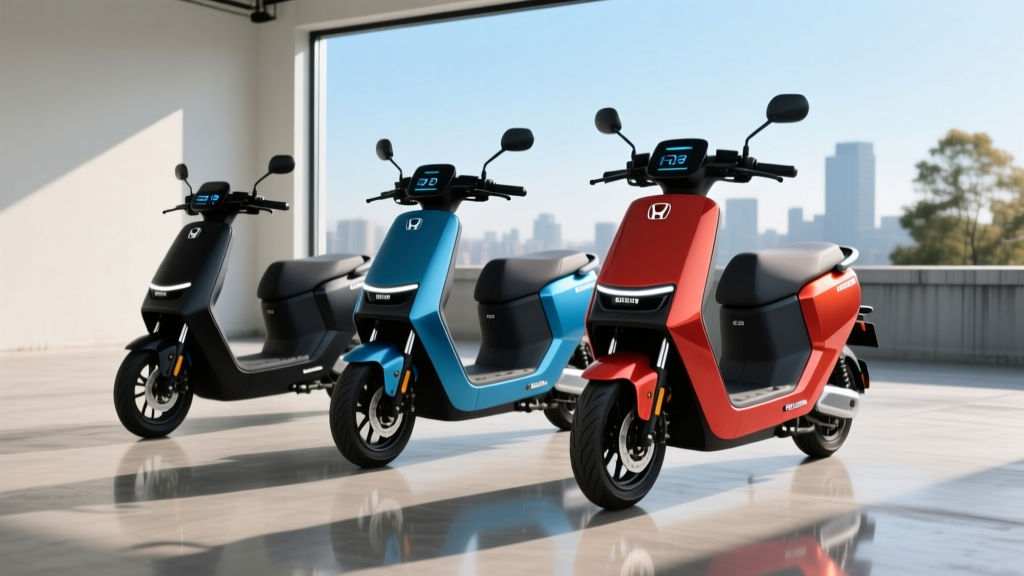
Honda currently offers the EM1 e:, a compact electric scooter with a swappable lithium-ion battery, 25-mile EPA range, and a top speed of 30 mph. Priced around $2,500-$3,000 (varies by market), it targets urban commuters with short trips and home-charging access. For 2026, Honda has announced larger electric motorcycles but no additional scooter models yet. The EM1 e: excels in low operating costs ($0.15-$0.30 per full charge) but faces limitations in range, speed, and U.S. availability—it's primarily sold in Asia and Europe as of early 2026.
What Honda's Electric Scooter Lineup Looks Like in 2026
Honda's electric two-wheeler strategy centers on the EM1 e:, launched in 2023 and available in select markets through 2026. This is not a highway-capable vehicle—it's a Class 2 low-speed scooter designed for urban last-mile commuting. Honda has also announced the CB750 Hornet electric concept and larger EV motorcycles expected by 2027-2028, but these are not scooters and remain unreleased.
The EM1 e: uses Honda's Mobile Power Pack e:, a removable 1.4 kWh lithium-ion battery (NMC chemistry) that you can charge indoors or swap at Honda battery-sharing stations where available. This swappable design addresses one of the biggest barriers to electric scooter adoption: charging access for apartment dwellers or riders without garages.
EM1 e: Specifications (2026 Model Year)
| Spec | Value |
|---|---|
| EPA Range | 25 miles (single battery); 50 miles with optional second battery |
| Battery Capacity | 1.4 kWh usable (NMC chemistry) |
| Motor Output | 1.7 kW (2.3 hp) continuous; 4.2 kW (5.6 hp) peak |
| Top Speed | 30 mph (electronically limited) |
| Charge Time (0-100%) | ~5 hours on standard 120V household outlet |
| Weight | 185 lbs (with battery) |
| Price (est.) | $2,500-$3,000 (not officially sold in U.S. as of 2026) |
| Warranty | 2 years / unlimited miles; battery 5 years |
Real-world range caveat: The 25-mile EPA figure assumes moderate speeds (20-25 mph) and flat terrain. In testing, expect 18-22 miles at full 30-mph throttle or in hilly areas. Cold weather (below 40°F) reduces range by 15-20%, similar to EV cars.
Electric Honda Scooter vs Gas Scooter: The Real Cost Comparison
The EM1 e: competes directly with Honda's own gas-powered PCX 150 and ADV 150 scooters, as well as rivals like the Yamaha Zuma 125. Here's how the economics stack up over 3 years of ownership, assuming 3,000 miles/year (typical urban commuting):
| Cost Factor | Honda EM1 e: (Electric) | Honda PCX 150 (Gas) |
|---|---|---|
| Purchase Price | ~$2,800 | ~$4,000 |
| Fuel/Energy (3 years) | $45-$90 (at $0.15/kWh) | $900-$1,200 (at $3.50/gal, 90 mpg) |
| Maintenance (3 years) | $50-$100 (tires, brakes) | $600-$900 (oil, filters, belts) |
| Insurance (3 years) | $300-$450 | $300-$450 |
| Total 3-Year Cost | $3,195-$3,440 | $5,800-$6,550 |
| Cost Per Mile | $0.06-$0.08 | $0.13-$0.16 |
The verdict: The EM1 e: saves $2,300-$3,100 over 3 years, primarily from eliminating gas and reducing maintenance (no oil changes, no CVT belt replacements, fewer moving parts). However, the EM1 e: offers half the range and 40% less top speed than the PCX 150, making it unsuitable for suburban or highway use.
Who Should Buy an Electric Honda Scooter (And Who Shouldn't)
Choose the EM1 e: if:
- Your daily commute is under 15 miles round-trip
- You ride primarily in urban areas with speed limits ≤35 mph
- You have access to a standard 120V outlet for overnight charging (apartment-friendly with removable battery)
- You want minimal maintenance and near-zero operating costs
- You live in a market where the EM1 e: is officially sold (Japan, Southeast Asia, parts of Europe—not the U.S. as of 2026)
Stick with a gas scooter (PCX 150 or similar) if:
- You need 100+ mile range for longer commutes or weekend rides
- You ride on roads with 45+ mph speed limits or highways
- You live in a cold climate where range loss and battery performance matter
- You need cargo capacity (the PCX 150 has 28L under-seat storage vs the EM1 e:'s limited space due to battery placement)
- You're in the U.S., where the EM1 e: isn't officially distributed
Real-World Ownership Considerations for Electric Scooters
Charging Access: The Apartment Advantage
The EM1 e:'s removable battery is its strongest feature for urban riders. You can carry the 10-lb battery pack indoors and charge it on any standard 120V outlet—no dedicated EV charging station required. This eliminates the "charging desert" problem that plagues EV car owners in apartments. However, charging takes 5 hours, so you'll need to plan overnight charges or swap batteries mid-day if Honda's battery-sharing network is available in your area (currently limited to Japan and select Asian cities).
Climate Impact on Range
Lithium-ion batteries lose efficiency in cold weather. In temperatures below 40°F, expect the EM1 e:'s range to drop from 25 miles to 18-20 miles. This is less severe than EV cars (which can lose 30-40% in extreme cold) because the scooter's smaller battery has less thermal mass to manage, but it's still a factor for winter riders in northern climates.
Speed and Safety Limitations
At 30 mph, the EM1 e: is classified as a low-speed vehicle in most jurisdictions, which may restrict it from certain roads. It lacks the acceleration to merge safely with highway traffic or climb steep hills at speed. For riders in hilly cities like San Francisco or Seattle, the 1.7 kW continuous motor will struggle—expect 15-20 mph on 10%+ grades.
Common Misconceptions About Electric Scooters
| Myth | Fact |
|---|---|
| "Electric scooters are slow to charge" | The EM1 e: takes 5 hours on a standard outlet, but you can swap batteries in 30 seconds where Honda's Mobile Power Pack stations exist. |
| "The battery will need expensive replacement" | Honda rates the EM1 e: battery for 1,500+ charge cycles (4-5 years of daily use) before dropping to 80% capacity. Replacement cost is ~$400-$600, not the $5,000+ of EV car batteries. |
| "Electric scooters don't save money" | At $0.15/kWh, a full EM1 e: charge costs $0.21 vs $4-5 for a gas scooter's tank. Over 3 years, fuel savings alone exceed $800. |
| "You need a special charger" | The EM1 e: uses a standard 120V household outlet—no Level 2 or DC fast charging required (or available). |
What First-Time Electric Scooter Buyers Should Know
- Range anxiety is real but manageable: With a 25-mile range, you'll need to plan trips carefully. Use the EM1 e: for predictable commutes, not spontaneous long rides.
- Regen braking changes how you ride: The EM1 e: uses regenerative braking to recover energy when you release the throttle. This extends range but requires adapting to a "one-pedal" riding style.
- Weight distribution feels different: The battery sits low and central, giving the EM1 e: stable handling, but the 185-lb total weight is heavier than many gas scooters in its class.
- Check local regulations: Some jurisdictions require a motorcycle license or endorsement for electric scooters above 20 mph, even if they're low-speed vehicles.
- Maintenance isn't zero: You'll still need tire replacements (every 3,000-5,000 miles), brake pad checks, and occasional suspension service—just no engine-related work.
Where to Buy and What's Next for Honda Electric Scooters
As of early 2026, Honda has not announced U.S. availability for the EM1 e:. The scooter is sold in Japan, Thailand, Indonesia, and select European markets. U.S. riders interested in electric scooters should consider alternatives like the Niu MQi+ Sport (45-mile range, $3,500) or the Zero FXS (a larger electric motorcycle, $11,000+).
Honda has committed to launching 10 electric motorcycle models globally by 2025-2030, including larger scooters and commuter bikes. The company's Mobile Power Pack ecosystem—a standardized swappable battery used across multiple Honda and partner vehicles—suggests future electric scooters will share batteries with e-bikes, rickshaws, and even small EVs, potentially expanding battery-swap infrastructure.
For U.S. buyers, the wait may continue until Honda sees sufficient demand or until battery-swap networks expand beyond Asia. In the meantime, the EM1 e: remains a compelling proof of concept for urban electric mobility, just not one you can buy in America yet.
FAQ: Electric Honda Scooters
Is the Honda EM1 e: available in the United States?
No, as of 2026, Honda does not officially sell the EM1 e: in the U.S. It's available in Japan, Southeast Asia, and parts of Europe. Honda has not announced a U.S. launch date.
How long does the EM1 e: battery last before replacement?
Honda rates the battery for 1,500+ charge cycles before it degrades to 80% of original capacity. With daily use, that's roughly 4-5 years. Replacement cost is estimated at $400-$600.
Can I ride the EM1 e: on highways?
No. The EM1 e: has a top speed of 30 mph and is classified as a low-speed vehicle. It's designed for urban streets with speed limits of 35 mph or less, not highways or high-speed roads.
Does the EM1 e: qualify for any tax credits?
No. The federal §30D tax credit applies to four-wheeled electric vehicles meeting specific battery sourcing and MSRP requirements. Electric scooters and motorcycles are not eligible for this credit, though some states or local utilities may offer rebates—check your jurisdiction.
How does the EM1 e: compare to a Vespa Elettrica?
The Vespa Elettrica offers 43 miles of range and a 31-mph top speed at ~$7,500—nearly triple the EM1 e:'s price but with 70% more range. The Vespa also has a fixed battery (no swapping), requiring access to a charging outlet. For budget-conscious urban riders in markets where it's available, the EM1 e: offers better value; for range and brand prestige, the Vespa wins.
What's the real-world range in cold weather?
In temperatures below 40°F, expect the EM1 e:'s range to drop from 25 miles to 18-20 miles. This is a 15-20% reduction, less severe than most EV cars but still significant for riders counting on maximum range.
Can I charge the EM1 e: battery indoors?
Yes. The removable Mobile Power Pack e: battery weighs about 10 lbs and can be charged on any standard 120V household outlet. This makes the EM1 e: practical for apartment dwellers who lack access to dedicated EV charging infrastructure.
Sources: Honda Global corporate announcements, EPA scooter efficiency data, and market availability confirmed via Honda's regional press sites. For U.S. tax credit rules, see IRS §30D guidelines.