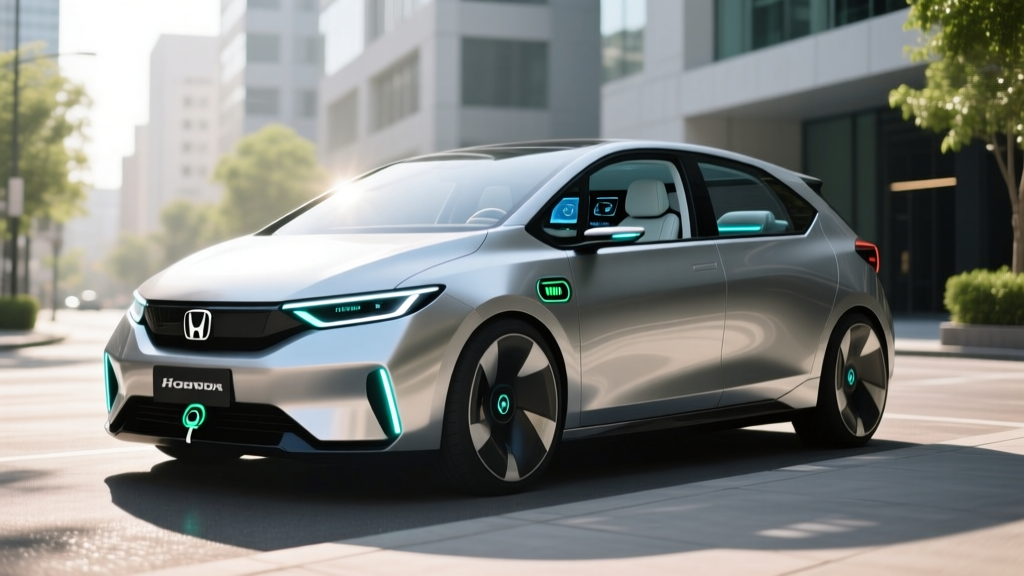
Short answer: Honda does not sell an electric Honda Fit (also known as the Jazz EV globally) in the United States as of the 2026 model year. The gas-powered Fit was discontinued in the U.S. after the 2020 model year, and Honda has not introduced a battery-electric successor for the American market. If you want a small, efficient, Honda-badged electrified vehicle, your closest options are the Honda Prologue (an all-electric compact SUV built on GM's Ultium platform, starting around $47,400) or the Honda Civic Hybrid (a compact sedan returning up to 49 MPG combined). For a true subcompact electric hatchback, look at alternatives like the Nissan LEAF, Mini Cooper Electric, or the upcoming entries in the affordable EV segment.
Why There's No Electric Honda Fit in America
The Honda Fit enjoyed a loyal U.S. following from 2006 through 2020 as one of the most practical, space-efficient subcompacts ever sold. Its Magic Seat system offered cargo flexibility that rivaled vehicles twice its size, and its 1.5L four-cylinder delivered solid fuel economy. But when Honda restructured its North American lineup for the 2021 model year, the Fit was axed alongside the Clarity plug-in hybrid as Honda shifted focus toward crossovers and SUVs.
In other markets — particularly Japan, Europe, and parts of Asia — Honda has offered the Honda e (a retro-styled city EV with roughly 137 miles of WLTP range and a 35.5 kWh battery) and the hybrid-only Jazz/Fit. However, the Honda e was never sold in the U.S., and Honda discontinued it in Europe in 2024 due to slow sales. Honda's U.S. EV strategy has instead centered on larger vehicles: the Prologue SUV and the upcoming 0 Series sedans and SUVs expected for the 2026–2027 timeframe.
The result? American buyers searching for an "electric Honda Fit" in 2026 are looking for a vehicle that simply doesn't exist in Honda's U.S. catalog. That doesn't mean you're out of luck — it means you need to evaluate alternatives that fill the same role.
What Honda Actually Offers in 2026: Electrified Options
Before exploring alternatives, it's worth understanding what Honda does sell that's electrified or electric in the U.S. market for 2026:
| Model | Type | EPA Range / MPG | Starting MSRP | Federal Tax Credit |
|---|---|---|---|---|
| Honda Prologue | BEV (SUV) | ~296 mi (FWD) / 281 mi (AWD) | ~$47,400 | Up to $7,500 (§30D, eligibility varies) |
| Honda Civic Hybrid | HEV (Sedan) | 49 MPG combined | ~$29,845 | Not eligible (HEV) |
| Honda Accord Hybrid | HEV (Sedan) | 48 MPG combined | ~$34,095 | Not eligible (HEV) |
| Honda CR-V Hybrid | HEV (SUV) | 43 MPG combined | ~$36,395 | Not eligible (HEV) |
The Prologue is Honda's only all-electric vehicle in the U.S. It's a capable midsize SUV with GM Ultium underpinnings, DC fast charging up to 150 kW (10–80% in roughly 30 minutes), and an 85 kWh battery pack. But at nearly $48,000 starting and with a footprint far larger than a Fit, it solves a different problem than the one subcompact shoppers are trying to address.
The Civic Hybrid, on the other hand, is the spiritual efficiency successor to the Fit for many buyers — offering outstanding fuel economy, a practical trunk, and a price under $30,000 — but it remains a conventional hybrid with no plug and no electric-only driving.
The Closest Alternatives: Subcompact EVs Compared to a Fit
If the Fit's appeal was its combination of small exterior dimensions, big interior space, and low running costs, here's how the nearest electric alternatives stack up for 2026:
| Vehicle | EPA Range | Battery (kWh) | Peak DC Charge (kW) | 10–80% Time | Starting MSRP |
|---|---|---|---|---|---|
| Nissan LEAF (2026) | ~212 mi (SV Plus) | 60 kWh (usable) | 100 kW (CCS) | ~40 min | ~$29,135 |
| Mini Cooper Electric SE | ~200 mi | 54.2 kWh | 95 kW (CCS) | ~30 min | ~$34,900 |
| Hyundai Kona Electric | ~261 mi | 65.4 kWh (NMC) | 100+ kW (CCS) | ~43 min | ~$33,975 |
| Chevrolet Bolt EV (2026 refresh) | ~259 mi | 65 kWh (NMC) | 115 kW (CCS) | ~35 min | ~$28,995 |
| 2020 Honda Fit (gas, used) | ~36 MPG combined | 10.6 gal tank | N/A | ~5 min at pump | ~$15,000–$20,000 (used) |
A few observations from this comparison:
- Cargo space: The Fit offered 52.7 cu ft with rear seats folded — genuinely exceptional for its class. The Kona Electric provides 25.8 cu ft behind the rear seats (63.7 folded), the LEAF offers 23.6 cu ft (30.0 folded), and the Bolt EV gives 16.3 cu ft (57.2 folded). None perfectly replicate the Fit's Magic Seat versatility, but the Kona comes closest in overall utility.
- Price: The Bolt EV and LEAF undercut or match what a well-equipped Fit cost new, especially after factoring in potential federal tax credits of up to $7,500 under IRS §30D rules — though eligibility depends on MSRP caps ($55,000 for cars), buyer income limits, and battery critical-mineral sourcing requirements that change yearly.
- Range reality: The EPA numbers above assume moderate temperatures and mixed driving. In real-world highway driving at 70+ mph, expect 15–20% less range. In freezing winter conditions, range can drop 25–40% depending on whether the vehicle uses a heat pump (the Kona Electric does; the LEAF does not).
EV vs. Gas vs. Hybrid: What Actually Costs Less to Own?
The Fit's low price and 36 MPG made it cheap to own. Does going electric actually save money? Let's compare a 5-year ownership scenario (75,000 miles) between a used 2020 Honda Fit, a new Honda Civic Hybrid, and a new Chevrolet Bolt EV:
| Cost Factor (5 Years / 75K Miles) | Used Honda Fit (Gas) | Honda Civic Hybrid (New) | Chevrolet Bolt EV (New) |
|---|---|---|---|
| Purchase Price | $17,500 (used avg.) | $29,845 | $28,995 |
| Federal Tax Credit | $0 | $0 (HEV) | Up to $7,500* |
| Net Purchase Cost | $17,500 | $29,845 | $21,495 (with credit) |
| Fuel / Electricity Cost | $7,813 (gas @ $3.00/gal, 36 MPG) | $5,357 (gas @ $3.00/gal, 49 MPG) | $3,000 (electric @ $0.14/kWh, 3.5 mi/kWh) |
| Maintenance (est.) | $3,200 | $2,500 | $1,200 |
| Insurance (est. 5-yr total) | $6,500 | $7,000 | $7,500 |
| 5-Year Total Cost | $35,013 | $44,702 | $33,195 |
| Cost Per Mile | $0.47 | $0.60 | $0.44 |
*Tax credit eligibility under §30D depends on battery sourcing, critical minerals requirements, buyer AGI limits ($150K single / $300K joint), and vehicle MSRP caps. Consult the IRS Clean Vehicle Credit page or a tax professional for your specific situation. The credit can now be transferred to the dealer at point of sale as an upfront discount.
The Bolt EV actually edges out the used Fit on total 5-year cost when the full federal credit applies, driven by dramatically lower fueling and maintenance costs. EVs eliminate oil changes, have far fewer moving parts, and use regenerative braking that extends brake pad life substantially. However, insurance premiums for EVs tend to run 10–20% higher due to battery replacement costs in collision claims.
The Civic Hybrid sits in a middle ground: no plug needed, no range anxiety, excellent fuel economy, but no tax credit and still dependent on gas prices.
Real-World Ownership: What First-Time EV Buyers Must Know
If you're considering any subcompact EV as a Fit replacement, these are the ownership realities that spec sheets don't capture:
Home Charging Is the Make-or-Break Factor
Over 80% of EV charging happens at home. If you have access to a garage or dedicated parking spot where a Level 2 (240V) charger can be installed, daily EV ownership is remarkably convenient — you start every morning with a "full tank." A typical Level 2 home installation runs $500–$2,000 for the charger unit plus $800–$3,000 for electrician labor, depending on whether your electrical panel needs an upgrade to 200 amps.
If you live in an apartment, rely on street parking, or lack access to a dedicated circuit, EV ownership becomes significantly more challenging. Public DC fast charging costs 2–4× more per kWh than home charging and frequent fast-charging accelerates battery degradation. Be honest about your charging access before committing.
Cold Weather Cuts Range — Plan Accordingly
Lithium-ion batteries lose efficiency in cold temperatures, and cabin heating draws substantial energy. A subcompact EV rated at 250 miles EPA might deliver only 150–180 miles in sustained below-freezing driving. If your commute is 40 miles round-trip and winters are harsh where you live, you need more range buffer than a warm-climate driver.
Charging Speed Matters More Than Peak Numbers Suggest
When a manufacturer advertises "100 kW DC fast charging," that's the peak rate — typically sustained only between roughly 10–40% State of Charge. Above 80%, charging slows dramatically to protect battery health. A vehicle that peaks at 100 kW might average only 50–60 kW across a full 10–80% session. This is why 10–80% charge time is a more useful metric than peak kW alone.
Common Misconceptions About Small EVs
| Myth | Fact |
|---|---|
| "Small EVs can't handle road trips." | A Bolt EV or Kona Electric can handle road trips with planning. DC fast chargers along interstates add ~150 miles in 30 minutes. The trip takes longer than in a gas car, but it's entirely feasible for 2–3 trips per year. |
| "EV batteries need replacing every few years." | Modern NMC and LFP batteries are designed to last the life of the vehicle. Most manufacturers warranty 8 years/100,000 miles with a capacity retention threshold of 70%. Real-world data shows most EV batteries retain 85–90% capacity after 100,000 miles. |
| "Hybrids are always cheaper than EVs." | Not when federal credits apply. A Bolt EV after the $7,500 credit can cost less upfront than a Civic Hybrid, with lower per-mile fueling costs. The math depends on your specific credit eligibility and electricity rates. |
| "I need a huge battery for daily driving." | The average American drives 37 miles per day (FHWA data). Even a 200-mile EV covers 4–5 days of commuting before needing a charge. Bigger batteries add cost, weight, and resource consumption you may never need. |
| "EVs are worse for the environment because of electricity generation." | Even on coal-heavy grids, EVs produce fewer lifetime emissions than equivalent gas cars. On grids with significant renewables (which most U.S. grids are increasingly adding), the advantage grows substantially over the vehicle's lifetime. |
Decision Framework: What Should You Actually Buy?
Use this framework to choose the right path:
Choose a subcompact EV (Bolt EV, Kona Electric, LEAF) if:
- You have home charging access (garage, driveway, or landlord-installed Level 2)
- Your daily driving is under 80 miles round-trip
- You qualify for the federal §30D tax credit (check income and sourcing rules)
- You want the lowest per-mile operating cost
- You're willing to plan longer road trips around DC fast-charger stops
Choose a hybrid (Civic Hybrid, CR-V Hybrid) if:
- You lack reliable home charging access
- You frequently drive long distances or in extreme cold without time to charge
- You want the lowest upfront cost with no behavioral change
- You live in an area with limited public charging infrastructure
- You want Honda reliability and dealer support
Wait for Honda's 0 Series or a future subcompact EV if:
- You're committed to the Honda brand and want an all-electric vehicle
- You can wait for 2027–2028 model-year introductions
- Your current vehicle has enough life left to bridge the gap
Buy a used Honda Fit (2017–2020) if:
- Your budget is under $20,000 and you need maximum cargo versatility on a small footprint
- You'll eventually transition to an EV when charging access or vehicle options improve
- You value the Magic Seat system that no current EV replicates
Frequently Asked Questions
Will Honda ever make an electric Fit for the U.S.?
There is no confirmed plan as of early 2026. Honda's U.S. EV roadmap focuses on the Prologue (on sale now), the upcoming 0 Series sedans and SUVs (expected 2026–2027), and larger vehicles. A subcompact electric hatchback is not in Honda's announced U.S. lineup. Honda's global "0 Series" strategy emphasizes thin, light, and efficient EV platforms, but initial products target midsize and larger segments for the American market.
Is the Honda e available in America?
No. The Honda e was sold only in Japan and Europe and was discontinued in 2024. It was never homologated for U.S. sale. Its 137-mile WLTP range (roughly 100–110 miles EPA-equivalent) and high price made it uncompetitive in the U.S. market even if it had been offered.
What's the cheapest electric car I can buy new in 2026?
The Chevrolet Bolt EV starts around $28,995 and the Nissan LEAF around $29,135, making them the most affordable new EVs in the U.S. market. After a potential $7,500 federal tax credit (subject to §30D eligibility rules including income caps and battery sourcing requirements), the effective price can drop to the low $20,000s — competitive with many used gas cars.
How much does it cost to charge an EV at home vs. buying gas?
At the U.S. average residential electricity rate of roughly $0.14–$0.17 per kWh, charging a 65 kWh battery from empty to full costs about $9–$11. That delivers approximately 220–250 miles of range. The equivalent gas cost at 36 MPG and $3.00/gallon would be roughly $18–$21. Home charging typically saves 40–55% on "fuel" costs. Public DC fast charging at $0.35–$0.50/kWh narrows or eliminates that advantage.
Do I need a special electrical panel for a home EV charger?
Not always. A Level 2 home charger typically requires a 240V circuit rated at 32–48 amps. If your home already has a 200-amp electrical panel with available capacity, installation may cost $800–$1,500. If you need a panel upgrade from 100A to 200A, expect an additional $1,500–$3,500. Always consult a licensed electrician for a site-specific assessment — electrical requirements vary by home age, wiring condition, and local code.
Is a plug-in hybrid (PHEV) a better bridge option than a full EV?
It depends. A PHEV like the Toyota Prius Prime (44 miles electric-only, then 52 MPG on gas) offers electric commuting with gas-car range flexibility. But Honda doesn't currently offer a PHEV in the U.S. market, and PHEVs carry a price premium over HEVs while offering less electric range than a full EV. If your daily driving is under 40 miles and you have home charging, a full EV usually delivers lower operating costs. If you frequently exceed 100+ miles without charging opportunities, a PHEV or HEV is more practical.
Sources: EPA fuel economy data via fueleconomy.gov; IRS Clean Vehicle Credit rules via irs.gov; manufacturer specification sheets for 2026 model year vehicles.