The Tesla Model Y enters 2026 with its highly anticipated "Juniper" refresh fully deployed across all trims, bringing a sleeker exterior, a redesigned minimalist interior, and meaningful improvements to ride comfort and cabin quietness. But beyond the headlines, buyers researching the 2026 Tesla Model Y colors, specs, and ownership costs need hard data — not marketing gloss. This profile breaks down every paint option, the real-world range you can actually expect, charging speeds on both DC fast chargers and home Level 2 setups, and exactly how the federal §30D tax credit applies to each trim.
2026 Tesla Model Y Exterior and Interior Color Options
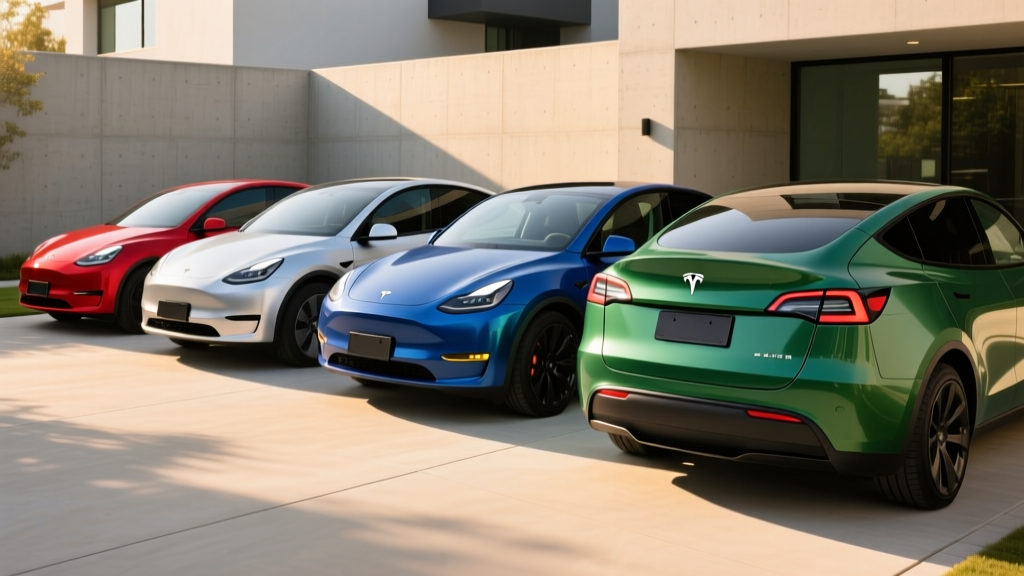
Tesla streamlined the Model Y palette for 2026, offering five exterior colors and two interior themes. Pearl White Multi-Coat remains the no-cost default, while four premium paints carry a $1,000 to $2,000 upcharge depending on the finish.
| Color | Finish Type | Upcharge |
|---|---|---|
| Pearl White Multi-Coat | Tri-coat pearl | Included |
| Solid Black | Standard solid | $1,000 |
| Deep Blue Metallic | Metallic | $1,000 |
| Quicksilver | Multi-coat metallic | $2,000 |
| Ultra Red | Multi-coat metallic | $2,000 |
The two multi-coat options — Quicksilver and Ultra Red — use additional pigment layers that create depth under direct sunlight but require more careful paint correction if scratched. For buyers prioritizing resale, Pearl White and Deep Blue Metallic historically hold strong in the used market, while Solid Black shows swirl marks more readily on the larger body panels.
Inside, the 2026 Model Y offers:
- All Black — premium vegan leather with black headliner (standard)
- Black and White — two-tone vegan leather with white seats and black dashboard ($1,000)
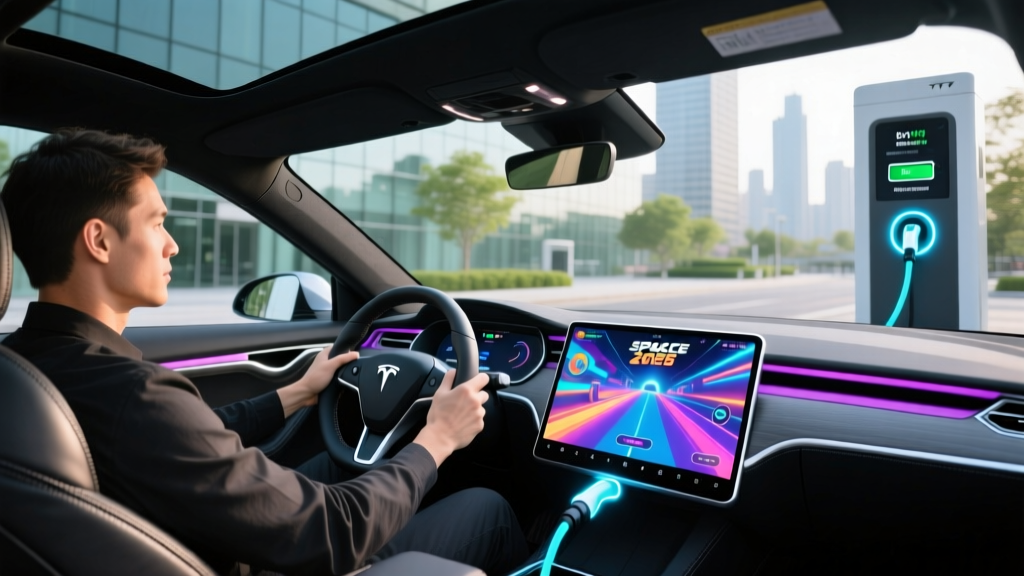
The Juniper refresh added ventilated front seats across all trims, ambient lighting integrated into the dashboard and door panels, and a rear-seat touchscreen for climate and media control — a welcome fix for the previous generation's rear-passenger complaints.
Range, Battery, and Real-World Efficiency
The 2026 Model Y is offered in three configurations, each with distinct range and powertrain characteristics. Tesla uses NMC (nickel manganese cobalt) chemistry in the Long Range and Performance variants for maximum energy density, while the standard-range RWD model has transitioned to an LFP (lithium iron phosphate) battery for cost efficiency and cycle longevity.
| Spec | RWD (Standard) | Long Range AWD | Performance |
|---|---|---|---|
| EPA Range | 277 mi | 320 mi | 293 mi |
| Battery (usable) | ~60 kWh (LFP) | ~78 kWh (NMC) | ~78 kWh (NMC) |
| Drivetrain | Rear-Wheel Drive | Dual-Motor AWD | Dual-Motor AWD |
| Horsepower | 295 hp | 384 hp | 456 hp |
| 0–60 mph | 6.5 sec | 4.8 sec | 3.5 sec |
| MPGe (combined) | 123 MPGe | 120 MPGe | 111 MPGe |
| Efficiency | 27 kWh/100mi | 28 kWh/100mi | 30 kWh/100mi |
| Top Speed | 135 mph | 135 mph | 155 mph |
| Base MSRP | $44,990 | $49,990 | $54,990 |
Real-World Range Reality Check
EPA sticker: 320 miles (Long Range AWD)
Expect in practice: 270–290 miles on mixed highway driving at 70–75 mph; approximately 230–250 miles in sustained sub-freezing winter conditions with cabin heat. The LFP battery in the RWD model tolerates 100% daily charging without degradation concerns, partially offsetting its lower total capacity — but you'll realistically see 235–250 highway miles from a full charge.
Efficiency remains a Tesla strong suit. The Juniper aerodynamic refinements — including a reshaped front fascia, revised underbody panels, and active aero elements — contribute to a combined 120 MPGe on the Long Range per EPA testing. In real-world mixed driving, expect 26–29 kWh per 100 miles depending on climate control usage and terrain.
Charging Speeds: DC Fast, Level 2, and Level 1
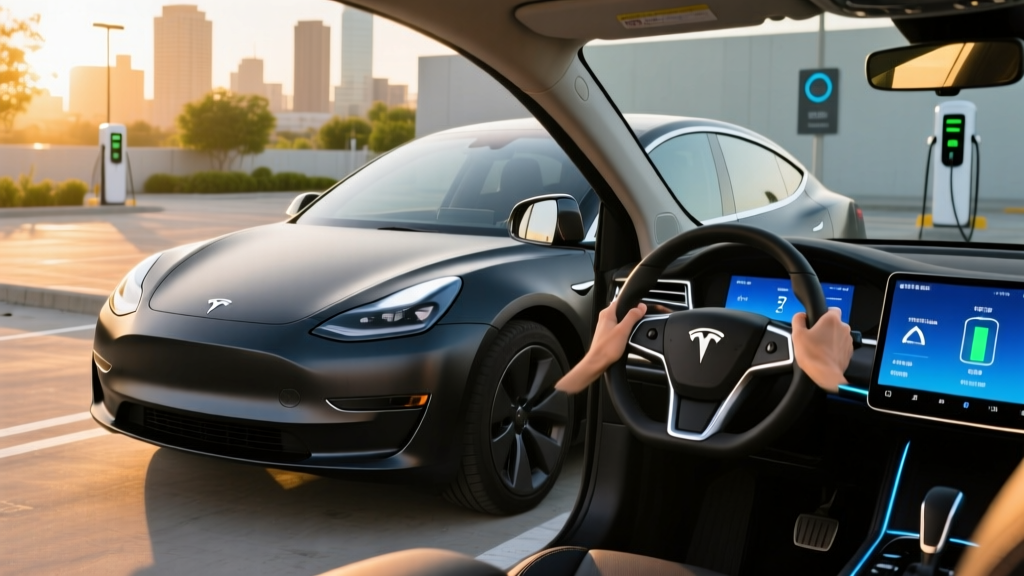
Charging remains one of the Model Y's strongest advantages, thanks to Tesla's Supercharger network and the vehicle's thermal management system, which preconditions the battery for optimal charge acceptance.
| Charging Level | Power / Rate | Speed (miles added) | Time (10–80%) |
|---|---|---|---|
| DC Fast Charge (V4 Supercharger) | Peak 250 kW | ~200 mi in 15 min | ~22 min (LR), ~25 min (Perf) |
| DC Fast Charge (RWD / LFP) | Peak 170 kW | ~140 mi in 15 min | ~28 min |
| Level 2 (Home Wall Connector, 48A) | 11.5 kW | ~37 mi/hr | ~7–8 hours (full) |
| Level 2 (32A mobile connector) | 7.7 kW | ~25 mi/hr | ~10–11 hours (full) |
| Level 1 (120V household) | 1.4 kW | ~4 mi/hr | Not recommended for full charge |
Charging curve reality: The 250 kW peak on the Long Range and Performance trims is not sustained across the entire session. Expect peak rates between 10–30% state of charge, tapering to ~150 kW by 50%, and dropping sharply above 80%. This is why Tesla and most EV analysts recommend charging to 80% at DC fast stations — the last 20% can take as long as the first 60%.
The Model Y ships with the NACS (North American Charging Standard) connector natively. Non-Tesla CCS stations are accessible via Tesla's included CCS adapter, though charge rates on third-party networks may vary based on station power output and connector compatibility.
Pricing, Trims, and Federal Tax Credit Eligibility
The 2026 Model Y lineup spans three trims. Destination charges add $1,390 to all configurations, and premium paint or interior selections stack on top.
| Trim | Base MSRP | As-Tested (w/ color + interior) | Est. After §30D Credit |
|---|---|---|---|
| RWD Standard Range | $44,990 | $47,380 (Ultra Red + B/W) | ~$37,490* |
| Long Range AWD | $49,990 | $52,380 (Quicksilver + B/W) | ~$42,490* |
| Performance | $54,990 | $57,380 (Ultra Red + B/W) | ~$47,490* |
*Assumes full $7,500 §30D credit eligibility. Actual credit varies based on buyer income, battery sourcing, and point-of-sale transfer election. See IRS §30D guidelines for current rules.
§30D Federal Tax Credit Checklist
The Model Y qualifies as an SUV under the IRS MSRP cap of $80,000, so all trims clear that hurdle. However, full credit eligibility depends on several factors that change periodically:
- Adjusted Gross Income caps: $150,000 (single), $225,000 (head of household), $300,000 (joint filers)
- Battery component sourcing: A percentage of battery components must be manufactured or assembled in North America (threshold increases annually)
- Critical minerals: A percentage of critical minerals must be sourced from the U.S. or FTA-partner countries
- Point-of-sale transfer: As of 2024, buyers can transfer the credit to the dealer at purchase, reducing the upfront cost rather than waiting for tax filing
- FEOC exclusion: Vehicles with battery components from a "foreign entity of concern" may lose partial or full credit
The RWD model's LFP battery has historically faced sourcing challenges under critical-mineral rules. Buyers should verify current credit status on the fueleconomy.gov credit lookup tool before finalizing a purchase, as eligibility can shift with supply-chain changes.
Cargo Space, Interior Dimensions, and Practicality
The Model Y's crossover form factor delivers practical cargo volume that outpaces most electric sedans and competes directly with the Hyundai Ioniq 5 and Ford Mustang Mach-E.
| Measurement | Specification |
|---|---|
| Cargo (rear seats up) | 30.2 cu ft |
| Cargo (rear seats folded) | 72.1 cu ft |
| Front trunk (frunk) | 4.1 cu ft |
| Front legroom | 41.8 in |
| Rear legroom | 38.4 in |
| Front headroom | 40.7 in |
| Rear headroom | 39.4 in |
| Seating capacity | 5 (optional 7-seat unavailable for 2026) |
The Juniper refresh improved rear-seat comfort with a slightly reclined seatback angle and revised cushion padding. The panoramic glass roof remains standard, though Tesla now includes a power-retractable sunshade — addressing one of the most persistent owner complaints from the pre-refresh model.
Technology, Driver Assistance, and Safety
The 2026 Model Y retains Tesla's 15.4-inch center touchscreen running the latest Tesla OS, with a secondary 8-inch rear display for passengers. Key tech features include:
- Autopilot (standard): Traffic-aware cruise control, autosteer, emergency braking, blind-spot monitoring
- Enhanced Autopilot ($6,000): Auto lane change, autosteer on navigation, smart summon, autopark
- Full Self-Driving (Supervised) ($8,000 or $99/mo): City-street autosteer, traffic light/stop sign control — requires continuous driver supervision
- Hardware 5 (AI5): New for Juniper, Tesla's latest compute platform with improved camera resolution and processing throughput
- Ventilated front seats, heated rear seats, heated steering wheel (all standard)
- Power-folding side mirrors, acoustic glass (front and rear)
Autopilot, Enhanced Autopilot, and FSD (Supervised) are all SAE Level 2 driver-assistance systems. The driver must remain fully attentive, keep hands on the steering wheel, and be prepared to take over at any moment. These are not self-driving systems. Tesla's naming of "Full Self-Driving" has drawn regulatory scrutiny — the "(Supervised)" suffix was added to clarify this limitation.
Safety ratings remain strong. The Model Y earned a 5-star overall rating from NHTSA and has historically performed well in IIHS crashworthiness testing, though IIHS retests are pending for the Juniper refresh.
Ownership Costs, Warranty, and Competitor Comparison
Tesla covers the 2026 Model Y with the following warranty:
- Basic vehicle: 4 years / 50,000 miles
- Battery & drive unit: 8 years / 120,000 miles (Long Range & Performance) or 8 years / 100,000 miles (RWD)
- Battery retention guarantee: Minimum 70% capacity retention over the warranty period
For total cost of ownership, the Long Range AWD at ~$50,000 (before credit) compares against several strong competitors:
| Vehicle | EPA Range | DC Fast Charge | Starting MSRP |
|---|---|---|---|
| Tesla Model Y LR AWD | 320 mi | 250 kW / ~22 min | $49,990 |
| Hyundai Ioniq 5 Limited AWD | 290 mi | 350 kW / ~18 min | $53,500 |
| Ford Mustang Mach-E Premium AWD | 300 mi | 150 kW / ~34 min | |
| Kia EV6 GT-Line AWD | 282 mi | 350 kW / ~18 min | $52,900 |
The Model Y's advantage lies in its combination of range, Supercharger network access, and cargo volume. The Ioniq 5 and EV6 charge faster on compatible 350 kW stations, but those stations remain less common than Tesla's 250 kW V3/V4 Superchargers in many regions.
Pros
- Class-leading 320-mile EPA range (Long Range)
- Extensive Supercharger network with native NACS
- Best-in-class cargo volume (72.1 cu ft folded)
- Strong efficiency (28 kWh/100mi) keeps charging costs low
- Over-the-air updates continuously add features
- Ventilated seats and rear screen now standard
Cons
- Minimalist interior lacks physical controls for climate/media
- No Apple CarPlay or Android Auto
- FSD (Supervised) still requires full driver attention at premium price
- Ride quality improved but still firm over rough pavement
- LFP battery in RWD model has lower cold-weather range retention
- Tax credit eligibility for RWD trim uncertain due to battery sourcing
Who Should Buy the 2026 Tesla Model Y?
The 2026 Model Y is best suited for:
- Daily commuters with home Level 2 charging who want minimal fuel costs and 300+ mile weekly range buffers
- Families needing car-seat-friendly rear space, strong safety ratings, and ample cargo for gear and groceries
- Road-trip enthusiasts who value the Supercharger network's reliability on long corridors (especially I-5, I-80, I-95, I-10)
- Tech-forward buyers who prefer OTA updates, app integration, and a software-defined vehicle experience
It may not be ideal for buyers who prioritize physical button controls, need Apple CarPlay/Android Auto, tow frequently (rated for 3,500 lbs but range drops significantly under load), or live in areas with limited home charging options and no nearby Superchargers.
Frequently Asked Questions
What is the real-world range of the 2026 Tesla Model Y?
The Long Range AWD is EPA-rated at 320 miles. In real-world highway driving at 70–75 mph, expect 270–290 miles. In winter conditions below freezing, plan for 230–250 miles due to battery chemistry limitations and cabin heating demand. The RWD model's LFP battery sees more pronounced cold-weather losses — budget 200–220 winter highway miles.
How fast does the 2026 Model Y charge at home and on road trips?
On a Tesla V3 or V4 Supercharger, the Long Range and Performance trims peak at 250 kW, adding roughly 200 miles in 15 minutes and reaching 10–80% in about 22 minutes. At home on a 48-amp Tesla Wall Connector (11.5 kW), you'll add ~37 miles per hour of charging — enough to fully replenish overnight. The RWD (LFP) model peaks at 170 kW on DC fast charge and takes approximately 28 minutes for 10–80%.
How much does the 2026 Model Y cost after the federal tax credit?
With the full $7,500 §30D credit applied at point of sale, the Long Range AWD drops from $49,990 to approximately $42,490 (before destination and options). The Performance trim falls to ~$47,490. However, credit eligibility depends on buyer income caps, battery critical-mineral sourcing, and component manufacturing requirements that shift annually. Verify current eligibility on fueleconomy.gov before purchasing.
Does the 2026 Tesla Model Y qualify for the federal EV tax credit?
The Model Y qualifies as an SUV under the $80,000 MSRP cap, clearing that threshold on all trims. However, the full $7,500 credit depends on meeting both critical-mineral and battery-component sourcing requirements set by the IRS under §30D. The Long Range and Performance trims with NMC batteries have generally qualified, while the RWD's LFP battery has faced partial-credit periods due to sourcing rules. Buyer income must also fall below the AGI caps ($150K single / $300K joint). Check the latest status at irs.gov.
Is the 2026 Model Y worth buying over the Hyundai Ioniq 5 or Ford Mach-E?
Choose the Model Y if you prioritize range (320 mi vs. 290 mi for the Ioniq 5), cargo space (72.1 vs. 59.3 cu ft), and Supercharger network access. Choose the Ioniq 5 or EV6 if faster 350 kW DC charging matters to you and you prefer physical controls with Apple CarPlay. The Mach-E offers a more traditional driving feel but charges more slowly at 150 kW. For most buyers wanting a do-it-all family EV with road-trip capability, the Model Y Long Range remains the benchmark — provided the minimalist interior and no-CarPlay approach work for your household.
What 2026 Tesla Model Y colors are available and which cost extra?
Five exterior colors are offered: Pearl White Multi-Coat (included), Solid Black ($1,000), Deep Blue Metallic ($1,000), Quicksilver ($2,000), and Ultra Red ($2,000). Interior options are All Black (standard) and Black & White ($1,000). The multi-coat finishes (Quicksilver and Ultra Red) offer the most visual depth but require paint protection film or careful maintenance to preserve the finish.