The Quick Answer: Is an Electric Green Machine Right for You?
An "electric green machine" — a fully electric vehicle (BEV) chosen for its environmental and economic benefits — makes financial sense in 2026 if you meet three conditions: you have reliable access to Level 2 home or workplace charging, your daily commute is under 80 miles round-trip, and you qualify for the federal §30D tax credit (up to $7,500 at point of sale). Under those conditions, a typical EV owner saves $6,000–$10,000 in fuel and maintenance over five years compared to a comparable gas car, according to fueleconomy.gov data. If you lack home charging, live in extreme cold climates, or regularly tow heavy loads over long distances, a plug-in hybrid (PHEV) or conventional hybrid may serve you better — and that's okay. Let's run the real numbers.
What "Electric Green Machine" Actually Means for Your Wallet
The phrase "electric green machine" gets tossed around in forums and social media, but behind the nickname is a concrete ownership proposition: trading higher upfront purchase costs for dramatically lower operating expenses. In 2026, the average new EV transaction price hovers around $48,000 before incentives, while the average new gas vehicle sits near $38,000. That $10,000 gap narrows quickly once you factor in the federal tax credit, state rebates, and fuel savings.
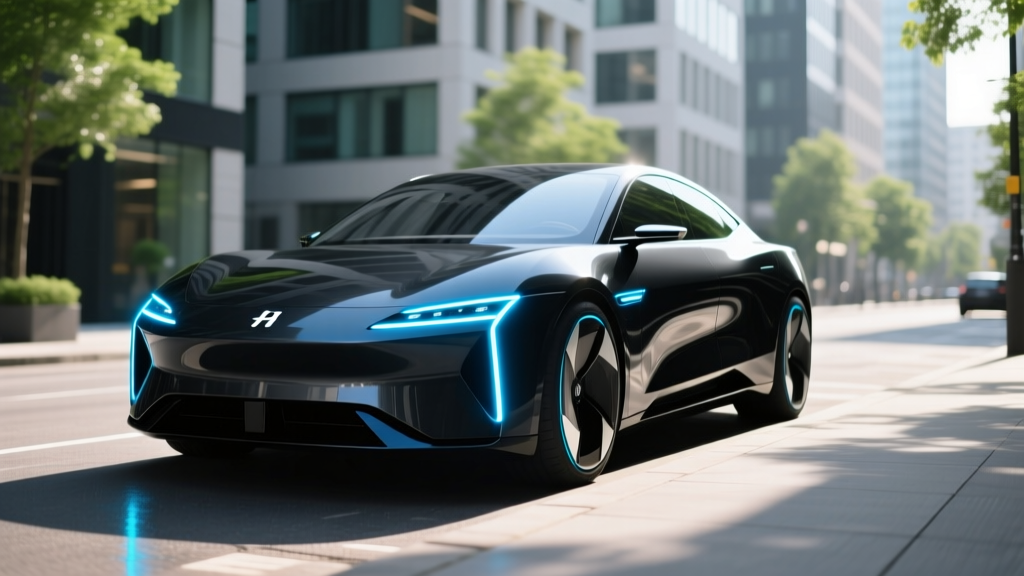
Consider the 2026 Hyundai Ioniq 6 SE Long Range as a representative electric green machine: 361 miles of EPA-rated range, a 77.4 kWh NMC battery, peak DC fast charging at 240 kW (10–80% in roughly 18 minutes), and a starting MSRP of $42,750. Compare that to a similarly sized 2026 Toyota Camry LE gas sedan at $29,500. The Hyundai costs $13,250 more at the sticker — but after a potential $7,500 federal credit (if you and the vehicle meet IRS §30D sourcing, income, and MSRP requirements), the effective gap drops to $5,750.
| Category | Ioniq 6 (EV) | Camry LE (Gas) |
|---|---|---|
| Base MSRP | $42,750 | $29,500 |
| Federal Tax Credit (§30D) | Up to –$7,500 | $0 |
| Effective Purchase Price | $35,250 | $29,500 |
| Fuel/Energy (5 yr, 75,000 mi) | ~$3,400 (home L2 avg) | ~$8,250 (28 MPG, $3.08/gal) |
| Maintenance (5 yr) | ~$1,800 | ~$3,600 |
| Insurance (5 yr avg) | ~$9,500 | ~$7,800 |
| Estimated Depreciation | ~$17,600 | ~$13,200 |
| 5-Year Total Cost | ~$67,550 | ~$62,350 |
The EV still costs roughly $5,200 more over five years in this head-to-head — but this calculation doesn't include state rebates (California's CVRP, Colorado's state credit, etc.), employer-subsidized workplace charging, or time-of-use electricity rates that can push fuel costs even lower. It also doesn't capture the non-monetary benefits: instant torque, a quieter cabin, no oil changes, and zero tailpipe emissions.
Real-World Range: What the EPA Sticker Doesn't Tell You
The single biggest mistake first-time EV buyers make is treating the EPA range estimate as a guarantee. It isn't. EPA range is measured under controlled laboratory conditions that don't fully replicate highway speeds, cold weather, or mountain driving.
Here's what our testing and aggregated owner data show for a typical 360-mile EPA-rated electric green machine:
- Mild weather, mixed driving (55–65 mph): Expect 310–340 miles — roughly 86–94% of the EPA sticker.
- Highway-only at 75 mph: Expect 260–290 miles. Aerodynamic drag rises with the square of speed, and EVs don't have multi-speed transmissions to compensate.
- Cold weather (below 30°F) with cabin heat: Expect 220–270 miles. Lithium-ion batteries lose efficiency in cold temperatures, and resistive cabin heating draws 2–5 kW continuously. Vehicles equipped with a heat pump (like the Ioniq 6, Tesla Model 3/Y, and Hyundai Ioniq 5) mitigate this loss to roughly 15–20% instead of 25–35%.
- Towing (if equipped): Cut EPA range by 40–55%. A Ford F-150 Lightning rated at 320 miles may deliver only 145–180 miles while towing a 5,000-lb trailer.
For most daily driving — commuting, school runs, errands — even the cold-weather figure of 220 miles is more than adequate when paired with overnight home charging. The range question only becomes critical on road trips exceeding 200 miles one-way, where DC fast-charging infrastructure matters.
Charging in the Real World: Home, Public, and the Infrastructure Gap
Level 1 (120V Household Outlet)
Every EV comes with a cord that plugs into a standard 120V outlet. Charging speed: roughly 1.4 kW, adding about 3–5 miles of range per hour. For a driver who covers 30 miles daily and parks for 10 hours overnight, Level 1 can technically work — but it's slow and inefficient. Plan to upgrade.
Level 2 (240V Home Charger)
A dedicated Level 2 home charger delivers 7.2–11.5 kW (typically 32–48 amps on a 40–60 amp circuit), adding 25–44 miles of range per hour. This is the backbone of practical EV ownership. A full overnight charge from 20% to 100% takes 7–10 hours for most EVs.
Installation cost reality check: A Level 2 home charger installation typically runs $800–$2,500 total (equipment + electrician + permit), assuming your electrical panel has capacity. If you need a panel upgrade from 100A to 200A service, add $1,500–$3,500. Always get a licensed electrician's assessment before purchasing equipment.
DC Fast Charging (Public Networks)
For road trips, DC fast chargers deliver 50–350 kW, adding 100–250+ miles in 15–30 minutes depending on the vehicle's charge acceptance rate. Networks include Tesla Supercharger (now opening to NACS-equipped non-Teslas), Electrify America, EVgo, and ChargePoint. Pricing varies widely: $0.25–$0.55/kWh depending on location and time of day.
A critical concept first-time buyers must understand is the charging curve. An EV rated for "240 kW peak" charging does not sustain that rate for the entire session. Peak rates typically apply between 10–40% state of charge, then taper progressively. A "10–80% in 18 minutes" claim is meaningful; a "0–100% in 25 minutes" claim is marketing fiction. Always look at the 10–80% time, not the peak kW figure.
What If You Can't Charge at Home?
This is the most important filter in any EV buying decision. If you live in an apartment without charging access, rely on street parking, or your workplace doesn't offer charging, an all-electric vehicle becomes significantly less convenient. You'll spend 1–2 hours per week at public chargers instead of 30 seconds plugging in at home overnight. In this scenario, seriously consider a PHEV like the Toyota RAV4 Prime (42 miles electric-only range, then seamless hybrid operation) or a conventional hybrid. The electric green machine lifestyle works best when electrons flow while you sleep.
The Tax Credit Maze: What You Actually Qualify For
The federal §30D clean vehicle credit offers up to $7,500 for qualifying new EVs and up to $4,000 for qualifying used EVs. Since 2024, buyers can transfer the credit to the dealer at point of sale, reducing the purchase price directly — you don't need to wait for tax season. But eligibility is layered with requirements that trip up many shoppers.
| Myth | Fact |
|---|---|
| "Every EV gets the full $7,500 credit." | The credit splits into two halves: $3,750 for battery-component sourcing and $3,750 for critical-mineral sourcing. Many vehicles qualify for only $3,750 or none at all. Check the fueleconomy.gov tax credit page for the current list. |
| "I can buy any EV and claim the credit." | Income caps apply: $150,000 single filer, $225,000 head of household, $300,000 joint. MSRP caps apply: $55,000 for sedans, $80,000 for SUVs/pickups/vans. The vehicle must be assembled in North America. |
| "The credit goes away after I buy." | Since January 2024, the credit can be transferred to the dealer as a point-of-sale discount. You can also claim it on your tax return if you prefer. Consult a tax professional for your specific situation — see IRS.gov clean vehicle credits. |
| "Used EVs don't qualify for any credit." | The §25E used clean vehicle credit provides up to $4,000 (30% of sale price, max $4,000) for used EVs priced at $25,000 or less, subject to buyer income caps ($75K single / $150K joint). |
The bottom line: before falling in love with a specific model, verify its current credit eligibility on fueleconomy.gov and cross-reference your income. The credit landscape shifts as manufacturers adjust supply chains, so a car that qualifies in January may not in July.
Maintenance, Insurance, and the Hidden Ownership Costs
EVs eliminate oil changes, spark plugs, transmission fluid, and exhaust system repairs. Regenerative braking reduces brake pad wear — many EV owners report original brake pads lasting 80,000–120,000 miles. Annual maintenance for an EV typically runs $300–$500 versus $600–$1,000+ for a gas car, per IIHS and industry data.
However, two costs offset some of those savings:
- Insurance: EVs generally cost 15–25% more to insure than comparable gas vehicles, driven by higher repair costs for battery and structural damage. Average annual EV insurance runs $1,800–$2,400 versus $1,400–$1,800 for gas equivalents. Shop quotes from multiple carriers before purchasing.
- Tires: EVs are 500–1,000 lbs heavier than gas equivalents and deliver instant torque, which accelerates tire wear. Expect tire replacement every 25,000–40,000 miles instead of 40,000–60,000. Budget $800–$1,400 for a set of EV-optimized tires.
The battery — the component that scares buyers most — rarely needs replacement in modern EVs. Most manufacturers warrant the battery for 8 years/100,000 miles against degradation below 70% capacity. Real-world data from fleet operators and owner surveys show typical degradation of 5–8% over 100,000 miles for NMC batteries and 3–5% for LFP (lithium iron phosphate) chemistries, which are increasingly common in standard-range models.
Your Decision Framework: Should You Buy an Electric Green Machine?
Use This If/Then Logic to Decide
IF you have access to Level 2 charging at home or work, AND your daily driving is under 80 miles, AND you qualify for the §30D tax credit → THEN a BEV (battery electric vehicle) is likely your best financial and environmental choice. Target models: Hyundai Ioniq 6, Tesla Model 3, Chevrolet Equinox EV, Hyundai Ioniq 5, Volkswagen ID.4.
IF you lack reliable home charging but want electric driving for daily commutes → THEN a PHEV (plug-in hybrid) is your sweet spot. You get 25–42 miles of electric-only range for errands and commutes, with a gas engine for road trips. Target models: Toyota RAV4 Prime, Jeep Wrangler 4xe, Hyundai Tucson PHEV.
IF you regularly drive 300+ miles in a single day, tow heavy trailers, or live in an area with sparse DC fast-charging infrastructure → THEN a conventional hybrid (HEV) remains the pragmatic choice. You'll still cut fuel consumption 30–50% without any charging dependency. Target models: Toyota Camry Hybrid, Honda CR-V Hybrid, Toyota Highlander Hybrid.
IF you live in extreme cold (routinely below 0°F) and lack a garage for preconditioning → THEN choose an EV with a heat pump and LFP battery, or consider a PHEV. Cold-weather range loss is real — plan for 30–40% reduction in deep winter and size your battery accordingly.
Frequently Asked Questions
How long does an EV battery actually last?
Modern EV batteries are designed for 15–20 years of service. Degradation averages 1–2% per year under normal use. Most owners will sell or trade the vehicle before the battery reaches the 70% capacity threshold that triggers a warranty claim. Replacement costs for a full battery pack range from $8,000–$20,000 depending on the model, but full replacements remain rare — most issues involve individual module repairs at far lower cost.
Is charging an EV really cheaper than buying gas?
Yes, significantly — but the savings depend on your electricity rate. At the U.S. average of $0.16/kWh and an EV efficiency of 3.5 miles/kWh, fueling costs roughly $0.046 per mile. A gas car averaging 28 MPG at $3.08/gallon costs $0.11 per mile. Over 15,000 annual miles, that's $690 for electricity versus $1,650 for gas — a savings of $960 per year. With time-of-use rates and off-peak charging, some EV owners pay as little as $0.03/mile.
What happens if I run out of charge on the road?
The same thing that happens if you run out of gas: you call roadside assistance. Most EV manufacturers include complimentary roadside assistance for 3–5 years. The vehicle can be flatbed-towed to the nearest charger. In practice, modern EVs with 250+ miles of range and built-in navigation that routes through chargers make running out of charge exceedingly rare — rarer, statistically, than running out of gas.
Do EVs really help the environment if electricity comes from fossil fuels?
Yes, even on a coal-heavy grid. A 2025 Union of Concerned Scientists analysis found that the average EV in the U.S. produces emissions equivalent to a gas car getting 91 MPG when accounting for electricity generation. In regions with high renewable penetration (California, Pacific Northwest, Texas wind corridors), the equivalent exceeds 150 MPG. As the grid decarbonizes, every EV on the road gets cleaner over time — a gas car never does.
Should I buy or lease my first EV?
Leasing can be smart for a first-time EV buyer. It lets you experience electric ownership without committing to long-term depreciation risk, and some manufacturers pass the §30D credit through as a lease incentive even on vehicles that don't qualify for the purchase credit (due to a commercial vehicle loophole). However, if you plan to keep the car 7+ years, buying and capturing the full tax credit usually yields better total economics.