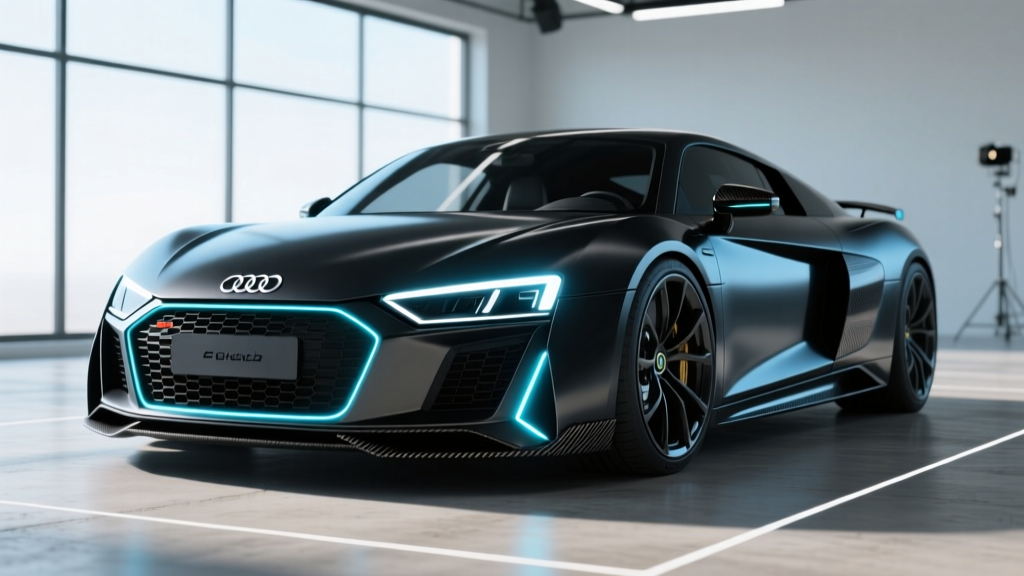
The short answer: As of 2026, there is no production Audi R8 electric car available for purchase. The original Audi R8 (V8/V10) ended production in 2024, and Audi's "R8 e-tron" — a limited-run electric supercar produced from 2015–2016 — was discontinued after roughly 100 units. Audi has not announced a direct electric successor wearing the R8 badge. If you're searching for an "Audi R8 electric car," you're likely encountering one of three things: the discontinued R8 e-tron, speculative renders, or confusion with Audi's current electric performance lineup (RS e-tron GT, e-tron GT). Below, we break down exactly what exists, what's rumored, and what to buy if you want electric Audi performance today.
The Truth About the Audi R8 Electric Car
The search term "Audi R8 electric car" generates consistent interest, but it doesn't map to a vehicle you can walk into a dealership and buy in 2026. Here's the factual timeline:
- Audi R8 e-tron (2015–2016): A limited-production electric supercar based on the first-generation R8 platform. Audi built approximately 100 units, primarily for the European market. It featured a 92 kWh battery, roughly 280 miles of NEDC range (significantly less under EPA testing), and 456 hp. It was never officially sold in the United States.
- Original R8 discontinuation (2024): The second-generation Audi R8 (5.2L V10) ended production in early 2024 with no announced direct successor.
- No confirmed R8 EV successor: As of 2026, Audi has not officially announced an electric R8 replacement. Industry speculation points to a potential high-performance EV built on the PPE (Premium Platform Electric) architecture co-developed with Porsche, but nothing is confirmed.
If you're a buyer interested in the intersection of Audi performance and electric propulsion, the closest current-production vehicle is the Audi RS e-tron GT, which we'll use as a practical benchmark throughout this guide.
What Exists Today: The Audi RS e-tron GT as the Closest Alternative
Since no Audi R8 electric car is available, let's examine the vehicle that actually fills the electric-performance-Audi role in 2026: the Audi RS e-tron GT.
| Spec | 2026 Audi RS e-tron GT |
|---|---|
| Base MSRP | ~$164,900 (before destination) |
| Powertrain | Dual-motor AWD, 646 hp (boost: 680 hp) |
| 0–60 mph | 3.1 seconds |
| Battery | 93.4 kWh gross (~83.7 kWh usable), NMC chemistry |
| EPA Range | ~246 miles |
| Real-World Range | ~200–220 miles (highway); ~180 miles (cold weather) |
| DC Fast Charge (peak) | 270 kW (10–80% in ~22 minutes) |
| Level 2 Charge Rate | 11 kW (~7 hours for full charge) |
| Connector | CCS1 (NACS adapter available) |
| MPGe | ~82 MPGe combined |
| Battery Warranty | 8 years / 100,000 miles (70% capacity retention) |
| Federal Tax Credit | Not eligible (MSRP exceeds §30D $80,000 sedan cap; likely fails battery sourcing) |
Real-World Range Reality: The RS e-tron GT's EPA rating of 246 miles drops significantly under real-world conditions. Expect 200–220 miles on a warm-weather highway trip at 70+ mph, and as low as 170–180 miles in sub-40°F temperatures. The 800V architecture enables impressive charging speeds, but the 270 kW peak is only sustained between roughly 10–40% SoC — above 60%, the curve tapers sharply, adding 10+ minutes to a 10–80% session.
Cost Breakdown: Electric Performance vs. Gas Supercar
Let's compare what ownership actually costs if you're cross-shopping the (discontinued) gas R8 against Audi's electric performance flagship.
| Cost Factor | Audi R8 V10 (2024 Final Year, Used) | 2026 Audi RS e-tron GT |
|---|---|---|
| Purchase Price | $180,000–$220,000 (used market) | $164,900+ (new) |
| Fuel/Energy (annual, 12,000 mi) | ~$4,200 (premium gas, 15 MPG avg) | ~$720 (home charging at $0.14/kWh) |
| Annual Maintenance | ~$1,800–$3,000 (oil, brakes, tires) | ~$400–$800 (tire rotation, cabin filter, brake fluid) |
| Insurance (annual est.) | $4,500–$7,000 | $3,800–$5,500 |
| 5-Year Fuel/Energy Total | ~$21,000 | ~$3,600 |
| 5-Year Maintenance Total | ~$12,000 | ~$3,000 |
| Federal Tax Credit | None | None (exceeds MSRP cap) |
The RS e-tron GT saves roughly $17,000–$25,000 over five years in fuel and maintenance alone. However, the used R8 V10 holds value differently — collector-grade V10 supercars often appreciate, while EVs currently face steep depreciation. A 2024 R8 may be worth more in five years; the RS e-tron GT will almost certainly be worth less.
EV vs. Gas: Performance and Ownership Trade-offs
| Category | Audi RS e-tron GT (EV) | Audi R8 V10 (Gas) |
|---|---|---|
| 0–60 mph | 3.1 sec (instant torque) | 3.2–3.4 sec (rev-dependent) |
| Top Speed | 155 mph (electronically limited) | 205 mph |
| Driving Range | ~200–220 miles (real-world) | ~280–320 miles (15.8-gal tank) |
| Refuel/Recharge Time | 22 min (10–80% DC fast); 7+ hr (Level 2) | ~5 min (gas station) |
| Sound/Engagement | Synthesized motor sound; near-silent | 5.2L V10 naturally aspirated — iconic |
| Track Capability | Heavy (5,139 lbs); battery thermal limits on repeated laps | Lighter (3,700 lbs); built for sustained track use |
| Daily Drivability | Quiet, smooth, 4-door practicality | Loud, stiff, 2-seat impracticality |
| Long-Term Value | Depreciating EV technology | Appreciating collector V10 |
The EV wins on daily usability, running costs, and off-the-line acceleration. The gas R8 wins on track endurance, emotional engagement, top speed, range flexibility, and long-term value retention. These are fundamentally different vehicles for fundamentally different buyers.
Common Misconceptions About the Audi R8 Electric Car
| Myth | Fact |
|---|---|
| "The Audi R8 electric car is available now." | No production R8 EV exists in 2026. The R8 e-tron was discontinued in 2016 after ~100 units. |
| "The RS e-tron GT is basically an electric R8." | The RS e-tron GT shares its J1 platform with the Porsche Taycan and is a 4-door grand tourer — not a mid-engine supercar. Different vehicle class entirely. |
| "Electric Audis qualify for the $7,500 tax credit." | Per IRS §30D rules, the RS e-tron GT exceeds the $80,000 sedan MSRP cap and likely fails critical-mineral sourcing requirements. Most Audi EVs do not qualify. |
| "EV batteries need replacing every 5 years." | Audi's battery warranty guarantees 70% capacity retention for 8 years/100,000 miles. NMC degradation data shows most packs retain 85–90% capacity at 100,000 miles under normal use. |
| "Charging an Audi EV takes all night." | At 11 kW on Level 2, a full charge takes ~7 hours — easily completed overnight. On a 270 kW DC fast charger, 10–80% takes ~22 minutes. |
Real-World Ownership: What a First-Time EV Buyer Needs to Know
If you're considering an electric Audi (RS e-tron GT or otherwise), here are the practical ownership factors that marketing materials omit:
Home Charging Access Is Non-Negotiable
Public DC fast charging at $0.40–$0.60/kWh erases most of the cost advantage over gas. To realize the ~$3,500/year fuel savings shown above, you need reliable Level 2 home charging. Installation of a 240V/48A circuit with a hardwired charger typically costs $1,500–$3,500, depending on panel capacity and conduit run length. If your home has a 100A electrical panel, a $2,000–$4,000 panel upgrade to 200A may be required. Confirm with a licensed electrician before purchasing any EV.
Cold Weather Cuts Range by 20–35%
The RS e-tron GT's 246-mile EPA range can drop to 160–190 miles in sustained sub-30°F driving. The heat pump (standard on the e-tron GT) mitigates cabin-heating energy draw, but battery chemistry itself is less efficient in cold. Preconditioning the battery while plugged in helps, but if your commute is 80+ miles round-trip in a northern winter, plan charging accordingly.
Insurance Costs More Than You Expect
EV insurance premiums run 15–30% higher than comparable gas vehicles due to battery replacement costs and specialized repair requirements. For a $165,000 RS e-tron GT, expect annual premiums of $3,800–$5,500 depending on your state, driving record, and coverage level. Get a quote before committing.
Depreciation Is Steep
High-end EVs have experienced brutal depreciation. The RS e-tron GT can lose 40–55% of its value within three years, driven by rapid technology advancement, battery degradation concerns, and Tesla/Chinese-EV price pressure. If resale value matters, this is a significant financial consideration versus a gas supercar that may hold or gain value.
Decision Framework: Should You Wait, Buy Electric, or Buy Gas?
Choose the Audi RS e-tron GT (current electric option) if:
- You have Level 2 home charging and drive under 200 miles daily
- You prioritize daily drivability, quietness, and low running costs
- You want instant-torque acceleration and modern tech
- You accept steep depreciation as the cost of EV ownership
- You don't need track-day endurance (3+ hot laps)
Wait for a potential R8 electric successor if:
- You specifically want a 2-seat mid-engine supercar form factor
- You're willing to wait 2–4 years with no guarantee Audi will build it
- You want next-generation battery tech (potential solid-state, higher energy density)
Buy a used Audi R8 V10 (gas) if:
- You want V10 sound, engagement, and collector-grade long-term value
- You track the car or take long road trips where 5-minute refueling matters
- You view the car as an appreciating asset, not just transportation
- You don't have home charging access
Consider the Porsche Taycan Turbo GT instead if:
- You want the highest-performance EV on the J1/PPE platform today
- You value track-focused engineering (1,019 hp, active aero)
- You accept the same $165,000+ price bracket
Frequently Asked Questions
Will Audi make an electric R8?
Audi has not confirmed an electric R8 successor as of 2026. The company's performance-EV strategy currently centers on the RS e-tron GT and upcoming PPE-based models. An R8-badged EV remains speculative.
How much would an Audi R8 electric car cost?
Since no production model exists, there is no official price. For context, the current RS e-tron GT starts at ~$164,900, and the discontinued 2016 R8 e-tron reportedly cost over $1 million per unit to produce. A future electric supercar from Audi would likely price above $200,000.
Does the Audi RS e-tron GT qualify for the federal EV tax credit?
No. Under IRS §30D, sedans are subject to an $80,000 MSRP cap, and the RS e-tron GT starts at ~$164,900. Additionally, the vehicle's battery likely does not meet the critical-mineral and battery-component sourcing requirements. Always verify current eligibility on the IRS website or with a tax professional.
What is the real-world range of the Audi RS e-tron GT?
The EPA rates it at approximately 246 miles. In real-world highway driving at 70–80 mph in moderate temperatures, expect 200–220 miles. In cold weather (below 40°F), expect 170–190 miles. These figures assume no preconditioning; warming the battery while plugged in can recover 10–15 miles of range.
How fast does the RS e-tron GT charge?
On a DC fast charger capable of 270+ kW, the RS e-tron GT charges from 10–80% in approximately 22 minutes. However, peak 270 kW is only sustained between roughly 10–40% state of charge. From 60–80%, the rate drops to 80–120 kW. On a Level 2 home charger at 11 kW, a full charge takes about 7 hours.
Is the RS e-tron GT self-driving?
No. The RS e-tron GT features Audi's adaptive cruise assist, which is an SAE Level 2 driver-assistance system. The driver must remain fully engaged, hands on or near the wheel, and eyes on the road at all times. It is not autonomous.
What's the difference between kW and kWh?
kW (kilowatts) measures power — the rate of energy flow, like the size of a water pipe. kWh (kilowatt-hours) measures energy — the total amount stored or used, like gallons of water. The RS e-tron GT has a 93.4 kWh battery (energy capacity) and charges at up to 270 kW (power rate). Confusing the two is the most common EV mistake new buyers make.