Quick Answer: Which Electric GM Car Should You Buy?
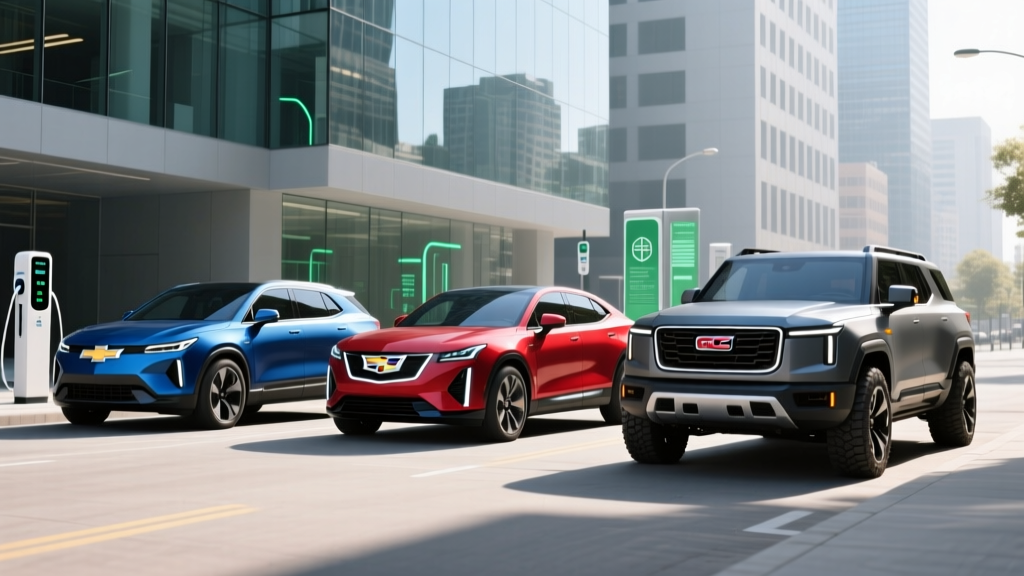
GM's 2026 Ultium-based EV lineup spans $33,000 to $130,000 across Chevy, Cadillac, GMC, and Buick. The Chevrolet Equinox EV (319 mi EPA, ~$33,600) is the volume pick for most buyers. The Cadillac Lyriq (314 mi, ~$58,590) targets luxury buyers. The Silverado EV (up to 492 mi, ~$57,900+) serves truck buyers. All use the Ultium platform with NMC chemistry and support 150–200 kW DC fast charging. Federal §30D tax credit eligibility varies by model and your income—check IRS sourcing rules before assuming $7,500.
The 2026 GM Ultium EV Lineup: What's Actually Available
GM retired the Bolt EV/EUV after 2023 and rebuilt its electric portfolio on the Ultium platform—a modular skateboard architecture using nickel-manganese-cobalt (NMC) pouch cells in wireless battery management packs. As of early 2026, these are the core electric GM cars you can order:
| Model | EPA Range | Battery (kWh usable) | Peak DC Charge | 10-80% Time | 0-60 mph | Starting MSRP |
|---|---|---|---|---|---|---|
| Chevy Equinox EV | 319 mi | 85 kWh | 150 kW | ~30 min | ~7.5 sec | $33,600 |
| Chevy Blazer EV | 324 mi | 102 kWh | 190 kW | ~27 min | ~6.0 sec | $44,600 |
| Silverado EV (WT) | 492 mi | 200 kWh | 200 kW | ~45 min | ~5.5 sec | $57,900 |
| Cadillac Lyriq | 314 mi | 102 kWh | 190 kW | ~27 min | ~5.5 sec | $58,590 |
| Cadillac Optiq | 300 mi (est.) | 85 kWh | 150 kW | ~30 min | ~6.5 sec | $48,000 (est.) |
| GMC Sierra EV | 440 mi | 200 kWh | 200 kW | ~45 min | ~5.0 sec | $57,900 |
Real-world range caveat: Expect 10-15% range loss at sustained highway speeds (70+ mph) and 20-30% loss in sub-freezing temperatures. A 319-mi Equinox EV realistically delivers 250-270 miles on a warm highway run, and closer to 200-230 miles in 20°F winter conditions. Preconditioning the battery while plugged in mitigates cold-weather charging slowdowns but does not fully recover range lost to cabin heating and increased battery resistance.
Electric GM Cars vs. Gas Equivalents: Cost & Efficiency Data
The purchase-price gap between electric GM cars and their ICE counterparts has narrowed, but the math depends heavily on your driving volume, local electricity rates, and tax credit eligibility.
| Factor | Chevy Equinox EV (2RS) | Chevy Equinox Gas (2RS AWD) |
|---|---|---|
| MSRP | $43,900 | $33,200 |
| Federal Tax Credit (§30D) | Up to $7,500 (if eligible) | $0 |
| Effective Price (after credit) | $36,400 | $33,200 |
| Fuel/Energy Cost (15,000 mi/yr) | $540 (home, $0.13/kWh) | $1,950 ($3.25/gal, 25 MPG) |
| 5-Year Fuel Savings | ~$7,050 | |
| Maintenance (5 yr est.) | ~$1,500 | ~$3,500 |
| EPA Efficiency | 115 MPGe (29 kWh/100mi) | 25 MPG combined |
At 15,000 miles per year with home charging at the national average of $0.13/kWh, the Equinox EV saves roughly $1,410 annually on fuel alone. Over five years, combined fuel and maintenance savings reach approximately $9,050—narrowing the effective price gap to near zero if you qualify for the full federal credit. However, if you lack home charging access and rely on public DC fast charging at $0.35-$0.50/kWh, your annual energy cost rises to $1,450-$2,080, erasing much of the advantage.
Common Misconceptions About Electric GM Cars
| Myth | Fact (with data) |
|---|---|
| "GM EVs can't road trip." | The Equinox EV charges at 150 kW peak, adding ~150 miles in 20 minutes. The Ultium platform supports NACS natively, granting access to 17,000+ Tesla Superchargers via adapter or built-in port on 2025+ models. |
| "Battery replacement will bankrupt me." | GM covers the Ultium battery for 8 years/100,000 miles with a 70% capacity retention warranty. Out-of-warranty replacement for an 85 kWh pack is estimated at $12,000-$15,000, but industry data shows fewer than 2% of packs require full replacement. |
| "All GM EVs qualify for the $7,500 tax credit." | Credit eligibility depends on battery component sourcing, critical mineral origin, MSRP caps ($55,000 sedans / $80,000 SUVs/trucks), and buyer income limits ($150K single / $300K joint). Some trims may lose eligibility mid-year based on IRS sourcing updates. |
| "Ultium EVs charge too slowly vs. Hyundai/Kia." | True—Hyundai Ioniq 5 peaks at 240 kW (10-80% in 18 min) on 800V architecture. GM's 400V Ultium peaks at 150-200 kW (27-30 min). This matters on road trips but is irrelevant for daily home Level 2 charging. |
Real-World Charging: Home Setup, Public Networks, and NACS Access
Every 2026 GM EV ships with a dual-level portable charge cord (120V Level 1 / 240V Level 2) and supports the North American Charging Standard (NACS) connector natively on models produced after mid-2024, or via adapter for early Ultium vehicles.
| Charging Level | Power | Miles Added per Hour | Best For |
|---|---|---|---|
| Level 1 (120V outlet) | 1.2 kW | ~3-4 mi/hr | Overnight top-up, emergencies |
| Level 2 (240V, 48A) | 11.5 kW | ~32-38 mi/hr | Daily home charging (full overnight) |
| DC Fast (150 kW peak) | 150 kW | ~650+ mi/hr | Road trips, public stations |
Home installation cost reality: A dedicated 240V/48A Level 2 circuit (like a ChargePoint Home Flex or Emporia Level 2) typically costs $800-$2,500 installed, depending on panel proximity and whether your home's electrical panel needs a 200A upgrade (add $1,500-$3,000 for a panel upgrade). If you have a garage or carport within 50 feet of your panel, expect the lower end. Condos and apartments without dedicated parking present a genuine barrier—plan around public charging availability before purchasing.
Charging curve honesty: The Blazer EV's 190 kW peak is sustained only between roughly 10-40% state of charge. Above 60%, charging tapers significantly—to around 80-90 kW by 70% SoC and below 50 kW past 80%. This is standard for NMC chemistry at 400V. Planning road-trip stops around the 10-80% window (rather than 0-100%) saves considerable time.
Tax Credit Eligibility: What GM EV Buyers Actually Qualify For
The federal §30D Clean Vehicle Credit offers up to $7,500, but qualifying for the full amount in 2026 requires meeting all of the following:
- Buyer income cap: AGI ≤ $150,000 (single) / $225,000 (head of household) / $300,000 (married filing jointly)
- MSRP cap: ≤ $55,000 for sedans / ≤ $80,000 for SUVs, trucks, and vans
- Battery component sourcing: ≥ 60% of battery components manufactured or assembled in North America (for $3,750 half)
- Critical minerals: ≥ 80% of critical minerals extracted or processed in the US or a free-trade-agreement country (for the other $3,750 half)
- Assembly: Final assembly in North America (all current Ultium vehicles qualify)
- Point-of-sale transfer: You can transfer the credit to the dealer for an immediate price reduction, but your actual tax liability must support the credit—excess is non-refundable
As of 2026, the Equinox EV 2LT ($33,600) and Lyriq Luxury ($58,590) are within MSRP caps, but several Blazer EV and Silverado EV trims exceed the $80,000 SUV/truck cap. Critical-mineral sourcing rules have tightened—verify the specific VIN's eligibility on fueleconomy.gov before signing. The credit is non-refundable: if your federal tax liability is only $4,000, you capture only $4,000 of the credit unless you use the point-of-sale transfer (which still requires you to not owe more than you claimed).
Decision Framework: Which Electric GM Car Fits Your Situation
If X, Then Y
| If you commute <40 mi/day and have home charging... | → Equinox EV 2LT. 319 mi EPA means weekly charging. Lowest effective price after credit. |
| If you road-trip monthly (>300 mi)... | → Blazer EV RS or Silverado EV 4WT. Larger battery = fewer stops. Accept the 27-45 min charge time. Consider a Hyundai Ioniq 5 or Tesla Model Y if charge speed is a priority. |
| If you need a truck for work/towing... | → Silverado EV (10,000 lb tow rating, 4WT trim). Note: towing cuts range 40-50%. Plan for 220-250 mi real-world range when loaded. |
| If you want luxury without Tesla's brand... | → Cadillac Lyriq. 33-inch LED display, Super Cruise (hands-free Level 2 on mapped highways), 314 mi range. Competes with BMW iX and Genesis Electrified GV70. |
| If you live in a condo/apartment with no charging... | → Reconsider. Relying solely on public DC fast charging costs 3-4x more than home and adds 20-40 min per session. A PHEV like the Toyota RAV4 Prime may be more practical. |
| If you live in extreme cold (below 10°F regularly)... | → All Ultium EVs have heat pumps and battery preconditioning, but expect 25-35% winter range loss. Oversize your battery choice—pick the Blazer EV's 102 kWh pack over the Equinox's 85 kWh. |
Ownership Costs Over 5 Years: What the Numbers Actually Show
| Cost Category | Equinox EV 2RS | Gas Equinox AWD |
|---|---|---|
| Purchase Price (after credit) | $36,400 | $33,200 |
| Insurance (5 yr avg.) | $9,500 | $7,800 |
| Fuel/Energy (5 yr, home charge) | $2,700 | $9,750 |
| Maintenance (5 yr) | $1,500 | $3,500 |
| Depreciation (est. 5 yr) | $16,000 | $14,500 |
| 5-Year Total Cost | $66,100 | $68,750 |
The EV wins by ~$2,650 over five years in this scenario—but only with consistent home charging and full tax credit qualification. Insurance premiums on Ultium EVs run 15-25% higher than gas equivalents due to repair costs and battery replacement exposure. Depreciation on GM EVs has been steeper than Tesla or Hyundai, though the gap is narrowing as the Ultium platform matures.
What First-Time GM EV Buyers Must Know Before Signing
Based on real ownership patterns and service data:
- Software matters as much as hardware. GM's Ultium vehicles launched with significant software bugs (infotainment freezes, phantom braking, charge scheduling errors). Most 2025-2026 model-year vehicles have improved substantially via OTA updates, but check owner forums for your specific trim before buying.
- Super Cruise is impressive but is Level 2, not self-driving. NHTSA classifies it as SAE Level 2—you must remain attentive, eyes on road. It works on 400,000+ miles of mapped highways but disengages in construction zones and unmapped roads.
- Regen braking is adjustable, not one-pedal by default. Unlike some competitors, GM's regen modes range from coasting to full one-pedal. Set it in the drive menu—most owners prefer the "One Pedal Driving" mode for city commuting.
- The included portable cord is adequate for most home needs. At 240V/32A, it delivers ~7.7 kW—enough for overnight charging on most daily commutes. A dedicated wall unit (48A/11.5 kW) is a worthwhile upgrade if you regularly deplete the battery below 30%.
- Warranty coverage: 3 years/36,000 miles bumper-to-bumper, 5 years/60,000 miles powertrain, 8 years/100,000 miles battery (70% capacity retention guarantee).
Do all electric GM cars use the same charging connector?
2025+ model-year GM EVs ship with the NACS (Tesla-style) charge port natively. Earlier 2022-2024 Ultium vehicles (early Lyriq, early Hummer EV) shipped with CCS1 but are eligible for a GM-provided NACS adapter. All current 2026 models support Tesla Supercharger V3/V4 stations directly.
Can I tow with a Silverado EV or Sierra EV?
Yes—the Silverado EV 4WT is rated for 10,000 lbs. However, towing at capacity reduces real-world range by 40-50%. A 492-mi EPA Silverado EV will realistically deliver 220-280 miles while towing 7,000+ lbs at highway speed. Plan charging stops accordingly.
Is the Chevy Bolt coming back?
GM has announced a next-generation Bolt EV on the Ultium platform with LFP chemistry, expected for the 2027 model year. As of early 2026, it is not available for purchase. Do not delay a purchase expecting it imminently.
How reliable are GM Ultium EVs compared to Tesla?
Early Ultium vehicles (2022-2023 Lyriq, 2024 Blazer EV) had significant software-related reliability issues. J.D. Power and Consumer Reports rated them below average in initial quality. The 2025-2026 model years show marked improvement. Tesla's build quality remains inconsistent, but its powertrain and charging network reliability lead the industry.
What happens if my Ultium battery degrades?
GM's 8-year/100,000-mile battery warranty triggers if capacity drops below 70%. Industry data from Recurrent Auto shows NMC batteries in liquid-cooled packs (like Ultium) typically retain 90-95% capacity at 100,000 miles. Full pack replacement out of warranty is estimated at $12,000-$18,000 depending on pack size, but module-level repairs may cost significantly less.