The Short Answer: Which Electric Genesis SUV Fits You?
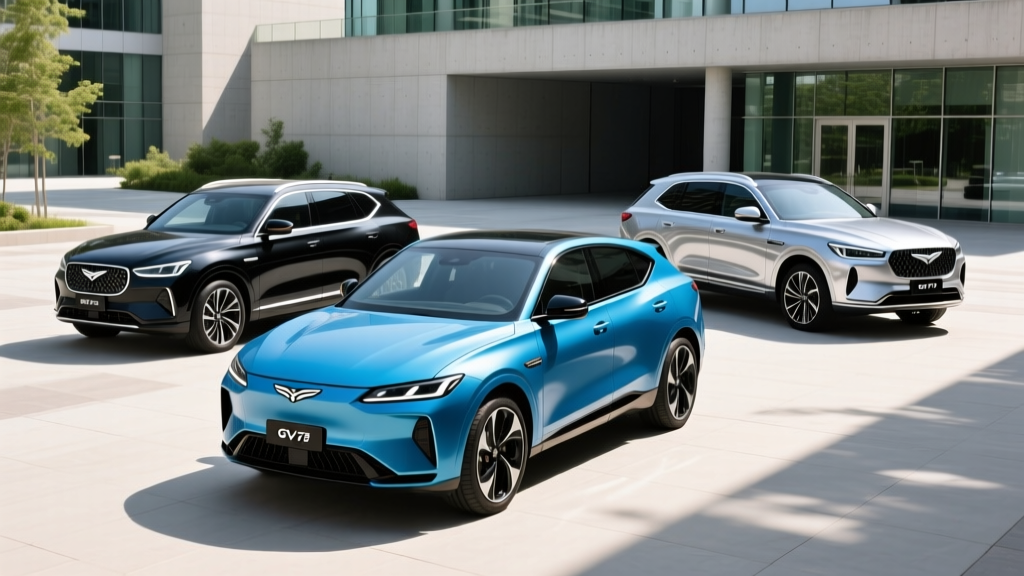
Genesis currently sells two fully electric SUVs in the U.S.: the GV60 (compact crossover, EPA range up to 294 miles, starting ~$53,350) and the Electrified GV70 (midsize luxury, EPA range up to 236 miles, starting ~$67,850). A third, the full-size Electrified GV80, is announced but not yet on sale. If you want maximum range and the lowest entry price, pick the GV60. If you need more cargo room and a traditional luxury SUV feel, the Electrified GV70 is the stronger fit — but you'll sacrifice roughly 60 miles of EPA range. Neither qualifies for the full $7,500 federal §30D tax credit as of 2026 due to battery-sourcing requirements, though point-of-sale lease incentives and state-level rebates may apply.
Genesis Electric SUV Lineup at a Glance
Genesis has been methodically electrifying its lineup. The GV60 was the brand's first dedicated EV, built on Hyundai Motor Group's E-GMP platform (shared with the Hyundai Ioniq 5 and Kia EV6). The Electrified GV70 is a conversion of the gas GV70, retaining its chassis and styling but swapping in a dual-motor powertrain. Here's how the current lineup stacks up by the numbers:
| Spec | GV60 (Standard Range) | GV60 (Extended Range) | Electrified GV70 | Electrified GV80 (Announced) |
|---|---|---|---|---|
| Platform | E-GMP (dedicated EV) | E-GMP (dedicated EV) | Modified ICE chassis | E-GMP-based (expected) |
| Battery (usable, kWh) | ~63 kWh | ~77.4 kWh | ~77.4 kWh | ~100+ kWh (est.) |
| Chemistry | NMC | NMC | NMC | NMC (likely) |
| EPA Range | ~264 mi | Up to 294 mi (RWD) / 248 mi (AWD) | 236 mi | 300+ mi (target) |
| Drivetrain | RWD or AWD | RWD or AWD | AWD only | AWD (expected) |
| Horsepower | 168 (RWD) / 314 (AWD) | 225 (RWD) / 314 (AWD) / 483 (Perf) | 429 hp (Boost mode) | TBD |
| 0–60 mph | ~7.3s (RWD) / 5.3s (AWD) | ~6.9s (RWD) / 5.3s (AWD) / 3.9s (Perf) | ~4.2s (Boost) | TBD |
| Max DC Fast Charge | ~240 kW (peak) | ~240 kW (peak) | ~250 kW (peak) | TBD |
| 10–80% DC Time | ~18 min (ideal) | ~18 min (ideal) | ~20 min (ideal) | TBD |
| Level 2 (AC) Rate | 10.9 kW | 10.9 kW | 10.9 kW | TBD |
| MPGe (combined) | ~98 MPGe | ~95 MPGe (AWD) | ~87 MPGe | TBD |
| Base MSRP | ~$53,350 | ~$61,350 | ~$67,850 | TBD (announced) |
| Battery Warranty | 10 yr / 100,000 mi | 10 yr / 100,000 mi | 10 yr / 100,000 mi | TBD |
Sources: EPA fueleconomy.gov, Genesis USA specifications. Performance trim 0–60 based on manufacturer data. Electrified GV80 specs are preliminary estimates for an announced, unreleased vehicle.
Real-World Range vs. EPA Stickers: What You'll Actually Get
The EPA range is a useful baseline, but it doesn't tell the full story. In real-world driving, several factors pull range below the sticker number — and Genesis EVs are no exception.
Real-World Range Expectations
GV60 Extended Range AWD (EPA 248 mi): Expect roughly 210–230 miles on a flat, temperate highway at 70 mph. In freezing weather (below 32°F), plan for 170–195 miles due to battery resistance and cabin heating load. The GV60 does not come standard with a heat pump on all trims — check your build sheet, as heat-pump-equipped models lose less range in cold.
Electrified GV70 (EPA 236 mi): Real-world highway range lands around 195–215 miles in mild conditions. Cold weather drops this to approximately 160–180 miles. The GV70's heavier curb weight (~4,800 lbs) and less aerodynamic profile compared to the GV60 contribute to higher consumption, especially above 65 mph.
Key variable — driving style: Aggressive acceleration and sustained speeds above 75 mph can shave 15–20% off EPA range in any EV. Regenerative braking on Genesis models is adjustable via paddle shifters (levels 0–3 plus i-PEDAL one-pedal mode), and using higher regen levels in stop-and-go traffic recovers meaningful energy.
Charging Speed and Infrastructure: What Genesis Owners Need to Know
Both the GV60 and Electrified GV70 use the E-GMP platform's 800-volt architecture, which enables exceptionally fast DC charging when paired with a capable station. Here's what that looks like in practice:
| Charging Level | Power (kW) | Connector | Miles Added per Hour | Use Case |
|---|---|---|---|---|
| Level 1 (120V household) | ~1.4 kW | J1772 (with adapter) | ~4–5 mi/hr | Emergency / overnight trickle |
| Level 2 (240V home/public) | Up to 10.9 kW | J1772 / CCS1 | ~30–36 mi/hr | Daily home charging |
| DC Fast (350 kW station) | Peak ~240–250 kW | CCS1 | ~150–200 mi in 18 min | Road trips |
| DC Fast (50 kW station) | ~50 kW | CCS1 | ~15–18 mi in 10 min | Older public stations |
Charging curve reality: The "peak 240 kW" figure is just that — a peak. The GV60 and GV70 sustain roughly 180–220 kW between 10–55% State of Charge, then taper progressively. From 55–80%, expect the rate to drop to 80–120 kW. Above 80%, charging slows dramatically (often below 40 kW) to protect battery health. This means a 10–80% session takes ~18 minutes under ideal conditions, but a 10–95% session can stretch past 40 minutes. On road trips, plan your stops around the 10–80% sweet spot.
Connector note for 2026: Genesis models sold in the U.S. currently ship with CCS1 ports. Hyundai Motor Group has announced a transition to NACS (Tesla's connector) for future models, and adapters for Tesla Supercharger access are becoming available. Check with your dealer on the latest adapter compatibility — this is a moving target as the industry shifts.
Home charging setup: A Level 2 home charger is essential for daily ownership convenience. At 10.9 kW, a full GV60 Extended Range charge (0–100%) takes roughly 7–8 hours. Budget $500–$1,200 for a quality Level 2 wallbox (ChargePoint Home Flex, Emporia Vue, or Wallbox Pulsar Plus) and $800–$2,500 for professional installation by a licensed electrician, depending on whether your electrical panel needs an upgrade to support a 48-amp circuit.
Cost of Ownership: Genesis EV vs. Gas Luxury SUV
Luxury SUV buyers often compare the Genesis lineup against the BMW X3, Mercedes GLC, or Lexus RX. Let's put concrete numbers behind the EV-versus-gas decision over a 5-year, 60,000-mile ownership period.
| Cost Category | GV60 Extended Range AWD | Gas GV70 2.5T AWD | Notes |
|---|---|---|---|
| Base MSRP | ~$61,350 | ~$49,150 | EV carries ~$12,200 premium |
| Federal §30D Credit | $0 (sourcing rules) | $0 | GV60/GV70 don't meet critical-mineral/battery sourcing for 2026 |
| Estimated State Rebate | $0–$2,000 | $0 | Varies by state; check local programs |
| Fuel/Energy (60k mi) | ~$4,200 | ~$9,600 | EV: $0.14/kWh avg home; Gas: $3.60/gal, 24 MPG combined |
| Maintenance (5 yr) | ~$1,200 | ~$3,800 | EV: no oil, fewer brake replacements, cabin filter, tire rotation |
| Insurance (5 yr avg) | ~$12,500 | ~$10,500 | EV insurance ~15–20% higher on average |
| Depreciation (est. 5 yr) | ~$28,000 | ~$22,000 | Luxury EVs depreciate faster than gas counterparts currently |
| 5-Year Total Cost | ~$107,250 | ~$95,050 | EV is ~$12,200 more over 5 years in this scenario |
Assumptions: 12,000 miles/year, $0.14/kWh home electricity, $3.60/gallon premium gas, 24 MPG combined for gas GV70. Insurance from industry averages for luxury compacts. Depreciation estimates based on current luxury EV market trends. Actual costs vary significantly by location, driving habits, and electricity rates. Source: fueleconomy.gov, Genesis USA MSRP.
The honest math: Without the federal tax credit, the Genesis electric SUVs are more expensive to own over five years than their gas counterparts, primarily due to the higher purchase price and steeper depreciation. The fuel and maintenance savings are real — roughly $8,000 combined over 60,000 miles — but they don't close the full gap. Buyers motivated by driving refinement, instant torque, home-charging convenience, and reduced tailpipe emissions will find value; pure cost-minimizers may not.
Federal Tax Credit and Incentive Reality for 2026
The §30D Clean Vehicle Credit offers up to $7,500 for qualifying new EVs, but eligibility hinges on three requirements that currently exclude most Genesis electric SUVs:
- MSRP cap: SUVs must have an MSRP at or below $80,000. Both the GV60 and Electrified GV70 clear this threshold on most trims. ✓
- Buyer income cap: AGI must not exceed $150,000 (single), $225,000 (head of household), or $300,000 (joint). Varies by buyer. ⚠
- Battery sourcing (critical minerals + components): Increasing percentages of battery minerals must be sourced from the U.S. or free-trade-agreement countries, and battery components cannot contain materials from "foreign entities of concern." As of 2026, Genesis electric SUVs use battery cells manufactured outside the U.S. with supply chains that do not fully meet these thresholds. ✗
Result: Purchasers of the GV60 and Electrified GV70 should not expect the $7,500 federal credit. However, leasing may unlock a pass-through incentive via the commercial clean vehicle credit (§45W), which some dealers apply as a lease discount. Always confirm with the dealer and consult a tax professional. Source: IRS.gov §30D.
Electric Genesis SUV vs. Gas and Hybrid Alternatives
If you're cross-shopping, here's how the electric Genesis SUVs compare to the most common alternatives in their segments:
| Metric | GV60 Extended Range AWD | Gas GV70 2.5T | Hyundai Tucson Hybrid (AWD) | BMW iX xDrive50 |
|---|---|---|---|---|
| Powertrain | BEV (dual motor) | Gas turbo I-4 | HEV (turbo + electric) | BEV (dual motor) |
| EPA Range / MPG | 248 mi / 95 MPGe | 25 MPG combined | 38 MPG combined | 324 mi / 86 MPGe |
| 0–60 mph | 5.3 sec | 6.1 sec | 7.1 sec | 4.4 sec |
| Base MSRP | ~$61,350 | ~$49,150 | ~$40,500 | ~$87,250 |
| Annual Fuel Cost | ~$840 | ~$1,920 | ~$1,260 | ~$1,100 |
| Cargo (rear seats up) | 24.0 cu ft | 28.9 cu ft | 38.7 cu ft | 35.5 cu ft |
Key takeaways: The GV60 delivers strong acceleration and low running costs but has less cargo space than the gas GV70 or Tucson Hybrid. The Tucson Hybrid is the cost champion if you want low fuel consumption without range anxiety or charging logistics. The BMW iX offers more range and power but at a significantly higher price. The Electrified GV70's 236-mile range is the weakest point in this comparison — it's adequate for commuting and moderate road trips but falls short of the iX and modern BEV benchmarks.
First-Time EV Buyer Checklist: What to Know Before You Sign
If this is your first electric vehicle, these are the practical realities that don't appear on the spec sheet:
1. Home charging is non-negotiable for most owners. Public charging works for road trips, but daily convenience depends on a Level 2 home charger. If you live in an apartment or lack garage access, evaluate public charging infrastructure near your home before buying. Apps like PlugShare and ChargePoint let you map nearby stations.
2. Cold weather reduces range 15–30%. Lithium-ion batteries are chemically less efficient in freezing temperatures, and cabin heating draws significant power. If you live in the upper Midwest or Northeast, size your range expectations accordingly. A GV60 with 248 EPA miles may deliver 175 miles on a 20°F January morning.
3. Tires wear faster on EVs. The instant torque and heavier curb weight of electric SUVs accelerate tire wear by roughly 20–30% compared to gas equivalents. Budget for tire replacement every 25,000–35,000 miles. Genesis includes a tire repair kit rather than a spare.
4. Insurance costs more. EV insurance premiums run 15–20% higher on average due to higher repair costs and battery replacement risk. Get quotes before purchasing — the difference can be $300–$600/year for a luxury EV.
5. Over-the-air updates change the car. Genesis supports OTA software updates that can add features, adjust charging behavior, or refine ADAS. Your car may improve after purchase — but updates can also change interfaces you've grown accustomed to.
Decision Framework: Which Electric Genesis SUV Should You Buy?
Choose the GV60 if:
- You want the longest range in the Genesis EV lineup (up to 294 mi RWD)
- Your budget is under $65,000 before incentives
- You prioritize fast DC charging and the E-GMP platform's efficiency
- You don't need more than 24 cu ft of cargo space
- You want a dedicated EV platform (better packaging, lower floor)
Choose the Electrified GV70 if:
- You need midsize SUV cargo room (28.9 cu ft) and a more traditional luxury feel
- You value the 429-hp Boost mode and 4.2-second 0–60 time
- Most of your driving is under 180 miles per day with home charging
- You prefer the GV70's exterior styling and interior materials
Wait for the Electrified GV80 if:
- You need three-row seating and 300+ miles of range
- You're not in a rush — it's announced but not yet available for purchase
- You want a full-size luxury electric SUV to compete with the BMW iX or Tesla Model X
Choose a gas GV70 or Tucson Hybrid instead if:
- You lack reliable home or workplace charging access
- You regularly drive 300+ miles between stops in rural areas
- You want the lowest 5-year total cost without relying on incentives
- You tow frequently (Genesis EVs have limited towing ratings vs. gas models)
Common Misconceptions About Electric Genesis SUVs
| Myth | Fact |
|---|---|
| "The GV70 EV charges slower because it's a converted gas car." | The Electrified GV70 still uses an 800V architecture and charges at up to ~250 kW peak — comparable to the GV60. The conversion chassis affects weight and range, not charging speed. |
| "Genesis EVs get the $7,500 tax credit." | As of 2026, neither the GV60 nor Electrified GV70 qualifies due to battery-sourcing rules. Leasing may unlock a pass-through incentive, but purchasing does not. Always verify at IRS.gov. |
| "236 miles of range isn't enough for road trips." | With 18-minute 10–80% DC charging on Electrify America or similar 350 kW stations, road trips are practical with brief stops every ~180 miles. It's more time than a gas stop, but manageable with planning. |
| "EV batteries need replacing after a few years." | Genesis covers its battery for 10 years/100,000 miles and guarantees minimum 70% capacity retention. Industry data shows NMC batteries typically lose 10–15% capacity over 100,000 miles — far less than full replacement. |
| "All Genesis EVs come with a heat pump." | Heat pump availability varies by trim and market. Confirm on your specific build sheet — it significantly affects cold-weather range preservation. |
Frequently Asked Questions
Does the Genesis GV60 have a frunk (front trunk)?
Yes, the GV60 has a small front trunk (frunk) offering roughly 1.6 cu ft of storage — enough for charging cables or a small bag. The Electrified GV70 also includes a frunk of similar size.
Can I use Tesla Superchargers with a Genesis electric SUV?
As of 2026, Genesis models ship with CCS1 connectors. Tesla has opened select Supercharger stations to non-Tesla EVs via the "Magic Dock" CCS adapter built into some stalls, and third-party CCS-to-NACS adapters are becoming available. Compatibility varies by station — check the Tesla app for "Charge Your Non-Tesl Vehicle" availability in your area.
What is Genesis's complimentary maintenance coverage?
Genesis offers 3 years/36,000 miles of complimentary scheduled maintenance on new vehicles, including EV-specific items like cabin air filter replacement, tire rotation, and multi-point inspections. This applies to both the GV60 and Electrified GV70.
How does the GV60's Boost mode work?
On Performance trims, pressing and holding both steering-wheel paddles for 10 seconds activates Boost mode, increasing output to 483 hp and dropping the 0–60 time to 3.9 seconds. It's available for short bursts and is designed for passing or on-ramp acceleration.
Is the Genesis Highway Driving Assist (HDA) self-driving?
No. HDA and HDA2 are SAE Level 2 driver-assistance systems — they provide adaptive cruise control with lane-centering and can assist with lane changes on highways, but the driver must remain fully engaged with hands on the wheel and eyes on the road at all times. This is not autonomous driving.
What happens if the battery degrades past 70% capacity?
If your Genesis EV battery falls below 70% of its original capacity within the 10-year/100,000-mile warranty period, Genesis will repair or replace the battery at no cost. In practice, most owners report 85–92% capacity retention at 60,000 miles based on industry-wide NMC degradation data.