The Quick Answer: What is an Electric Gator?
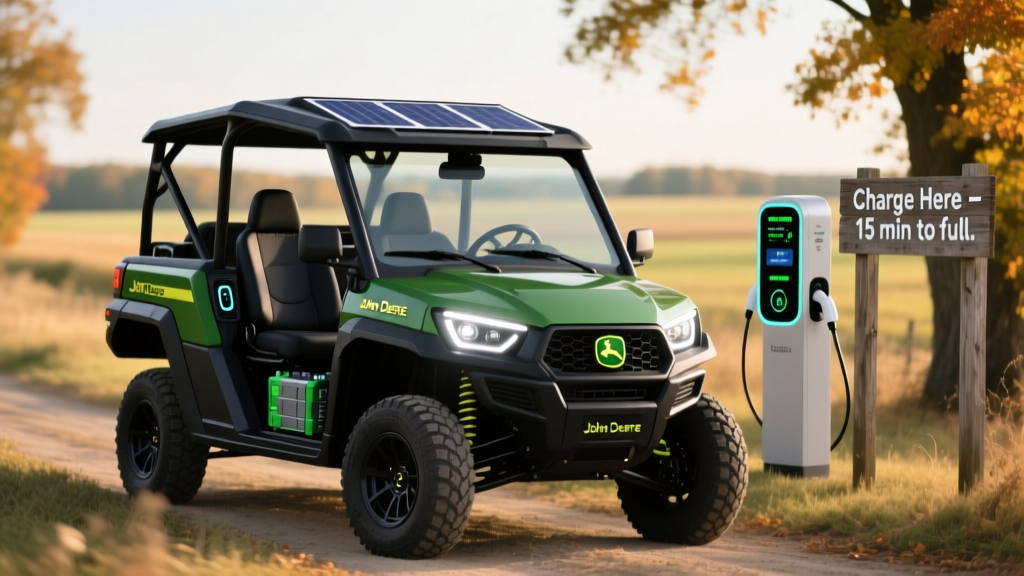
If you are searching for an electric Gator, you are likely looking into the growing segment of electric utility vehicles (UTVs) designed for farm, ranch, estate, and commercial use. While John Deere has historically dominated the Gator nameplate with gas and diesel models, the broader market for electric utility vehicles has expanded significantly by 2026, with several manufacturers offering battery-electric UTVs that rival the Gator's utility capabilities. Currently, John Deere's fully electric Gator offerings remain limited to specialized commercial prototypes and the older TE Gator platform, but competitors like Polaris (Ranger XP Kinetic), Club Car, and Tracker have filled the gap with production-ready electric utility vehicles that serve the exact same buyer profile.
Bottom line: A true all-new consumer electric Gator from John Deere is not yet widely available at dealerships as a mass-market product in 2026. Buyers seeking an electric utility vehicle in the Gator class should evaluate the Polaris Ranger XP Kinetic (the segment leader), along with emerging options from Club Car and Tracker Off-Road. Expect battery capacities of 14–30 kWh, ranges of 45–100+ miles depending on load and terrain, and starting prices between $25,000 and $35,000 before incentives.
Electric UTV Market in 2026: The Gator's Competition
The electric utility vehicle segment has matured considerably. Here is how the leading electric UTVs stack up against what a traditional gas Gator delivers:
| Spec | Polaris Ranger XP Kinetic | John Deere Gator XUV835M (Gas) | Club Car Urban EV |
|---|---|---|---|
| Powertrain | Full EV (BEV) | Gas (3-cyl, 812cc) | Full EV (BEV) |
| Battery Capacity | 29.8 kWh (Lithium-ion, NMC) | N/A (16.1 gal fuel tank) | ~14.4 kWh (LFP) |
| Horsepower | 110 hp | 54 hp | ~30 hp |
| Torque | 140 lb-ft (instant) | 48 lb-ft | ~80 lb-ft |
| EPA-Est. Range | Up to 110 mi (low-speed work) | ~250 mi (fuel) | ~50 mi |
| Real-World Range (heavy load) | ~55–75 mi | ~180 mi | ~30–40 mi |
| Towing Capacity | 2,500 lbs | 2,000 lbs | 1,200 lbs |
| Payload Capacity | 1,250 lbs | 1,500 lbs | 800 lbs |
| Charge Time (240V L2) | ~5 hours (0–100%) | N/A | ~6–8 hours |
| Starting MSRP | ~$29,999 | ~$20,499 | ~$18,500 |
Sources: Polaris.com, John Deere product specs. Note: Range varies dramatically with terrain, payload, speed, and temperature.
Real Costs: Electric UTV vs. Gas Gator Ownership
The purchase price of an electric UTV is higher upfront, but operational savings can close the gap significantly over five years of typical farm or estate use. Here is a realistic cost comparison based on 1,500 miles per year of mixed utility work:
| Cost Factor (5-Year) | Electric UTV (Polaris Kinetic) | Gas Gator XUV835M |
|---|---|---|
| Purchase Price | $29,999 | $20,499 |
| Fuel/Energy Cost | ~$450 (at $0.14/kWh avg) | ~$3,750 (at $3.50/gal, 20 mpg avg) |
| Maintenance (oil, filters, belts) | ~$200 | ~$1,800 |
| Insurance (avg annual) | ~$1,500 total | ~$1,400 total |
| Estimated Resale Value | ~$15,000 | ~$12,000 |
| Net 5-Year Cost | ~$17,149 | ~$15,449 |
The gap narrows to roughly $1,700 over five years. For buyers who use their UTV heavily (3,000+ miles/year), the electric option breaks even by year three. Federal tax credits under IRS §30D do not typically apply to off-road UTVs, as they are not classified as on-road motor vehicles — always verify eligibility with a tax professional.
Battery Technology and Charging: What Buyers Must Know
Understanding the battery in an electric Gator-class vehicle requires distinguishing between kW (power — how fast energy flows) and kWh (energy — how much the battery holds). The Polaris Ranger XP Kinetic uses a 29.8 kWh NMC (nickel manganese cobalt) lithium-ion battery, which provides high energy density for its size but is more sensitive to extreme heat cycles than LFP chemistry.
Charging Realities
- Level 1 (120V standard outlet): Adds roughly 5–8 miles of range per hour. A full charge takes 15–20 hours — practical only for overnight top-offs.
- Level 2 (240V, 32A): Adds roughly 20–25 miles per hour. Full charge in about 5 hours. This is the practical standard for UTV owners with a barn, garage, or workshop.
- DC Fast Charging: Most electric UTVs do not support DC fast charging. This is a segment limitation, not a feature.
Cold Weather Impact
Lithium-ion batteries lose 15–30% of usable capacity in temperatures below 32°F. If you operate in northern climates during winter, expect a 29.8 kWh battery that delivers 75 real-world miles in summer to drop to 50–60 miles in freezing conditions. Battery preconditioning features are rare in this vehicle class, unlike passenger EVs.
Common Misconceptions About Electric UTVs
| Myth | Fact |
|---|---|
| "Electric UTVs have no torque for towing." | Electric motors deliver peak torque at 0 RPM. The Polaris Kinetic produces 140 lb-ft instantly — nearly 3× a comparable gas Gator's torque. |
| "The battery will need replacing in 3 years." | Modern NMC and LFP packs in utility vehicles are rated for 1,000–2,000 full charge cycles before reaching 80% capacity. At typical UTV usage, that equates to 8–15 years of service. |
| "You need a special charger installed." | Most electric UTVs charge on a standard 240V outlet (like a dryer plug). A licensed electrician can install a NEMA 14-50 outlet for $300–$800 depending on panel proximity. |
| "Electric UTVs can't handle water or mud." | Leading electric UTVs are IP67-rated for battery enclosures and sealed motor housings. They handle creek crossings and muddy conditions comparably to gas models. |
| "Federal EV tax credits apply to UTVs." | IRS §30D applies to on-road vehicles with 4 wheels meeting specific MSRP, income, and battery-sourcing criteria. Off-road UTVs generally do not qualify. Check IRS guidelines for specifics. |
Decision Framework: Should You Buy an Electric UTV or Stick With Gas?
Choose an electric UTV if:
- You have reliable access to 240V charging at your barn, garage, or workshop
- Your typical daily use is under 50 miles with overnight charging windows
- Noise reduction matters (livestock operations, hunting, residential-adjacent properties)
- You want to eliminate fuel storage, oil changes, and air filter maintenance
- You value instant torque for towing and hill climbing
- You operate in areas with strict emissions or noise regulations
Choose a gas Gator (or gas UTV) if:
- You regularly exceed 80+ miles per day with no mid-day charging opportunity
- You operate in extreme cold (below 10°F) for extended periods
- You need maximum payload capacity (gas models still lead in some configurations)
- You lack access to 240V power at your work site
- Upfront budget is tight and you need the lowest entry price
- You need a proven dealer service network in rural areas (John Deere's advantage)
What First-Time Electric UTV Buyers Should Know
Buying an electric utility vehicle for the first time involves a different evaluation process than buying a gas model. Here are the critical considerations:
1. Audit Your Electrical Infrastructure
Before purchasing, confirm you have (or can install) a 240V outlet near where you park. A NEMA 14-50 outlet on a dedicated 50-amp circuit is ideal. Budget $300–$1,200 for professional installation by a licensed electrician, depending on panel capacity and run distance. If your electrical panel is maxed out, a panel upgrade can add $1,500–$3,000.
2. Calculate Your Real Range Needs
Manufacturer range claims assume flat terrain, light loads, and moderate speeds. For utility work with heavy payloads, hilly terrain, and stop-start operation, plan on 50–65% of the advertised range. If your daily work requires 60 miles, you need a vehicle rated for 100+ miles.
3. Understand the Warranty
Battery warranties in the electric UTV segment typically cover 3–5 years with no specific capacity-retention guarantee (unlike passenger EVs, which commonly warrant 70% capacity at 8 years/100,000 miles). Read the fine print carefully. Replacement battery packs can cost $5,000–$10,000+ out of warranty.
4. Dealer Support Varies
John Deere's dealer network is unmatched for agricultural utility vehicles, which is a major reason buyers remain loyal to the Gator line. If you choose a competitor's electric UTV, verify that your local dealer has technicians trained on high-voltage systems and carries diagnostic equipment for the specific brand.
Frequently Asked Questions
Does John Deere make a fully electric Gator in 2026?
John Deere has produced limited electric Gator variants (like the TE Gator) primarily for commercial and fleet customers, but as of 2026, there is no widely available, mass-market, full-size electric Gator at consumer dealerships. John Deere has signaled ongoing electrification R&D, but buyers looking for a production electric UTV today should evaluate Polaris, Club Car, and Tracker options.
How long does an electric UTV battery last before replacement?
Modern lithium-ion UTV batteries (NMC or LFP) are designed for 1,000–2,000 full charge cycles before degrading to 80% of original capacity. At typical utility use (100–200 cycles per year), that translates to 8–15 years before significant range loss. Full replacement, if needed, costs $5,000–$10,000 depending on pack size.
Can I charge an electric UTV from a standard household outlet?
Yes, on a standard 120V outlet (Level 1), but charging is slow — roughly 5–8 miles of range per hour of charging. A full charge of a 29.8 kWh battery on 120V takes 15–20 hours. For practical daily use, a 240V Level 2 outlet is strongly recommended.
Are electric UTVs quieter than gas models?
Significantly so. Electric UTVs produce minimal noise — primarily tire and wind noise above 15 mph. This makes them ideal for hunting, wildlife management, livestock operations, and properties near residential neighbors. The difference is not subtle; it is transformational for noise-sensitive applications.
What about the Polaris Ranger XP Kinetic — is it a good Gator alternative?
The Polaris Ranger XP Kinetic is currently the benchmark electric UTV with 110 hp, 140 lb-ft of torque, 2,500-lb towing, and a 29.8 kWh battery delivering 55–110 real-world miles depending on workload. At ~$29,999, it costs roughly $9,500 more than a gas Gator XUV835M, but fuel and maintenance savings narrow the gap to under $2,000 over five years of typical use. It is the strongest electric Gator alternative available in 2026.