Quick Answer: An electric garage heater with thermostat keeps your garage between 40–55°F (4–13°C), which prevents the 20–40% cold-weather range loss most EVs experience below freezing, maintains DC fast-charge speeds (a cold battery can peak at under 50 kW vs. a rated 150–250 kW), and reduces the energy your EV wastes preconditioning its battery pack. For most 2-car garages, a 240V hardwired unit rated 4,000–7,500 watts (16–30 amps) costs $200–$500 for the heater plus $300–$800 for professional installation, and adds roughly $15–$45/month to your electric bill in a cold climate.
Why Cold Garages Quietly Destroy EV Range and Charging Speed
Electric vehicles rely on lithium-ion battery packs — whether NMC (nickel manganese cobalt) or LFP (lithium iron phosphate) chemistry — that operate best between roughly 60–80°F (15–27°C). When ambient temperatures drop below freezing, several measurable things happen:
- Range loss: The EPA rates vehicles at moderate temperatures. In real-world testing at 20°F (-7°C), most EVs lose 20–30% of their EPA-rated range. An EV stickered at 300 miles EPA may deliver only 210–240 miles in sustained cold driving, per data from fueleconomy.gov and independent testing by Recurrent and Consumer Reports.
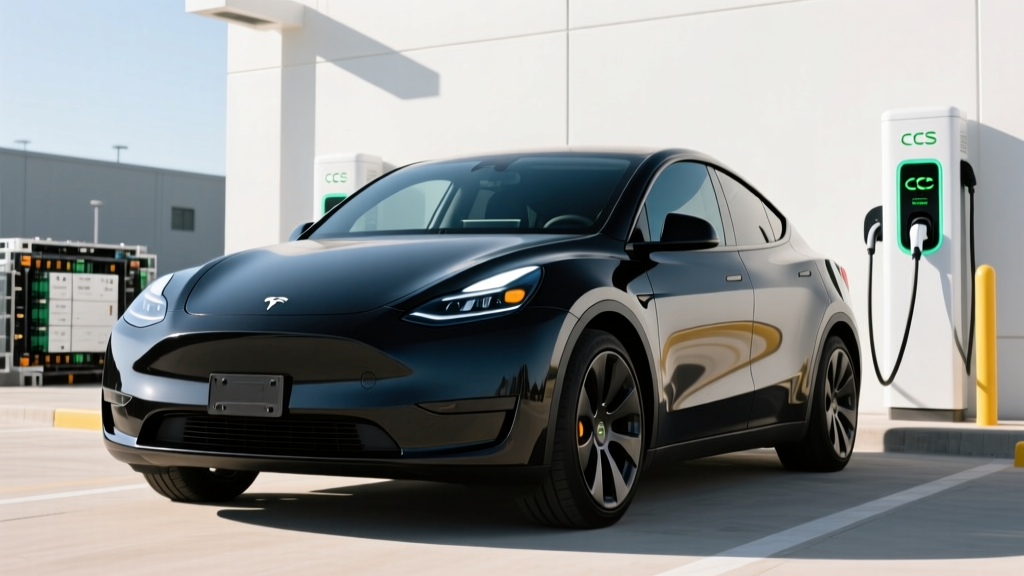
- Charging speed collapse: A cold battery management system (BMS) throttles DC fast charging to protect the cells. A vehicle rated for 150 kW peak may accept only 30–50 kW until the pack warms, stretching a 10–80% session from ~20 minutes to 45–60 minutes.
- Preconditioning energy drain: Your EV uses battery energy to heat the cabin and warm the pack before you drive. If the car sits in a 15°F garage, preconditioning can consume 3–8 kWh before you even leave home — energy that came from your battery, not the grid.
- Regen braking reduction: Cold batteries accept less regenerative braking energy, which means more friction-brake use and less energy recaptured on deceleration.
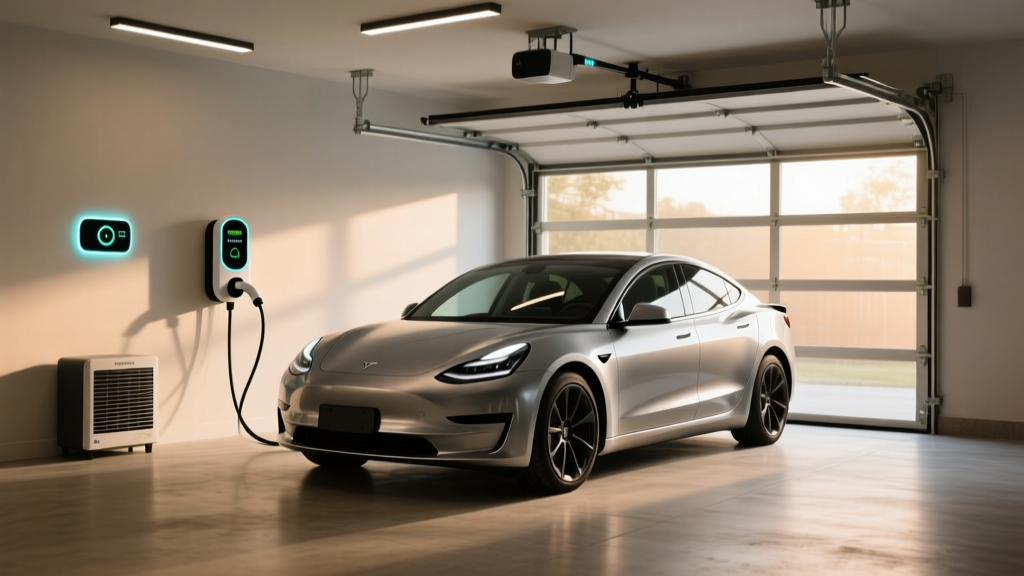
An electric garage heater with thermostat solves most of these problems by keeping the storage environment above the threshold where these penalties kick in. The thermostat is critical: without it, you're either wasting electricity running the heater constantly or failing to maintain the minimum temperature on the coldest nights.
Electric Garage Heaters vs. Gas: What Makes Sense for EV Owners?
If you already own an EV and have a 240V circuit (or plan to install one for Level 2 charging), an electric unit heater is usually the more practical choice over a natural-gas or propane garage heater. Here's the comparison:
| Factor | Electric Garage Heater (240V) | Natural Gas / Propane Heater |
|---|---|---|
| Unit cost | $200–$500 | $400–$1,200 |
| Installation cost | $300–$800 (240V circuit) | $500–$2,000 (gas line + venting) |
| Operating cost (per month, cold climate) | $15–$45 | $20–$60 |
| Thermostat precision | Digital, ±1°F accuracy | Varies; often less precise |
| Venting required | No | Yes (combustion exhaust) |
| Compatibility with sealed EV garage | Excellent — no fumes | Poor — CO risk in tight spaces |
| Maintenance | Minimal (no burner, no pilot) | Annual inspection recommended |
| Electrical panel load impact | 16–30A at 240V | Minimal (120V for blower only) |
For EV owners, the electric option wins on simplicity and safety. You don't introduce combustion gases into a space where your $40,000+ vehicle is stored and charging. The main trade-off is electrical panel capacity — which we'll address below.
Sizing Your Heater: Garage Volume, Insulation, and Wattage Math
Garage heater sizing depends on three variables: volume (cubic feet), insulation level, and your target temperature rise (the difference between the coldest outdoor temperature and your desired indoor minimum).
The rough formula: For a moderately insulated garage, you need approximately 10 watts per square foot of floor area to maintain a 30–40°F temperature rise. Here's a practical sizing guide:
| Garage Size | Recommended Heater Wattage | Amp Draw at 240V | Circuit Breaker Needed |
|---|---|---|---|
| Single-car (12×20 ft, 240 sq ft) | 2,400–3,000W | 10–12.5A | 20A double-pole |
| Two-car (20×20 ft, 400 sq ft) | 4,000–5,000W | 16.7–20.8A | 30A double-pole |
| Oversized / 3-car (600+ sq ft) | 5,000–7,500W | 20.8–31.3A | 30–40A double-pole |
| Poorly insulated (any size) | Add 25–50% wattage | — | Size up accordingly |
Key spec to check: Look for a built-in or compatible wall-mount thermostat with a low-temperature set point around 40°F. Many garage heaters ship with thermostats that only go down to 50°F, which wastes energy if your only goal is protecting your EV battery. A programmable or smart thermostat (like a line-voltage model from Honeywell or a Wi-Fi-enabled unit) lets you set 40–45°F overnight and bump to 55°F an hour before you drive — enough to precondition the battery without running the heater at full output all day.
The Panel Capacity Problem: Sharing Power with Your Level 2 Charger
This is the part most garage heater guides skip, but it's the #1 issue EV owners face. A Level 2 EV charger typically draws 32–48 amps on a 40–60A circuit. A garage heater draws 16–30 amps on its own circuit. Together, that's potentially 50–80 amps of continuous 240V load.
Most US homes have a 100A or 200A main service panel. Here's how the math works:
- 200A panel with gas appliances (stove, furnace, water heater): You likely have 60–80A of headroom. A 48A EV charger and a 20A heater can coexist, but you may be near capacity during peak usage.
- 200A panel with all-electric appliances: You may already be close to capacity. Adding both an EV charger and a heater could require a panel upgrade ($1,500–$3,000) or a smart load-management system.
- 100A panel: Almost certainly requires an upgrade to 200A before adding both loads.
Solutions that avoid a panel upgrade:
- Smart load-sharing devices (e.g., NeoCharge, Wallbox Power Sharing): These split a single 240V circuit between the charger and heater, ensuring they never draw simultaneously above the circuit's rating.
- Scheduled operation: Set the heater thermostat to run during off-peak hours and the EV charger to run overnight — they rarely need to operate at full power simultaneously.
- Lower-wattage heater: A 3,000W heater on a 20A circuit is much easier to accommodate than a 7,500W unit.
Always have a licensed electrician perform a load calculation per NEC Article 220 before adding circuits. The final spec must come from a professional who has inspected your panel.
Operating Costs: What You'll Actually Spend Each Winter
Let's run real numbers for a two-car garage in a climate that averages 20°F on winter nights (think Chicago, Minneapolis, or Boston), using a 5,000W heater with a thermostat set to 45°F, running approximately 60% of the time during an 8-hour overnight period:
- Hourly consumption: 5 kW × 0.60 duty cycle = 3.0 kWh per hour average
- Overnight (8 hours): 24 kWh per night
- Monthly (30 nights): 720 kWh
- Cost at $0.14/kWh (national average): ~$101/month
- Cost at $0.10/kWh (cheaper utility rate): ~$72/month
- Cost with better insulation (40% duty cycle): ~$67/month at $0.14/kWh
That sounds significant — but compare it to the cost of not heating the garage:
- Lost range value: If your EV loses 80 miles of range to cold for 4 months, and you're spending $0.05/mile on electricity, the wasted preconditioning energy and reduced efficiency cost roughly $40–$80/month in extra charging.
- Public DC fast-charge penalty: A cold battery that charges at 40 kW instead of 150 kW means longer sessions and potentially more idle fees at networks like Electrify America or Tesla Superchargers.
- Battery longevity: Repeatedly charging a sub-freezing lithium-ion pack accelerates degradation. While modern BMS systems protect against the worst damage, keeping the pack above 40°F is the single best thing you can do for long-term State of Health (SoH). A battery replacement costs $5,000–$20,000 depending on the vehicle.
Common Misconceptions About Heating Your EV Garage
| Myth | Fact |
|---|---|
| "My EV's battery heater handles the cold fine." | The onboard battery heater works, but it draws 2–6 kWh from your pack during preconditioning. A warm garage eliminates this energy drain entirely and lets you start with a full battery. |
| "Any space heater will do the job." | 120V space heaters max out at 1,500W — enough for a small, well-insulated space but not a typical garage. They also lack the safety certifications (UL/ETL) required for permanent garage installation near vehicles and flammable materials. |
| "I need to heat the garage to 70°F." | You don't. The goal is to keep the battery above 40°F. Setting the thermostat to 45°F uses roughly 60% less energy than heating to 70°F and still eliminates most cold-weather penalties. |
| "Electric heaters are too expensive to run." | At 45°F with a good thermostat and decent insulation, a 5,000W unit costs $15–$45/month in most climates — less than the fuel you'd waste idling a gas car to warm up. |
| "LFP batteries don't need warmth." | LFP chemistry is more tolerant of cold storage, but cold LFP packs still charge much slower and lose range in freezing temps. Keeping them above 40°F still provides measurable benefits. |
Installation Checklist for EV Owners
- Get a panel load calculation. Have a licensed electrician assess whether your panel can support both the EV charger and heater circuits. Reference NEC Article 220.
- Choose a hardwired 240V unit. Hardwired heaters are safer, more reliable, and don't occupy outlet space you may need for other garage tools. Look for UL or ETL listing.
- Install the thermostat at vehicle height. Mount it 4–5 feet off the floor, away from the heater's direct airflow, to get an accurate reading of the air temperature around your EV's battery pack.
- Add weatherstripping and insulation. Sealing the garage door bottom and insulating the door panels can reduce heater duty cycle by 20–40%, saving $10–$25/month.
- Set the thermostat to 40–45°F minimum. Use a programmable schedule: 40°F overnight, ramping to 50–55°F one hour before your typical departure time. This pre-warms the battery for optimal regen and range without wasting energy all day.
- Verify clearances. Most unit heaters require 3–6 inches of clearance from walls and 18+ inches from the ceiling. Follow the manufacturer's installation manual exactly.
Decision Framework: Do You Need One?
Get an electric garage heater with thermostat if:
- You live where winter temperatures regularly drop below 30°F (-1°C)
- You park your EV in an attached or detached garage overnight
- You rely on EPA-rated range for your daily commute and can't afford 20–30% cold-weather loss
- You DC fast-charge frequently and want to avoid cold-battery throttling at public stations
- Your electrical panel has at least 20A of 240V headroom after your EV charger
Skip it if:
- Your winter lows rarely drop below 35°F (mild coastal or southern climates)
- You park outdoors and can't practically heat an open space
- Your panel is maxed out and an upgrade isn't in the budget right now
- You drive a PHEV with a small battery (the gas engine covers range loss and cabin heat)
Will a garage heater void my EV's battery warranty?
No. Keeping your battery in a moderate-temperature environment is aligned with every manufacturer's storage recommendations. Federal law requires battery warranties of at least 8 years/100,000 miles (per the EPA and IRS definitions for qualified plug-in vehicles), and moderate temperatures only help you maintain capacity.
Can I use a 120V heater instead of a 240V unit?
A 120V heater maxes out at ~1,500W, which is sufficient only for a small, well-insulated single-car garage in a mild climate. For a standard two-car garage in a region with sub-freezing winters, you need the 4,000–5,000W output that only a 240V circuit provides.
How does a heated garage affect my EV's charging speed at home?
Level 2 charging speed is determined by your charger's kW rating (typically 7.2–11.5 kW) and the vehicle's onboard charger capacity. A warm garage doesn't increase Level 2 speed, but it eliminates the energy your EV diverts to battery heating during the charge session — meaning more of those kW go into actual range rather than thermal management.
What's the best thermostat setting for EV battery health?
Maintain 40–50°F (4–10°C) as your minimum. This keeps lithium-ion cells well above the threshold where electrolyte viscosity increases and charge acceptance drops. If you want maximum comfort when working in the garage, a programmable thermostat lets you bump to 55–60°F during active hours without paying to heat the space 24/7.
Does this qualify for any energy tax credits?
The federal Energy Efficient Home Improvement Credit (IRC §25C) covers certain qualified energy property, but standard electric resistance garage heaters generally do not qualify — heat pump systems may. Check current-year IRS guidance or consult a tax professional, as rules and eligible equipment lists change annually.