The Short Answer on the Electric Ford Maverick
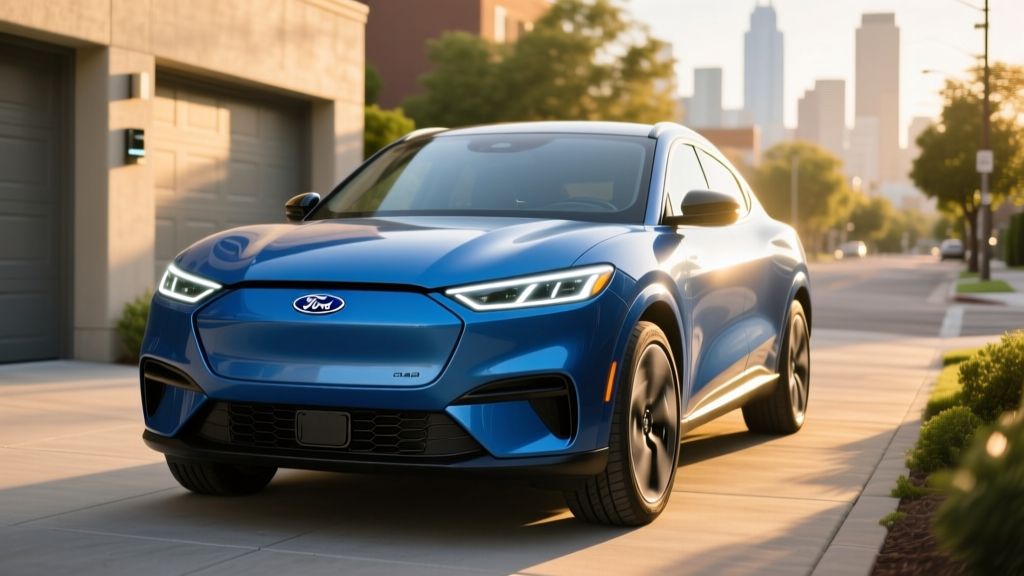
Ford has confirmed an electric Maverick pickup is in development for its next-generation platform, targeting a sub-$40,000 starting MSRP and an EPA-estimated range near 250 miles. As of early 2026, the electric Ford Maverick is not yet available for purchase—specs below are preliminary based on Ford's announced EV architecture and supply-chain disclosures. If you need a Maverick today, the 2026 Maverick Hybrid (FWD, ~42 MPG combined, ~$28,990 MSRP) is the most efficient option currently in showrooms. The fully electric variant is expected to reach dealers late 2026 or as a 2027 model-year vehicle.
What We Know About the Electric Ford Maverick So Far
Ford CEO Jim Farley confirmed in 2024 that the next-generation Maverick would ride on a new, flexible platform capable of supporting hybrid and fully electric powertrains. The electric Ford Maverick is expected to slot into Ford's "Model T" universal EV platform strategy, sharing components with a next-gen midsize electric SUV. Production is anticipated at Ford's Hermosillo, Mexico plant alongside the current Maverick, though Ford has not officially confirmed the assembly location for the EV variant.
Here's what Ford has disclosed or what industry analysts project based on the platform's known parameters:
| Attribute | Projected Spec |
|---|---|
| Powertrain | Single-motor FWD / dual-motor AWD (TBD) |
| Battery chemistry | LFP (lithium iron phosphate) — projected |
| Usable battery capacity | ~65–75 kWh (est.) |
| EPA-estimated range | ~230–260 miles (FWD, est.) |
| Peak DC fast-charge rate | ~150 kW (est.) |
| 10–80% DC charge time | ~28–35 minutes (est.) |
| Level 2 AC charging | ~11.5 kW onboard charger (est.) |
| 0–60 mph | ~6.0–7.5 seconds (AWD est.) |
| Towing capacity | ~2,000–4,000 lbs (est.) |
| Starting MSRP | ~$35,000–$39,995 (est.) |
| Battery warranty | 8 years / 100,000 miles (Ford EV standard) |
Note: All figures above are preliminary estimates. Final specs will be confirmed by Ford closer to launch. We will update this article when official data is published.
Real-World Range Expectations
If the electric Maverick achieves an EPA rating around 250 miles, expect roughly 200–220 miles on the highway at 70 mph, and potentially 170–190 miles in freezing temperatures. LFP batteries tend to suffer slightly more cold-weather range loss than NMC chemistries—typically 25–35% reduction at 20°F versus 15–25% for NMC. Preconditioning the battery before DC fast charging will be essential to hit peak charge rates.
Electric Maverick vs. Maverick Hybrid vs. Gas: Cost Comparison
The current Maverick Hybrid is one of the most fuel-efficient pickups on the market. Does going fully electric make financial sense? Let's compare projected costs across a 5-year / 75,000-mile ownership period.
| Cost Category | Electric Maverick (est.) | Maverick Hybrid (2026) | Maverick Gas 2.0T EcoBoost (2026) |
|---|---|---|---|
| Base MSRP | ~$37,500 | $28,990 | $27,995 |
| Federal tax credit (§30D) | Up to $7,500* | None (hybrid) | None |
| Effective purchase price | ~$30,000 | $28,990 | $27,995 |
| Fuel/energy (75k mi) | ~$3,200 (home L2) | ~$5,900 (gas) | ~$8,100 (gas) |
| Maintenance (5 yr) | ~$1,800 | ~$3,200 | ~$3,600 |
| Insurance (5 yr avg) | ~$8,500 | ~$7,200 | ~$7,000 |
| Estimated depreciation | ~$14,000 | ~$11,500 | ~$12,000 |
| Total 5-yr cost | ~$57,500 | ~$56,790 | ~$58,695 |
Assumptions: $0.14/kWh home electricity, $3.50/gal gas, 42 MPG hybrid, 26 MPG combined gas, 3.5 mi/kWh EV efficiency. Insurance based on national EV average premium data. Tax credit eligibility varies—see §30D details below. Sources: fueleconomy.gov, manufacturer MSRP data.
The electric Maverick's total cost of ownership is projected to be competitive with the gas model and nearly identical to the hybrid—but only if you qualify for the full federal tax credit and charge primarily at home. Public DC fast charging at $0.35–$0.50/kWh would push the electric Maverick's energy cost above the hybrid's fuel cost.
Federal Tax Credit: Will the Electric Maverick Qualify?
The IRS §30D Clean Vehicle Credit offers up to $7,500 for qualifying new EVs, but eligibility depends on several factors that change annually. Based on current rules:
§30D Requirements (2026 Rules)
- MSRP cap: Trucks and SUVs must have an MSRP at or below $80,000 — the Maverick should clear this easily.
- Buyer income cap: Adjusted gross income must not exceed $150,000 (single), $225,000 (head of household), or $300,000 (joint).
- Battery sourcing: A percentage of critical minerals and battery components must be sourced from the US or free-trade-agreement countries. These thresholds increase each year, making qualification harder over time.
- Final assembly: Must occur in North America. If Ford produces the electric Maverick in Hermosillo, Mexico, it would qualify (Mexico is part of USMCA).
- Point-of-sale transfer: Buyers can transfer the credit to the dealer at purchase, reducing the upfront price directly.
The biggest wildcard is battery sourcing. If Ford uses LFP cells sourced from CATL (China), the critical-minerals requirement could disqualify the truck from the full $7,500—or potentially from any credit at all, depending on 2026 threshold levels. Ford has been working to diversify its battery supply chain through partnerships with SK On and LG Energy Solution, but final cell sourcing for the electric Maverick has not been confirmed. Always verify current eligibility at irs.gov before purchasing.
Charging the Electric Maverick: Home and Public
Charging logistics will determine whether the electric Maverick fits your lifestyle. Here's what to plan for:
| Level | Power | Miles Added per Hour | Full Charge Time (10–100%) |
|---|---|---|---|
| Level 1 (120V household) | ~1.4 kW | ~4–5 mi/hr | ~50–60 hours |
| Level 2 (240V home, 48A) | ~11.5 kW | ~35–40 mi/hr | ~6–7 hours |
| DC fast charge (peak) | ~150 kW | ~250+ mi/hr (peak) | 10–80% in ~30 min (est.) |
Home charging is critical. A Level 2 home charger (240V, 40–48 amp circuit) will fully replenish the Maverick overnight. Installation typically costs $800–$2,000 depending on your electrical panel's capacity. If you need a panel upgrade from 100A to 200A service, add $1,500–$3,000. Always consult a licensed electrician for a site-specific quote.
For road trips, the projected 150 kW DC fast-charge rate means a 10–80% session in roughly 30 minutes at a compatible station. Note that peak kW is not sustained kW—charge speed tapers significantly above 80% State of Charge to protect battery health. Plan road-trip stops around the 10–80% window for the fastest sessions. The electric Maverick is expected to use the NACS (Tesla-style) connector, given Ford's commitment to transitioning its North American EV fleet to NACS by 2025–2026.
Common Misconceptions About the Electric Maverick
| Myth | Fact |
|---|---|
| "Electric trucks can't tow." | EVs produce maximum torque at 0 RPM, making them strong tow vehicles. However, towing cuts range by 30–50%. The electric Maverick's projected 2,000–4,000 lb capacity is adequate for light trailers but not heavy hauling. |
| "The battery will need replacing in 5 years." | Modern LFP batteries are rated for 3,000+ charge cycles before reaching 80% capacity. Ford's EV battery warranty covers 8 years/100,000 miles against degradation below 70% state of health. Most EV batteries outlast the vehicle. |
| "I'll save $7,500 no matter what." | The §30D credit has income caps, MSRP caps, and battery-sourcing requirements that change yearly. Not every buyer or every configuration will qualify. |
| "Charging is free." | Home charging at $0.14/kWh costs roughly $0.04/mile. Public DC fast charging at $0.40/kWh costs ~$0.11/mile—comparable to a 32 MPG gas car at $3.50/gal. |
| "It's self-driving." | Ford's BlueCruise is an SAE Level 2 driver-assistance system. You must keep your eyes on the road and hands available to take over at all times. It is not autonomous driving. |
Decision Framework: Should You Wait for the Electric Maverick?
Choose the Electric Maverick (wait) if:
- You have reliable home Level 2 charging (or can install it).
- Your daily driving is under 80 miles round-trip, with occasional longer trips.
- You qualify for the §30D federal tax credit based on income and sourcing rules.
- You want the lowest per-mile energy cost and minimal maintenance.
- You're not in a rush—production may not begin until late 2026 or 2027.
Choose the Maverick Hybrid (buy now) if:
- You lack home charging access or live in an apartment without EV infrastructure.
- You frequently drive in extreme cold where EV range drops 25–35%.
- You regularly tow near the truck's max capacity and can't afford range loss.
- You want a proven powertrain with 42 MPG combined and no charging logistics.
- You need a truck in the next 3–6 months.
Choose the Gas Maverick if:
- You want the lowest upfront price (~$27,995) and AWD availability today.
- Your annual mileage is low (under 8,000 miles/year), making fuel savings negligible.
- You live in a rural area with limited public charging infrastructure.
What First-Time EV Buyers Should Know
If the electric Ford Maverick would be your first EV, prepare for a few ownership realities that differ from gas vehicles:
- Install a Level 2 charger before the truck arrives. Lead times for electricians can be 4–8 weeks in some regions. Get a quote early and confirm your electrical panel has capacity for a 40–60 amp dedicated circuit.
- Understand kW vs. kWh. kW is power (how fast you charge); kWh is energy (how much your battery holds). A 70 kWh battery charged at 11.5 kW takes about 6 hours from empty to full.
- Plan for cold weather. If you live where temperatures regularly drop below freezing, expect 25–35% range loss. A garage and battery preconditioning help significantly.
- Insurance costs more for EVs. EV insurance premiums average 15–25% higher than equivalent gas vehicles due to higher repair costs and specialized parts. Get quotes before committing.
- Maintenance is lower but not zero. You'll still rotate tires (EVs wear tires faster due to instant torque and heavier weight), replace cabin air filters, and top off washer fluid. But no oil changes, spark plugs, or transmission fluid.
- Check your utility's EV rate plan. Many utilities offer time-of-use plans with off-peak electricity as low as $0.06–$0.08/kWh overnight, cutting your fueling cost in half.
Frequently Asked Questions
When will the electric Ford Maverick be available to buy?
Ford has confirmed an electric Maverick is in development but has not announced an exact on-sale date. Industry projections point to late 2026 as a 2027 model-year vehicle. We will update this article when Ford publishes official timing.
Will the electric Maverick have AWD?
Ford has not confirmed powertrain configurations. A dual-motor AWD variant is likely given the Maverick's positioning as a lifestyle truck, but it may not be available at launch. The FWD hybrid Maverick is currently the only drivetrain option for the hybrid; AWD is available on the gas 2.0T EcoBoost model.
What connector will the electric Maverick use?
Ford has committed to adopting the NACS (North American Charging Standard) connector across its EV lineup. The electric Maverick is expected to ship with a native NACS port, granting access to Tesla Supercharger stations as well as other NACS-equipped networks.
How does the electric Maverick compare to the Ford F-150 Lightning?
The F-150 Lightning is a full-size truck with up to 320 miles of EPA range, 775 lb-ft of torque, and up to 10,000 lbs towing—but starts around $55,000. The electric Maverick will be smaller, lighter, less expensive, and aimed at urban and light-duty buyers who don't need full-size capability.
Is the Maverick Hybrid a better deal than waiting for the EV?
Financially, the two are projected to be very close over 5 years if you qualify for the full $7,500 tax credit on the EV and charge at home. The hybrid wins on simplicity—no charging infrastructure needed, no range anxiety in cold weather, and it's available today. The EV wins on per-mile fueling cost and maintenance savings if your lifestyle supports it.
Sources: fueleconomy.gov (EPA efficiency data), irs.gov (§30D credit rules), Ford Motor Company press releases and spec sheets.