Quick Answer: Is There an Electric Ford Focus?
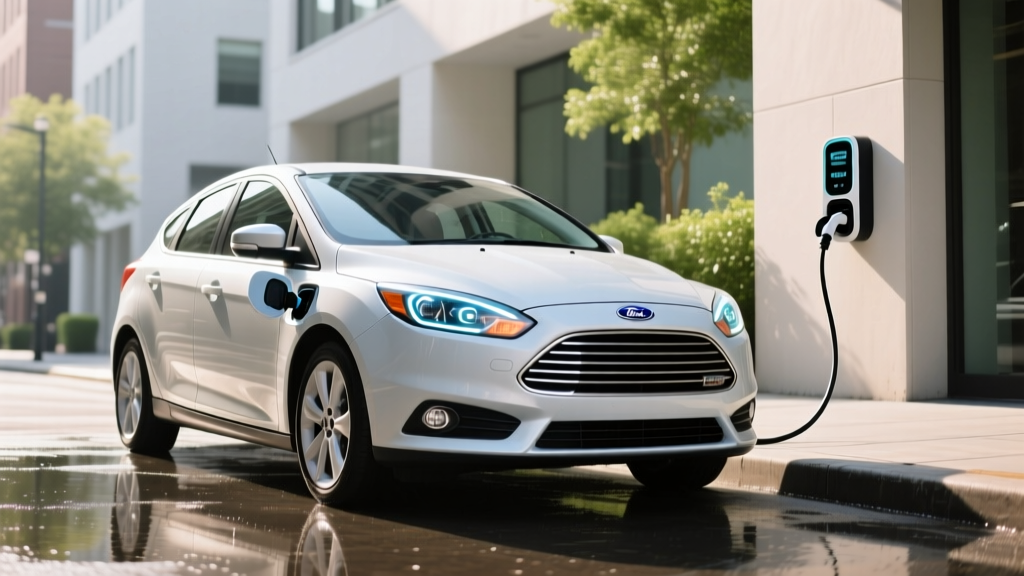
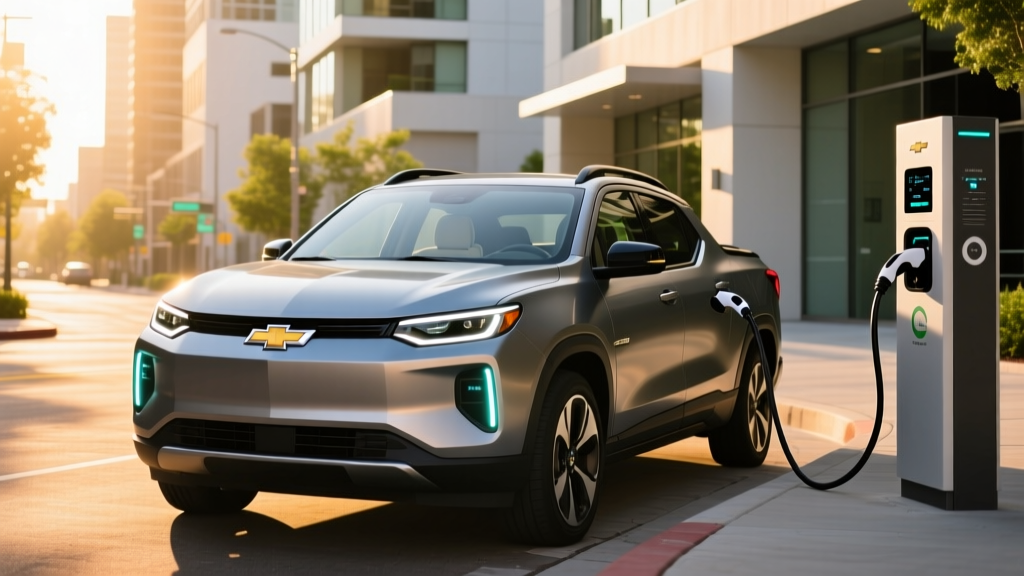
As of 2026, Ford does not offer an electric version of the Focus in the United States. The Focus nameplate was discontinued in North America after the 2018 model year, and Ford's EV strategy has shifted entirely to SUVs, trucks, and commercial vehicles. If you're searching for an "electric Ford Focus," you'll need to consider alternatives like the Ford Mustang Mach-E, Chevrolet Equinox EV, or Hyundai Ioniq 5—compact electric vehicles that offer similar practicality with modern range and charging capabilities.
Why Ford Abandoned the Focus (and Small Cars Generally)
Ford's decision to kill the Focus and other small cars wasn't arbitrary—it reflected brutal market economics. By 2018, American consumers had decisively shifted toward crossovers and trucks, leaving compact sedans and hatchbacks with thin profit margins. The Focus, despite being a capable and well-reviewed car, simply couldn't compete financially against the F-150 or Escape in Ford's portfolio.
When Ford pivoted to electric vehicles, they applied the same logic: invest where demand and margins align. The result was the Mustang Mach-E (a compact electric SUV starting around $42,000 in 2026) and the F-150 Lightning. A compact electric hatchback like an "electric Focus" never made it into Ford's product roadmap for North America.
This isn't unique to Ford. Most mainstream automakers have deprioritized small EVs in the U.S. market due to:
- Consumer preference: SUVs and trucks dominate sales volume
- Battery economics: Smaller vehicles have less room for batteries, making range-per-dollar harder to optimize
- Regulatory pressure: CAFE standards push automakers toward larger vehicles with higher profit margins to offset EV investments
What You Can Buy Instead: Electric Alternatives to the Focus
If you wanted a Focus-sized electric vehicle with similar practicality—compact dimensions, decent cargo space, and everyday usability—here are the closest 2026 options with real numbers:
| Model | EPA Range | Battery (kWh) | Peak DC Charge (kW) | 10-80% Time | Base MSRP |
|---|---|---|---|---|---|
| Ford Mustang Mach-E (Select RWD) | 250 mi | 75.7 kWh (NMC) | 150 kW | ~30 min | $42,995 |
| Chevrolet Equinox EV (2LT) | 315 mi | 85 kWh (NMC) | 150 kW | ~32 min | |
| Hyundai Ioniq 5 (SE Standard Range) | 220 mi | 58 kWh (NMC) | 175 kW | ~18 min | $41,450 |
| Nissan Leaf (SV Plus) | 212 mi | 60 kWh (NMC) | 100 kW | ~40 min | $36,190 |
Real-world range caveat: EPA estimates assume mixed driving at moderate temperatures. Expect 15-25% range reduction in sustained highway driving above 70 mph, and 20-30% loss in freezing temperatures. The Ioniq 5's 220-mile EPA rating might deliver 165-180 miles on a cold winter highway trip.
Cost Comparison: EV vs. Gas Compact Car
Let's compare the economics of a hypothetical "electric Focus" alternative against a gasoline compact car over 5 years. We'll use the Chevrolet Equinox EV (315 mi range, $43,000 MSRP) versus a Honda Civic (32 MPG combined, $26,000 MSRP) as a realistic proxy.
| Category | Chevrolet Equinox EV | Honda Civic (Gas) |
|---|---|---|
| Purchase Price (MSRP) | $43,000 | $26,000 |
| Federal Tax Credit (§30D) | -$7,500 (if eligible) | $0 |
| Effective Purchase Price | $35,500 | $26,000 |
| Fuel/Energy (60,000 miles) | $3,600 (home charging @ $0.13/kWh) | $7,050 (gas @ $3.50/gal, 32 MPG) |
| Maintenance (5 years) | $1,200 (tire rotations, cabin filter) | $3,500 (oil changes, brakes, filters) |
| Insurance (5-year avg) | $9,500 | $7,200 |
| 5-Year Total | $49,800 | $43,750 |
| Cost Per Mile | $0.83 | $0.73 |
The math: Even with the $7,500 federal tax credit and lower fuel/maintenance costs, the EV costs roughly $6,000 more over 5 years. However, this doesn't account for:
- Time value: No gas station stops (home charging adds convenience)
- Performance: EVs deliver instant torque and smoother acceleration
- Resale uncertainty: EV depreciation curves are still evolving; gas cars have predictable patterns
- Local incentives: Some states offer additional rebates ($1,000-$4,000) that improve EV economics
Tax credit eligibility is not guaranteed. The §30D credit requires:
- Vehicle MSRP under $55,000 (cars) or $80,000 (SUVs/trucks)
- Buyer income under $150,000 (single) or $300,000 (joint)
- Battery components and critical minerals sourced from U.S. or free-trade partners (rules tighten annually)
Always verify eligibility at IRS.gov before purchasing. Point-of-sale transfers are available, reducing your upfront cost if you qualify.
Real-World Ownership Considerations
Before committing to any compact EV, honestly assess these factors:
Home Charging Access
If you have a garage or dedicated parking spot: A Level 2 home charger (240V, 32-48 amps) adds 25-35 miles of range per hour of charging. Most EVs fully recharge overnight. Installation costs $800-$2,500 depending on electrical panel capacity and wiring distance.
If you rely on street parking or apartments: Public charging becomes your primary refueling method. This adds time (30-45 minutes per session) and cost (DC fast charging averages $0.35-$0.50/kWh vs. $0.13/kWh at home). Check apps like PlugShare or ChargePoint to map charging density in your area before buying.
Climate and Driving Patterns
Cold weather (below 32°F): Battery chemistry slows in cold temperatures, reducing range by 20-30% and slowing DC fast charging speeds. EVs with heat pumps (like the Ioniq 5 and Mach-E) mitigate this somewhat, but winter range loss is unavoidable.
Highway-heavy commutes: EVs are most efficient in stop-and-go city driving where regenerative braking recaptures energy. Sustained 75+ mph highway driving reduces range significantly. If your commute is 90% highway, size your battery 20% larger than your daily needs.
Mountainous terrain: Climbing consumes energy rapidly, but descending regenerates it. Net range impact depends on your specific routes.
Common Misconceptions About Compact EVs
| Myth | Fact |
|---|---|
| "EVs don't have enough range for road trips" | Most 2026 EVs offer 220-320 miles EPA. With DC fast charging adding 150-200 miles in 20-30 minutes, road trips require planning but are entirely feasible. Apps like A Better Routeplanner optimize charging stops. |
| "Batteries need replacement after 5 years" | Modern EV batteries are warrantied for 8 years/100,000 miles (minimum 70% capacity retention). Real-world degradation data shows most batteries retain 85-90% capacity after 100,000 miles. Replacement is rare and typically only needed after 15+ years. |
| "EVs are worse for the environment due to battery mining" | Lifecycle analyses (including battery production) show EVs produce 50-70% fewer emissions than gas cars over their lifetime, even on coal-heavy grids. As grids decarbonize, this advantage grows. Source: EPA Green Vehicles. |
| "Charging takes too long" | Home charging happens while you sleep (8-10 hours for full charge). DC fast charging adds 150-200 miles in 20-30 minutes—longer than a gas fill-up, but you're not standing at a pump. Most charging happens at home or work, not on road trips. |
| "EVs are unreliable" | EVs have fewer moving parts than gas cars (no transmission, no exhaust system, no spark plugs). Consumer Reports and J.D. Power data show EVs have lower maintenance costs and comparable or better reliability than gas vehicles after the first year. |
Decision Framework: Should You Buy a Compact EV?
If-Then Decision Guide
- IF you have home charging access AND drive less than 200 miles daily AND qualify for the $7,500 tax credit → THEN a compact EV like the Equinox EV or Ioniq 5 makes strong economic and practical sense.
- IF you rely on public charging AND live in an area with sparse charging infrastructure → THEN consider a plug-in hybrid (PHEV) like the Toyota Prius Prime (44 miles electric-only, 52 MPG combined) as a bridge solution.
- IF you frequently drive 300+ miles in cold weather OR tow heavy loads → THEN a gas or hybrid vehicle may still be more practical until battery energy density improves or charging infrastructure expands.
- IF you want a Ford specifically AND need compact EV practicality → THEN the Mustang Mach-E is your only current option, but it's larger and more expensive than a Focus would have been.
- IF you're budget-constrained under $30,000 → THEN wait for the next generation of affordable EVs (expected 2027-2028) or consider a used EV like a 2022-2023 Chevrolet Bolt (259 miles range, ~$18,000-$22,000 used).
Frequently Asked Questions
Will Ford ever make an electric Focus?
Unlikely for the North American market. Ford has publicly committed to an EV lineup focused on SUVs, trucks, and commercial vehicles. The Focus nameplate is discontinued in the U.S., and there's no indication Ford will revive it as an EV. European markets may see different products, but U.S. buyers should not expect an electric Focus.
What's the cheapest compact EV I can buy in 2026?
The Nissan Leaf S starts at $28,140 with a 149-mile range (40 kWh battery). The Leaf SV Plus ($36,190) offers 212 miles with a 60 kWh battery. However, the Leaf uses the outdated CHAdeMO charging standard, which limits DC fast-charging availability compared to CCS or NACS (Tesla) connectors. For better charging infrastructure access, the Chevrolet Equinox EV ($43,000) or Hyundai Ioniq 5 ($41,450) are more future-proof choices.
How long do EV batteries really last?
Federal law mandates EV battery warranties of at least 8 years/100,000 miles with minimum 70% capacity retention. Real-world data from Tesla, Nissan, and Chevrolet shows most batteries retain 85-90% capacity after 100,000 miles. Battery replacement is rare and typically only needed after 15+ years or 200,000+ miles. When replacement is necessary, costs range from $5,000-$15,000 depending on the vehicle and battery size, though prices are declining as the industry matures.
Do I need to charge every night?
No. Most EV owners charge 2-3 times per week based on their driving patterns. Lithium-ion batteries actually prefer staying between 20-80% state of charge for longevity. Many EVs allow you to set a charge limit (e.g., stop at 80%) to reduce stress on the battery. Daily charging to 100% is only necessary if you regularly drive near the vehicle's maximum range.
What happens if I run out of charge on the road?
Modern EVs provide accurate range estimates and multiple warnings before depletion. Apps like PlugShare, ChargePoint, and built-in navigation systems show nearby charging stations. If you do run out, roadside assistance can tow you to the nearest charger (AAA and many manufacturers include EV-specific roadside assistance). Running out of charge is rare and usually the result of poor planning rather than inadequate infrastructure.
Are EVs cheaper to insure?
Generally, no. EV insurance premiums are 15-25% higher than comparable gas cars due to higher repair costs (specialized parts, battery replacement concerns) and higher vehicle values. However, some insurers offer EV-specific discounts. Shop quotes from multiple providers—GEICO, Progressive, and State Farm all have EV insurance programs. Expect to pay $150-$250/month for comprehensive coverage on a $40,000 EV, versus $120-$180/month for a $26,000 gas car.
Bottom Line: The Electric Focus Isn't Coming—But Good Alternatives Exist
If you're searching for an electric Ford Focus, you're looking for a vehicle that doesn't exist and likely never will in the U.S. market. Ford's EV strategy has moved on to larger, more profitable vehicles. However, the compact EV segment offers solid alternatives with modern range (220-315 miles), fast charging (20-30 minutes for 150-200 miles), and improving economics.
The decision comes down to your specific situation: home charging access, daily mileage, climate, and budget. For most buyers with home charging and moderate daily drives, a compact EV like the Chevrolet Equinox EV or Hyundai Ioniq 5 delivers lower operating costs, smoother performance, and zero tailpipe emissions. For those without reliable charging access or extreme range needs, a plug-in hybrid or efficient gas car remains a pragmatic choice.
Check current federal tax credit eligibility at IRS.gov, verify EPA range and efficiency data at fueleconomy.gov, and test-drive multiple options before committing. The right vehicle depends on your real-world needs, not marketing promises.