The Short Answer on the Electric Ford Bronco
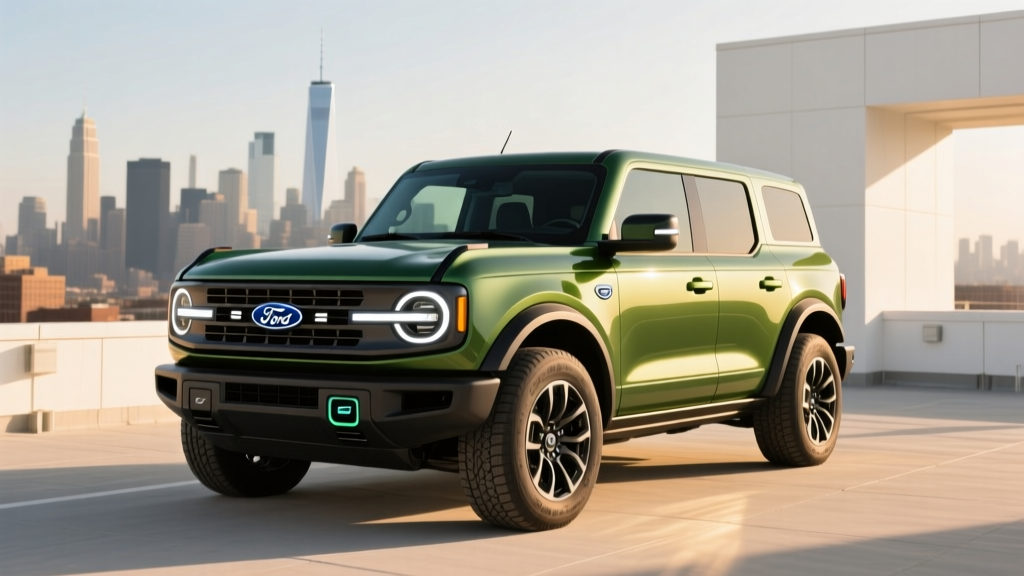
As of early 2026, Ford has not officially released a fully electric Bronco. The current sixth-generation Bronco (2021–present) is available only with turbocharged gasoline engines and, in the Bronco Sport variant, a mild-hybrid setup. Ford has signaled its intent to electrify its rugged SUV lineup — the automaker confirmed in late 2024 that a next-generation Bronco family would include electrified powertrains — but no production-spec electric Bronco has been unveiled, priced, or made available for order.
What follows is a data-driven breakdown of what industry reporting and Ford's own EV platform investments suggest an electric Bronco would look like, how it would compare to the gas model on cost and capability, and what buyers should prepare for if and when it arrives. If you're researching an "electric Ford Bronco" today, your best near-term options are the gas Bronco, the Ford F-150 Lightning (if you need electric off-road utility), or competitors like the Rivian R1S and upcoming electric Jeep Wrangler variants.
What Ford Has Actually Said About an Electric Bronco
Ford CEO Jim Farley confirmed in a 2024 investor call that the Bronco nameplate would eventually receive electrified variants, though he stopped short of committing to a full battery-electric vehicle (BEV) in the near term. The company's "Ford Model e" division, which oversees EV development, has been working on a flexible body-on-frame EV architecture that could underpin future trucks and SUVs — including potentially the Bronco and its larger sibling, the Expedition.
Key signals from Ford's public statements and filings:
- Hybrid first, BEV later: Ford has indicated a plug-in hybrid (PHEV) Bronco is more likely before a full EV, similar to the strategy used with the Ford Escape and Explorer PHEVs.
- Platform sharing: An electric Bronco would likely share components with the F-150 Lightning's architecture, potentially using a version of Ford's TE1 (Truck EV) platform.
- No official timeline: Ford has not announced a model year, pricing, or specifications for an electric Bronco. Any numbers circulating online are analyst projections, not confirmed specs.
This matters because buyers searching for an "electric Bronco" may encounter speculative renders and rumor-site specs presented as fact. Until Ford publishes a spec sheet on ford.com, everything below is projection, not promise.
Projected Specs: What an Electric Bronco Could Look Like
Based on Ford's existing EV hardware (the F-150 Lightning's battery and motor systems), the competitive landscape (Rivian R1S, Jeep Recon), and the Bronco's body-on-frame architecture, here's a realistic projection of what a production electric Bronco might deliver:
| Spec | Projected Electric Bronco | 2026 Gas Bronco (2.7L EcoBoost) |
|---|---|---|
| Battery Capacity | ~100–130 kWh usable (NMC) | N/A (16.9 gal fuel tank) |
| EPA Range | 250–320 mi (est.) | ~340 mi (20 MPG × 16.9 gal) |
| Motor / Drivetrain | Dual-motor AWD, ~450–580 HP | 330 HP, 415 lb-ft, 4WD |
| 0–60 mph | ~4.5–5.5 sec (est.) | ~6.5 sec |
| DC Fast Charge (Peak) | ~150–200 kW | N/A |
| 10–80% DC Charge | ~30–40 min (est.) | ~5 min at a gas pump |
| Towing Capacity | ~5,000–7,500 lbs (est.) | 3,500–4,500 lbs |
| Starting MSRP | $55,000–$70,000 (est.) | $39,695 (Big Bend 4-door) |
| Off-Road Hardware | Locking diffs, G.O.A.T. modes, skid plates | Locking diffs, G.O.A.T. modes, skid plates |
Real-World Range Reality Check
If an electric Bronco achieves a 300-mile EPA estimate, expect real-world highway range closer to 230–260 miles at 70+ mph, and potentially 180–210 miles in sub-30°F winter conditions. The Bronco's boxy shape creates significant aerodynamic drag, which hits EV efficiency especially hard at highway speeds. Off-road use with aggressive tires and low-speed crawling would further reduce range. These are the same dynamics that affect the F-150 Lightning and Rivian R1S — there's no escaping physics.
Electric Bronco vs. Gas Bronco: The Ownership Cost Picture
The core question for any buyer is whether the electric version saves money over time. Here's a five-year cost comparison, assuming 15,000 miles/year, $0.14/kWh home charging, $3.40/gallon gas, and a projected $60,000 electric Bronco MSRP:
| Cost Category | Projected Electric Bronco | 2026 Gas Bronco (2.7L EcoBoost) |
|---|---|---|
| Purchase Price (MSRP) | ~$60,000 | ~$45,000 |
| Est. Federal Tax Credit (§30D) | $0–$7,500* | $0 |
| Fuel/Energy (5 yr / 75k mi) | ~$5,250 (home L2) | ~$12,750 (20 MPG avg) |
| Maintenance (5 yr) | ~$1,500 | ~$3,500 |
| Insurance (5 yr avg) | ~$12,000 | ~$9,500 |
| 5-Year Total (excl. depreciation) | ~$71,250–$78,750 | ~$70,750 |
*Federal §30D tax credit eligibility depends on MSRP caps (SUVs: $80,000), buyer income limits ($300k joint / $150k single), and battery critical-mineral sourcing requirements per current IRS rules. Credit amounts phase based on sourcing compliance — not every EV qualifies for the full $7,500. Consult a tax professional for your specific situation.
The electric Bronco would likely carry a $10,000–$15,000 price premium over an equivalently trimmed gas Bronco. Fuel and maintenance savings of roughly $9,500 over five years narrow that gap substantially but don't fully close it unless you drive significantly more than 15,000 miles annually or benefit from cheap off-peak electricity rates below $0.10/kWh.
Charging an Electric Bronco: What You'd Actually Need
A body-on-frame electric SUV with a 100+ kWh battery demands serious charging infrastructure. Here's what ownership looks like in practice:
| Level | Power | Miles Added/Hour | Use Case |
|---|---|---|---|
| Level 1 (120V outlet) | ~1.4 kW | ~3–4 mi/hr | Emergency/top-up only; 100+ hours for full charge |
| Level 2 (240V home) | 7.7–11.5 kW | ~22–33 mi/hr | Daily charging; 10–14 hours for full charge |
| DC Fast Charge | 150–200 kW (peak) | ~500–700 mi/hr (peak) | Road trips; 10–80% in ~30–40 min |
Home charging is essential for practical electric Bronco ownership. A Level 2 home charger (240V, 48-amp circuit) would add roughly 25–30 miles of range per hour — enough to replenish a day's driving overnight. Installation costs typically range from $800 to $2,500 depending on panel capacity, run distance, and local permit fees. If your home has a 100-amp electrical panel, a panel upgrade to 200 amps could add $1,500–$3,000 to the project.
Common Electric Bronco Myths vs. Facts
| Myth | Fact |
|---|---|
| "An electric Bronco can't off-road." | Electric motors deliver instant torque at 0 RPM — ideal for rock crawling. Rivian R1S and GMC Hummer EV have proven EV off-road capability. Battery placement low in the chassis also improves center of gravity. |
| "The battery won't survive trail abuse." | Body-on-frame EV platforms use structural skid plating around the battery pack. Ford's F-150 Lightning battery passed the same durability testing as its gas counterparts. |
| "It'll have 400 miles of range." | Unlikely. The Bronco's boxy, un-aerodynamic profile and heavy curb weight (likely 5,500+ lbs) will limit efficiency. Expect 250–320 miles EPA, similar to the F-150 Lightning Extended Range. |
| "I can charge it on any public charger." | Ford has adopted the NACS (Tesla) connector for its EVs. An electric Bronco would almost certainly ship with NACS, granting access to Tesla Superchargers (via adapter or native plug) plus Electrify America and other CCS networks with an adapter. |
Competitors to Consider Right Now
If you need an electric SUV with genuine off-road capability today, these are the real alternatives while you wait for Ford to formalize its Bronco EV plans:
| Spec | Rivian R1S (Dual-Motor) | Jeep Recon (Announced) | Ford F-150 Lightning (Lariat) |
|---|---|---|---|
| Status | Available now | Announced, expected 2026–2027 | Available now |
| Battery | ~106 kWh (Standard) / ~141 kWh (Max) | Not confirmed | 131 kWh (Extended Range) |
| EPA Range | ~270–410 mi (varies by pack) | ~300+ mi (est.) | 320 mi |
| HP / Torque | 533 HP / 610 lb-ft (Dual) | ~600 HP (est.) | 580 HP / 775 lb-ft |
| 0–60 mph | ~4.5 sec | TBD | ~3.8 sec |
| DC Fast Charge | ~200 kW peak | TBD | ~150 kW peak |
| Off-Road Capability | Excellent (air suspension, quad-motor option) | Expected strong (Trail Rated target) | Good (not purpose-built for trails) |
| Starting MSRP | ~$79,900 | ~$55,000–$65,000 (est.) | ~$54,995 |
The Rivian R1S is the closest analog to what an electric Bronco would be — a capable, three-row electric SUV with serious off-road chops — but at a significantly higher price point. The F-150 Lightning offers Ford's electric truck platform with real towing and off-road ability, though in a pickup form factor. The Jeep Recon is the most direct competitive threat, positioned as an electric Wrangler alternative with Trail Rated ambitions.
Decision Framework: Should You Wait or Buy Now?
Who Should Wait for an Electric Bronco
- You're committed to the Bronco nameplate and want it electric. No current vehicle replicates the Bronco's removable roof/doors, heritage styling, and compact trail-friendly dimensions in EV form.
- Your purchase timeline is 2027 or later. An electric Bronco is unlikely to reach dealers before the 2027 model year at the earliest.
- You have reliable home charging and a moderate daily commute (under 60 miles), making EV ownership practical regardless of which model you choose.
Who Should Buy Something Else Now
- You need a vehicle this year. The electric Bronco doesn't exist as a purchasable product. Waiting means driving your current car indefinitely with no guaranteed timeline.
- Budget is a primary concern. A gas Bronco Big Bend starts at ~$39,695. An electric Bronco will likely start at $55,000+, a substantial premium even after potential tax credits.
- You regularly tow heavy loads long distances. Electric SUVs lose 30–50% of range when towing. A gas Bronco or F-150 remains more practical for frequent 5,000+ lb towing over 200+ miles.
- You live in a charging desert. If your area lacks reliable DC fast charging and you can't install Level 2 at home, EV ownership of any kind will be frustrating.
Frequently Asked Questions
Is the Ford Bronco available as an electric vehicle?
No. As of 2026, the Ford Bronco is sold exclusively with gasoline engines (2.3L EcoBoost, 2.7L EcoBoost, and 3.0L EcoBoost in the Raptor). Ford has confirmed electrified Bronco variants are in development, but no production electric Bronco has been officially unveiled or made available for order.
Will the electric Bronco qualify for the federal EV tax credit?
It's too early to say definitively. The §30D credit requires the vehicle to meet MSRP caps ($80,000 for SUVs), buyer income thresholds, and battery component/critical mineral sourcing rules. Given Ford's stated commitment to domestic battery production (including its BlueOval SK plants in Kentucky and Tennessee), there's a reasonable chance a future electric Bronco could qualify for at least partial credit — but IRS sourcing requirements are stringent and subject to change.
What would an electric Bronco cost to charge at home?
Assuming a ~110 kWh battery and the US average residential electricity rate of ~$0.16/kWh (per EIA data), a full charge would cost roughly $17.60 — delivering an estimated 250–300 miles of range. That compares to about $57 to fill the gas Bronco's 16.9-gallon tank at $3.40/gallon for ~340 miles. Per-mile energy cost: ~$0.06/mile electric vs. ~$0.17/mile gas.
Can an electric SUV handle real off-roading?
Yes, with caveats. Electric motors provide maximum torque from 0 RPM, which is ideal for low-speed technical crawling. Battery packs mounted low in the chassis improve the center of gravity. The main limitation is range — slow-speed crawling and sand/mud driving consume energy faster than highway cruising, and there's no jerry-can equivalent for a dead battery on a remote trail. Vehicles like the Rivian R1S and GMC Hummer EV have demonstrated strong off-road capability in real-world testing.
Should I buy a gas Bronco now and trade it for an electric one later?
This is a viable strategy if you want the Bronco experience today. Gas Broncos hold strong resale value due to high demand and limited supply of certain trims (Wildtrak, Raptor). However, factor in depreciation of 30–40% over three years and the transaction costs of trading. If you're confident an electric Bronco will arrive by 2027–2028 and your current vehicle situation allows waiting, holding off is also reasonable.