Quick Answer: Are Electric Fire Trucks Ready for Frontline Service?
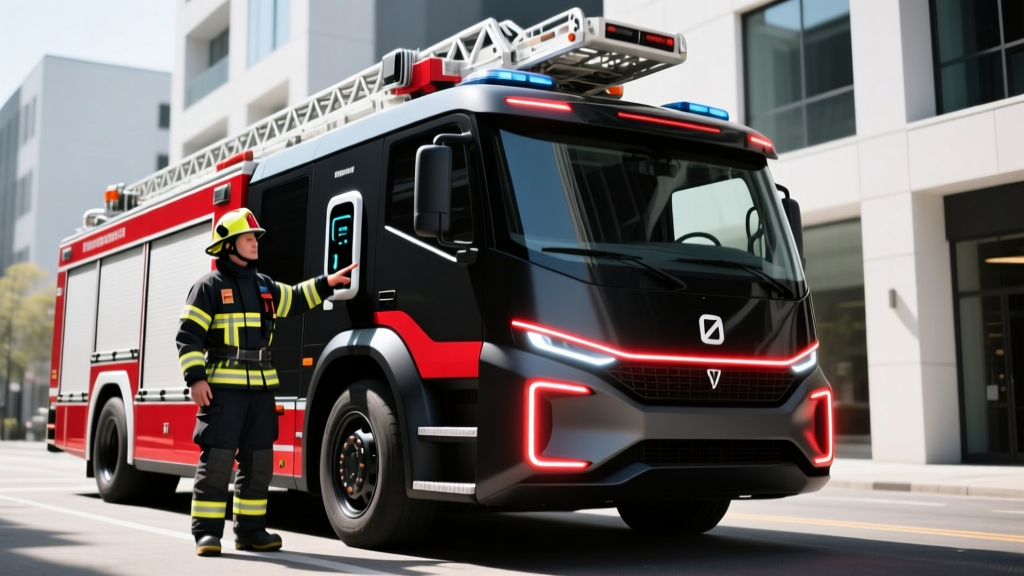
Yes — but only for specific use cases. As of 2026, battery-electric fire apparatus from manufacturers like Rosenbauer, Pierce Manufacturing (Oshkosh), and Rev Fire Group (E-One) are in limited production and active service with departments in cities including Madison, WI; Portland, OR; and several European municipalities. A fully electric pumper costs between $1.2 million and $1.8 million, roughly 1.5x–2.2x the price of a comparable diesel rig ($550,000–$850,000). Usable battery capacity on current models ranges from 200 to 400 kWh, providing approximately 60–120 miles of road range plus 2–4 hours of pump-and-roll operation at a scene. For departments covering dense urban districts with short response distances and depot-return charging, electric apparatus offer compelling lifecycle savings. For rural or wildland departments needing 200+ mile responses, diesel remains the practical choice.
Why Fire Departments Are Considering Electric Apparatus
The fire service is one of the last heavy-duty sectors where electrification seemed impractical. Fire trucks idle for hours at emergency scenes, run high-draw auxiliary systems (lighting, hydraulic tools, pump motors), and must perform flawlessly under extreme stress. Yet the economics and environmental pressures are shifting.
Diesel fire apparatus average 3–6 miles per gallon during road operation and consume 0.8–1.5 gallons per hour while idling at scenes. A busy urban engine company might burn 3,000–5,000 gallons of diesel per year just from idling and response driving. At $3.80/gallon, that's $11,400–$19,000 annually in fuel per apparatus.
Electric fire trucks eliminate tailpipe emissions at the scene — a significant health consideration since firefighters already face elevated cancer risks from combustion byproducts. Several departments have also cited reduced noise at residential calls and lower vibration as quality-of-life improvements for crews.
Current Electric Fire Truck Models and Specifications
| Manufacturer / Model | Type | Battery (kWh) | Road Range | Pump Operation Time | Approx. Price | Status (2026) |
|---|---|---|---|---|---|---|
| Rosenbauer RT (Revolutionary Technology) | Pumper / Rescue | ~200–350 kWh (LFP) | ~60–100 mi | ~2.5 hrs at rated flow | $1.4M–$1.7M | In production; US deliveries ongoing |
| Pierce Volterra (Oshkosh) | Pumper | ~200 kWh (NMC) | ~75–100 mi | ~2 hrs (hybrid-electric assist) | $1.3M–$1.6M | Limited production |
| Rev Fire Group / E-One eMAX EV | Pumper | ~250 kWh | ~80–110 mi | ~3 hrs (estimated) | $1.2M–$1.5M | Announced / early deliveries |
| Magirus iVehicle (Europe) | Aerial / Pumper | ~300–400 kWh | ~90–120 mi | ~3–4 hrs | €1.3M–€1.8M (~$1.4M–$1.9M) | European deliveries; limited US |
Note: Range figures are manufacturer-estimated under loaded conditions. Actual range varies significantly with payload, terrain, ambient temperature, and pump usage. Battery chemistry noted where confirmed by manufacturer.
Electric Fire Truck vs. Diesel: Total Cost of Ownership
The upfront price gap is the first objection every fire chief faces when presenting an electric apparatus to a city council or board of supervisors. Here's how the numbers work over a typical 15-year apparatus lifecycle:
| Cost Category | Diesel Pumper | Electric Pumper | Notes |
|---|---|---|---|
| Purchase Price | $700,000 | $1,500,000 | Mid-range configuration |
| Fuel / Energy (15 yrs) | $225,000 | $45,000 | Diesel at $3.80/gal; electricity at $0.14/kWh avg |
| Maintenance (15 yrs) | $180,000 | $95,000 | No engine/transmission overhauls; brake regen savings |
| Charging Infrastructure | $0 | $150,000–$350,000 | Depot DC fast chargers + electrical upgrades |
| Battery Replacement (if needed) | $0 | $80,000–$150,000 | May be needed at year 10–12; depends on SoH |
| Estimated Federal / State Grants | $0 | –$250,000 to –$500,000 | EPA Clean Heavy-Duty Vehicles Program; state AQMD grants |
| 15-Year Total | $1,105,000 | $1,520,000–$1,890,000 | Before grants; after grants: $1,270,000–$1,390,000 |
The math is clear: without grants, electric apparatus still carry a $400,000–$785,000 premium over 15 years. With aggressive grant stacking — the EPA Clean Heavy-Duty Vehicles Program has allocated billions for zero-emission vocational trucks, and state air-quality districts in California, New York, and Colorado offer additional $150,000–$350,000 per vehicle — the lifetime cost gap narrows to roughly break-even or a modest $100,000–$200,000 premium.
For departments in nonattainment air-quality districts, the grant landscape is strong enough to make electric apparatus cost-competitive today. For departments without access to these funding streams, the payback period extends beyond the apparatus's service life.
Charging Infrastructure: The Hidden Challenge
A fire station built in 1965 wasn't designed for 350 kW DC fast chargers. Retrofitting a typical engine company for electric apparatus involves:
- Electrical service upgrade: Most stations have 200–400A service. A single 150 kW DC fast charger draws ~200A at 480V three-phase. Two chargers plus building load often requires a new 800–1200A service or a dedicated transformer from the utility.
- Utility coordination: New transformer installations take 6–18 months in many jurisdictions. This is the single longest lead-time item.
- Charger hardware: A 150–350 kW DC fast charger costs $60,000–$150,000 per unit, installed.
- Site work: Trenching, conduit, concrete pads, and charger mounting add $30,000–$80,000.
- Software / fleet management: Charge scheduling, load management, and telematics integration add $10,000–$25,000 annually.
Total station charging infrastructure: $150,000–$350,000 per station, with an 18–24 month planning-to-commissioning timeline. Departments planning multi-station rollouts should budget for utility interconnection studies early.
Charging Speed vs. Diesel Refueling
| Metric | Diesel Apparatus | Electric Apparatus |
|---|---|---|
| Refuel / Recharge Time (full) | 10–15 minutes | 2–5 hours (depot AC/DC) |
| Quick Top-Up (50% → 80%) | N/A | 30–60 minutes at 150+ kW DC |
| Range Added per Hour (DC fast) | N/A | ~30–50 miles/hr at 150 kW |
| Operational Impact | Minimal; refuel between calls | Must return to depot; requires spare or rotation planning |
Real-World Performance: What Departments Are Reporting
The Madison Fire Department (WI), which took delivery of a Rosenbauer RT in 2024, reported that the electric pumper handled 95%+ of daily calls without range concern, as their average response distance is under 3 miles and the apparatus returns to station between runs. Pump testing at their training facility confirmed the electric pump motor could sustain 1,250 GPM at 150 PSI for over two hours on battery alone — sufficient for most structural fires before relay pumping or a water supply engine arrives.
Cold-weather performance is the primary concern for northern departments. Battery capacity drops 15–30% at temperatures below 20°F, reducing both road range and pump runtime. Departments in Minnesota and Wisconsin report using battery preconditioning routines and heated station bays to mitigate losses. Rosenbauer's thermal management system includes active battery heating, but this itself draws from the pack when the truck is not plugged in.
For departments in the Southwest or Gulf Coast, heat management is the concern. Sustained pump operation in 100°F+ ambient temperatures requires active cooling, which increases parasitic battery draw by an estimated 10–15%.
Decision Framework: Should Your Department Go Electric?
Choose Electric Fire Apparatus If:
- Your average response distance is under 10 miles one-way
- Your station has or can accommodate 480V three-phase electrical service
- You have access to state or federal zero-emission vehicle grants totaling $250,000+
- Your department operates in an air-quality nonattainment zone with regulatory pressure
- Your fleet includes spare apparatus for rotation during charging downtime
- Daily call volume allows 6+ hours of depot charging between runs
Stick With Diesel (or Consider Hybrid) If:
- Your coverage area includes rural or wildland responses exceeding 50 miles one-way
- Your station electrical service is under 400A with no feasible upgrade path
- You operate in extreme cold climates (regular sub-zero°F) without heated apparatus bays
- You have no access to grant funding and cannot absorb a $500,000+ premium
- Your department relies on mutual aid responses requiring long-distance highway travel
- You need aerial/tower ladder platforms — electric aerials are still largely in prototype stage
Common Misconceptions About Electric Fire Trucks
| Myth | Fact |
|---|---|
| "An electric fire truck can't pump water." | Current electric pumpers sustain 1,000–1,500 GPM using dedicated electric pump motors. Pumping draws heavily from the traction battery, limiting runtime to 2–4 hours — but most structural fires are knocked down within 30–60 minutes of water application. |
| "They'll run out of battery at a fire scene." | Departments mitigate this through dispatch protocols: electric apparatus are assigned to closer-in responses, and diesel units handle extended operations. Scene battery management is a training and SOP issue, not a technology failure. |
| "Electric fire trucks are unproven." | Rosenbauer has delivered 100+ electric apparatus worldwide as of 2025. US departments in Madison, Portland, and several California cities have accumulated multi-year service records. The technology is early but not experimental. |
| "The battery will need replacing every 5 years." | LFP battery packs in heavy-duty applications are warrantied for 8–10 years or 250,000+ miles. Degradation to 80% State of Health (SoH) typically occurs at 2,500–4,000 charge cycles. For a fire truck charging once daily, that's 7–11 years before meaningful capacity loss. |
| "They cost the same as diesel." | They don't. Purchase price is 1.5–2.2x diesel. Total cost of ownership can approach parity with grants, but the sticker price remains a significant barrier without external funding. |
Federal and State Funding for Electric Fire Apparatus
The EPA's Clean Heavy-Duty Vehicles Program, funded through the Inflation Reduction Act, allocated $1 billion specifically for zero-emission Class 6–8 vocational vehicles, which includes fire apparatus. Eligible applicants include state and local governments, tribal nations, and nonprofit emergency service providers. Awards have ranged from $250,000 to $500,000 per vehicle.
Additionally, the Alternative Fuels Data Center maintains a state-by-state database of incentive programs. States with the strongest additional funding include:
- California: CARB and local air districts offer up to $300,000 per heavy-duty ZEV through the Hybrid and Zero-Emission Truck and Bus Voucher Incentive Project (HVIP).
- New York: NYSERDA's New York Truck Voucher Incentive Program provides up to $250,000 per Class 8 ZEV.
- Colorado: The state ZEV fleet grant covers up to $60,000 per heavy-duty vehicle, stackable with federal funds.
Important: These programs have application windows, funding caps, and eligibility requirements that change annually. Departments should consult their state energy office and the IRS guidance on clean vehicle incentives for current-year rules. Note that the federal §30D light-duty tax credit does not apply to fire apparatus — these are covered under separate heavy-duty incentive programs, not consumer tax credits.
Frequently Asked Questions
How long does it take to charge an electric fire truck?
From 20% to 80% State of Charge at a 150 kW DC fast charger: approximately 1.5–2.5 hours depending on pack size. A full charge on Level 2 (40–80 kW AC): 4–8 hours. Most departments charge overnight at the station, which is operationally practical for apparatus that return to quarters between calls.
Can an electric fire truck operate in a blackout or grid failure?
Yes — the onboard battery is independent of the grid once charged. However, recharging during a prolonged outage requires either a backup generator (which reintroduces diesel dependency) or a solar-plus-storage microgrid at the station. Some departments are exploring V2L (vehicle-to-load) capability, using the fire truck's battery to power scene lighting and tools — essentially turning the apparatus into a mobile power station.
What happens to the battery at end of life?
Heavy-duty LFP and NMC packs are recyclable through established lithium-ion recycling chains (Redwood Materials, Li-Cycle). Replacement cost for a 300 kWh pack in 2026 is estimated at $80,000–$150,000, though prices continue to decline. Many manufacturers offer battery-as-a-service or extended warranty programs that cap out-of-pocket replacement risk.
Are electric fire trucks NFPA-compliant?
Yes. Current production models from Rosenbauer and Pierce are built to NFPA 1900/1901 standards for automotive fire apparatus. The NFPA has published guidance on electric and hybrid apparatus safety, including high-voltage system isolation, emergency disconnect procedures, and crash-rescue protocols for first responders working on energized vehicles.
How does cold weather affect electric fire truck performance?
Battery capacity drops 15–30% below 20°F, reducing both road range and pump runtime. Active thermal management systems mitigate this when the truck is plugged in or preconditioning before dispatch. Departments in cold climates report that heated station bays (maintained at 50°F+) significantly reduce cold-start capacity loss and recommend this as essential infrastructure for northern deployments.
Is this just for large city departments?
Currently, early adopters skew urban and suburban — departments with shorter response radii, existing grant access, and fleet depth for rotation. Volunteer and rural departments face greater barriers: longer response distances, limited station electrical capacity, and fewer grant resources. However, as battery energy density improves and prices decline, smaller departments may find electric apparatus viable within the next 5–7 years, particularly for first-response and rescue units rather than full pumpers.