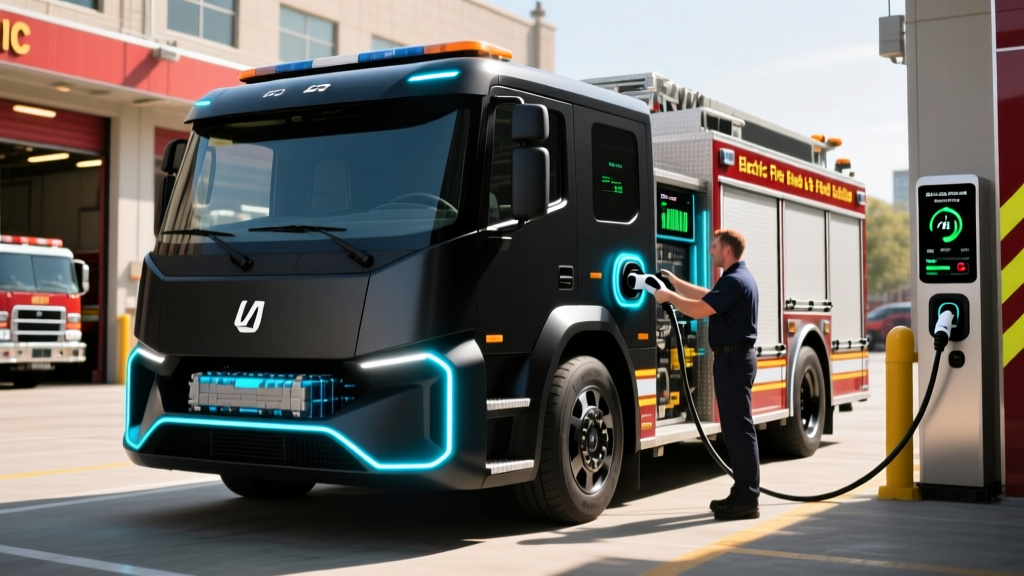
Quick Answer: Are Electric Fire Trucks Viable for Municipal Fleets?
Yes — but only for specific duty cycles. Current production electric fire trucks like the Rosenbauer RTX and Pierce Volterra carry a battery capacity of 100–200 kWh, offer 75–125 miles of real-world range, and cost $900,000–$1.5 million per unit — roughly 2–3× the price of a comparable diesel pumper. They make economic sense for urban/suburban departments with short response radii (under 15 miles per call), depot-based charging infrastructure, and idle-heavy duty cycles. Rural departments with long mutual-aid runs and no fast-charging access should wait or consider hybrid-electric alternatives.
Why Municipalities Are Evaluating Electric Fire Trucks
The push toward fleet electrification in emergency services isn't driven by consumer-style range anxiety or fuel savings alone. Fire departments face a unique set of pressures: tightening municipal emissions mandates, diesel exhaust exposure linked to elevated cancer rates among firefighters (per NIOSH research), and the desire to reduce station-level particulate pollution.
Unlike a consumer EV purchase, an electric fire truck decision involves fleet lifecycle costing, station infrastructure upgrades, and mission-critical reliability standards. The apparatus must perform under extreme thermal and electrical loads — running pumps, aerial ladders, scene lighting, and HVAC simultaneously — often for hours at a staging area.
Current Electric Fire Truck Models and Specs
As of 2026, several manufacturers have production or advanced-pilot electric and hybrid-electric fire apparatus. Here's how the leading platforms compare on paper and in documented fleet trials:
| Model | Type | Battery (kWh) | EPA-Est. Range | Peak DC Charge (kW) | Pump Capacity (GPM) | Est. Price |
|---|---|---|---|---|---|---|
| Rosenbauer RTX (Electric Pumper) | BEV | ~132 kWh (LFP) | ~100 mi | 150 kW | 1,500 | $1.1M–$1.3M |
| Pierce Volterra (Pumper) | Series Hybrid | ~100 kWh + diesel range extender | ~75 mi electric + unlimited diesel | 60 kW (L2 depot) | 1,500 | $950K–$1.1M |
| REV Group / E-One Vector | BEV (Pilot) | ~200 kWh (NMC) | ~125 mi | 175 kW | 1,250 | $1.3M–$1.5M (est.) |
| Spartan ER FC-94 (Electric Concept) | BEV (Announced) | TBD | TBD | TBD | 1,500 | TBD |
Key terminology note: kW (kilowatts) measures power — how fast energy flows during charging. kWh (kilowatt-hours) measures energy — the total capacity of the battery pack. A 132 kWh battery charged at a sustained 100 kW would theoretically fill in ~80 minutes; real-world charge curves taper significantly above 80% state of charge, so expect 10–80% in roughly 50–70 minutes on a 150 kW DC charger.
Real-World Range vs. Sticker Numbers
The EPA-equivalent range figures above assume moderate ambient temperatures and mixed driving. In actual fire service use, range drops 20–35% due to:
- Pump-and-idle loads: Running a 1,500 GPM pump draws significant energy from the traction battery or a separate auxiliary system.
- Cold-weather degradation: Battery efficiency drops 15–25% below 32°F; departments in the Upper Midwest and Northeast should plan for 60–70 miles of usable range in winter.
- High GVW and stop-start driving: Fully loaded pumpers weigh 36,000–42,000 lbs. Urban response driving (hard acceleration, frequent stops) consumes more energy per mile than highway cruising.
- Scene power demands: Lighting, HVAC, and communications at extended incidents can draw 5–15 kW continuously.
Cost Breakdown: Electric vs. Diesel Fire Apparatus
The upfront cost gap is substantial, but total cost of ownership (TCO) over a 15–20 year apparatus lifecycle tells a more nuanced story. Here's a modeled comparison for a standard 1,500 GPM pumper:
| Cost Category | Diesel Pumper | BEV Electric Pumper | Notes |
|---|---|---|---|
| Purchase Price | $500,000–$650,000 | $1,100,000–$1,300,000 | BEV premium: ~$600K–$700K |
| Federal / State Incentives | None | Up to $40,000 (HVIP/DERA grants) | EPA DERA + state clean-fleet programs; §30D does NOT apply to commercial/fleet vehicles over 14,000 lbs GVWR |
| Fuel / Energy (Annual) | $12,000–$18,000 (diesel) | $3,500–$6,000 (electricity) | Based on 8,000 mi/yr; $3.80/gal diesel vs. $0.12/kWh utility rate |
| Maintenance (Annual) | $8,000–$12,000 | $3,000–$5,000 | No engine oil, filters, DEF, exhaust aftertreatment; brake wear reduced via regen |
| Depot Charging Install | N/A | $80,000–$200,000 | Level 2 (19.2 kW) or DC fast (60–150 kW) per bay; panel upgrades often required |
| Battery Replacement (Year 12–15) | N/A | $80,000–$150,000 | Projected; LFP chemistries degrade slower than NMC |
| 15-Year TCO (Estimated) | $870,000–$1,100,000 | $1,150,000–$1,450,000 | BEV still costs ~20–30% more at current pricing; gap narrows with grants |
Critical caveat on federal tax credits: The IRS §30D clean vehicle credit applies only to vehicles under 14,000 lbs GVWR purchased for personal use. Fire apparatus (typically 33,000+ lbs GVWR) does not qualify. Fleet buyers should look instead at the Alternative Fuels Data Center for applicable federal and state incentive programs, EPA DERA grants, and utility make-ready infrastructure rebates.
Charging Infrastructure: What a Fire Station Actually Needs
Charging a 132 kWh battery pack from 20% to full requires significant electrical infrastructure. Most existing fire stations were built with 200–400 amp residential-grade panels — entirely insufficient for fleet EV charging.
| Charging Level | Power (kW) | Miles Added/Hour | Full Charge Time (132 kWh) | Station Upgrade Needed |
|---|---|---|---|---|
| Level 2 (Standard Depot) | 19.2 kW | ~12–15 mi/hr | ~7–8 hours | 480V/60A circuit; panel upgrade likely |
| DC Fast (Depot) | 60 kW | ~35–45 mi/hr | ~2.5 hours (10–80%) | 480V/3-phase; transformer upgrade probable |
| DC Fast (High-Power) | 150 kW | ~80–100 mi/hr | ~50–70 min (10–80%) | Dedicated utility feed; $100K–$200K install |
Real-world ownership consideration: Most fire departments can operate on overnight Level 2 charging if apparatus return to station between calls (common in suburban career departments). Volunteer departments with dispersed personnel and rural call patterns face harder logistics — the truck may need to stage at a scene for 2+ hours with no charging available.
Preconditioning matters here just as it does for consumer EVs: warming the battery pack before a fast-charge session improves charge acceptance and reduces taper. Fleet telematics systems from Rosenbauer and Pierce include automated preconditioning scheduling tied to shift changes and predicted dispatch windows.
Electric vs. Diesel vs. Hybrid: Which Drivetrain Fits Your Department?
| Factor | Diesel | BEV Electric | Series Hybrid (e.g., Pierce Volterra) |
|---|---|---|---|
| Range / Endurance | 300+ mi; unlimited with refueling | 60–125 mi real-world | 75 mi electric + unlimited diesel |
| Refuel / Recharge Time | 10 minutes | 50 min–8 hours (charger dependent) | 10 min diesel; 2–4 hr electric depot |
| Station Emissions | High (diesel particulate, NOx) | Zero at point of use | Reduced vs. diesel; engine runs less |
| Noise (Scene / Residential) | 85+ dB idle | Near-silent | Electric mode: silent; engine: reduced run time |
| Maintenance Complexity | High (DEF, DPF, turbo, injection) | Low (no ICE components) | Moderate (both systems) |
| Cold-Weather Reliability | Proven (block heaters, fuel gelling managed) | Range drops 15–25%; battery heating required | Diesel backup eliminates range risk |
| Upfront Cost | $500K–$650K | $1.1M–$1.5M | $950K–$1.1M |
| Best For | Rural, mutual-aid, wildland, long runs | Urban/suburban, short radius, depot-based | Departments wanting emissions reduction without range risk |
Common Misconceptions About Electric Fire Trucks
| Myth | Fact |
|---|---|
| "An electric fire truck can't pump water — it doesn't have enough power." | Current BEV pumpers deliver full NFPA 1901-rated pump capacity (1,250–1,500 GPM). The pump motor draws from the traction battery or a dedicated auxiliary pack, and can sustain pumping for 2–4 hours depending on battery size and flow rate. |
| "They'll run out of battery at a fire scene." | Scene power management systems prioritize critical loads and can shed non-essential systems. Mutual-aid and tanker/tender support remain standard. Hybrid models carry diesel backup specifically for extended operations. |
| "Federal tax credits cover $7,500 of the cost." | The §30D credit applies to light-duty personal vehicles under 14,000 lbs GVWR. Commercial fire apparatus does not qualify. Fleet incentives come from EPA DERA, state HVIP-type programs, and utility rebates. |
| "Electric fire trucks are unproven and experimental." | Rosenbauer RTX units have been in active service with departments including Los Angeles, Berlin, and Amsterdam since 2022–2023. Pierce Volterra hybrid units are deployed across multiple US career departments with documented uptime data. |
| "They cost the same as diesel when you factor in savings." | At current pricing, BEV apparatus still carry a 20–30% TCO premium over a 15-year lifecycle, even accounting for fuel and maintenance savings. The gap narrows significantly with grant funding ($40K–$150K available in many states). |
Real-World Fleet Considerations Beyond the Spec Sheet
Driving Patterns and Call Volume
Urban career departments averaging 10–20 calls per day with a 3–5 mile response radius typically put 5,000–8,000 miles per year on a pumper. This duty cycle fits BEV capability well — the truck returns to station between most calls, and overnight Level 2 charging restores the pack.
Rural volunteer departments covering 50+ square miles with mutual-aid obligations may put 3,000 miles on a truck annually — but individual runs can exceed 20 miles one-way. A BEV apparatus responding to a distant mutual-aid call risks arriving with insufficient reserve for extended pumping. Hybrid-electric platforms mitigate this risk entirely.
Climate and Seasonal Variation
Departments in Phoenix, Houston, or Miami face minimal cold-weather range loss but must manage battery cooling during extreme heat. Departments in Minneapolis, Chicago, or Boston should spec battery thermal management systems and plan for 60–70 miles of winter range from a pack rated at 100 miles in moderate conditions.
Station Infrastructure Realities
Before ordering an electric apparatus, commission an electrical load study of your station. Key questions:
- What is the existing panel capacity (amps)? Is a service upgrade to 800A or 1,200A required?
- Does the utility offer make-ready infrastructure programs or demand-charge exemptions for fleet EV charging?
- Can the site accommodate a 480V 3-phase feed for DC fast charging?
- Is there space for charging equipment without compromising apparatus bay maneuvering?
A licensed electrical contractor and your utility's fleet electrification team should be involved 12–18 months before apparatus delivery.
Battery Longevity and Replacement
LFP (lithium iron phosphate) chemistry, used by Rosenbauer, offers superior cycle life (3,000–5,000 cycles to 80% capacity) and thermal stability compared to NMC (nickel manganese cobalt), which delivers higher energy density but degrades faster under high-temperature and high-C-rate conditions. Most manufacturers warranty the traction battery at 80% capacity retention for 7–10 years. Budget for a battery replacement at year 12–15 at an estimated $80,000–$150,000 depending on pack size and chemistry.
Decision Framework: Should Your Department Go Electric?
Choose a BEV Electric Fire Truck If:
- Your department is urban or suburban with a response radius under 15 miles
- Apparatus return to station between most calls (depot charging feasible)
- Your station can support a 480V electrical upgrade for Level 2 or DC fast charging
- You have access to state/federal fleet electrification grants ($40K–$150K+)
- Reducing station-level diesel exhaust exposure is a priority (firefighter health)
- Your annual mileage is under 10,000 miles and individual runs rarely exceed 20 miles
Choose a Hybrid-Electric (e.g., Pierce Volterra) If:
- You want emissions reduction and electric-mode scene operation but can't accept range limitations
- Your department covers rural territory with long mutual-aid runs
- Station electrical upgrades are cost-prohibitive in the near term
- You need unlimited pumping duration without grid dependency
Stay With Diesel For Now If:
- Your department is rural/volunteer with extended response distances and no charging infrastructure
- Budget constraints preclude the $600K+ upfront premium and $100K+ station upgrades
- You operate in extreme cold climates without access to proven cold-weather BEV fleet data
- Your apparatus regularly tows, operates wildland, or runs extended highway mutual-aid
Frequently Asked Questions
How long does it take to charge an electric fire truck?
On a 150 kW DC fast charger, expect 10–80% in roughly 50–70 minutes for a 132 kWh pack, with charge rate tapering above 80% to protect battery health. On a 19.2 kW Level 2 depot charger, a full charge takes 7–8 hours — suitable for overnight turnaround between shifts.
Can an electric fire truck pump water and drive at the same time?
Not simultaneously in most current designs. The apparatus drives to the scene on battery power, then switches to pump mode, which draws from the same battery pack. Pumping at full rated capacity (1,500 GPM) typically provides 2–4 hours of operation before the pack requires recharging. Hybrid models switch to diesel power for extended pumping.
Do electric fire trucks qualify for the $7,500 federal EV tax credit?
No. The IRS §30D clean vehicle credit applies only to vehicles under 14,000 lbs GVWR purchased for personal use. Fire apparatus typically exceeds 33,000 lbs GVWR and is purchased by municipal entities. Fleet incentives are available through EPA DERA grants, state clean-fleet programs, and utility rebates — consult your state's alternative fuels office for current offerings.
What happens if the battery runs out during an emergency?
Fleet telematics and NFPA-compliant low-state-of-charge alarms alert crews well before the battery reaches critical levels. Standard mutual-aid protocols ensure backup apparatus is dispatched. Hybrid-electric models carry a diesel range extender that eliminates this risk entirely. No documented case exists of a production electric fire truck stranding a crew due to battery depletion during an active emergency response.
How does extreme cold affect electric fire truck performance?
Battery efficiency drops 15–25% in sub-freezing temperatures, reducing real-world range from ~100 miles to approximately 60–75 miles. Modern platforms include battery thermal management (heating and cooling) to mitigate this. Departments in cold climates should specify cold-weather packages and plan dispatch logistics around reduced winter range. Pumping performance is generally unaffected as the battery thermal system prioritizes pack temperature during operation.
What is the expected lifespan of an electric fire truck battery?
LFP chemistry packs are rated for 3,000–5,000 charge cycles to 80% capacity retention, translating to roughly 12–15 years in typical fire service duty cycles (shallow daily cycles rather than full 0–100% charges). Manufacturer warranties typically cover 7–10 years at 80% capacity. Budget $80,000–$150,000 for an end-of-life replacement, though prices are projected to decline as battery manufacturing scales.
Sources: Rosenbauer RTX specifications (rosenbauer.com), Pierce Manufacturing Volterra platform (piercemfg.com), EPA Diesel Emissions Reduction Act program (epa.gov/dera), NIOSH Firefighter Cancer Study (cdc.gov/niosh), Alternative Fuels Data Center (afdc.energy.gov).