Quick Answer: Is There an Electric F1?
No — as of 2026, Formula 1 does not use fully electric powertrains. F1 cars run 1.6-liter turbocharged V6 hybrid power units that pair an internal-combustion engine with two electric motor-generator units (MGU-K and MGU-H), producing roughly 1,000+ combined horsepower. The 2026 F1 regulations nearly triple electrical power output to 350 kW (~470 hp) from the battery-electric side while dropping the MGU-H and reducing ICE output to ~400 kW. Fully electric single-seater racing exists in the ABB FIA Formula E World Championship, which uses the GEN3 Evo car with a 47 kWh battery and up to 350 kW of power. F1's parent company and the FIA have signaled no plan to make F1 fully electric before 2030 at the earliest — sustainable synthetic fuels, not full electrification, are F1's stated carbon-neutral path.
Why F1 Isn't Fully Electric Yet — The Physics Problem
The core barrier to an electric F1 isn't politics — it's energy density. A current F1 car carries roughly 110 kg of fuel for a 300+ km race. That fuel contains about 1,320 kWh of chemical energy. Even at the ~50% thermal efficiency of a modern F1 hybrid power unit (the highest of any ICE on Earth, per Formula1.com), that yields ~660 kWh of usable mechanical and electrical energy over a race distance.
By contrast, the best lithium-ion racing cells in the Formula E GEN3 Evo pack store 47 kWh in a ~280 kg battery. To match the usable energy of an F1 car's fuel load with current battery technology, you'd need a battery weighing well over 3,000 kg — roughly three times the minimum weight of an entire F1 car (798 kg in 2026). That's before accounting for the cooling systems, structural reinforcement, and safety cells required.
This is the same energy-density gap that limits road-going EVs, just expressed at the extreme. A 100 kWh LFP or NMC pack in a consumer EV weighs 500–700 kg and delivers 250–350 miles of EPA range. Racing demands are far more punishing: sustained 200+ mph speeds, 5G cornering loads, and 300+ km without pit stops for energy.
F1's 2026 Hybrid Power Unit: More Electric Than Ever
Rather than going full EV, the FIA's 2026 power-unit regulations represent a compromise — dramatically more electrical energy recovery and deployment while keeping a smaller combustion engine running on 100% sustainable drop-in fuel.
| Specification | 2024 PU | 2026 PU |
|---|---|---|
| ICE Configuration | 1.6L V6 Turbo | 1.6L V6 Turbo (no MGU-H) |
| ICE Power Output | ~560 kW (~750 hp) | ~400 kW (~540 hp) |
| Electric Power (MGU-K) | 120 kW (~161 hp) | 350 kW (~470 hp) |
| Total System Power | ~750+ kW (~1,000+ hp) | ~750 kW (~1,000+ hp) |
| Energy Store (Battery) | ~4 MJ deployment/lap | ~8.5 MJ deployment/lap |
| Fuel | E10 (10% ethanol) | 100% sustainable synthetic fuel |
| MGU-H | Yes | Removed |
| Active Aero | DRS only | Active front + rear wings |
The 2026 car deploys nearly three times the electrical power of its predecessor. On many straights, close to half the car's total propulsion will come from the battery-electric system. The FIA has also mandated active aerodynamics to offset increased drag from the heavier energy store, and the removal of the MGU-H simplifies the system — making the technology more relevant to road-car manufacturers like Audi (entering F1 in 2026 with Sauber) and Ford (returning via Red Bull Powertrains).
Formula E vs. F1: The Electric Racing Alternative
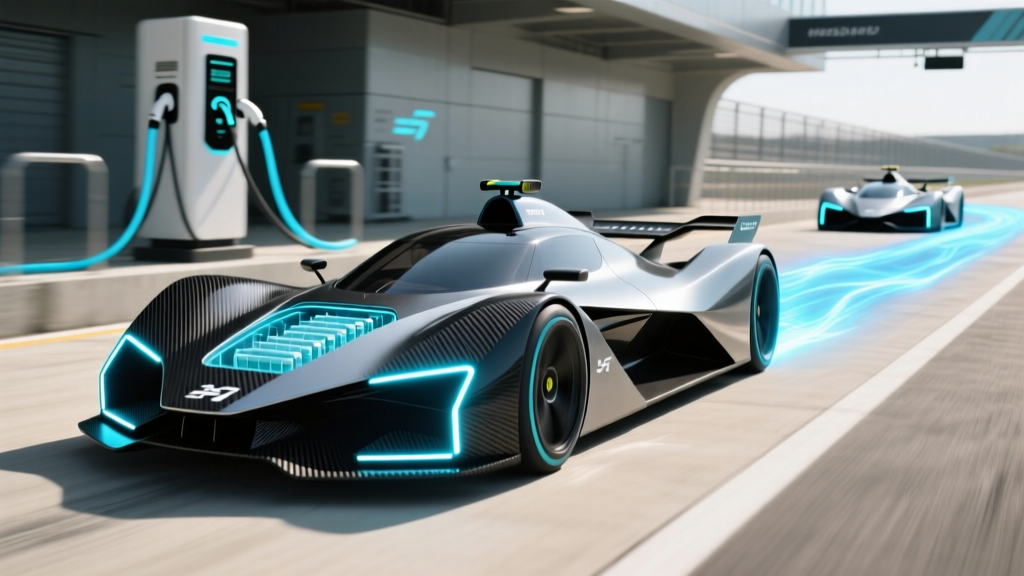
Formula E is FIA-sanctioned, fully electric, single-seater racing — the closest thing to an "electric F1" that exists today. Here's how the two series stack up on hard numbers:
| Metric | Formula E (GEN3 Evo) | F1 (2026 Spec) |
|---|---|---|
| Powertrain | Fully electric | 1.6L V6 hybrid + 350 kW electric |
| Max Power | 350 kW (470 hp) | ~750 kW (1,000+ hp) |
| Battery Capacity | 47 kWh usable | ~7 MJ energy store (~1.9 kWh) |
| 0-100 km/h (0-62 mph) | ~2.8 seconds | ~2.4 seconds |
| Top Speed | ~322 km/h (200 mph) | ~370+ km/h (230+ mph) |
| Min Weight (car + driver) | 840 kg | 798 kg |
| Race Distance | ~90–100 km (45 min + 1 lap) | ~305 km (2 hours max) |
| Pit Stops | Attack Charge (30 sec, 600 kW) | Tire/fuel stops |
| Fast-Charge Power | 600 kW (mid-race boost) | N/A |
| Annual Budget Cap | ~$15M (team) | ~$135M (team, excl. PU) |
The gap is stark. F1's total system power is more than double Formula E's, and F1 races are roughly three times longer. But Formula E's 600 kW mid-race "Attack Charge" — a 30-second ultra-fast pit stop delivering a power boost — showcases the kind of extreme fast-charging technology that eventually trickles to road cars. That's a 3.6 megawatt charge rate, far beyond anything currently available at public DC fast-charging stations (the fastest consumer chargers in 2026 peak around 400–500 kW).
What Electric Racing Tech Means for Your Next EV
The technology transfer from motorsport to road cars is real, but it's not a straight line. Here's what's genuinely trickling down from F1 and Formula E to the EVs you can buy in 2026:
Thermal Management & Battery Cooling
F1's 2026 energy store must absorb and deploy 8.5 MJ per lap — massive thermal loads that require advanced liquid-cooling architectures. Those same thermal-management strategies now appear in road cars like the Porsche Taycan and Hyundai Ioniq 5, which precondition batteries to accept 250–350 kW DC fast charges while managing cell temperature to prevent degradation.
Sustainable Fuels vs. Full Electrification
F1's bet on 100% sustainable synthetic fuel is a deliberate hedge. The logic: if drop-in e-fuels can decarbonize existing ICE vehicles (there are 1.4 billion on the road globally), the total carbon impact could rival full electrification — without requiring grid upgrades or battery mineral supply chains. This matters for buyers deciding between a BEV and a PHEV: a plug-in hybrid running on future e-fuels could have a lifecycle carbon footprint competitive with a battery-electric car on a coal-heavy grid.
Ultra-Fast Charging Infrastructure
Formula E's 600 kW Attack Charge validates that lithium-ion cells can accept extreme charge rates for short bursts. Road-car chargers are catching up: the Tesla V4 Supercharger and IONITY High Power Charging networks in Europe now deliver 350–500 kW. The limiting factor isn't the charger — it's the car's charge curve. Most 2026 EVs peak at 250–350 kW for only the 10–40% SoC window before tapering sharply above 80%.
The Road-Car Parallel: Hybrid vs. EV vs. Gas in 2026
F1's hybrid-dominant approach mirrors a real debate facing buyers right now. Here's how the powertrain choices compare for a typical midsize SUV in 2026:
| Metric | Gas (ICE) | Hybrid (HEV) | PHEV | Battery Electric |
|---|---|---|---|---|
| EPA Efficiency | 24 MPG combined | 38 MPG combined | 84 MPGe / 30 MPG gas | 105 MPGe (3.0 kWh/mi) |
| EPA Electric Range | 0 mi | 0 mi | 35 mi | 310 mi |
| Battery Size | N/A | ~1.5 kWh | ~18 kWh (NMC) | ~84 kWh (NMC/LFP) |
| Base MSRP (avg.) | $36,000 | $39,500 | $45,000 | $48,000 |
| Fed. Tax Credit (§30D) | $0 | $0 | Up to $7,500* | Up to $7,500* |
| Annual Fuel/Energy Cost | $2,100 | $1,325 | $850 (mixed) | $620 (home charging) |
| 5-Year Fuel/Energy Cost | $10,500 | $6,625 | $4,250 | $3,100 |
* §30D credit eligibility requires MSRP caps ($55K cars / $80K trucks & SUVs), buyer income limits ($150K single / $300K joint AGI), and battery-critical-mineral and component sourcing requirements. Credit can transfer to the dealer as a point-of-sale discount. Verify current-year rules at IRS.gov. Source: fueleconomy.gov averages for midsize SUVs.
Common Misconceptions About Electric F1 and Racing EVs
| Myth | Fact |
|---|---|
| "F1 is going fully electric in 2026" | F1's 2026 PU is still hybrid — with ~47% electrical power but a retained ICE on synthetic fuel. |
| "Formula E cars are slow compared to F1" | GEN3 Evo hits 200 mph and 0-62 in 2.8s — slower than F1 but faster than most road supercars. |
| "Electric racing doesn't help road cars" | Formula E pioneered 600 kW charging and silicon-carbide inverters now appearing in production EVs. |
| "Batteries can't handle racing" | Formula E races 45+ minutes at full power; road EV batteries routinely handle 10-80% DC fast charges at 250+ kW. |
| "Synthetic fuel is just greenwashing" | 100% drop-in e-fuels are chemically identical to fossil fuel but made from captured CO₂ + green hydrogen — net carbon-neutral if produced with renewable energy. |
Decision Framework: What Type of Electrified Vehicle Is Right for You?
If you're inspired by F1's hybrid tech...
Choose a PHEV if: You want electric-only commuting (25–45 mi range) plus a gas engine for road trips. Models like the Toyota RAV4 Prime (42 mi EV range, 94 MPGe) or Jeep Wrangler 4xe mirror F1's "best of both" philosophy.
If you want the Formula E full-electric experience...
Choose a BEV if: You have reliable Level 2 home charging, drive under 250 miles/day, and want the lowest operating cost. The Hyundai Ioniq 5 (310 mi EPA, 250 kW peak DC charging, ~$42,500) or Tesla Model 3 Long Range (341 mi EPA, 250 kW peak, ~$42,000) deliver the EV experience with proven charging networks.
If you're waiting for F1 tech to mature...
Choose a HEV if: You lack home charging access or regularly drive in extreme cold (where BEV range drops 20–40%). A Toyota Camry Hybrid (51 MPG combined, ~$30,000) needs no plug and delivers real savings today — the same hybrid philosophy F1 has used since 2014.
Real-World Ownership Considerations for First-Time EV Buyers
Racing tech is aspirational, but ownership is practical. Before buying any electrified vehicle in 2026, honestly assess these factors:
- Home charging access: A Level 2 (240V, 7–11 kW) home charger adds ~25–40 miles of range per hour of charging. Installation costs $800–$2,500 depending on panel capacity and wiring run. If you can't install one, a BEV becomes significantly less convenient.
- Climate impact: In sub-20°F weather, expect 20–40% EPA range reduction due to battery chemistry limitations and cabin heating demands. PHEVs and HEVs are less affected because the ICE provides waste heat.
- Insurance costs: BEVs carry 15–25% higher insurance premiums on average due to higher repair costs for battery packs and specialized components. Get quotes before purchasing.
- Maintenance savings: BEVs eliminate oil changes, transmission fluid, spark plugs, and exhaust repairs. Expect ~$0.06/mile maintenance vs. ~$0.10/mile for ICE vehicles — saving roughly $600/year at 15,000 miles.
- Battery longevity: Most 2026 BEV batteries carry 8-year/100,000-mile warranties with a 70% capacity-retention threshold. Real-world data from Tesla and Hyundai shows NMC packs retaining 85–90% capacity at 100,000 miles with normal use.
Frequently Asked Questions
Will F1 ever become fully electric?
Not before 2030 at the earliest. The FIA and F1's commercial rights holder (Liberty Media) have committed to net-zero carbon by 2030 through sustainable fuels, not full electrification. Battery energy density would need to improve roughly 5–10× to support a full F1 race distance without prohibitive weight. Solid-state batteries could close this gap eventually, but they remain pre-commercial for racing applications as of 2026.
Is Formula E the same as electric F1?
Formula E is the FIA's official all-electric single-seater championship, but it's a separate series from F1 with different cars, circuits (mostly street circuits), and race formats. Think of it as F1's electric cousin, not a replacement. GEN3 Evo cars produce 470 hp vs. F1's 1,000+ hp.
Does F1 hybrid technology end up in road cars?
Yes, selectively. Mercedes-AMG's E Performance hybrid system (used in the C63 S E Performance and GT 63) directly derives from the F1 MGU-K architecture. Ferrari's SF90 Stradale and 296 GTB use F1-derived electric motor and energy-recovery concepts. The thermal management and power-electronics lessons are more transferable than the raw hardware.
What's the fastest electric race car?
The Volkswagen ID.R holds the Pikes Peak and Nürburgring EV records (1,340 hp, 0-62 in 2.25 seconds), but it's a one-off time-attack car. In series racing, Formula E's GEN3 Evo is the fastest dedicated electric single-seater. Porsche's Mission R concept demonstrated 1,073 hp and 0-60 in 2.2 seconds as a GT-class electric race-car prototype.
How much does a Formula E car cost?
The GEN3 Evo chassis and powertrain cost approximately $1.5–2 million per car. By comparison, a 2026 F1 car costs roughly $15–20 million per chassis (excluding the power unit, which is leased or developed in-house at enormous cost). Formula E's budget cap of ~$15 million per team per season is roughly 1/9th of F1's $135 million team cap.