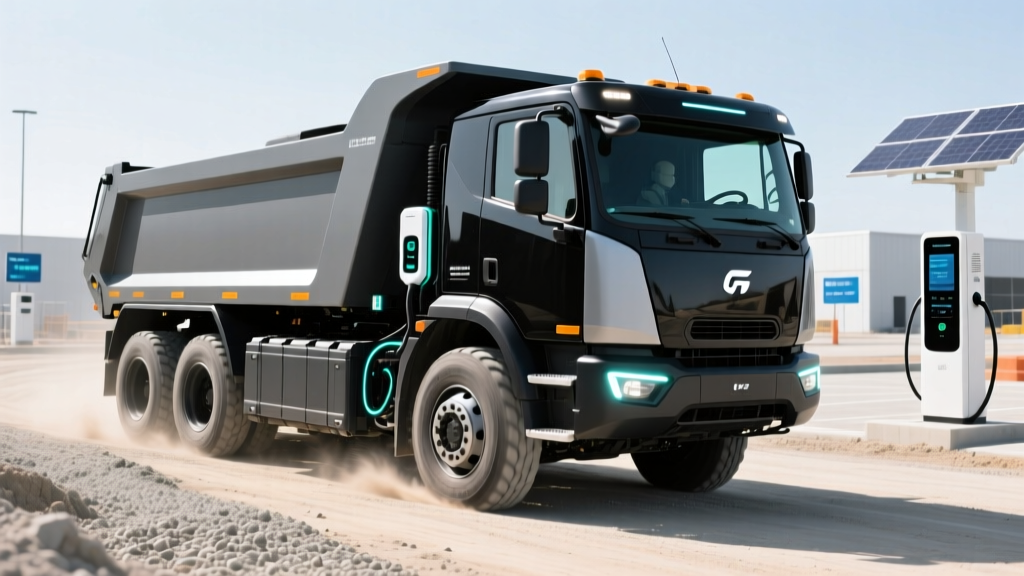
If you're researching an electric dumper truck for construction, mining, or heavy-haul operations, the short answer is: battery-electric dump trucks are now viable for short-haul, return-to-base cycles (typically under 150 miles daily), but they require depot charging infrastructure and careful route analysis. Expect 100–200 miles of real-world range under load, 300–600 kWh battery packs, and DC fast charging from 20–80% in 45–90 minutes depending on charger capacity. Purchase prices run 2–3× a comparable diesel, but fuel and maintenance savings can close that gap in 4–7 years depending on duty cycles and electricity rates.
Quick Answer: Is an Electric Dumper Right for Your Operation?
Electric dumpers work best for: predictable routes under 150 miles/day, return-to-base depot charging, urban/suburban construction sites with noise or emission restrictions, and operations in regions with low industrial electricity rates (<$0.12/kWh). They are not yet practical for long-haul quarry runs, remote mining without grid access, or operations requiring rapid mid-shift refueling.
What Is an Electric Dumper Truck?
An electric dumper (or battery-electric dump truck) replaces the diesel engine and fuel tank with lithium-ion battery packs (typically LFP chemistry for durability) and one or more electric motors driving the axles. The hydraulic bed mechanism is also electrified. Major manufacturers offering or announcing Class 7–8 electric dumpers in 2026 include Volvo Trucks (VNR Electric with dump body), Mack Trucks (LR Electric and Granite Electric), Peterbilt (Model 520EV/579EV configurations), and specialized off-highway manufacturers like Epiroc and Komatsu for mining applications.
These are not consumer pickups with a dump bed bolted on. We're talking Class 8 vehicles with GVWRs of 33,001+ lbs, payload capacities of 10–20+ tons, and battery packs ranging from 200 kWh to over 600 kWh. The energy demands are enormous: a fully loaded electric dumper can consume 2–4 kWh per mile depending on terrain, grade, and stop-start frequency.
Electric Dumper vs Diesel: Real Cost Comparison
The purchase premium for electric dumpers is significant, but the operating cost differential is where the math gets interesting for fleet managers running high-utilization, short-haul cycles.
| Cost Category | Electric Dumper | Diesel Dumper |
|---|---|---|
| Purchase Price (base) | $350,000–$500,000 | $150,000–$200,000 |
| Federal Tax Credit (§45W commercial) | –$40,000 (max for >14,000 lb GVWR) | $0 |
| Fuel/Energy (5 years @ 50k mi/yr) | $75,000–$125,000 (electricity @ $0.10–0.15/kWh) | $200,000–$275,000 (diesel @ $4.00–5.50/gal, 5–6 MPG) |
| Maintenance (5 years) | $25,000–$40,000 | $60,000–$90,000 |
| Depot Charger Installation | $50,000–$150,000 (one-time, shared across fleet) | $0 |
| Estimated 5-Year TCO | $460,000–$775,000 | $410,000–$565,000 |
The gap narrows further when you factor in state incentives (California's HVIP program, for example, can add $40,000–$120,000 per vehicle), lower brake wear from regenerative braking, and potential carbon credit revenue. According to the U.S. Department of Energy, medium- and heavy-duty EVs can achieve lifetime fuel savings of $50,000–$150,000 depending on duty cycle.
Note: The IRS §45W Commercial Clean Vehicle Credit applies to business-purchased EVs with GVWR over 14,000 lbs, capped at $40,000 (or 30% of cost, whichever is lower). Unlike the consumer §30D credit, there are no MSRP or buyer income caps, but battery sourcing requirements still apply. Consult your tax professional.
Range, Battery, and Charging: The Real Numbers
Range is the single most scrutinized metric, and for electric dumpers, EPA-style estimates don't exist in the same way they do for passenger cars. Instead, manufacturers provide estimated range based on standardized duty cycles (often the CARB heavy-duty test procedures). Real-world range varies dramatically based on payload, terrain, and ambient temperature.
| Specification | Volvo VNR Electric (Dump Config) | Mack LR Electric | Diesel Baseline (Typical Class 8) |
|---|---|---|---|
| Battery Capacity | 375 kWh (NMC) | 376 kWh (NMC) | N/A (150-gal diesel tank) |
| Estimated Range (loaded) | 120–175 miles | 100–150 miles | 600–900 miles |
| Peak DC Charge Rate | 250 kW | 250 kW | N/A (diesel fill ~5 min) |
| 20–80% Charge Time | ~60 minutes @ 250 kW | ~60–75 minutes @ 250 kW | ~10 minutes |
| Motor Output | 455 HP / 4,051 lb-ft | 448 HP / 4,150 lb-ft | 400–500 HP / 1,450–1,850 lb-ft |
| Regenerative Braking | Yes (significant energy recapture on downhill/stop cycles) | Yes | Engine brake only |
| Warranty (Battery) | 5 years / 600,000 miles | 5 years / unlimited miles | N/A |
Critical real-world caveats: A fully loaded electric dumper climbing a 6% grade in a quarry can see energy consumption spike to 5+ kWh/mile, cutting effective range by 40–50%. Conversely, a return route with downhill grades can regenerate 15–25% of the uphill energy consumed. Cold weather (below 32°F) reduces battery capacity by 15–30% and increases energy demand for cabin heating and battery thermal management.
Charging infrastructure for electric dumpers is depot-centric. Most fleets install 150–350 kW DC fast chargers at their yard. A single 350 kW charger can cost $80,000–$150,000 installed, including transformer upgrades, trenching, and permitting. Plan for 1.5–2 hours of overnight charging per vehicle on Level 2 (40–80 kW AC) or 1–1.5 hours on DC fast charge to replenish a full day's work.
Who Should Buy an Electric Dumper? Decision Framework
Electric Dumper Suitability Checklist
Choose an electric dumper if:
- Your daily routes are under 150 miles and return to the same depot
- You operate in a metro area with idle-reduction or zero-emission zone mandates (e.g., CARB's Advanced Clean Fleets rule)
- Your local industrial electricity rate is under $0.15/kWh
- You can install or access depot DC fast charging (minimum 150 kW per vehicle)
- Your operation involves frequent stop-start or downhill segments (regenerative braking advantage)
- You qualify for state incentive programs that can offset $40,000–$120,000 of the purchase premium
- Noise restrictions limit early-morning or nighttime diesel operations near residential areas
Stick with diesel (or wait) if:
- Your routes exceed 200 miles daily without mid-shift charging access
- You operate in remote areas without reliable grid power or 3-phase electrical service
- Your duty cycle involves sustained high-speed highway runs (less regen benefit, higher energy consumption)
- You need rapid mid-shift refueling flexibility (diesel in 10 minutes vs 60+ minutes for DC fast charge)
- Your fleet is small (1–2 trucks) and cannot justify dedicated charging infrastructure investment
- Ambient temperatures regularly drop below 0°F without climate-controlled depot storage
Common Misconceptions About Electric Dumpers
| Myth | Fact |
|---|---|
| "Electric trucks can't handle heavy payloads" | Class 8 electric dumpers carry 10–20+ tons. The Volvo VNR Electric has a GCWR up to 82,000 lbs. The torque advantage of electric motors (instant, from 0 RPM) actually improves grade-climbing under load. |
| "Batteries won't last in construction environments" | LFP and NMC packs in heavy-duty EVs are rated for 3,000–5,000 charge cycles before 80% capacity retention. At one cycle/day, that's 8–13 years. Battery warranties typically cover 5 years / 600,000 miles. Thermal management systems protect against vibration and temperature extremes. |
| "The grid can't support fleet charging" | A 10-truck depot at 150 kW per charger needs ~1.5 MW of capacity — feasible with utility coordination and potential infrastructure upgrades. Many utilities offer commercial EV rate schedules with off-peak discounts. Plan 12–18 months ahead for utility interconnection. |
| "Electric dumpers are always cheaper to operate" | Not in every scenario. High electricity rates (>$0.20/kWh), long highway routes, or low annual mileage can extend the payback period beyond 7 years. Run your specific duty cycle through a TCO calculator before committing. |
| "Hydrogen fuel cell is better for heavy trucks" | Hydrogen infrastructure is extremely limited in 2026 (fewer than 60 public stations nationwide, mostly in California). BEV charging infrastructure is far more mature. Fuel cells may be competitive for long-haul by 2030+, but BEVs win the short-haul dump truck cycle today. |
Charging Infrastructure: What Fleet Buyers Must Plan For
The single biggest barrier to electric dumper adoption is not the truck — it's the charging infrastructure. Here's what fleet managers need to budget and plan for:
Depot charging (primary): Most electric dumper fleets rely on overnight depot charging. Options include:
- Level 2 AC (40–80 kW): $15,000–$40,000 per charger installed. Full charge in 5–9 hours. Best for overnight replenishment if trucks return by 8 PM and depart by 5 AM.
- DC Fast Charge (150–350 kW): $60,000–$150,000 per charger installed. 20–80% in 45–75 minutes. Necessary if you need mid-shift top-ups or have limited overnight dwell time.
- Pantograph/overhead charging: $100,000–$250,000 per station. Automated connection, up to 450 kW. Used by some transit and refuse fleets. Less common for dump trucks but emerging.
Utility coordination: Contact your utility 12–18 months before planned deployment. A fleet of 10 electric dumpers charging simultaneously at 150 kW each represents a 1.5 MW load — equivalent to a small factory. Your utility may need to upgrade transformers, install new feeders, or build a dedicated substation. Ask about:
- Commercial EV time-of-use rates (off-peak charging can cut energy costs 30–50%)
- Make-ready infrastructure programs (some utilities cover the cost of wiring to the charger pad)
- Demand charge management (peak demand charges can dominate your bill without smart charging software)
Smart charging software: Fleet management platforms like ChargePoint Cloud, Volvo Connect, or Electrify America Fleet can stagger charging across vehicles to minimize demand charges and align with off-peak rate windows. Budget $5,000–$15,000/year for software licensing.
First-Time Electric Dumper Buyer: What You Need to Know
If your fleet is transitioning from diesel to electric for the first time, here are the non-obvious considerations that experienced EV fleet operators wish they'd known earlier:
- Route analysis comes first, not truck selection. GPS-log your current diesel trucks for 30 days. Map every route, payload, idle time, and elevation change. This data determines battery size requirements and whether you need mid-shift charging.
- Spec conservatively on range. If your worst-case loaded route is 120 miles, don't buy a truck with 125 miles of range. Target 30–40% buffer for cold weather, battery degradation over years, and unexpected detours. A 375 kWh pack giving 150 miles of range should cover a 100-mile worst-case route comfortably.
- Driver training matters more than you think. Regenerative braking behavior, one-pedal driving modes, and energy-efficient acceleration patterns can improve range by 10–20%. Budget a half-day training session per driver.
- Plan for battery degradation. Expect 2–3% capacity loss per year in heavy-duty use. By year 5, your 375 kWh pack may hold only 310–325 kWh. Your route analysis should account for year-5 range, not day-one range.
- Insurance costs may be higher initially. Insurers are still building actuarial data on electric heavy-duty trucks. Expect premiums 10–25% above diesel equivalents until more claims data is available. Get quotes before finalizing your purchase decision.
- Resale value is uncertain. The used market for electric dumpers is thin in 2026. Residual values may be lower than diesel for the next 3–5 years until the secondary market matures. Factor this into your TCO model.
Electric Dumper FAQ
How long does it take to charge an electric dumper truck?
At a 250 kW DC fast charger, a 375 kWh battery charges from 20% to 80% in approximately 60 minutes. However, charging slows significantly above 80% to protect battery health — a full 0–100% charge may take 90–120 minutes. Overnight Level 2 charging (40–80 kW AC) takes 5–9 hours for a full cycle, which works well for return-to-base fleets.
What happens if an electric dumper runs out of charge on a job site?
Unlike a diesel truck that can be refueled in 10 minutes from a portable tank, a depleted electric dumper requires a mobile charger or flatbed tow. Some fleet operators deploy mobile DC charging units ($30,000–$60,000) for emergency top-ups. The practical solution is route planning with a 30%+ range buffer and mid-shift charging access for high-utilization routes.
Do electric dumpers qualify for the federal EV tax credit?
Yes, but under IRS §45W (Commercial Clean Vehicle Credit), not the consumer §30D credit. For vehicles over 14,000 lbs GVWR, the credit is up to $40,000 or 30% of the vehicle cost (whichever is lower). Battery component and critical mineral sourcing requirements apply. The credit is non-refundable but can be transferred to the dealer as a point-of-sale discount starting in 2024. Consult your tax advisor for eligibility specifics.
What battery chemistry do electric dumpers use?
Most Class 8 electric dumpers in 2026 use NMC (nickel manganese cobalt) chemistry for its high energy density — critical when battery weight competes with payload capacity. Some manufacturers are transitioning to LFP (lithium iron phosphate) for its longer cycle life (5,000+ cycles vs 3,000 for NMC), lower cost, and better thermal stability, though LFP's lower energy density means heavier packs for the same range. Mining and quarry applications that prioritize cycle life over range may favor LFP.
Can an electric dumper tow or haul as much as diesel?
Yes, in terms of rated capacity. Electric motors produce maximum torque from 0 RPM, which actually improves grade performance under load. The Volvo VNR Electric, for example, has a GCWR (gross combination weight rating) up to 82,000 lbs. The trade-off is that battery weight (3,000–6,000 lbs for the pack alone) reduces available payload on weight-limited routes. Check your specific state's bridge formula and axle weight limits.
What's the maintenance difference between electric and diesel dumpers?
Electric dumpers eliminate oil changes, fuel filters, DEF fluid, exhaust aftertreatment (DPF/SCR), and transmission service. Regenerative braking extends brake pad life by 50–70%. Remaining maintenance includes tire rotation, suspension, hydraulic system (bed), cabin HVAC, and coolant system checks. Industry estimates put electric heavy-duty maintenance costs at 30–50% less than diesel equivalents, translating to $7,000–$10,000/year in savings at typical utilization.