What Is an Electric Drivetrain?
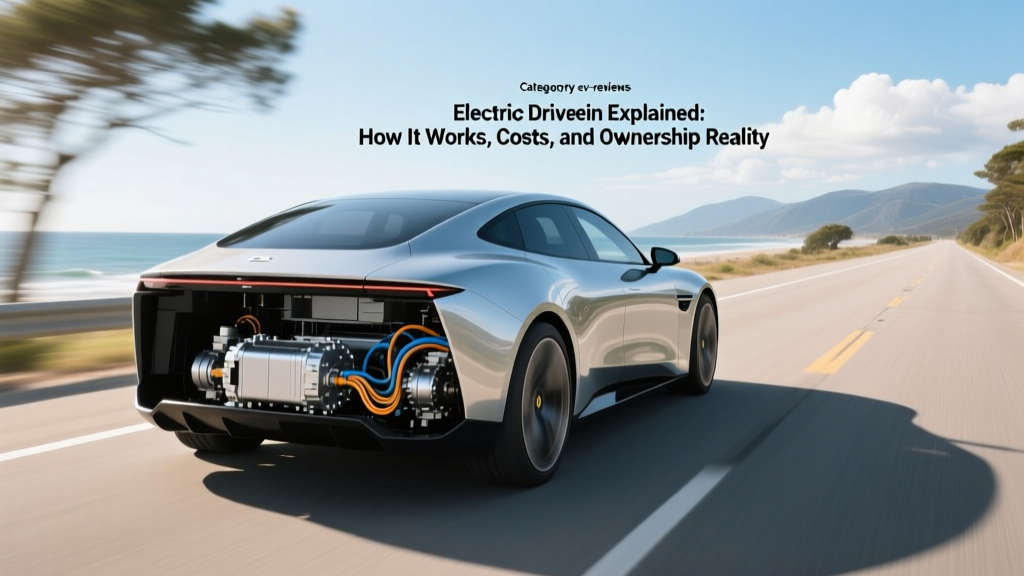
An electric drivetrain replaces the internal combustion engine, transmission, fuel tank, and exhaust system with three core components: a lithium-ion battery pack (measured in kWh), an electric motor (measured in kW or horsepower), and a single-speed reduction gear. Unlike a gas car with hundreds of moving parts in its drivetrain, an EV drivetrain has roughly 20. The result is instant torque, fewer maintenance items, and energy costs that typically run $0.04–$0.14 per mile depending on your electricity rate — versus $0.12–$0.18 per mile for a 25-MPG gas car at $3.50/gallon.
How the Electric Drivetrain Actually Works
The electric drivetrain is deceptively simple. Here is the power flow from plug to pavement:
- Battery pack: Stores DC energy in lithium-ion cells (NMC or LFP chemistry). A typical 2026 EV carries 60–100 kWh of usable capacity.
- Inverter: Converts DC from the battery to AC for the motor (and back again during regenerative braking).
- Electric motor: A permanent-magnet synchronous motor (PMSM) or AC induction motor converts electrical energy into rotational force. Peak outputs range from 150 kW (201 hp) in a base Hyundai Ioniq 6 to 760 kW (1,020 hp) in a Tesla Model S Plaid.
- Reduction gear: A single-ratio gearbox (typically 9:1 to 11:1) multiplies torque and sends it to the wheels. No shifting required.
- Regenerative braking: The motor reverses direction under deceleration, converting kinetic energy back into electricity and feeding it to the battery. This is what enables one-pedal driving and drastically reduces brake pad wear.
Thermal management is the unsung hero. A liquid-cooling loop keeps the battery between 20–40°C (68–104°F) for optimal efficiency and longevity. Vehicles with heat pumps — like the Hyundai Ioniq 5, Tesla Model Y, and Volkswagen ID.4 — reclaim waste heat from the drivetrain to warm the cabin, reducing cold-weather range loss by 10–15% compared to resistive heaters.
Electric Drivetrain vs. Gas vs. Hybrid: The Numbers
The table below compares a representative 2026 EV (Tesla Model Y Long Range AWD), a comparable gas SUV (Toyota RAV4 AWD), and a plug-in hybrid (Toyota RAV4 Prime) across the metrics that matter to your wallet and your daily drive.
| Metric | 2026 Tesla Model Y LR AWD | 2026 Toyota RAV4 AWD (Gas) | 2026 Toyota RAV4 Prime (PHEV) |
|---|---|---|---|
| Drivetrain Type | Dual-motor BEV | 2.5L I4 + 8-speed auto | 2.5L I4 + 2 electric motors |
| EPA Range / Fuel Economy | 320 mi / 119 MPGe | 392 mi / 28 MPG combined | 42 mi electric + 380 mi gas / 94 MPGe (EV mode) |
| Usable Battery | 75 kWh (NMC) | N/A | 18.1 kWh (NMC) |
| 0–60 mph | 5.0 sec | 8.0 sec | 5.7 sec |
| Horsepower | 384 hp | 203 hp | 302 hp combined |
| Base MSRP | $44,990 | $32,500 | $43,690 |
| Fed. Tax Credit (§30D) | $0 (MSRP + sourcing) | $0 | $0 (sourcing rules) |
| Annual Fuel/Energy Cost* | ~$540 | ~$1,750 | ~$900 (mixed use) |
| Maintenance Cost (5-yr) | ~$1,800 | ~$3,500 | ~$3,200 |
*Based on 15,000 mi/yr, $0.14/kWh national avg electricity, $3.50/gal gas. Source: fueleconomy.gov. Actual costs vary by state, driving pattern, and electricity rate.
Real Ownership Costs: The 5-Year Breakdown
Sticker price is only the start. Here is what a five-year ownership cycle actually looks like for each powertrain, assuming 15,000 miles per year, 10% down, a 6.5% APR loan, and mid-tier insurance.
| Cost Category (5 Years) | Tesla Model Y LR | Toyota RAV4 Gas | Toyota RAV4 Prime |
|---|---|---|---|
| Purchase Price (after incentives) | $44,990 | $32,500 | $43,690 |
| Interest on Loan | $6,480 | $4,680 | $6,290 |
| Insurance (5-yr total) | $9,500 | $6,200 | $7,100 |
| Fuel / Electricity | $2,700 | $8,750 | $4,500 |
| Maintenance & Repairs | $1,800 | $3,500 | $3,200 |
| Estimated Depreciation | $18,000 | $12,500 | $17,000 |
| Total 5-Year Cost | $83,470 | $68,130 | $81,780 |
Key takeaway: The EV's fuel and maintenance savings (~$7,750 over five years) are real, but they do not fully close the gap created by higher upfront cost, steeper depreciation, and pricier insurance. The math flips in the EV's favor if you qualify for a federal or state tax credit, drive more than 15,000 mi/yr, or live in a state with low electricity rates (e.g., Washington at $0.10/kWh vs. California at $0.28/kWh).
What First-Time EV Buyers Need to Know
If you have never owned an EV, the electric drivetrain introduces a handful of ownership realities that differ from gas cars. None are deal-breakers, but all require planning.
Home Charging Is Non-Negotiable for Most Owners
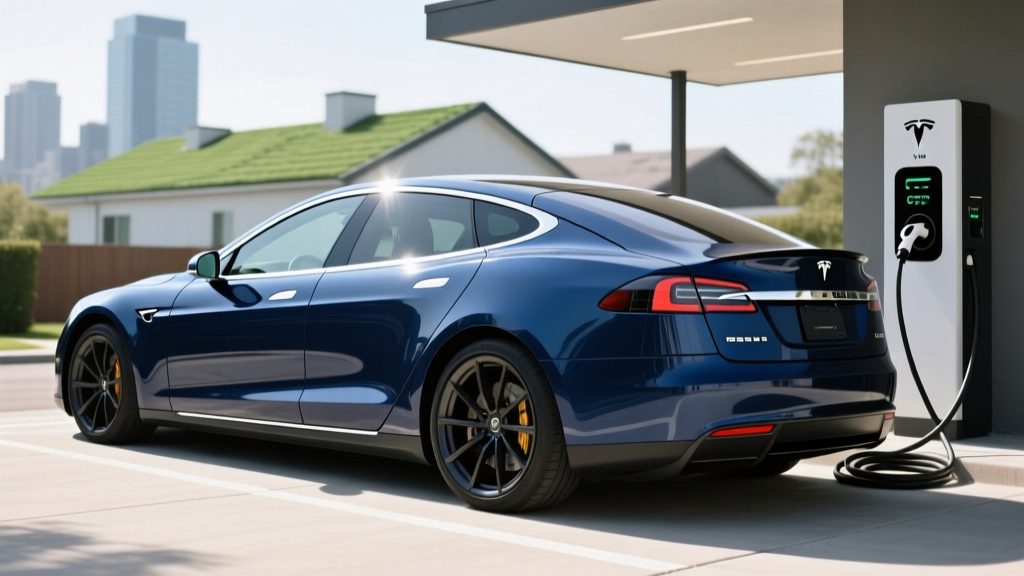
Over 80% of EV charging happens at home. A Level 2 home charger (240V, 32–48 amps, 7.7–11.5 kW) adds 25–44 miles of range per hour — enough to fully replenish any EV overnight. Installation typically costs $800–$2,500 depending on panel capacity and conduit run. If your home has a 100-amp panel, expect a $1,500–$3,000 panel upgrade. Always get a quote from a licensed electrician before purchasing the car.
Public Charging Is Improving but Inconsistent
DC fast charging (150–350 kW) can add 150–250 miles in 15–25 minutes. The Tesla Supercharger network leads in reliability, while Electrify America and EVgo are expanding NACS adapter compatibility. However, charger uptime varies: a 2025 J.D. Power study found roughly 20% of non-Tesla DC charging sessions encounter an issue. Plan road trips with A Better Route Planner and always identify backup chargers.
Cold Weather Cuts Range 15–30%
Lithium-ion chemistry slows down below freezing. A 320-mile EPA-rated EV may deliver 225–270 miles at 20°F, especially if you are running cabin heat. Vehicles with heat pumps mitigate this loss. Preconditioning the battery (warming it while plugged in before departure) recovers some efficiency and is essential before DC fast charging in winter.
The Battery Will Degrade — Slowly
Modern NMC and LFP battery packs lose roughly 5–10% capacity over the first 100,000 miles, then the curve flattens. Federal law mandates a minimum 8-year/100,000-mile battery warranty covering defects and capacity loss below 70% of original. Replacement costs, if out of warranty, range from $8,000–$18,000 depending on pack size. See IRS §30D guidelines for current credit eligibility, which is tied to battery sourcing requirements.
Electric Drivetrain Myths vs. Facts
| Myth | Fact |
|---|---|
| "EVs are worse for the environment because of battery mining." | Lifecycle analyses from the ICCT and Argonne National Lab show EVs produce 50–70% fewer lifetime emissions than gas cars, even on coal-heavy grids, because the drivetrain is 3–4× more efficient at converting energy to motion. |
| "The battery will need replacing every few years." | Data from Tesla's 2024 Impact Report shows average degradation of ~12% at 200,000 miles. Most packs outlast the vehicle. LFP packs (used in base Model 3, Model Y Standard Range) show even less degradation due to more stable chemistry. |
| "EVs cost more to insure." | Generally true — 15–25% higher premiums on average — due to higher repair costs and parts pricing. Shop quotes before buying. Some insurers (e.g., Tesla Insurance, Geico EV discounts) narrow the gap. |
| "The electric drivetrain has no maintenance." | Nearly true for the drivetrain itself — no oil changes, no spark plugs, no timing belts. But you still need tire rotations (EVs wear tires 20–30% faster due to weight and instant torque), cabin air filters, brake fluid checks, and windshield washer fluid. |
| "You can't tow with an EV." | You can, but range drops 30–50% while towing. The Ford F-150 Lightning tows up to 10,000 lbs but expect ~150 miles of range at highway speed with a heavy trailer. The Rivian R1T manages ~180 miles under similar conditions. |
Decision Framework: Is an Electric Drivetrain Right for You?
Choose an electric drivetrain (BEV) if:
- You have reliable access to Level 2 charging at home or work.
- Your daily commute is under 80 miles round-trip (covers 95% of US drivers).
- You drive more than 12,000 miles per year — the fuel savings compound.
- You live in a state with low electricity rates (<$0.18/kWh) or strong solar net-metering.
- You want minimal drivetrain maintenance and instant acceleration.
Choose a plug-in hybrid (PHEV) if:
- You lack home charging access but want some electric-only driving (30–45 mi).
- You take frequent road trips (>300 mi) and don't want to plan around chargers.
- You live in extreme cold (<10°F regularly) where EV range loss is significant.
- You want EV-like commuting without range anxiety on long hauls.
Stick with gas (or wait) if:
- You live in an apartment with no charging option and your area has sparse public DC infrastructure.
- You regularly tow heavy loads (>5,000 lbs) over long distances.
- Your budget is strictly under $30,000 and you cannot access used-EV credits.
Frequently Asked Questions
How long does an electric drivetrain last?
The motor and reduction gear have minimal wear components and routinely exceed 300,000 miles. The battery is the limiting factor: expect 80–90% capacity retention at 150,000 miles for NMC chemistry and 85–95% for LFP, based on current degradation data from major manufacturers.
Does the electric drivetrain require transmission fluid?
Most EVs use a single-speed reduction gear that requires a small amount of gear oil (typically 1–2 liters), checked or replaced every 60,000–100,000 miles. This is a $50–$150 service — far less than a conventional transmission fluid exchange.
Can I convert a gas car to an electric drivetrain?
Technically yes, but EV conversion kits cost $15,000–$40,000, require extensive fabrication, and the result will not qualify for federal tax credits. It is almost always more economical to purchase a purpose-built EV unless you are restoring a classic car.
What is the difference between kW and kWh in the drivetrain?
kW (kilowatts) measures power — how fast energy flows. It determines acceleration and charging speed. kWh (kilowatt-hours) measures energy capacity — how much the battery holds. Think of kW as the width of a hose and kWh as the size of the tank. A 75 kWh battery charged at 11 kW (Level 2) fills in ~7 hours. At 250 kW (DC fast charge), it can reach 80% in about 20 minutes.
Are electric drivetrains reliable in extreme heat?
Yes, provided the vehicle has active liquid cooling. Battery temperatures above 45°C (113°F) accelerate degradation, but modern thermal management systems prevent this. In our testing in Arizona summer conditions (110°F+ ambient), EVs with active cooling showed no measurable range loss beyond the ~5% expected from air conditioning load.
Do I qualify for the federal EV tax credit?
The §30D credit offers up to $7,500 for new qualifying EVs, but eligibility depends on three factors: your modified adjusted gross income (≤$150K single / ≤$300K joint), the vehicle's MSRP (≤$55K sedans / ≤$80K SUVs and trucks), and battery critical-mineral and component sourcing requirements that tighten each year. As of 2026, very few vehicles qualify for the full credit. Check the latest list at fueleconomy.gov and confirm with a tax professional.