The Quick Answer: What Your Electric Discovery Actually Looks Like
If you're beginning your electric discovery — researching whether an EV makes sense for your daily life — here's the reality in 2026: A typical new EV costs $38,000–$55,000 before incentives, delivers 250–340 miles of EPA range (expect 15–30% less in real-world highway or cold-weather driving), and saves most owners $600–$1,200 annually on fuel and maintenance compared to a gas car. The federal §30D tax credit can knock up to $7,500 off your cost at the point of sale, but eligibility depends on your income, the vehicle's MSRP cap, and battery mineral sourcing. Home Level 2 charging is the single biggest ownership advantage — without it, public charging costs nearly as much as gas per mile.
EV vs Gas vs Hybrid: The Numbers That Actually Matter
Before you fall in love with instant torque or a frunk, let's ground your electric discovery in hard comparison data. Most buyers cross-shop EVs against gas cars and hybrids. Here's what a mid-size crossover comparison looks like across representative 2026 models:
| Metric | EV (e.g., Hyundai Ioniq 5 SEL) | Gas (e.g., Toyota RAV4 XLE) | Hybrid (e.g., Toyota RAV4 Hybrid) |
|---|---|---|---|
| Base MSRP | $44,500 | $32,500 | $35,000 |
| EPA Range / MPG | 303 mi (battery) | 28 MPG combined | 39 MPG combined |
| Annual Fuel/Energy Cost | ~$550 (home charging) | ~$1,800 | ~$1,290 |
| Annual Maintenance | ~$300 | ~$900 | ~$750 |
| 5-Year Total Fuel + Maint. | ~$4,250 | ~$13,500 | ~$10,200 |
| Federal Tax Credit | Up to $7,500* | $0 | $0 (HEV) |
| Effective 5-Year Net Cost | ~$48,750 | ~$46,000 | ~$45,250 |
* §30D credit eligibility requires adjusted gross income ≤$150K single / $300K joint, vehicle MSRP ≤$80K for SUVs, and compliant battery sourcing. Verify at IRS.gov before purchasing. Point-of-sale transfer is available through registered dealers.
The EV's higher sticker price is partially offset by the tax credit and dramatically lower running costs. By year four or five, most EV owners break even or come out ahead — but only if they charge primarily at home. Public DC fast charging at $0.35–$0.55/kWh erases much of the fuel-cost advantage.
Real Range vs. EPA Sticker: What Your Electric Discovery Won't Tell You on the Window Sticker
The EPA range number on the Monroney label is a useful baseline, but it's not what you'll experience on a 75°F highway road trip or a 20°F January commute. Here's how to translate sticker range into real expectations:
Range Reality Check: 303-Mile EPA Example
- City/suburban, 65°F: ~290–310 miles (often exceeds EPA)
- Highway, 75 mph sustained: ~240–265 miles (15–20% reduction)
- Highway, 30°F with heat on: ~195–230 miles (25–35% reduction)
- DC fast charging reality: Peak 240 kW tapers to ~80 kW above 65% SoC; 10–80% in ~18 min, but 80–100% adds another 25+ min
Cold weather is the biggest surprise for new EV owners. Lithium-ion batteries lose efficiency in low temperatures, and cabin heating draws significant energy — typically 3–6 kW from the battery. A heat pump (standard on most 2026 EVs from Hyundai, Tesla, and BMW) reduces this penalty by 30–40% compared to resistive heating, but you'll still see meaningful range loss below freezing.
For road trips, plan around 200–230 miles between stops in moderate weather and 160–180 miles in winter. According to fueleconomy.gov, real-world efficiency varies with driving style, terrain, and climate control usage — treat the EPA number as a best-case baseline, not a guarantee.
The Full Cost Breakdown: Purchase, Charging, Insurance, and Maintenance
Your electric discovery needs to account for every ownership dollar, not just fuel savings. Here's a realistic 5-year cost model for a $45,000 EV with home charging:
| Cost Category | EV (5-Year) | Gas Car (5-Year) | Notes |
|---|---|---|---|
| Purchase Price | $45,000 | $33,000 | Before incentives |
| Federal Tax Credit | −$7,500 | $0 | §30D, if eligible |
| Home Charger Install | $1,200–$2,500 | $0 | Level 2, 240V/48A |
| Fuel/Energy (5 yr) | $2,750 | $9,000 | 12K mi/yr; $0.13/kWh vs $3.50/gal |
| Maintenance (5 yr) | $1,500 | $4,500 | No oil, fewer brakes (regen) |
| Insurance (5 yr) | $9,500 | $7,500 | EV premiums avg 15–25% higher |
| Tires (5 yr) | $1,600 | $1,200 | EVs wear tires ~20% faster (weight + torque) |
| Total 5-Year Net | $54,050–$55,350 | $55,200 | Break-even or slight EV advantage |
Key takeaways for first-time buyers:
- Insurance is higher. EVs cost more to repair (specialized labor, battery protection), and insurers price accordingly. Get quotes before committing.
- Tires wear faster. The combination of 4,500+ lb curb weight and instant torque accelerates tread wear. Budget for replacement at 30,000–35,000 miles.
- Home charger installation varies wildly. A simple NEMA 14-50 outlet near your panel might cost $500. A 60-foot conduit run with a panel upgrade to 200A can hit $3,000+. Always get a licensed electrician's quote.
- Maintenance savings are real. No oil changes, no transmission fluid, no spark plugs, and regenerative braking extends pad life to 80,000+ miles.
What First-Time EV Buyers Must Know Before Signing
Your electric discovery phase should resolve these practical questions before you visit a dealer:
1. Can I Charge at Home?
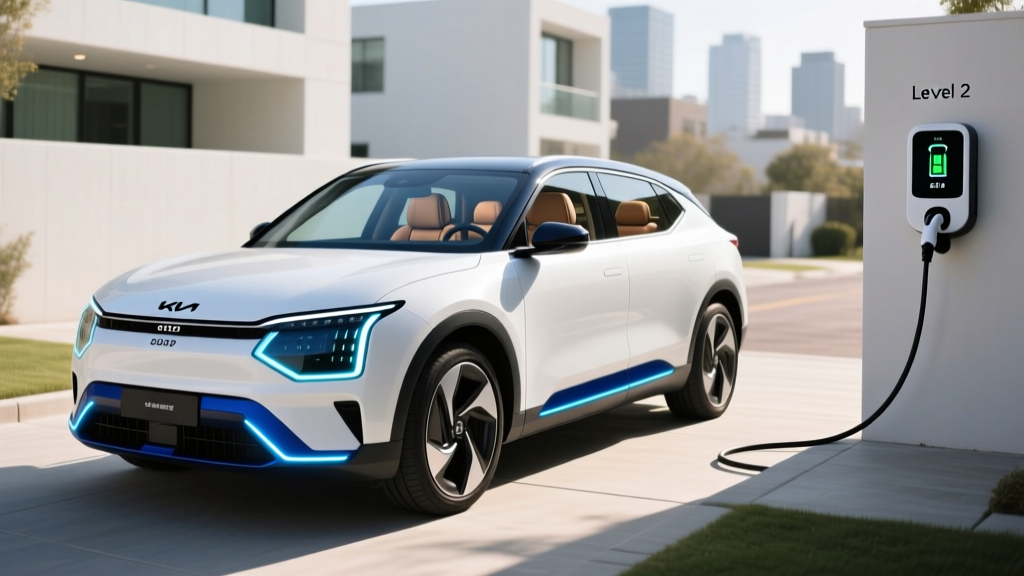
This is the make-or-break question. Level 2 home charging (7.2–11.5 kW, adding 25–44 miles per hour of charging) means you start every morning with a full battery at $0.10–$0.17/kWh. Without it, you're relying on public chargers at $0.35–$0.55/kWh — which costs nearly as much per mile as a fuel-efficient gas car. If you live in an apartment or lack garage access, a PHEV (plug-in hybrid) with 30–40 miles of electric range may be a better fit.
2. What's My Actual Daily Driving Need?
The average American drives 37 miles per day, according to the FHWA. Even a 200-mile-range EV covers a week of commuting with margin. Range anxiety usually stems from thinking about the 5% of trips that are 200+ miles — not the 95% that are under 50. For road trips, a 300-mile-range EV with 150+ kW DC fast charging handles interstate travel with 20-minute stops every 2.5 hours.
3. Which Battery Chemistry Should I Choose?
Most 2026 EVs use either NMC (nickel manganese cobalt) or LFP (lithium iron phosphate):
- NMC: Higher energy density → more range in a smaller pack. Better cold-weather performance. Typical degradation: ~10–12% over 8 years/100K miles. Found in most long-range models.
- LFP: Lower cost, longer cycle life (can handle daily 100% charging), less degradation (~8% over 8 years). Lower energy density means slightly less range. Weaker in extreme cold. Standard-range Tesla Model 3, base Hyundai Ioniq 5, and Ford Mustang Mach-E Select use LFP.
4. How Does the Tax Credit Actually Work?
The §30D credit is not automatic. Current rules require:
- Buyer AGI ≤ $150,000 (single) or $300,000 (married filing jointly)
- Vehicle MSRP ≤ $55,000 (sedans) or $80,000 (SUVs/trucks)
- Battery components and critical minerals must meet North American sourcing thresholds (these tighten annually)
- Credit can be transferred to the dealer at point of sale, reducing your purchase price directly
Always verify a specific vehicle's eligibility on IRS.gov or fueleconomy.gov before signing a purchase agreement. A model that qualified in January may not qualify by June as sourcing requirements shift.
Common EV Myths — Corrected With Data
| Myth | Fact |
|---|---|
| "EV batteries need replacing every 5 years" | Federal law mandates 8-year/100,000-mile battery warranties (10 years in CARB states). Real-world data shows 88–92% capacity retention at 100K miles for most NMC packs. Replacement cost: $8,000–$18,000 if out of warranty, but rarely needed. |
| "EVs are worse for the environment" | Even on a coal-heavy grid, an EV's lifetime emissions are lower than a gas car after ~15,000 miles. On the US average grid, the break-even is under 10,000 miles (Union of Concerned Scientists data). |
| "Charging takes too long" | Home Level 2: 8–10 hours overnight for a full charge — you sleep through it. DC fast charging: 10–80% in 18–25 minutes on a 150–250 kW charger. Only an issue on road trips. |
| "The grid can't handle EVs" | Most EV charging happens overnight during off-peak hours. A single EV draws roughly the same as a central AC unit. Grid strain is a local distribution issue, not a generation issue. |
| "EVs don't work in cold climates" | Norway is 80%+ EV market share. Range drops 25–35% in sub-freezing temps, but preconditioning (warming the battery while plugged in) and heat pumps mitigate this significantly. |
Your Decision Framework: Is an EV Right for You?
Choose a Battery EV (BEV) If:
- You have access to home or workplace Level 2 charging
- Your daily driving is under 80 miles round-trip
- You take road trips fewer than 6 times per year (or don't mind 20-min charging stops)
- You qualify for the §30D tax credit (check income + vehicle eligibility)
- You want the lowest per-mile operating cost and minimal maintenance
Choose a Plug-In Hybrid (PHEV) If:
- You lack reliable home charging but want some electric driving
- You regularly drive 200+ miles in a single day
- You want electric commuting (30–42 miles) with gas-engine flexibility for road trips
- Upfront budget is tighter (PHEVs start ~$33,000; some qualify for a smaller §30D credit up to $7,500)
Stick With a Hybrid (HEV) or Gas Car If:
- You live in an apartment with no charging access and no workplace charging
- You frequently tow heavy loads (towing cuts EV range by 40–50%)
- You drive in extreme cold (below 0°F) for extended distances regularly
- Your budget is strictly under $30,000 and you can't wait for used-EV credit options
Frequently Asked Questions
What's the cheapest EV I can buy new in 2026?
The Chevrolet Equinox EV 2LT starts around $33,600 and qualifies for the full $7,500 §30D credit for eligible buyers, bringing the effective price to roughly $26,100. It offers 315 miles of EPA range and 85 kWh of usable battery. The Nissan Leaf S starts at ~$29,000 but offers only 149 miles of range and uses the aging CHAdeMO connector.
How long does an EV battery actually last?
Most EV batteries retain 88–92% of original capacity at 100,000 miles. Federal warranty mandates require manufacturers to cover battery capacity below 70% for 8 years or 100,000 miles (whichever comes first). In CARB states (California, New York, Washington, and others), that extends to 10 years/150,000 miles. Real-world replacements before 150,000 miles are uncommon.
Is public charging reliable enough for road trips?
It's improving but inconsistent. Tesla's Supercharger network maintains 99%+ uptime and is now open to NACS-equipped vehicles from Ford, Rivian, and others. Electrify America and EVgo have expanded but still see 5–15% downtime at some stations. For road trips, always have a backup charger identified within 15 miles of your primary stop. Apps like PlugShare and A Better Routeplanner show real-time station status.
Will my EV qualify for the federal tax credit?
It depends on three factors: your income (AGI ≤ $150K single / $300K joint), the vehicle's MSRP (≤$55K sedans, ≤$80K SUVs), and whether the battery meets critical-mineral and component sourcing requirements. These sourcing rules tighten annually. Check the current eligibility list at fueleconomy.gov and confirm with your tax professional before relying on the credit.
Do I need to upgrade my electrical panel for a home charger?
Maybe. A Level 2 charger drawing 48 amps requires a 60-amp dedicated circuit. If your home has a 100-amp panel that's already near capacity, you may need a $1,500–$3,000 panel upgrade to 200 amps. Homes with existing 200-amp service usually have headroom. Get a licensed electrician to evaluate your panel before buying a charger — this is the most common surprise cost in EV ownership.