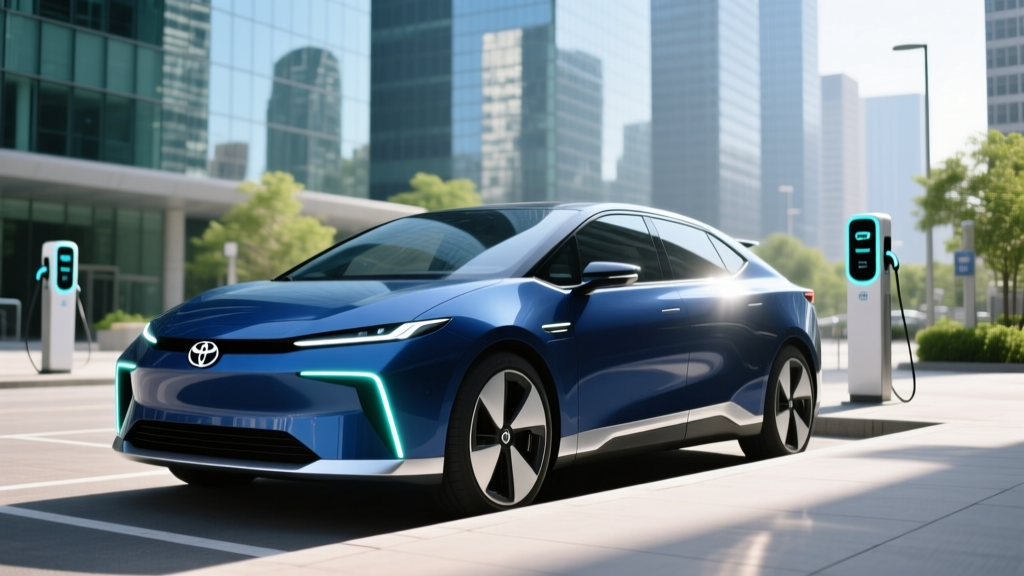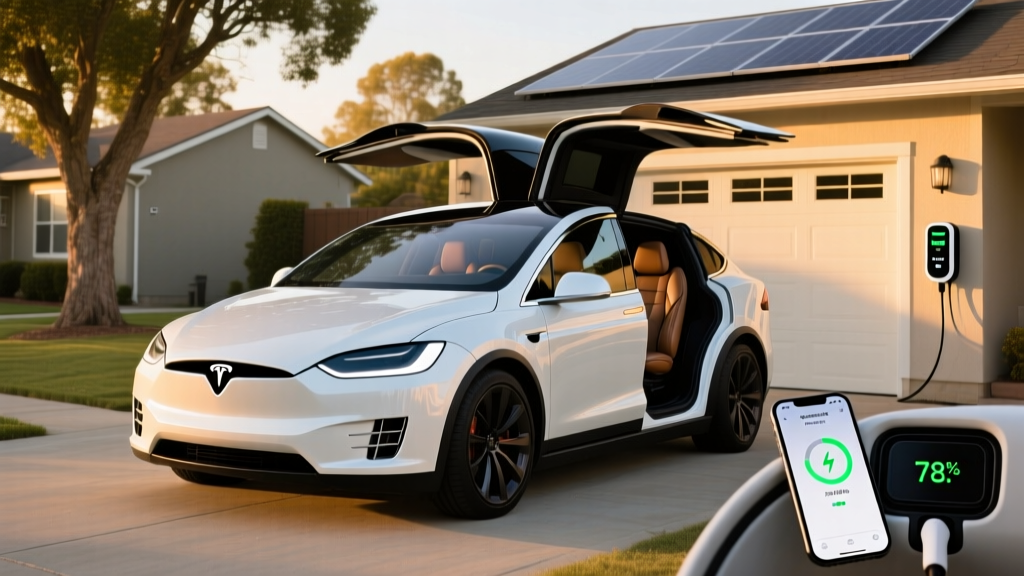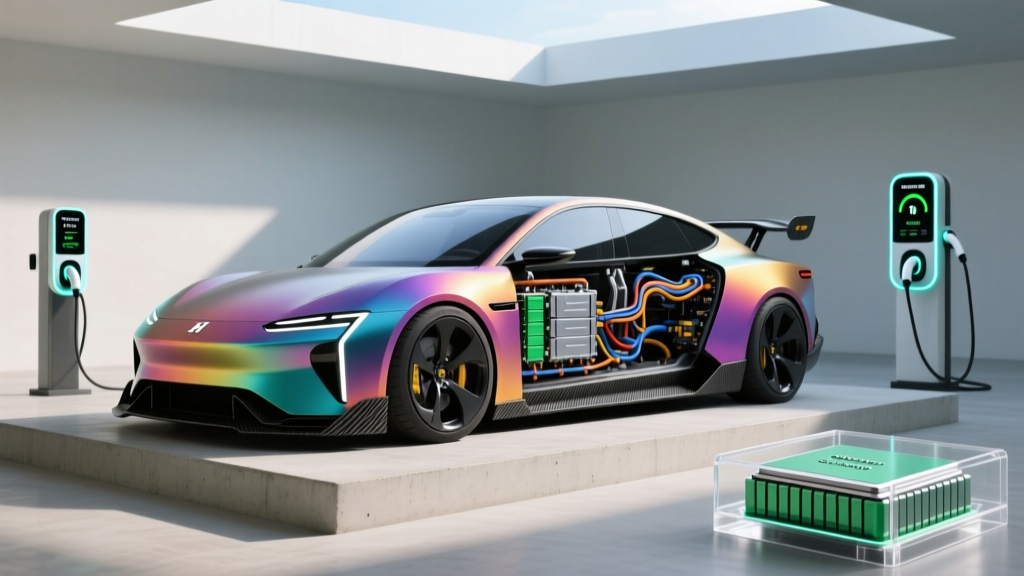
If you've been browsing forums or YouTube builds, you've likely seen electric crate motors pop up as the gateway to a DIY EV conversion. The core question is straightforward: Can you buy an off-the-shelf electric motor, drop it into a classic or donor car, and end up with a practical daily driver?
The Quick Answer
Electric crate motors are standalone electric powertrain units — motor, inverter, and often a reduction gear — sold separately from a complete vehicle for custom installations or EV swaps. In 2026, popular options like the Ford Performance Eluminator (~$4,500 for the motor alone) and aftermarket kits from NetGain, Cascadia Motion, and EV West deliver between 100 kW and 300+ kW of peak power. A full drivetrain swap (motor + battery + controller + installation) typically costs $25,000–$65,000+ depending on battery capacity and labor. Range depends entirely on your battery pack — a 60 kWh pack in a lightweight classic might yield 120–160 real-world miles. These projects are best suited for hobbyists, restomodders, and builders — not cost-conscious commuters looking for a budget EV alternative.
What Are Electric Crate Motors, Exactly?
An electric crate motor is the EV equivalent of a traditional crate engine — a self-contained electric drive unit you can purchase and install into a vehicle chassis. Unlike a factory EV where the motor, battery, thermal management, and software are engineered as a unified system, a crate motor setup requires you (or your builder) to source and integrate each subsystem independently.
A typical electric crate motor package includes:
- Electric motor — usually a permanent magnet synchronous motor (PMSM) or AC induction motor
- Inverter/controller — converts DC battery power to AC for the motor and manages torque delivery
- Reduction gear or adapter plate — matches motor output to your drivetrain (direct-drive, transaxle adapter, or belt/chain drive)
- Throttle interface — electronic pedal or potentiometer for acceleration control
What's not included in most crate motor kits — and where costs escalate quickly:
- Battery pack — the single most expensive component ($8,000–$30,000+ depending on capacity and chemistry)
- Battery management system (BMS) — critical for cell balancing, thermal protection, and state-of-charge monitoring
- Charging hardware — onboard charger for Level 2 AC charging, DC fast-charge port (if supported)
- Thermal management — cooling loops for motor, inverter, and battery
- Instrumentation — SoC gauge, power meter, warning systems
- High-voltage wiring, contactors, safety cutoffs
Popular Electric Crate Motors in 2026: Specs & Pricing
The market has matured beyond the early days of salvaged forklift motors. Here are the most accessible crate motor options available to builders right now:
| Motor / Kit | Peak Power | Peak Torque | Motor Type | Price (Motor + Controller) | Best For |
|---|---|---|---|---|---|
| Ford Performance Eluminator (M-9000-MACHE) | 210 kW (281 hp) | 317 lb-ft | PMSM | ~$4,500 (motor only); ~$7,000 with inverter harness | Restomods, muscle car swaps |
| NetGain Hyper 9 | 85 kW (114 hp) | 175 lb-ft | AC Induction | ~$3,800 (motor + controller) | Lightweight classics, trucks |
| Cascadia Motion iDM-220 | 220 kW (295 hp) | 330 lb-ft | PMSM w/ integrated gearbox | ~$8,500–$10,000 | Performance builds, track cars |
| EV West Revolt System | 110 kW (148 hp) | 220 lb-ft | AC Induction | ~$5,200 (complete kit w/ controller) | VW swaps, light roadsters |
| Tesla Large Drive Unit (salvaged) | ~270 kW (362 hp) | ~325 lb-ft | AC Induction | ~$3,500–$5,500 (used market) | Budget performance builds |
Key takeaway: The motor itself is often the cheapest part of an EV conversion. A 210 kW Eluminator produces more power than a new V8 crate engine — for less money. The cost challenge is everything else in the powertrain.
Full EV Swap Cost Breakdown: Motor, Battery & Labor
Here's where the real numbers come in. Below is a realistic cost breakdown for a typical electric crate motor conversion using a classic car donor chassis (e.g., a 1960s–1980s vehicle):
| Component | Budget Build | Mid-Range Build | High-Performance Build |
|---|---|---|---|
| Electric crate motor + controller | $3,500–$5,000 | $5,000–$8,000 | $8,000–$12,000 |
| Battery pack (LFP or NMC modules) | $6,000 (30 kWh) | $14,000 (60 kWh) | $25,000+ (90+ kWh) |
| BMS + safety systems | $800–$1,200 | $1,500–$2,500 | $2,500–$4,000 |
| Onboard charger (Level 2, 6.6–11.5 kW) | $600–$1,000 | $1,000–$1,800 | $1,500–$2,500 |
| Thermal management (cooling/heating) | $500–$800 | $1,500–$2,500 | $3,000–$5,000 |
| Drivetrain adapter / fabrication | $1,000–$2,000 | $2,500–$5,000 | $5,000–$10,000 |
| Instrumentation & wiring | $500–$1,000 | $1,500–$3,000 | $2,500–$5,000 |
| Professional labor (if not DIY) | $5,000–$10,000 | $10,000–$20,000 | $20,000–$40,000 |
| Total Estimated Cost | $18,000–$30,000 | $37,000–$53,000 | $67,000–$100,000+ |
For context, the battery pack alone in a mid-range 60 kWh build (using NMC pouch cells or salvaged Tesla modules) will typically provide 120–170 miles of real-world range depending on vehicle weight, aerodynamics, and driving style. That's a far cry from a 2026 Hyundai Ioniq 6's EPA-rated 361 miles on a 77.4 kWh pack — but the Ioniq 6 starts at $38,650 MSRP and was engineered as a complete system from day one.
Electric Crate Motor Swap vs. Buying a New EV: Which Makes Sense?
This is the comparison every prospective builder needs to confront honestly. Here's how a crate-motor EV conversion stacks up against buying a production EV:
| Factor | Electric Crate Motor Swap | New Production EV (e.g., Tesla Model 3, Chevy Equinox EV) |
|---|---|---|
| Total cost | $25,000–$65,000+ (plus donor car) | $29,000–$55,000 (before incentives) |
| Range (real-world) | 80–200 miles (battery dependent) | 250–360 miles (EPA-rated) |
| DC fast charging | Rarely supported; most builds are Level 2 only | Standard; 150–250 kW peak, 10–80% in 18–30 min |
| Battery warranty | None (or cell manufacturer warranty only) | 8 years / 100,000 miles (federal minimum) |
| Safety ratings (NHTSA/IIHS) | None — converted vehicle not crash-tested | 5-star NHTSA; IIHS Top Safety Pick on most models |
| Federal tax credit (§30D) | Not eligible — conversions do not qualify | Up to $7,500 (subject to MSRP caps, income limits, battery sourcing rules — see IRS §30D guidelines) |
| Insurance | Specialty/agreed-value policies; often higher premiums | Standard EV policies; varies by model and state |
| Resale value | Highly variable; niche market | Predictable depreciation curves |
| Build time | 3–12+ months | Available immediately (dealer inventory or order) |
The financial case for an electric crate motor swap almost never works out as a savings strategy versus buying a new or used production EV. Where it wins is in uniqueness, craftsmanship, and the restomod experience — putting modern electric power into a vintage body that was never offered as an EV.
Range, Charging & Real-World Ownership Considerations
If you're seriously considering an electric crate motor build, here are the practical realities that forum posts and build videos tend to gloss over:
Range Is a Battery Problem, Not a Motor Problem
Your crate motor's kW rating determines acceleration and top speed, but your range is dictated entirely by battery capacity (kWh) and vehicle efficiency (Wh/mile). A lightweight roadster weighing 2,500 lbs with a 50 kWh pack might see 4–5 miles per kWh, yielding 200+ miles. A heavy steel-body truck at 4,500 lbs with the same pack might manage only 2.5–3 miles per kWh — dropping to 125–150 miles.
Battery chemistry matters too. LFP (lithium iron phosphate) cells are increasingly popular for conversions because they tolerate 100% daily charging, have longer cycle life (3,000+ cycles vs. ~1,500–2,000 for NMC), and are less prone to thermal runaway. The trade-off: LFP has lower energy density, meaning more weight and volume for the same kWh. If packaging space is tight (as in most classic cars), NMC modules may be the only practical choice for adequate range.
DC Fast Charging: The Conversion's Biggest Gap
Most electric crate motor builds support Level 2 AC charging only — typically at 6.6 kW or occasionally 11.5 kW through an aftermarket onboard charger. That means a full charge from a 60 kWh battery takes 5–9 hours on Level 2. Adding DC fast charging capability requires a compatible CCS or CHAdeMO inlet, a high-voltage contactor system rated for 400V+ DC input, and communication protocol integration between the charger and your BMS. It's technically possible but adds $3,000–$6,000+ and significant engineering complexity. Most builders accept the Level 2 limitation and treat their conversion as a local-range vehicle.
Cold Weather, Weight Distribution & Safety
Expect 20–35% range loss in freezing temperatures — the same physics that affect production EVs, but without the benefit of factory-engineered heat pumps and battery preconditioning. Battery heating pads or liquid thermal loops can mitigate this but add cost and complexity.
Weight distribution is another challenge. Classic cars were designed around a front-mounted engine and fuel tank. Placing 500–1,000 lbs of battery modules requires careful engineering to maintain handling balance, suspension geometry, and braking performance. Upgraded brakes, springs, and shocks are almost always necessary.
Common Electric Crate Motor Misconceptions
| Myth | Fact |
|---|---|
| "An EV swap is cheaper than buying a new EV." | A mid-range conversion costs $37,000–$53,000 plus a donor car. A 2026 Chevy Equinox EV starts at ~$33,600 MSRP and qualifies for up to $7,500 in federal tax credits, bringing the effective price well below most conversions. |
| "You can use any battery pack." | Cell voltage, chemistry, BMS compatibility, and thermal requirements must match your motor controller's input range. Mismatched packs risk fire, cell damage, or controller failure. |
| "Electric crate motors are plug-and-play." | The motor itself bolts in with fabrication work. The integration of battery, BMS, charger, throttle, cooling, and instrumentation is a custom engineering project every time. |
| "I'll get 300 miles of range easily." | 300 miles requires ~80–100 kWh of usable battery in a typical classic car (3–4 mi/kWh). That's 1,200–1,800+ lbs of battery alone — often impossible to package and structurally support in a vintage chassis. |
| "My converted EV will qualify for the federal tax credit." | The IRS §30D credit applies only to new qualified plug-in electric vehicles from certified manufacturers. Conversions and kit-car builds do not qualify. |
Decision Framework: Should You Build or Buy?
Choose an Electric Crate Motor Build If:
- You have a specific donor car with sentimental or collector value (e.g., a '69 Camaro, '72 VW Bus, '84 Porsche 944)
- You have fabrication and electrical skills — or a trusted shop with EV conversion experience
- You accept 100–180 miles of real-world range and Level 2-only charging as adequate for local driving
- You view the project as a hobby build, not a budget transportation hack
- You want a one-of-a-kind vehicle that no production EV can replicate
- You have a budget of $30,000–$70,000+ beyond the donor car's value
Choose a Production EV If:
- You need reliable daily transportation with 250+ miles of range
- You want DC fast charging for road trips (10–80% in 18–30 minutes at 150–250 kW)
- You want factory battery warranties (8 years / 100,000 miles minimum)
- You want NHTSA crash-test ratings and modern ADAS features (automatic emergency braking, lane-keeping)
- You want to claim the §30D federal tax credit (up to $7,500, subject to income, MSRP, and battery-sourcing requirements)
- You want predictable insurance, financing, and resale value
First-Time EV Buyer? Start Here Before Considering a Swap
If you're new to electric vehicles and the crate motor concept caught your attention, here's practical advice: own a production EV first. Spend at least a year understanding real-world charging behavior, range management in different seasons, and the actual cost-per-mile of electricity versus gasoline in your area. That experience will make you a far better EV conversion builder if you still want to pursue one.
For first-time EV buyers comparing a crate motor project against simply purchasing an EV, consider these 2026 benchmarks from the EPA's fueleconomy.gov database:
- Tesla Model 3 RWD: 272 mi EPA range, 132 MPGe combined, ~$38,990 MSRP — efficiency benchmark
- Chevy Equinox EV 2LT: 319 mi EPA range, 95 MPGe combined, ~$33,600 MSRP — value leader
- Hyundai Ioniq 5 SE: 303 mi EPA range, 114 MPGe combined, ~$42,600 MSRP — 800V fast charging (10–80% in ~18 min at 240 kW)
All three qualify for at least partial §30D tax credits (eligibility depends on your adjusted gross income, the vehicle's MSRP relative to caps — $55,000 for sedans, $80,000 for SUVs/trucks — and battery critical-mineral sourcing requirements that continue to tighten through 2026).
Frequently Asked Questions
Can I put a Tesla motor in any car?
Tesla's Large Drive Unit (LDU) and Small Drive Unit (SDU) are popular in conversions because they're available on the salvage market for $3,500–$5,500. However, they require custom adapter plates, a compatible controller (such as an Open Inverter or Evnetics controller), and significant fabrication. They're not plug-and-play — Tesla does not sell crate motors directly to consumers, and their software ecosystem is proprietary.
How long does an EV conversion battery last?
Battery longevity depends on chemistry, usage patterns, and thermal management. NMC modules (like salvaged Tesla cells) typically deliver 1,500–2,000 full charge cycles before degrading to 80% capacity — roughly 150,000–250,000 miles depending on pack size and efficiency. LFP cells can exceed 3,000–5,000 cycles. Proper BMS calibration and avoiding sustained 100% or 0% states of charge will maximize lifespan. Unlike production EVs, there's no factory warranty backing the pack.
Is it legal to drive a converted EV on public roads?
Yes, but requirements vary by state. Most states require a converted vehicle to pass a safety inspection (brakes, lights, seatbelts, windshield) and may require a rebuilt or reconstructed vehicle title. Some states, like California, have specific EV conversion registration pathways through the DMV's special vehicle programs. Emissions testing is typically waived for EVs, but you'll need to document the conversion for titling and insurance purposes.
What's the cheapest viable electric crate motor setup?
The most affordable viable path in 2026 is a NetGain Hyper 9 motor with a X1 controller (~$3,800), paired with salvaged Nissan Leaf battery modules (~$2,500–$4,000 for 30–40 kWh) and a basic BMS. Total powertrain cost: roughly $10,000–$14,000 before fabrication, wiring, and labor. Expect 80–120 miles of range in a lightweight vehicle (under 3,000 lbs) and Level 2 charging only at 3.3–6.6 kW.
Does an EV conversion increase a classic car's value?
It depends on the vehicle and the buyer. High-quality conversions of iconic cars (Porsche 911, VW Bus, Ford Bronco) by reputable shops like Electrogenic, Everrati, or Zero Labs have sold for $150,000–$350,000+. However, a DIY conversion of a common classic typically does not recoup the build cost. Collector car buyers often prefer original powertrains, and the EV conversion market remains niche. Treat the investment as personal enjoyment, not financial appreciation.