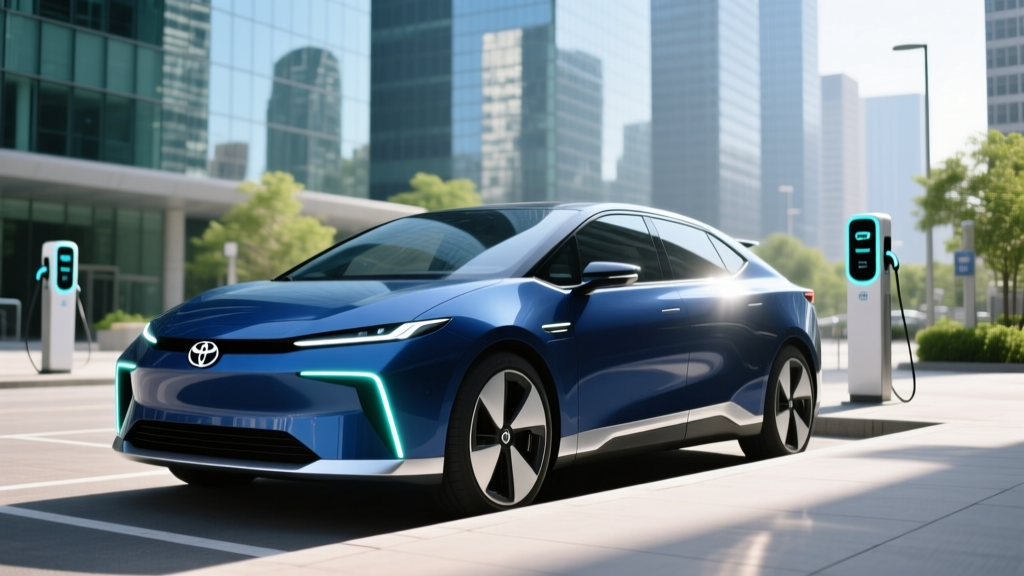
Quick Answer: Toyota's primary all-electric car for 2026 is the bZ4X, a compact electric SUV starting around $37,070 MSRP with up to 252 miles of EPA-estimated range (FWD trim) and a 71.4 kWh NMC battery. It charges at up to 150 kW DC, reaching 10–80% in roughly 32 minutes. AWD trims sacrifice range (228 miles EPA) for 214 hp and better traction. The bZ4X may qualify for a partial or full §30D federal tax credit depending on battery-sourcing compliance, buyer income, and point-of-sale transfer rules — check current IRS guidelines before purchasing. If you're cross-shopping Toyota's lineup, the RAV4 Hybrid (39 MPG combined) and RAV4 Prime PHEV (42 miles electric-only + 38 MPG) remain strong alternatives if home charging is limited or you frequently drive long highway routes in cold climates.
Toyota's All-Electric Lineup: What's Actually Available
Toyota was slower to the battery-electric market than Hyundai, Tesla, or Ford, but the bZ4X (pronounced "bee-zee-four-ex") has been the brand's sole mass-market all-electric car since its 2023 launch. For the 2026 model year, Toyota continues to refine the bZ4X with modest software and efficiency updates, though the core hardware remains largely unchanged from the 2024 refresh.
Here's what Toyota offers in the electrified space as of 2026:
| Model | Type | EPA Range / MPG | Battery | Starting MSRP |
|---|---|---|---|---|
| bZ4X (FWD) | BEV | 252 mi range | 71.4 kWh NMC | ~$37,070 |
| bZ4X (AWD) | BEV | 228 mi range | 71.4 kWh NMC | ~$39,570 |
| RAV4 Prime | PHEV | 42 mi electric + 38 MPG | 18.1 kWh | ~$43,690 |
| RAV4 Hybrid | HEV | 39 MPG combined | 1.6 kWh (self-charging) | ~$33,975 |
Toyota has announced additional bZ-series EVs for the future, but as of early 2026, the bZ4X remains the only Toyota all electric car you can actually walk into a dealership and buy. The brand's strategy leans heavily on offering a powertrain for every buyer: hybrid, plug-in hybrid, and full electric.
bZ4X Range, Charging, and Real-World Efficiency
The EPA-estimated 252-mile range on the FWD bZ4X is competitive with older EVs but trails segment leaders like the Hyundai Ioniq 5 (303 miles) and Tesla Model Y (308 miles). More importantly, that sticker number needs real-world context.
EPA Range: 252 miles (FWD) / 228 miles (AWD)
Real-World Expectation: Plan for approximately 210–230 miles in mixed driving on the FWD trim. Sustained highway speeds (70–80 mph) reduce efficiency to roughly 3.2–3.5 mi/kWh, yielding closer to 190–210 miles of practical range. In cold weather (below 32°F), expect a 20–30% reduction, putting real range around 160–185 miles on the FWD model. The bZ4X lacks a heat pump on base trims, which worsens cold-weather efficiency compared to competitors with standard heat pumps.
Charging Speeds: Adequate but Not Class-Leading
Understanding the difference between kW (power — how fast energy flows) and kWh (energy — how much the battery holds) is critical here. The bZ4X's 71.4 kWh battery stores energy; the charge rate in kW determines how quickly you refill it.
| Charging Level | Power | Approximate Speed | Use Case |
|---|---|---|---|
| Level 1 (120V) | ~1.2 kW | ~4–5 miles/hour | Overnight trickle; emergency top-up |
| Level 2 (240V, 32A) | ~7.7 kW | ~25–28 miles/hour | Home/workplace; full charge in ~9 hours |
| DC Fast Charge | Peak 150 kW | 10–80% in ~32 min | Road trips; tapers significantly above 80% |
The bZ4X's DC fast charging peaks at 150 kW but doesn't sustain that rate. In real-world testing, the charge curve tapers early — you'll see roughly 100–120 kW sustained through the 40–60% state of charge window, then a notable drop above 70%. This means a 10–80% session takes approximately 32 minutes under ideal conditions (warm battery, preconditioned). Competitors like the Ioniq 5 (peak 240 kW, 10–80% in ~18 minutes) outperform it meaningfully on road trips.
Preconditioning matters: The bZ4X allows battery preconditioning when you set a DC fast charger as your navigation destination. This warms the battery to optimal temperature for faster charging. Skip this step on a cold morning, and your peak charge rate may drop below 100 kW.
EV vs Gas vs Hybrid: The Cost Comparison That Matters
The most common question from Toyota shoppers: does the bZ4X save you money compared to a RAV4 Hybrid or a gas RAV4? The answer depends entirely on your driving patterns, electricity cost, and whether you can charge at home.
| Factor | bZ4X (FWD BEV) | RAV4 Hybrid | RAV4 Gas (FWD) |
|---|---|---|---|
| Base MSRP | ~$37,070 | ~$33,975 | ~$30,495 |
| Fed. Tax Credit (§30D) | Up to $7,500* | None (HEV) | None |
| Effective Price After Credit | ~$29,570* | $33,975 | $30,495 |
| Fuel/Energy Cost (15k mi/yr) | ~$540–$750/yr | ~$1,350/yr | ~$1,875/yr |
| Annual Maintenance | ~$200–$350 | ~$500–$700 | ~$600–$900 |
| 5-Year Fuel/Energy Total | ~$2,700–$3,750 | ~$6,750 | ~$9,375 |
*§30D tax credit eligibility depends on battery critical-mineral sourcing, buyer income caps ($150K single / $300K joint AGI), and MSRP caps ($80K for SUVs). Credit may be applied at point of sale. Verify current rules at irs.gov before purchasing.
The math favors the bZ4X if: you qualify for the full tax credit, charge primarily at home on a standard residential rate (~$0.13–$0.17/kWh national average), and drive 12,000–15,000 miles annually. Over five years, the effective purchase price plus fuel savings can make the bZ4X the cheapest option in this comparison.
The math favors the RAV4 Hybrid if: you live in an apartment without charging access, regularly drive 400+ mile road trips, or reside in a cold climate where the bZ4X's range drops below comfortable margins. The hybrid's 39 MPG combined requires zero behavior change and eliminates range variability.
Real Ownership Costs: Beyond the Sticker Price
First-time EV buyers often focus on the purchase price and fuel savings but overlook other ownership costs. Here's a realistic five-year breakdown for the bZ4X FWD:
| Cost Category | 5-Year Estimate | Notes |
|---|---|---|
| Purchase (after credit) | $29,570–$37,070 | Varies by credit eligibility |
| Home Level 2 Charger Install | $500–$2,000 | Depends on panel capacity & wiring run |
| Electricity (home charging) | $2,700–$3,750 | At $0.13–$0.17/kWh, 15k mi/yr |
| Public DC Fast Charging | $300–$800 | Road trips; ~$0.35–$0.48/kWh average |
| Insurance | $7,500–$10,000 | EV premiums typically 15–25% higher |
| Maintenance | $1,000–$1,750 | Tires, cabin filter, wipers, brake fluid |
| Estimated 5-Year Total | $41,570–$55,370 | Before resale value |
Key ownership insights:
- Insurance is higher. EVs generally cost 15–25% more to insure than equivalent gas vehicles due to battery replacement costs and specialized repair requirements. Get quotes before buying.
- Tires wear faster. The bZ4X's instant torque and ~4,300-lb curb weight accelerate tire wear. Budget for replacement at 30,000–40,000 miles rather than the 50,000+ miles typical for lighter gas vehicles.
- Home charging is essential for savings. If you rely entirely on public DC fast chargers at $0.35–$0.48/kWh, your "fuel" cost rises to roughly $1,200–$1,600/year — still below gas, but the gap narrows significantly.
- Panel upgrades may be needed. If your home has a 100-amp electrical panel, adding a 40-amp Level 2 circuit may require a $1,500–$3,000 panel upgrade. Always consult a licensed electrician for a site assessment.
Battery Longevity, Warranty, and Degradation
Battery anxiety is the number-one concern for first-time EV buyers, and it deserves a data-driven answer rather than reassurance.
The bZ4X uses a 71.4 kWh NMC (nickel-manganese-cobalt) lithium-ion battery. Toyota warranties the battery for 8 years or 100,000 miles (whichever comes first) against defects and excessive capacity loss — defined as dropping below 70% of original capacity.
What does degradation look like in practice? Industry data from fleets and long-term EV testing shows that modern NMC batteries typically lose 5–8% capacity in the first 50,000 miles, then degradation slows to roughly 1–2% per year afterward. For the bZ4X, this means:
- Year 1–2: ~240–248 effective miles (from 252 EPA)
- Year 5 / 75,000 miles: ~225–235 effective miles
- Year 8 / 100,000 miles: ~215–225 effective miles (still above 70% warranty threshold)
LFP vs NMC context: Some competitors (notably Tesla's Model 3 Standard Range and certain BYD models) use LFP (lithium iron phosphate) chemistry, which degrades more slowly and tolerates daily 100% charging. Toyota's NMC chemistry offers higher energy density (more range per pound) but benefits from being charged to 80% daily and 100% only before road trips. This is a meaningful ownership habit to adopt.
Common Misconceptions About the Toyota bZ4X
| Myth | Fact |
|---|---|
| "The bZ4X can go 252 miles no matter what." | EPA estimates assume mild weather and mixed driving. Highway driving at 75 mph yields ~195–210 miles; cold weather drops it to ~160–185 miles. |
| "I'll save money even if I only use public chargers." | Public DC fast charging at $0.35–$0.48/kWh costs ~$1,200–$1,600/year — savings over gas, but $600–$900 more than home charging annually. |
| "Toyota's EV reliability is unproven." | The bZ4X shares its e-TNGA platform with the Subaru Solterra. Early recall issues (wheel hub bolts in 2023) were addressed. Toyota's 8-year/100,000-mile battery warranty matches the industry standard. |
| "The battery will need a $20,000 replacement." | Full battery replacement is rare and typically covered under warranty if capacity drops below 70% within 8 years. Out-of-warranty replacement costs are estimated at $12,000–$18,000, but most EV batteries outlast the vehicle. |
| "It qualifies for the full $7,500 tax credit." | Credit amount depends on critical-mineral and battery-component sourcing requirements, which change annually. Some buyers may qualify for $3,750 (partial) or $0 depending on current-year rules. Always verify at fueleconomy.gov. |
Decision Framework: Should You Buy the Toyota bZ4X?
Choose the Toyota bZ4X if:
- You have reliable Level 2 home charging (garage or driveway with 240V access)
- Your daily commute is under 80 miles round-trip
- You qualify for the §30D federal tax credit, bringing effective price below $32,000
- You want a mainstream-brand EV with Toyota dealer support and a proven warranty network
- You rarely take 400+ mile road trips, or you're comfortable planning DC fast-charge stops
Choose the RAV4 Hybrid instead if:
- You live in an apartment or lack home charging access
- You regularly drive in sub-freezing climates where EV range drops 20–30%
- You take frequent long road trips and don't want to plan charging stops
- You want lower upfront cost (~$3,000 less than bZ4X) with no behavioral changes
Choose the RAV4 Prime PHEV if:
- You want 42 miles of electric-only range for daily commuting but gas flexibility for road trips
- You can install a Level 2 charger at home and want the best of both worlds
- You qualify for the §30D credit (the Prime may qualify for up to $7,500 depending on sourcing rules)
What First-Time EV Buyers Must Know Before Purchase Day
- Get a home electrical assessment first. Before signing a purchase agreement, have a licensed electrician evaluate your panel capacity. A 200-amp panel typically supports a 48-amp Level 2 charger without upgrade. A 100-amp panel may need a costly upgrade ($1,500–$3,000).
- Verify tax credit eligibility yourself. Don't rely solely on dealer assurances. Check the DOE's fueleconomy.gov vehicle eligibility list and review IRS income caps. The credit can be transferred to the dealer at point of sale, reducing your out-of-pocket cost immediately.
- Test the charging ecosystem in your area. Download apps for Electrify America, EVgo, and ChargePoint before buying. Check how many reliable DC fast chargers exist along your most common road-trip routes. If you live in a charging desert, a PHEV or hybrid may serve you better.
- Understand the charge curve. The "150 kW peak" charge rate is not sustained. Expect an average of ~80–100 kW over a 10–80% session. Plan road-trip stops around 25–35 minutes, not the theoretical minimum.
- Factor in insurance early. Get quotes from your current insurer and at least two competitors before committing. EV insurance premiums vary widely — some insurers charge 10% more, others 30% more.
Frequently Asked Questions
Is the Toyota bZ4X a good first EV?
It's a reasonable first EV for buyers who prioritize Toyota brand trust, dealer support, and moderate range needs. However, its 150 kW peak charging speed and ~252-mile EPA range (less in real-world driving) trail competitors like the Hyundai Ioniq 5 and Tesla Model Y. If charging speed and maximum range are priorities, cross-shop those alternatives. If Toyota reliability perception and local dealer convenience matter most, the bZ4X is a solid entry point.
How long does it take to charge the bZ4X at home?
On a Level 2 home charger (240V, 32-amp, ~7.7 kW), a full 0–100% charge takes approximately 9–10 hours. Most owners plug in overnight and wake up to a full battery. On a standard 120V outlet (Level 1), expect roughly 4–5 miles of range per hour of charging — adequate for topping up if you drive less than 40 miles daily, but too slow as a primary charging method.
Does the bZ4X qualify for the $7,500 federal tax credit?
Eligibility is not guaranteed and depends on current-year battery sourcing requirements under IRS §30D rules. The bZ4X's battery components and critical minerals must meet phased-in thresholds that tighten annually. Buyer income must not exceed $150,000 (single) or $300,000 (joint). Always verify current eligibility on irs.gov or fueleconomy.gov before purchasing.
How does the bZ4X compare to the Subaru Solterra?
The bZ4X and Solterra share the same e-TNGA platform, battery, and powertrain. Key differences: Subaru includes standard AWD (the Toyota offers FWD or AWD), slightly different suspension tuning, and distinct interior styling. Range and charging specs are nearly identical. Choose based on which dealer network and styling you prefer.
Will Toyota release more all-electric cars?
Toyota has announced plans for a broader bZ EV lineup, including a larger three-row SUV and a sedan, targeting the late 2020s. However, as of 2026, the bZ4X remains the only Toyota all electric car available for purchase. Future models are preliminary and specs are not finalized.