Quick Answer: What Does an Electric Conversion Actually Involve?
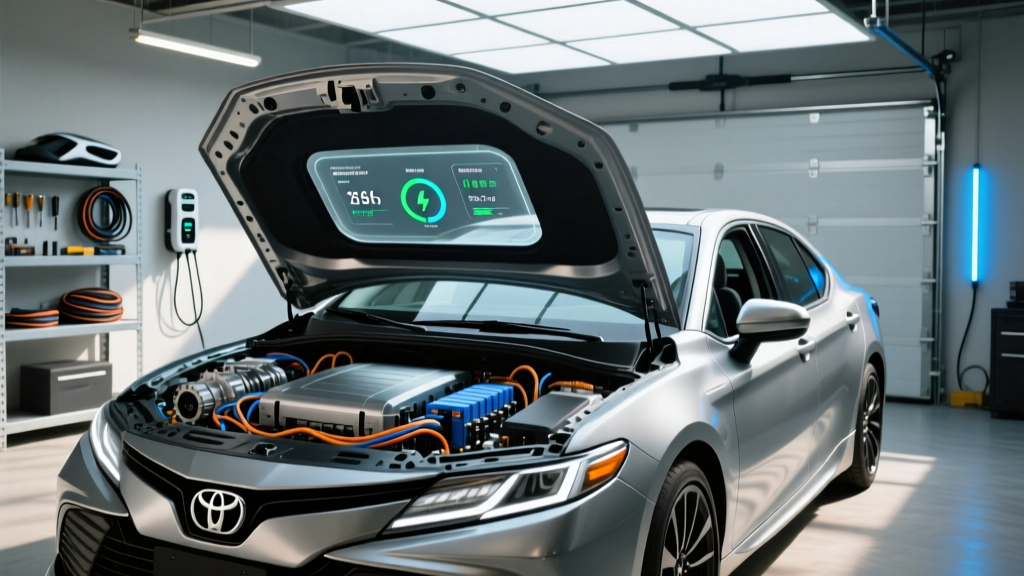
An electric conversion for cars means removing the internal combustion engine, fuel tank, and exhaust system from an existing vehicle and replacing them with an electric motor, battery pack, and power electronics. In 2026, a professional EV conversion typically costs $25,000 to $75,000+ depending on battery capacity and motor selection, yields 80 to 200 miles of real-world range, and takes 3 to 12 months to complete. Most conversions use salvaged or aftermarket battery modules (often 30–80 kWh usable) paired with AC induction or permanent magnet motors producing 100–300 horsepower. The result is a zero-tailpipe-emission classic or daily driver that charges on Level 2 (typically 6.6–11 kW) and, in higher-budget builds, DC fast charging at 50–150 kW.
Bottom line: Conversions make sense for classic car preservation, specialty vehicles, or hobbyists who want a specific chassis electrified. For most buyers simply seeking an affordable EV, a used or new production EV (starting around $28,000 before incentives) remains the more practical, reliable, and warrantied path.
What an Electric Conversion for Cars Actually Includes
A proper EV swap is far more involved than bolting on a motor. Here's what a reputable conversion shop typically delivers:
- Motor and adapter plate: A custom-machined plate mates the electric motor to the existing transmission (in "transmission-retained" builds) or directly to the differential (in direct-drive setups). Common motors include the NetGain Hyper9 (up to 120 kW / 161 hp) and salvaged Tesla Large Drive Units (~270 hp).
- Battery pack: Modules from salvaged Tesla Model S/X packs, Nissan Leaf cells, or aftermarket LFP (lithium iron phosphate) packs from suppliers like KiloWatt or EVTec. Usable capacity ranges from 30 kWh (budget builds) to 80+ kWh (premium builds).
- Battery Management System (BMS): Monitors cell voltage, temperature, and State of Health (SoH). Essential for safety and longevity — never skip this.
- Charger and inlet: Onboard AC charger (typically 3.3–11 kW) with a J1772 inlet. DC fast charging (CCS or NACS) requires additional high-voltage contactors and communication hardware, adding $3,000–$8,000.
- Thermal management: Liquid cooling for battery and motor on higher-end builds; air-cooled on simpler conversions (which limits sustained power and fast-charge capability).
- Instrumentation and controls: Throttle pedal sensor, DC-DC converter (to run the 12V system for lights, wipers, and electronics), and a dashboard display for State of Charge (SoC), power draw, and temperature.
- Safety systems: High-voltage interlock loop, emergency disconnect, and proper cable routing per SAE J1766 and NFPA 70 (NEC Article 625) standards.
Electric Conversion Costs: Full Breakdown
Here's what a realistic budget looks like in 2026, based on quotes from established U.S. conversion shops and DIY build logs:
| Component | Budget Build | Mid-Range Build | Premium Build |
|---|---|---|---|
| Electric motor + controller | $3,000–$5,000 | $5,000–$9,000 | $9,000–$15,000 |
| Battery pack (cells/modules + enclosure) | $8,000–$12,000 | $12,000–$22,000 | $22,000–$40,000 |
| BMS + thermal management | $1,500–$3,000 | $3,000–$6,000 | $6,000–$10,000 |
| Onboard charger + J1772 inlet | $1,000–$2,000 | $2,000–$3,500 | $3,500–$6,000 |
| DC fast-charge hardware (optional) | — | $3,000–$5,000 | $5,000–$8,000 |
| DC-DC converter, wiring, adapters | $1,500–$3,000 | $2,500–$4,000 | $4,000–$7,000 |
| Labor (professional shop) | $8,000–$15,000 | $15,000–$25,000 | $25,000–$40,000 |
| Engineering, fabrication, testing | $2,000–$4,000 | $4,000–$8,000 | $8,000–$15,000 |
| Total parts + labor | $25,000–$44,000 | $46,500–$82,500 | $82,500–$141,000 |
DIY savings: Performing the work yourself can eliminate the $8,000–$40,000 labor line, but requires high-voltage safety training, fabrication skills, and hundreds of hours. A realistic DIY budget for a competent hobbyist: $15,000–$35,000 in parts.
Important caveat: The IRS §30D federal EV tax credit (up to $7,500) applies only to new qualified plug-in electric vehicles purchased from a manufacturer. A custom EV conversion does not qualify for §30D. The used-EV credit (§25E, up to $4,000) also does not apply to conversions. See IRS clean vehicle credit rules for current eligibility details. Some states or local air-quality districts may offer incentives for electrifying older vehicles — check your state energy office.
Range, Charging, and Real-World Performance
Conversion range depends heavily on battery size, vehicle weight, and aerodynamics. A 1970s sedan with a 50 kWh pack will not match a modern Tesla Model 3's efficiency. Here's what to expect:
| Metric | Budget Conversion (30 kWh) | Mid-Range Conversion (60 kWh) | Production EV Example (Hyundai Ioniq 6 SE) |
|---|---|---|---|
| Usable battery | ~28 kWh | ~56 kWh | 74 kWh (NMC) |
| Vehicle weight (added) | +400–700 lbs | +600–1,000 lbs | OEM-optimized |
| Efficiency | 2.5–3.5 mi/kWh | 2.8–3.5 mi/kWh | 4.0 mi/kWh (140 MPGe combined) |
| EPA-equivalent range | 70–100 miles | 150–200 miles | 361 miles EPA |
| Real-world highway range | 55–80 miles | 120–160 miles | ~280–310 miles |
| Cold-weather range (20°F) | 45–65 miles | 90–130 miles | ~220–260 miles |
| 0–60 mph | 8–12 seconds | 5–8 seconds | 5.1 seconds |
| Level 2 charging (240V) | 3.3–6.6 kW (9–17 hrs) | 6.6–11 kW (5–9 hrs) | 10.9 kW (~7 hrs) |
| DC fast charge (10–80%) | Not available (most) | 50–80 kW (~40–55 min) | 235 kW (~18 min) |
Real-world range honesty: Conversions rarely match production EV efficiency because donor vehicles weren't designed for aerodynamics or low rolling resistance. Expect 20–35% less range than a comparably sized production EV with the same battery capacity. Cold weather hits conversions especially hard if the battery lacks active liquid heating — plan for 30–40% range loss below freezing without preconditioning.
Charging at home: Most conversions charge at 3.3–6.6 kW on Level 2, which means overnight charging is sufficient for daily driving within the battery's range. A dedicated 240V / 40A circuit installation runs $500–$2,500 depending on panel capacity and run length. If your home panel is maxed out (common in older homes with 100A service), a panel upgrade to 200A adds $1,500–$3,500. Always consult a licensed electrician for final specs.
Conversion vs. Buying a Production EV: The Honest Comparison
This is the decision most prospective converters face. Here's a data-driven look at both paths:
Choose an Electric Conversion If:
- You own a classic, vintage, or specialty vehicle you want to preserve and drive regularly (e.g., 1965 Mustang, 1973 BMW 2002, 1985 VW Vanagon).
- The vehicle has sentimental or collector value that justifies the investment beyond pure economics.
- You want a unique, one-of-a-kind EV that no one else has.
- You have access to a qualified conversion shop or possess the fabrication and electrical skills for a DIY build.
- Your daily driving needs fit within 80–150 miles and you have reliable home charging.
Choose a Production EV If:
- You need reliable daily transportation with a factory warranty (8 years / 100,000 miles on battery and powertrain is standard).
- You want DC fast charging at 150–350 kW for road trips.
- You need 250+ miles of real-world range and modern safety features (AEB, lane-keep, blind-spot monitoring).
- You want to qualify for the §30D federal tax credit (up to $7,500 for eligible new EVs) or the §25E used-EV credit (up to $4,000).
- You value resale liquidity — production EVs have established market values; conversions are highly illiquid.
Cost-per-mile comparison: A mid-range conversion using $0.13/kWh national-average electricity costs roughly $0.04–$0.05 per mile to "fuel." A comparable gas car at 25 MPG combined and $3.40/gallon costs $0.14 per mile. That's a $0.09–$0.10/mile savings, or about $1,080–$1,200 per year at 12,000 miles annually. At that rate, recouping a $50,000 conversion investment through fuel savings alone would take 42+ years — making clear that conversions are passion projects, not economic optimizations.
Registration, Insurance, and Legal Considerations
Before committing to a conversion, understand the regulatory landscape:
- DMV registration: Most states require a converted vehicle to be re-titled as an electric vehicle. Some states require a special inspection (brake, lighting, and high-voltage safety). California's BAR (Bureau of Automotive Repair) has specific EV conversion certification requirements. Check with your state DMV before starting the build.
- Insurance: Specialty insurers like Hagerty, Grundy, or American Modern can cover converted classics on an agreed-value basis. Standard insurers may decline or undervalue a conversion. Expect premiums of $800–$2,500/year for a converted classic depending on agreed value and usage limits.
- Safety inspections: High-voltage systems must meet SAE and NFPA standards. A poorly executed conversion can be a fire or electrocution risk. Insist on documentation of all HV connections, proper insulation, and a functioning emergency disconnect.
- Emissions testing: Once converted, the vehicle is zero-tailpipe-emission and exempt from smog checks in most jurisdictions — a genuine benefit in states like California, New York, and Colorado.
Common EV Conversion Myths vs. Facts
| Myth | Fact |
|---|---|
| "You can convert any car for under $10,000." | A safe, roadworthy conversion with adequate range starts at $25,000+ professionally. Sub-$10K builds typically use lead-acid batteries with 20–30 mile range and no fast charging — essentially neighborhood electric vehicles, not highway-capable cars. |
| "Converted EVs are just as fast as Teslas." | Most conversions produce 100–200 hp and weigh 400–1,000 lbs more than stock. 0–60 times of 6–10 seconds are typical. Only premium builds with Tesla drive units approach Model 3 performance. |
| "I'll get 300 miles of range." | Unless you're spending $100K+ on a 100+ kWh pack in a lightweight, aerodynamic donor, expect 80–200 miles real-world. Physics limits energy density in a retrofit. |
| "The battery will need replacing in 3 years." | Properly managed lithium-ion or LFP modules (kept between 20–80% SoC, with thermal management) retain 80%+ capacity for 1,000–2,000+ cycles — roughly 100,000–200,000 miles. Salvaged Tesla modules from 2015–2018 are still performing well in 2026. |
| "Conversions qualify for the $7,500 tax credit." | They do not. The §30D credit applies only to new qualified vehicles from registered manufacturers. No conversion shop qualifies as an OEM under current IRS rules. |
| "Any mechanic can do this." | EV conversions require high-voltage safety certification, electrical engineering knowledge, and fabrication skills. General mechanics without EV-specific training should not work on HV systems. |
Is an Electric Conversion for Cars Worth It in 2026?
The honest answer depends entirely on why you want one.
Worth it if: You're electrifying a classic car you already own and love, the vehicle's sentimental or collector value exceeds the conversion cost, and you understand this is a passion project — not a cost-saving measure. A well-executed conversion can make a 50-year-old car reliable, quiet, and daily-drivable in a way that a tired gas powertrain never could.
Not worth it if: You're trying to save money versus buying a used EV. A 2022–2024 Chevrolet Bolt EV on the used market sells for $15,000–$20,000, offers 238–259 miles EPA range, DC fast charging (albeit at a modest 55 kW), a factory battery warranty, and modern safety tech. A used Tesla Model 3 (2021–2023) runs $20,000–$28,000 with 272–358 miles of range and access to the Supercharger network. Neither requires you to spend $40,000+ and wait months for a custom build.
The conversion market in 2026 is maturing. Shops like EV West, Zelectric Motors, and Electric GT have established reputations and documented builds. Turnkey conversion kits for popular platforms (air-cooled VW, classic Porsche 911, early Ford Broncos) are more accessible than ever. But the economics remain clear: conversions are for vehicles where the chassis, the story, or the sentiment is irreplaceable.
How long does an electric car conversion take?
Professional shops typically quote 3–8 months from deposit to delivery, depending on parts availability and build complexity. DIY builds can take 6–18 months of weekends and evenings. Supply-chain delays on specific battery modules or motor controllers can add weeks.
What's the best donor car for an EV conversion?
Ideally, a lightweight, simple, manual-transmission vehicle with good parts availability. Popular choices in 2026 include the VW Beetle/Bus, Porsche 914/911, Datsun 240Z/280Z, 1965–1970 Ford Mustang, BMW 2002, and Fiat 124 Spider. Lighter vehicles require smaller (cheaper) battery packs for the same range.
Can I keep the manual transmission in an EV conversion?
Yes. Many conversions retain the original manual gearbox, using an adapter plate to mate the electric motor to the bell housing. You typically drive in 2nd or 3rd gear for around-town use and shift to higher gears for highway speeds. Some builders use a fixed-ratio reduction gear for simplicity.
Will an EV conversion increase my car's value?
For desirable classics (early Porsche 911, air-cooled VW, iconic American muscle), a quality conversion can maintain or modestly increase value among the right buyers. For common vehicles, the conversion cost rarely recoups at resale. Converted vehicles are illiquid — expect a smaller buyer pool than a stock classic or a production EV.
Is it safe to drive a converted electric car?
When performed by a qualified shop following SAE J1766, NFPA 70, and applicable FMVSS standards, converted EVs are safe for road use. Key safety requirements include a high-voltage interlock loop, emergency disconnect switch, proper HV cable shielding, and crash-safe battery mounting. Avoid shops that cannot document their safety protocols.
Can I add DC fast charging to a conversion?
Yes, but it adds $3,000–$8,000 and requires a CCS or NACS inlet, additional contactors, and a BMS capable of communicating with the charger. Peak charge rates of 50–80 kW are realistic for most conversions; matching a production EV's 200+ kW rate requires an expensive, high-C-rate battery pack and advanced thermal management.