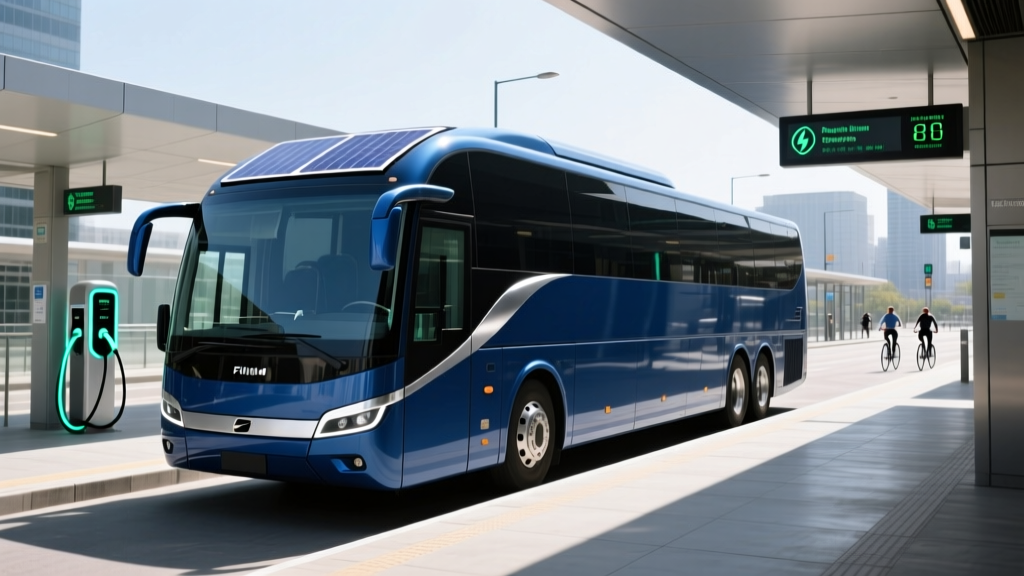
Quick Answer: Electric coach bus partnerships—where transit agencies, private fleets, and school districts collaborate with OEMs like Proterra, New Flyer (Xcelsior CHARGE), Blue Bird, and Lion Electric to deploy battery-electric buses—typically involve 250–350 kWh battery packs, 150–250 miles of real-world range, and DC fast charging at 150–350 kW. While the upfront cost runs $900,000–$1.4 million per vehicle (versus $500,000–$650,000 for a diesel coach), total cost of ownership over 12 years can be $200,000–$400,000 lower per bus when fuel savings, reduced maintenance, and federal/state grants are factored in. The right partnership depends on your route profiles, depot charging access, and local utility rate structures.
What Electric Coach Bus Partnerships Actually Mean for Fleet Buyers
When a transit authority or private operator says they're entering an "electric coach bus partnership," they're typically signing a multi-year procurement and support agreement that covers far more than just the vehicle. These agreements bundle the battery-electric bus (BEB), depot or en-route charging infrastructure, workforce training, telematics software, and long-term battery warranty support into a single contract.
The major OEM players in 2026 include:
- New Flyer Xcelsior CHARGE NG — 40-ft and 60-ft articulated models with up to 525 kWh of NMC battery capacity
- Proterra ZX5 — up to 738 kWh battery option, targeting the longest-range Class 8 transit application
- Lion Electric LionC — purpose-built school and coach bus with 210 kWh usable LFP chemistry
- Blue Bird Vision Electric — school bus segment, 155 kWh pack, ~150-mile range
- BYD K-series — available in select US markets with LFP blade battery architecture
Partnerships often involve a phased rollout: 5–10 pilot units in year one, infrastructure buildout in years one through two, and scaled procurement in years three through five. This is fundamentally different from buying a diesel coach, where the fueling infrastructure (diesel depots) already exists and the vehicle is a standalone capital purchase.
Range, Battery, and Charging: The Numbers That Matter
Range is the single most scrutinized metric in any electric coach bus partnership negotiation—and the one most prone to misunderstanding. OEM-stated range figures are typically derived from EPA or SAE J2982 testing cycles that may not reflect your actual route topography, passenger load, HVAC usage, or climate.
| Model | Battery (kWh usable) | Chemistry | Stated Range (mi) | Real-World Range (mi) | Peak DC Charge (kW) | 10–80% Charge Time |
|---|---|---|---|---|---|---|
| New Flyer Xcelsior CHARGE NG (40-ft) | 350–525 | NMC | 200–300 | 150–240 | 350 | ~55–80 min |
| Proterra ZX5 (40-ft) | 440–738 | NMC | 250–329 | 190–270 | 350 | ~60–95 min |
| Lion Electric LionC | 210 | LFP | 175 | 120–155 | 150 | ~50–65 min |
| Blue Bird Vision Electric | 155 | LFP | 150 | 100–130 | 150 | ~45–60 min |
| BYD K8M | 391 | LFP (Blade) | 250 | 180–220 | 200 | ~65–80 min |
Real-World Range Reality: A 40-foot electric coach with a 350 kWh pack rated at 250 miles will typically deliver 190–220 miles in moderate climates with full passenger loads and HVAC running. In cold-weather markets (below 20°F), expect a 25–40% range reduction—bringing that same bus down to 150–170 usable miles. Route planners should spec battery capacity for the worst-case day, not the average day.
Charging Infrastructure: The Hidden Half of the Partnership
Unlike diesel coaches that refuel in 10 minutes at an existing pump, electric coaches require depot charging infrastructure that can cost $50,000–$150,000 per stall, depending on power delivery requirements. A 150 kW DC fast charger for a single bus stall may require a new utility transformer, switchgear upgrades, and trenching for conduit runs.
| Charging Method | Power (kW) | Miles Added per Hour | Typical Use Case | Infrastructure Cost per Stall |
|---|---|---|---|---|
| Level 2 AC (J1772/CCS AC) | 19.2–25 | 8–12 | Overnight depot top-off | $15,000–$35,000 |
| DC Fast (CCS1) | 60–150 | 30–70 | Depot opportunity charging | $60,000–$120,000 |
| High-Power DC (CCS/MCS) | 150–350 | 70–160 | En-route / layover charging | $100,000–$200,000 |
| Pantograph (overhead) | 150–450 | 70–200 | On-route top-up at terminals | $200,000–$500,000 |
Most fleet partnerships structure charging as either depot-only (overnight Level 2 or DC charging at the bus barn) or depot + en-route (overnight base charge plus midday opportunity charging at transit centers). The depot-only model works for routes under 180 miles; en-route charging is essential for longer blocks or high-frequency service.
Electric Coach vs. Diesel Coach: Total Cost of Ownership
The sticker price of an electric coach bus is 1.5× to 2.5× that of a comparable diesel coach. But fleet procurement decisions increasingly rely on total cost of ownership (TCO) over the vehicle's 12–15 year service life. Here's how the numbers break down for a typical 40-foot transit coach running 45,000 miles per year.
| Cost Category | Diesel Coach (Clean Diesel) | Electric Coach (BEB) | Notes |
|---|---|---|---|
| Vehicle Purchase | $550,000–$650,000 | $900,000–$1,200,000 | BEB premium driven by battery cost |
| Charging/Fueling Infrastructure (allocated per bus) | $5,000–$15,000 | $60,000–$150,000 | Depot charger + utility upgrades |
| Fuel/Energy (12 yrs @ 45k mi/yr) | $450,000–$600,000 | $120,000–$220,000 | Based on $3.80/gal diesel vs. $0.12–0.18/kWh |
| Maintenance (12 yrs) | $180,000–$250,000 | $80,000–$130,000 | No oil, filters, DEF, fewer brake jobs (regen) |
| Battery Replacement (mid-life) | N/A | $0–$180,000 | Most OEMs warranty 12 yrs; replacement if out of warranty |
| Federal/State Incentives | $0 | –$150,000 to –$400,000 | EPA Clean School Bus, FTA Low-No grants, state HVIP programs |
| Total 12-Year TCO | $1,185,000–$1,515,000 | $1,010,000–$1,430,000 | BEB breaks even or saves $100k–$400k |
The energy savings are substantial. A diesel coach averaging 4.5 MPG burning fuel at $3.80/gallon costs roughly $0.84/mile in fuel. An electric coach consuming 2.1 kWh/mile at $0.14/kWh (a blended commercial rate) costs $0.29/mile—a 65% per-mile energy reduction. Over 540,000 miles (12 years at 45,000 miles/year), that's a $300,000+ fuel savings.
Maintenance Savings Are Real but Not Unlimited
Electric drivetrains eliminate engine oil changes, diesel particulate filter (DPF) regeneration, selective catalytic reduction (SCR/DEF) fluid, transmission overhauls, and roughly 70% of brake pad replacements thanks to regenerative braking. However, fleets should budget for:
- Thermal management system service (coolant loops for battery and power electronics)
- High-voltage cable inspection and connector maintenance
- HVAC compressor and heat pump service (critical for range preservation)
- Suspension and steering components (same wear as diesel coaches)
Grants, Incentives, and Funding Structures
The economics of electric coach bus partnerships hinge significantly on available public funding. Unlike the IRS §30D consumer tax credit that applies to light-duty EVs, heavy-duty electric buses tap into different incentive pools:
Key Funding Sources for Electric Coach Buses (2026):
- EPA Clean School Bus Program — Up to $375,000 per electric school bus + $20,000 for charging infrastructure; prioritized for high-need districts
- FTA Low-No Emission Vehicle Program — Competitive grants covering up to 85% of vehicle cost and 90% of infrastructure for transit agencies
- State HVIP / Voucher Programs — California's Hybrid and Zero-Emission Truck and Bus Voucher Incentive Program offers $120,000–$300,000 per Class 8 BEB; similar programs in New York, New Jersey, Colorado
- IRS §45W Commercial Clean Vehicle Credit — Up to $40,000 per vehicle for qualified commercial electric vehicles over 14,000 lbs GVWR
- Utility Make-Ready Programs — Many IOUs cover the utility-side infrastructure cost (transformer, service drop) for depot charging, saving $50,000–$150,000 per site
These incentives can reduce the effective purchase price of an electric coach by 30–60%, fundamentally changing the TCO equation. However, grant funding is competitive, time-limited, and often requires 12–18 months of lead time in the procurement cycle. Smart fleet operators build grant application timelines into their partnership agreements.
Common Misconceptions About Electric Coach Buses
| Myth | Fact |
|---|---|
| "Electric buses can't handle cold weather routes." | Modern BEBs with heat pump HVAC and battery preconditioning lose 25–35% range at 0°F—but fleets in Duluth, MN and Anchorage, AK operate them year-round by oversizing battery packs and using depot preheating. |
| "Charging takes too long for transit schedules." | Overnight depot charging (8–10 hours on Level 2) handles most daily blocks. For high-utilization routes, 150–350 kW DC opportunity chargers add 30–80 miles in 15–25 minutes during layovers. |
| "The battery will need replacing every 5 years." | Current NMC and LFP packs are warrantied for 12 years or 300,000–500,000 miles at 70–80% capacity retention. Real-world degradation data from early-adopter fleets shows 1.5–2.5% annual loss, suggesting 80%+ SoH at year 10. |
| "The grid can't handle depot charging for 50 buses." | Utility coordination and managed charging software (staggered start times, demand-response integration) can keep peak demand within existing feeder capacity. Most utilities offer commercial EV rate schedules with favorable off-peak pricing. |
| "Electric coaches are heavier, reducing passenger capacity." | While BEBs carry 2,000–5,000 lbs of battery, OEMs have optimized chassis design. Most 40-ft models maintain the same seated+standing capacity as diesel equivalents within federal bridge-formula weight limits. |
Decision Framework: Is an Electric Coach Bus Partnership Right for Your Fleet?
Use this framework to evaluate whether to pursue an electric coach bus partnership:
Choose an electric coach partnership IF:
- Your average daily route blocks are under 200 miles (or under 160 miles in cold climates)
- You have depot space with access to three-phase utility power (or can negotiate a utility make-ready program)
- Your fleet operates in a state or metro with active HVIP/voucher incentive programs
- You're replacing 5+ buses in the next procurement cycle (making infrastructure investment worthwhile per unit)
- Your community has air-quality mandates or zero-emission fleet commitments with 2030–2035 deadlines
- Your electricity rates are below $0.18/kWh blended or you can negotiate off-peak depot charging rates below $0.10/kWh
Stay with diesel, CNG, or hybrid for now IF:
- Your routes regularly exceed 250 miles per day with no en-route charging opportunity
- Your depot lacks utility capacity and the local utility quotes 3+ years for a feeder upgrade
- You're in a rural area with no state incentive programs and electricity rates above $0.22/kWh
- You need to replace only 1–2 buses and cannot justify the infrastructure investment per unit
- Your operation requires intercity coach service with no layover charging infrastructure along the corridor
Consider a hybrid or fuel-cell bridge strategy IF:
- Your routes are 200–350 miles and you cannot install en-route fast chargers within your procurement timeline
- You operate in extreme cold (–20°F or below) where battery range loss exceeds 40% and passenger comfort is non-negotiable
- Hydrogen fueling infrastructure exists or is planned in your operating area (fuel-cell electric buses from New Flyer and Van Hool offer 300+ mile range with 10-minute refueling)
What First-Time Electric Fleet Buyers Should Know
Transitioning from diesel to electric coaches is not a vehicle swap—it's a systems change. Here are the practical realities that experienced fleet managers wish they'd known before signing their first BEB partnership:
1. Start with route analysis, not vehicle specs. Use GPS telematics data from your existing diesel fleet to map actual daily mileage, dwell times, and energy demand by route. Tools like NREL's DRIVE Cycle simulation can model energy consumption for specific routes before you commit to a battery size.
2. Engage your utility on day one. Depot charging for 20+ buses may require a dedicated feeder or substation upgrade. Utility planning cycles run 12–36 months. If you wait until the buses arrive to think about power delivery, you'll be parking brand-new electric coaches in a lot with nowhere to plug them in.
3. Negotiate battery warranty terms carefully. The battery represents 35–50% of the vehicle cost. Ensure your partnership agreement specifies capacity retention thresholds (e.g., 80% SoH at year 10 or 400,000 miles), replacement obligations, and performance guarantees under your specific climate and usage conditions.
4. Budget for workforce training. Your maintenance technicians need high-voltage safety certification (NFPA 70E), OEM-specific diagnostic training, and new tooling. Budget $5,000–$15,000 per technician for initial training and recertification.
5. Plan for charging software. Managed charging platforms (e.g., ChargePoint, Tritium Fleet, Amply Power) optimize charge scheduling to minimize demand charges and align with off-peak utility rates. This software typically costs $50–$200 per vehicle per month but can save $2,000–$5,000 per bus per year in electricity costs.
Frequently Asked Questions
How long does an electric coach bus battery last before replacement?
Most OEM battery warranties cover 12 years or 300,000–500,000 miles with guaranteed capacity retention of 70–80%. Real-world fleet data from early adopters (LACMTA, King County Metro, NYC MTA) suggests annual degradation of 1.5–2.5% for NMC chemistry and 1.0–1.8% for LFP chemistry. Most packs will still be functional at year 12 but may need replacement for continued full-route service.
Can electric coach buses tow or handle steep grades?
Electric motors deliver peak torque from zero RPM, making BEBs strong hill-climbers. The Proterra ZX5 and New Flyer CHARGE NG handle 6–8% grades at full passenger load without issue. However, sustained climbing draws significant energy—mountainous routes may see 30–40% higher kWh/mile consumption, which must be factored into battery sizing.
What happens if a bus runs out of charge mid-route?
Unlike a diesel bus that can be rescued with a $50 fuel delivery, a depleted BEB requires a flatbed tow or a mobile DC charger (some fleets keep a portable 30–50 kW unit on a service truck). Operational planning—conservative state-of-charge thresholds, driver training on energy-efficient driving, and real-time telematics monitoring—virtually eliminates mid-route stranding.
Do electric coach buses qualify for the $7,500 federal EV tax credit?
No. The IRS §30D credit applies only to light-duty vehicles under 14,000 lbs GVWR. Electric coach buses (typically 26,000–40,000+ lbs GVWR) qualify instead for the §45W Commercial Clean Vehicle Credit (up to $40,000 per vehicle) plus the grant and voucher programs described above. Consult a tax professional for eligibility specifics.
How does charging cost compare to diesel fuel for a coach bus?
At a blended commercial electricity rate of $0.14/kWh and an efficiency of 2.1 kWh/mile, an electric coach costs roughly $0.29/mile in energy. A diesel coach at 4.5 MPG and $3.80/gallon costs $0.84/mile. That's a $0.55/mile savings—roughly $24,750 per year at 45,000 annual miles. Over 12 years, energy savings alone exceed $297,000 per bus.