Quick Verdict: The Refreshed Benchmark
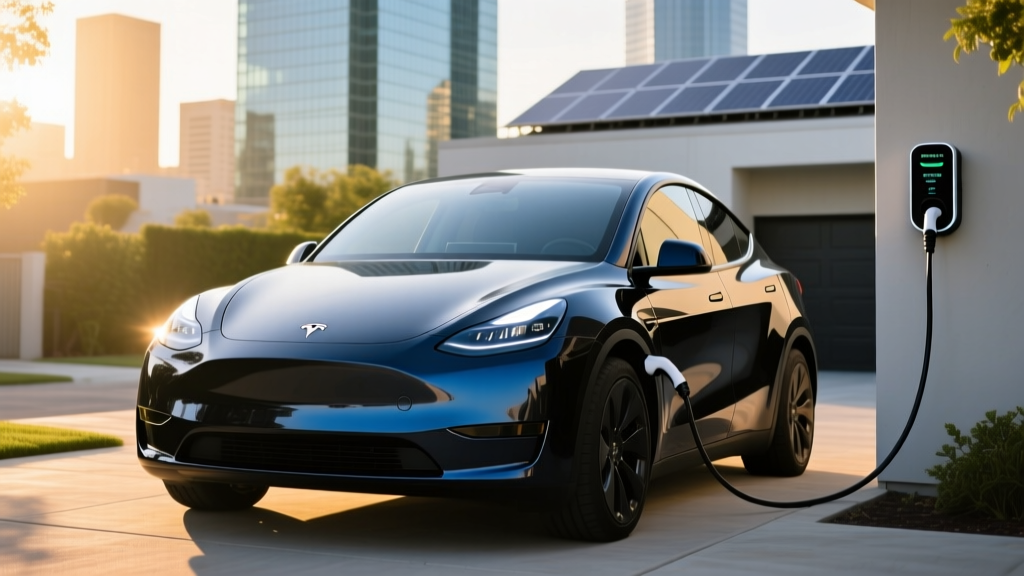
The Tesla Model Y remains the best-selling electric vehicle in the United States for good reason, and the 2027 Tesla Model Y refresh sharpens an already formidable package. Following the "Juniper" interior and exterior overhaul introduced for the 2025 model year, the 2027 iteration brings incremental but meaningful upgrades: a slightly larger battery pack pushing EPA range past 320 miles, a revised heat pump for better cold-weather efficiency, and standard ambient lighting and ventilated seats across all trims. It is not a ground-up reinvention — it is Tesla tightening the screws on competitors who have been closing the gap.
For buyers cross-shopping the Hyundai Ioniq 5, Ford Mustang Mach-E, and upcoming Chevrolet Equinox EV, the 2027 Model Y still offers the most complete package: Supercharger network access, class-leading cargo space, and over-the-air updates that keep adding features post-purchase. But it is no longer the undisputed default. Let's break down exactly what you get, what it costs, and where the real-world numbers diverge from the spec sheet.
Range and Efficiency: EPA vs. Reality
The 2027 Tesla Model Y Long Range AWD carries an EPA-estimated range of 320 miles on a full charge, up from 308 miles on the pre-refresh Long Range. This improvement comes from a combination of a slightly larger usable battery capacity (approximately 79 kWh, up from ~75 kWh), improved aerodynamic drag coefficient, and a more efficient drive unit. The Performance trim, with its stickier tires and sportier tuning, drops to an EPA-estimated 285 miles.
EPA Sticker: 320 miles (Long Range AWD) / 285 miles (Performance)
Highway driving (70-75 mph, moderate temps): Expect ~260–280 miles before needing to charge. EVs are least efficient at sustained highway speeds where there is no regenerative braking to recapture energy.
Cold weather (below 32°F): Plan for 20–30% range reduction, bringing usable range down to roughly 220–250 miles. The revised heat pump helps, but physics is physics — battery chemistry slows and cabin heating draws significant power.
City/commuter driving (moderate temps): You can approach or even slightly exceed the EPA figure thanks to frequent regen opportunities. Owners regularly report 310–330 miles in stop-and-go conditions.
Efficiency is rated at approximately 122 MPGe combined (Long Range), translating to roughly 27 kWh per 100 miles — competitive with the Ioniq 5 AWD but slightly behind the RWD Ioniq 5's class-leading efficiency. For context, that means a full charge costs roughly $8–$12 on a national-average residential electricity rate of $0.16/kWh.
Charging Speed: Home and DC Fast Charging
Tesla's charging story remains one of its strongest competitive advantages, both because of the Supercharger network and the vehicle's charge management software.
| Charging Level | Power / Rate | Speed | Notes |
|---|---|---|---|
| Level 1 (120V household) | ~1.4 kW | ~4 miles/hour | Emergency/trickle only; full charge takes days |
| Level 2 (240V home/public) | 11.5 kW (48A) | ~34 miles/hour | Full charge in ~7 hours; ideal overnight setup |
| DC Fast Charge | Peak 250 kW | 10–80% in ~25 min | Peak rate held to ~50% SoC, then tapers; preconditioning critical |
A few practical notes on charging the 2027 Model Y:
- Preconditioning matters. Navigate to a Supercharger using the built-in nav and the car will warm the battery en route, enabling peak charge rates on arrival. Cold-soak the battery and your first 10 minutes of charging may be limited to 40–60 kW.
- The charge curve tapers hard above 80%. While 10–80% takes roughly 25 minutes, going from 80–100% can add another 20+ minutes. For road trips, charge to 80% and move on — it is faster overall.
- NACS connector is native. The Model Y uses Tesla's North American Charging Standard (NACS) plug. With the industry-wide adoption of NACS by Ford, GM, Rivian, and others, Tesla owners now share Supercharger stalls with a growing number of non-Tesla EVs — which can mean longer wait times at popular corridors during peak travel.
- Home Level 2 installation typically costs $500–$2,000 depending on panel capacity and run length. Tesla's Wall Connector retails for ~$475 and is a solid, reliable unit. If your home has a 200A electrical panel with spare capacity, installation is straightforward. Older 100A panels may require a $1,500–$3,000 panel upgrade — factor this into your purchase budget.
Performance and Drivetrain
The 2027 Model Y continues to offer two primary powertrain configurations:
| Specification | Long Range AWD | Performance |
|---|---|---|
| Drivetrain | Dual-motor AWD | Dual-motor AWD |
| Horsepower | ~384 hp | ~456 hp |
| 0–60 mph | 4.8 seconds | 3.5 seconds |
| Top Speed | 135 mph | 155 mph |
| EPA Range | 320 miles | 285 miles |
| Battery (usable) | ~79 kWh, NMC | ~79 kWh, NMC |
| Towing Capacity | 3,500 lbs | 3,500 lbs |
The Long Range is the sweet spot for most buyers. A 4.8-second 0–60 time is quicker than most drivers will ever need, and you gain 35 miles of range over the Performance. The Performance trim's track mode, lowered suspension, and 21-inch wheels are genuinely fun on a canyon road, but the trade-off in ride comfort and range is significant for daily driving.
One-pedal driving via regenerative braking remains excellent in the Model Y. Tesla's regen tuning is among the smoothest in the industry, allowing true single-ped operation in most city and suburban driving. The brake pedal feel has improved post-refresh with a more linear response, addressing a common complaint from pre-2025 models.
Interior, Tech, and Cargo
The Juniper refresh transformed the Model Y from a minimalist interior that some found spartan to one that feels genuinely premium. Key improvements carried into the 2027 model year include:
- Ventilated front seats (now standard on all trims — a major quality-of-life upgrade for warm climates)
- Ambient lighting integrated across the dashboard and door panels
- Rear-seat touchscreen (8-inch) for climate and entertainment control
- Improved sound insulation — cabin noise at highway speeds is noticeably reduced vs. pre-2025 models
- Power-folding second row accessible from the cargo area
Cargo volume: 30.2 cubic feet behind the second row, expanding to 72.1 cubic feet with the second row folded. The front trunk (frunk) adds approximately 4.1 cubic feet. This remains class-leading for the compact electric SUV segment — the Ioniq 5 offers 27.2 cu ft rear / 59.3 cu ft total, and the Mach-E provides 29.7 / 59.7 cu ft.
Passenger space: Front legroom is generous at 41.8 inches. Rear legroom measures 41.6 inches — adequate for adults on longer trips, though the sloping roofline cuts into headroom for passengers over 6 feet tall. Three-across seating in the rear is tight for adults but works for children.
Infotainment: The 15.4-inch center touchscreen runs Tesla's proprietary OS, which remains the most responsive and feature-rich system in the EV market. Navigation, streaming, gaming, and vehicle controls are all integrated. Wireless Apple CarPlay and Android Auto are not supported — Tesla's ecosystem is intentionally closed. If you rely heavily on phone-mirroring, this is a genuine drawback.
Driver Assistance: Autopilot and FSD (Supervised)
Tesla Autopilot and Full Self-Driving (Supervised) are SAE Level 2 driver-assistance systems. This means the driver must remain fully attentive, keep hands on the wheel (or demonstrate attentiveness via the cabin camera), and be prepared to take over at any moment. These are not self-driving systems. Only Level 4 services like Waymo operate without a human driver — and those are limited to geofenced urban areas in select cities.
Standard Autopilot includes Traffic-Aware Cruise Control and Autosteer (lane-centering). It works well on divided highways and in stop-and-go traffic, though it can be overly cautious with phantom braking — a persistent Tesla quirk that has improved but not disappeared.
Full Self-Driving (Supervised), available as a $8,000 one-time purchase or $99/month subscription, adds automated lane changes, navigation-guided on/off-ramp transitions, traffic light and stop sign recognition, and a more assertive driving style. In our testing, FSD (Supervised) handles well-marked suburban and highway routes competently but requires constant vigilance in construction zones, faded lane markings, and complex intersections. It is a useful assist on long road trips — not a replacement for an attentive driver.
- It does not drive you while you sleep, text, or look away from the road
- It does not handle all weather conditions — heavy rain, snow, and fog degrade performance
- It does not eliminate the need for driver insurance and liability
- It is not available in all jurisdictions — check local regulations
Pricing, Trims, and Federal Tax Credit
| Trim | Base MSRP | Est. After §30D Credit | Credit Eligible? |
|---|---|---|---|
| Long Range AWD | $44,990 | ~$37,490* | Yes (if sourcing rules met) |
| Performance | $48,990 | ~$41,490* | Yes (if sourcing rules met) |
*Estimated price assumes full $7,500 federal tax credit. Actual eligibility depends on buyer income, battery sourcing, and point-of-sale transfer rules. See IRS §30D guidelines for current-year requirements.
- MSRP cap: SUVs must be under $80,000 — both Model Y trims qualify
- Buyer income cap: AGI must not exceed $150,000 (single), $225,000 (head of household), or $300,000 (joint)
- Battery sourcing: A percentage of critical minerals and battery components must be sourced from the U.S. or FTA partners. Tesla has been working to localize supply chains, but eligibility can shift — verify at fueleconomy.gov before purchasing
- Point-of-sale transfer: As of 2024+, buyers can transfer the credit to the dealer at purchase, reducing the upfront price rather than waiting for a tax refund. This is available for the Model Y if all requirements are met
Warranty and Ownership Costs
Tesla's warranty coverage for the 2027 Model Y:
- Basic vehicle: 4 years / 50,000 miles
- Battery and drive unit: 8 years / 120,000 miles (Long Range and Performance, with a minimum 70% capacity retention guarantee)
The battery warranty is competitive but not class-leading — Hyundai backs the Ioniq 5's battery for 10 years / 100,000 miles. However, Tesla's real-world degradation data is reassuring: fleet data consistently shows Model Y batteries retaining approximately 90% capacity at 100,000 miles when charged primarily on Level 2 and kept between 20–80% SoC for daily use. The NMC chemistry in the Long Range and Performance trims benefits from not being regularly charged to 100% — save full charges for road trips.
Insurance costs for the Model Y tend to run 15–25% higher than comparable gas-powered compact SUVs, reflecting higher repair costs and Tesla's proprietary parts ecosystem. Expect annual premiums in the $1,800–$2,600 range depending on your state, driving record, and coverage level. Get quotes before purchasing — this is a real ownership cost that surprises some buyers.
Maintenance is minimal: no oil changes, no spark plugs, brake pads last significantly longer due to regen, and cabin air filter replacement every 2–3 years. Tire rotation every 6,000–8,000 miles is the primary recurring service. Budget roughly $400–$600/year for maintenance, primarily tires (EVs are heavier and wear tires faster than gas equivalents).
Who Should Buy the 2027 Tesla Model Y?
- You want access to the Supercharger network for hassle-free road trips (though non-Tesla EVs are gaining access, Tesla vehicles still have the most seamless plug-and-charge experience)
- Cargo space is a priority — 72+ cu ft with seats folded is best-in-class
- You value over-the-air updates that add features post-purchase
- You want a proven platform with extensive real-world ownership data
- You tow occasionally (3,500-lb capacity handles small boats and utility trailers)
Consider a competitor if:
- You want Apple CarPlay/Android Auto (look at the Ioniq 5 or Mach-E)
- You prefer a more traditional dealership service experience (Tesla's mobile-ranger and service-center model frustrates some owners)
- You want a longer battery warranty (Hyundai's 10-year coverage leads here)
- Ride comfort is paramount — the Model Y's firm suspension transmits more road imperfections than the Ioniq 5 or EV6
- Class-leading cargo volume and practicality
- Supercharger network access with native NACS
- Strong real-world battery degradation data
- Continuous OTA feature improvements
- Excellent one-pedal driving and regen tuning
- Competitive efficiency at 122 MPGe combined
- No Apple CarPlay or Android Auto
- Phantom braking still occurs on Autopilot
- Insurance premiums 15–25% above segment average
- Firm ride quality on rough pavement
- FSD (Supervised) costs $8,000 extra and is not self-driving
- Service experience varies by region — some areas have long wait times
Frequently Asked Questions
What is the real-world range of the 2027 Tesla Model Y?
The EPA estimates 320 miles for the Long Range AWD and 285 miles for the Performance. In real-world highway driving at 70–75 mph, expect roughly 260–280 miles. In cold weather (below freezing), plan for 220–250 miles. City driving with regenerative braking can approach or slightly exceed the EPA figure.
How fast does the 2027 Model Y charge?
On a DC fast charger, the Model Y peaks at 250 kW and can charge from 10–80% in approximately 25 minutes, though the charge rate tapers significantly above 50% state of charge. At home on a Level 2 charger (240V, 48A), it charges at 11.5 kW, adding roughly 34 miles per hour — a full charge takes about 7 hours overnight.
How much does the 2027 Tesla Model Y cost after tax credits?
The Long Range AWD starts at $44,990 MSRP. If you qualify for the full $7,500 federal §30D tax credit (income caps apply, battery sourcing rules must be met), the effective price drops to approximately $37,490. The Performance trim starts at $48,990, or roughly $41,490 after the credit. Verify current eligibility at irs.gov before purchasing, as sourcing requirements can change.
Is the 2027 Model Y worth buying vs. the Hyundai Ioniq 5 or Ford Mustang Mach-E?
The Model Y wins on cargo space, Supercharger access, and software ecosystem. The Ioniq 5 offers a longer battery warranty, faster 800V charging architecture (10–80% in ~18 min on compatible chargers), and Apple CarPlay. The Mach-E provides a more engaging driving experience and traditional dealership service. If road-trip charging convenience and cargo volume are your top priorities, the Model Y is still the strongest choice. If you value warranty, ride comfort, or phone integration, test-drive the Ioniq 5 and Mach-E before committing.
Does the 2027 Tesla Model Y qualify for the federal EV tax credit?
Both trims fall well under the $80,000 SUV MSRP cap. Eligibility then depends on your adjusted gross income (must not exceed $150K single / $300K joint) and whether Tesla's battery components and critical minerals meet the current-year sourcing thresholds. Tesla has been localizing supply chains aggressively, and the Model Y has maintained eligibility through recent rule updates — but always verify at fueleconomy.gov and consult a tax professional for your specific situation.
What battery chemistry does the 2027 Model Y use?
The Long Range and Performance trims use NMC (nickel manganese cobalt) chemistry in a ~79 kWh usable battery pack. NMC offers higher energy density than LFP (lithium iron phosphate), which is why Tesla reserves it for the longer-range models. For daily use, charge NMC batteries to 80–90% and save 100% charges for road trips to maximize long-term battery health.