The Short Answer on the Electric Chevy Camaro
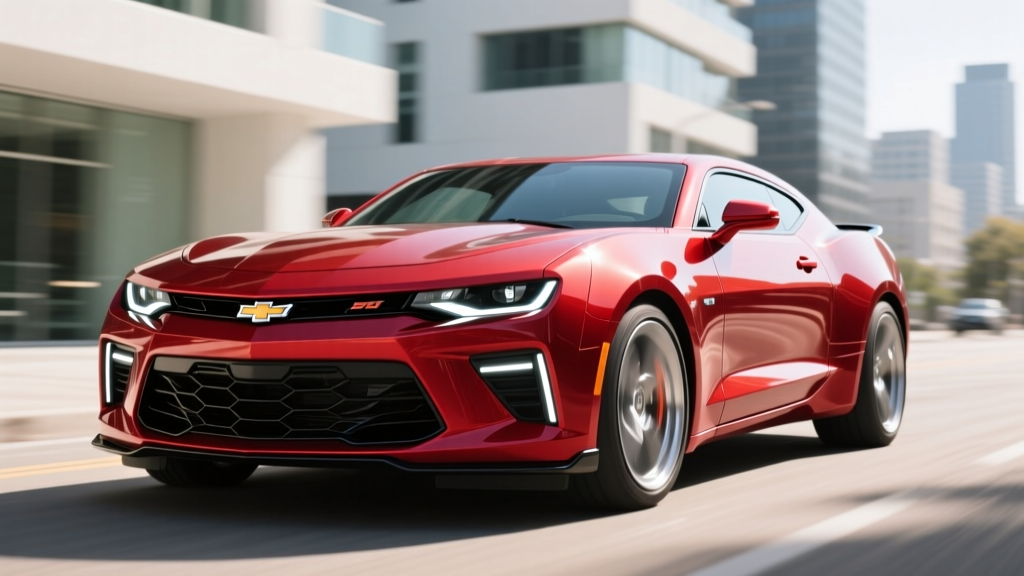
As of early 2026, Chevrolet has not officially released or opened orders for a production electric Chevy Camaro. The sixth-generation Camaro ended production in January 2024, and while GM executives have strongly hinted at an electric successor built on the Ultium platform, no confirmed model-year, pricing, or EPA range figures exist yet. If you're searching for an electric Chevy Camaro to buy today, your closest real options are the Chevrolet Blazer EV SS (557 hp, EPA 279–324 mi range depending on trim) or waiting for an official GM announcement. Any specs circulating online for an "eCamaro" remain preliminary estimates, not buyable reality.
What We Know (and Don't Know) About an Electric Camaro
GM retired the sixth-generation Camaro after the 2024 model year, citing declining sales in a market shifting toward SUVs and crossovers. However, GM President Mark Reuss and other executives have repeatedly stated the Camaro nameplate isn't dead — it's evolving. The brand's commitment to an all-electric lineup by 2035 and the capabilities of the Ultium battery platform make an electric Chevy Camaro a logical next step.
Here's what the Ultium platform can currently deliver based on existing GM EVs:
- Battery options: 85 kWh to 200+ kWh usable capacity (NMC chemistry)
- Power output: Up to 655 hp in current Blazer EV SS configuration; potential for 800+ hp in a performance application
- 0-60 mph: Sub-3.0 seconds achievable (Blazer EV SS targets ~3.4 sec; a lower, lighter coupe could beat that)
- DC fast charging: Up to 190 kW peak on current Ultium architecture, with GM's newer 800V systems targeting 350+ kW
- Platform flexibility: Rear-wheel drive, all-wheel drive, and dual-motor configurations supported
What remains unknown: body style (coupe, sedan, or crossover-coupe), official trim lineup, battery size options, EPA range estimates, MSRP, production timeline, and whether it will carry the Camaro name at all.
How an Electric Camaro Would Compare: EV vs. Gas Muscle
To understand what an electric Chevy Camaro might offer, let's compare the final gas-powered Camaro specs against what the Ultium platform currently delivers in performance applications, plus direct EV competitors:
| Spec | 2024 Camaro SS (Gas, Final Gen) | 2024 Camaro ZL1 (Gas, Final Gen) | 2026 Blazer EV SS (Closest Current Chevy EV) | Ford Mustang Mach-E GT (2025) |
|---|---|---|---|---|
| Horsepower | 455 hp | 650 hp | 557 hp | 480 hp (600 hp w/ Rally) |
| 0-60 mph | 4.0 sec | 3.5 sec | ~3.4 sec | 3.5 sec (3.0 sec Rally) |
| EPA Range / MPG | ~370 mi (19 MPG combined) | ~300 mi (15 MPG combined) | 279 mi (AWD) / 324 mi (RWD) | 280 mi (GT) / 312 mi (Premium RWD) |
| Fuel/Energy Cost per Mile | ~$0.18/mi (gas @ $3.50/gal) | ~$0.23/mi | ~$0.04/mi (home L2) / ~$0.12/mi (DCFC) | ~$0.04/mi (home L2) |
| Estimated Base MSRP | $44,600 (final) | $68,400 (final) | $58,400 | $59,995 |
| Drivetrain | RWD | RWD | AWD (dual motor) | AWD (dual motor) |
| Cargo (cu ft) | 9.1 (trunk) | 9.1 | 25.5 (rear) + 1.5 (frunk) | 29.7 (rear) + 4.7 (frunk) |
Sources: fueleconomy.gov, chevrolet.com, ford.com
The data tells a clear story: EVs deliver supercar-level acceleration at a fraction of the per-mile energy cost, but they trade the long, easy road-trip range of a gas muscle car for charging stops. A gas Camaro SS could cover 370 miles on a $50 fill-up in 5 minutes. An EV equivalent would need a 30-minute DC fast charge stop (adding ~200 miles) on a 350-mile trip — manageable, but a different experience.
Real Costs and Savings: What Ownership Actually Looks Like
Since we can't price a car that doesn't exist, let's model ownership economics using the closest proxy — the 2026 Blazer EV SS — against the final Camaro SS. This gives you a realistic sense of what an electric Camaro would cost to own:
| Cost Category (5-Year / 75,000 Miles) | Camaro SS (Gas, $44,600 MSRP) | Blazer EV SS ($58,400 MSRP) |
|---|---|---|
| Purchase Price (before incentives) | $44,600 | $58,400 |
| Federal Tax Credit (§30D) | $0 | Up to $7,500 (eligibility dependent) |
| Net Purchase Price | $44,600 | $50,900 (if full credit applies) |
| Fuel / Electricity (75k mi) | $13,500 (19 MPG, $3.50/gal) | $3,000 (home L2) / $9,000 (all DCFC) |
| Maintenance (5 years) | $3,200 (oil, brakes, belts, fluids) | $1,100 (cabin filter, tire rotation, wipers) |
| Insurance (avg. 5 years) | $9,500 | $11,200 (EV premium ~15-18%) |
| Depreciation (est. 5 years) | $18,000 | $24,000 (EVs depreciate faster currently) |
| Total 5-Year Cost | $88,800 | $90,200 (home charge) / $96,200 (DCFC) |
The EV saves dramatically on fuel and maintenance, but higher insurance premiums, steeper depreciation, and a higher purchase price (even after the tax credit) keep total costs roughly even over five years. The math improves significantly if you charge at home on off-peak electricity rates and keep the vehicle beyond five years, since EV powertrains have far fewer wear components.
Tax credit reality check: The federal §30D credit of up to $7,500 requires the buyer to meet income caps ($150K single / $300K joint), the vehicle must have an MSRP under $55,000 (sedans/coupes) or $80,000 (SUVs/trucks), and battery components and critical minerals must meet domestic-sourcing thresholds that tighten annually. As of 2026, many GM Ultium vehicles qualify for a partial or full credit, but you should verify current eligibility at IRS.gov before purchasing. The credit can now be transferred to the dealer at point of sale, reducing your out-of-pocket cost immediately.
Home Charging, Climate, and Daily Driving: The Real-World Check
Any electric muscle car lives or dies by your charging situation. Here's what prospective buyers need to confront honestly:
Home Charging Access
If you can install a Level 2 (240V) home charger — typically a 48-amp wallbox on a 60-amp circuit — you'll wake up every morning with a full battery. A typical installation runs $800–$2,000 depending on panel capacity and run length. If your home has a 200-amp panel with spare capacity, you're likely set. Older 100-amp panels may need a $2,000–$4,000 upgrade. Renters and condo dwellers without dedicated parking face a genuine obstacle: relying entirely on public DC fast charging is expensive ($0.30–$0.50/kWh vs. $0.10–$0.15/kWh at home) and adds wear to the battery from sustained high-rate charging.
Cold-Weather Range Loss
EV batteries lose 20–35% of their range in sub-freezing temperatures. An electric Camaro with an EPA-estimated 300 miles of range might deliver only 200–240 miles in a Midwest or Northeast winter. GM's Ultium platform includes active thermal management and a heat pump (on most models), which mitigates but doesn't eliminate this loss. If you live where winters are harsh, plan for a range buffer.
Driving Patterns That Work (and Don't)
EVs excel in stop-and-go commuting (regenerative braking recovers energy), short-to-medium daily drives under 60 miles round-trip, and warm-weather driving. They struggle with frequent 400+ mile road trips (charging stops add time), sustained high-speed driving above 80 mph (aerodynamic drag crushes efficiency), and towing (though a Camaro wouldn't be a tow vehicle).
Common Misconceptions About Electric Muscle Cars
| Myth | Fact |
|---|---|
| "EVs are slow and boring to drive" | Electric motors deliver instant torque. The Blazer EV SS hits 60 mph in ~3.4 seconds — faster than the gas Camaro SS (4.0 sec). A dedicated electric Camaro would likely target sub-3.0 seconds. |
| "The battery will need replacing in a few years" | GM's Ultium batteries carry an 8-year/100,000-mile warranty with a capacity retention threshold (typically 70% of original capacity). Real-world data from millions of EVs shows average degradation of 8–12% over 8 years with normal use. |
| "There's nowhere to charge" | The U.S. now has over 70,000 public charging ports, with GM's agreement giving Ultium EVs access to 17,000+ Tesla Superchargers via NACS adapter. That said, charging deserts remain real in rural areas and along some interstate corridors. |
| "EVs cost more to own, period" | As the cost table above shows, 5-year total costs are roughly comparable. EVs cost more upfront and depreciate faster (currently), but save $8,000–$10,000 on fuel and maintenance over five years. Long-term owners (7+ years) typically come out ahead. |
| "An electric Camaro won't sound or feel like a real Camaro" | This is subjective but valid. No EV replicates the rumble of a 6.2L V8. GM and others are experimenting with synthetic sound profiles, but the visceral exhaust note is gone. What replaces it: silent, violent acceleration that pins you to the seat without a downshift. |
Decision Framework: Should You Wait or Buy Now?
Choose to WAIT for an electric Chevy Camaro if:
- You specifically want a 2-door coupe with Camaro branding and styling
- You're willing to wait 1–3+ years with no guaranteed timeline
- Your current vehicle is running fine and you're not under purchase pressure
- You want to see real-world EPA range and charging data before committing
- You value the emotional connection to the Camaro nameplate
Choose to BUY NOW (Blazer EV SS or competitor) if:
- You want Chevy EV performance today with confirmed specs, warranty, and dealer support
- You need a practical daily driver with real cargo space (25+ cu ft vs. Camaro's ~9 cu ft trunk)
- You want to lock in current §30D tax credit eligibility before sourcing rules tighten further
- You're open to a crossover-coupe form factor that delivers muscle-car acceleration
- You need AWD for four-season driving (the gas Camaro was RWD-only)
Choose a GAS or USED Camaro if:
- You can't install a home charger and public charging is sparse in your area
- You take frequent road trips over 350 miles and don't want to plan charging stops
- You're on a tighter budget — a used 2022–2024 Camaro SS runs $30,000–$42,000
- The V8 sound and manual transmission experience are non-negotiable for you
- You live in extreme cold and need maximum range predictability
What a First-Time EV Buyer Should Know Before Going Electric
If you're considering any electric performance vehicle — whether it's a future electric Camaro, a Blazer EV SS, a Mustang Mach-E GT, or something else — these fundamentals apply:
- kW vs. kWh: Kilowatts (kW) measure power — how fast you charge or how hard the motor pushes. Kilowatt-hours (kWh) measure energy — how much the battery holds. A 100-kWh battery charged at 150 kW doesn't fill in 40 minutes because charging speed tapers as the battery fills.
- Charging curves are real: Peak charge rates (e.g., "190 kW!") only apply between roughly 10–40% state of charge. Above 80%, charging slows dramatically to protect the battery. A "10-80% in 30 minutes" claim is the meaningful number, not peak kW.
- EPA range is a best-case estimate: Expect 80–90% of EPA range in real-world highway driving, and 65–75% in freezing weather. Plan trips around the lower number.
- Install home charging first: Before buying any EV, get a quote from a licensed electrician for a Level 2 (240V, 48-amp) charger installation. If the quote includes a panel upgrade over $3,000, factor that into your total EV budget.
- Verify tax credit eligibility yourself: Don't rely on the dealer. Check IRS.gov for current income caps, MSRP limits, and battery-sourcing requirements. The rules change, and not every EV qualifies for the full $7,500.
- Budget for insurance: EV insurance premiums run 15–25% higher than equivalent gas cars due to higher repair costs and battery replacement risk. Get quotes before you buy.
Frequently Asked Questions
Is Chevy making an electric Camaro for 2026 or 2027?
GM has not officially announced a production electric Camaro as of early 2026. Executives have hinted the nameplate will return in electric form on the Ultium platform, but no model year, specs, or pricing have been confirmed. Treat any leaked specs or renderings as speculative.
What's the closest electric car to a Camaro I can buy today?
The 2026 Chevrolet Blazer EV SS (557 hp, ~3.4-sec 0-60, $58,400 MSRP) is the closest within the Chevy lineup. Beyond Chevy, the Ford Mustang Mach-E GT (480–600 hp, $59,995) and the Dodge Charger Daytona EV (announced, 496–670 hp) are the most direct electric muscle car competitors.
Would an electric Camaro qualify for the $7,500 federal tax credit?
If it's classified as a sedan/coupe, the MSRP must be under $55,000 to qualify — which would be challenging for a performance EV. If GM classifies it differently or prices an entry trim under the cap, it could qualify. The buyer must also meet income limits ($150K single / $300K joint) and the battery must meet critical-mineral and component-sourcing thresholds. Always verify at IRS.gov before purchasing.
How long do EV batteries last in performance cars?
GM covers Ultium batteries with an 8-year/100,000-mile warranty guaranteeing a minimum capacity retention (typically 70% of original). Real-world data from high-mileage EVs shows NMC batteries degrading roughly 1–2% per year under normal use. Performance driving with frequent DC fast charging and deep discharges may accelerate degradation slightly, but modern thermal management systems are robust.
Can I charge an electric Camaro at a Tesla Supercharger?
Yes. GM EVs built from 2025 onward use the NACS (North American Charging Standard) connector natively, giving direct access to Tesla's Supercharger network — over 17,000 stations nationwide. This is a significant advantage over CCS-only EVs, which require adapters for Supercharger access.