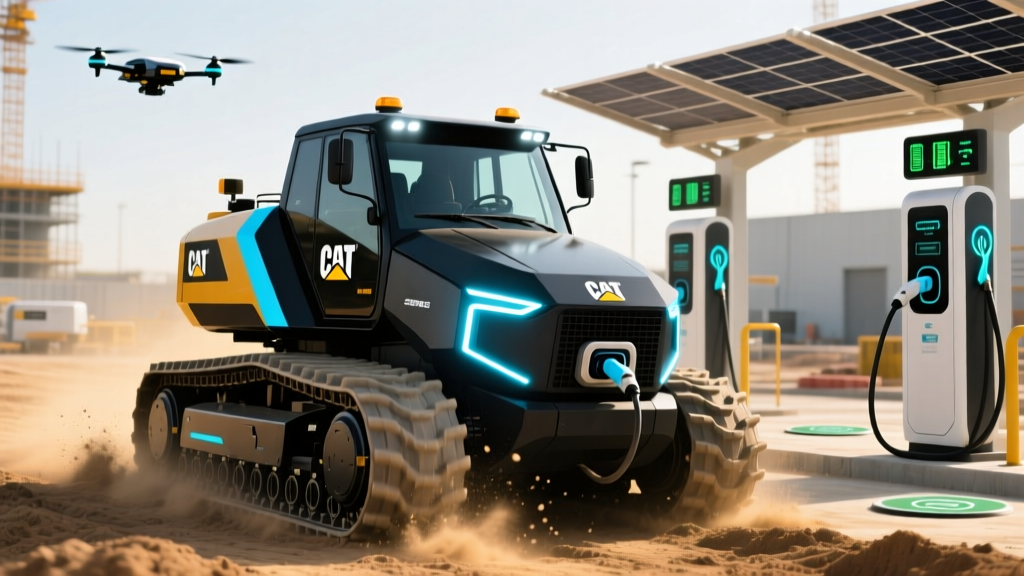
Quick Verdict: Is the Electric Caterpillar Worth the Switch?
For 2026, the transition to an electric Caterpillar (specifically models like the CAT 301.9 Electric and the 323F ZEV) represents a massive shift in operational economics. While the upfront MSRP can be 150–200% higher than a diesel equivalent, the Total Cost of Ownership (TCO) often reaches parity within 3–5 years due to the elimination of diesel fuel ($4.00+/gallon) and a 90% reduction in moving parts. These machines are ideal for urban contractors facing noise ordinances and indoor demolition crews, provided you have access to Level 2 (J1772/CCS) or high-power DC mobile charging infrastructure.
The Economics of Going Electric with CAT
When evaluating an electric Caterpillar against a traditional diesel CAT, the conversation starts with the 'Fuel vs. Electron' spread. In 2026, a mid-size diesel excavator burns roughly 2–4 gallons of diesel per hour. At $4.50/gal, that's $9–$18 per hour in fuel. An electric equivalent consuming 20–30 kWh per hour at an industrial rate of $0.18/kWh costs roughly $3.60–$5.40 per hour.
| Category | Diesel CAT 320 (Baseline) | Electric CAT 320 (ZEV/EV Concept) |
|---|---|---|
| Energy Cost/Hour | $13.50 (3 gal @ $4.50) | $4.50 (25 kWh @ $0.18) |
| Maintenance (Annual) | $3,500 (Filters, DEF, Oil) | $450 (Grease, Cabin Filter) |
| Engine Rebuild (10k hrs) | $15,000+ | $0 (No ICE) |
| Idle Cost | $5.00/hr (Wet Stacking Risk) | $0.50/hr (Electronics/Cab) |
Real-World Range and Battery Chemistry
Unlike consumer EVs, construction equipment measures 'range' in shift-duration. Most 2026 electric Caterpillar models utilize Lithium Iron Phosphate (LFP) battery packs ranging from 50 kWh to 300 kWh. LFP is chosen for its thermal stability and high cycle life (3,000+ cycles), which is essential for the high-C-rate discharges required during heavy digging.
Sticker vs. Site Reality: A 150 kWh battery might provide 6–8 hours of 'mixed duty' (digging, swinging, idling). However, in 'severe duty' (continuous hammering or heavy rock extraction), expect that runtime to drop by 40%. Cold-weather performance in LFP packs also sees a 15–20% loss in efficiency if the thermal management system isn't preconditioned.
Charging Infrastructure: The Site Power Problem
The biggest hurdle for the electric Caterpillar isn't the machine—it's the grid. Most construction sites lack the 480V 3-phase power needed for DC Fast Charging (50kW–150kW). Without a dedicated mobile power unit (like a CAT XE generator), a 200 kWh machine could take 20+ hours to charge on a standard Level 2 connection.
| Level | Power (kW) | Time to 80% (200kWh Pack) |
|---|---|---|
| Level 2 (Industrial) | 19.2 kW | ~10 Hours |
| DC Fast (Mobile) | 50 kW | ~3.5 Hours |
| DC Ultra-Fast | 150 kW | ~1.2 Hours |
Performance: Instant Torque vs. Diesel Lag
Electric motors provide peak torque at 0 RPM. In an excavator, this means faster cycle times and smoother hydraulics. While a diesel engine must 'spool up' to handle a sudden load (leading to 'turbo lag' and fuel waste), the electric Caterpillar responds in milliseconds. This results in a 10–15% increase in productivity for 'stop-and-go' trenching work.
Decision Framework: Should You Buy?
- Choose Electric if: You work in urban centers with strict noise/air quality laws, have a predictable 8-hour shift cycle, and can secure a site with 480V power or a mobile DC charger.
- Stick to Diesel if: You work in remote areas with no grid access, require 12+ hours of continuous high-load operation, or frequently move between sites without towing a high-capacity mobile charger.
Common Misconceptions
| Myth | Fact |
|---|---|
| Electric machines lack digging power. | Electric motors provide more instantaneous torque than diesels at low speeds. |
| Batteries won't last in construction. | LFP packs are rated for 10+ years and are more vibration-resistant than ICE components. |
| You can charge from any site outlet. | Standard 120V/240V outlets are insufficient for daily commercial use; 480V is the standard. |
Frequently Asked Questions
Does the CAT Electric qualify for commercial tax credits?
Yes. Under current IRS rules, the 'Qualified Commercial Clean Vehicle' credit (IRC 45W) can provide up to $40,000 for heavy equipment, though it depends on the specific battery sourcing and your business's tax liability.
How does the weight of the battery affect the machine?
While batteries are heavy, CAT uses them as a 'counterweight' in the design, often eliminating the need for traditional iron counterweights. This keeps the machine's footprint and lifting capacity identical to the diesel version.
What happens if I run out of charge on the job?
Unlike running out of diesel, you cannot simply 'top off' with a jerry can. You must have a mobile DC charging unit or a tow-truck capable of moving a multi-ton machine to a grid connection.