The Short Answer: Yes, You Can Own an EV in a Terraced House
If you live in a terraced house without a private driveway or garage, you can still own an electric vehicle — but your strategy depends entirely on three variables: your weekly mileage, the density of public chargers within a 10-minute walk, and your workplace charging access. In practice, drivers covering under 150 miles per week with access to a reliable DC fast charger (50+ kW) nearby or workplace Level 2 charging spend roughly $30–$55 per week on electricity versus $65–$90 on gasoline for a comparable 28 MPG sedan. The trade-off is convenience: plan for 2–3 charging sessions per week at 25–40 minutes each unless you secure curbside or lamppost charging infrastructure in your neighborhood.
Why Terraced Houses Create a Unique EV Charging Challenge
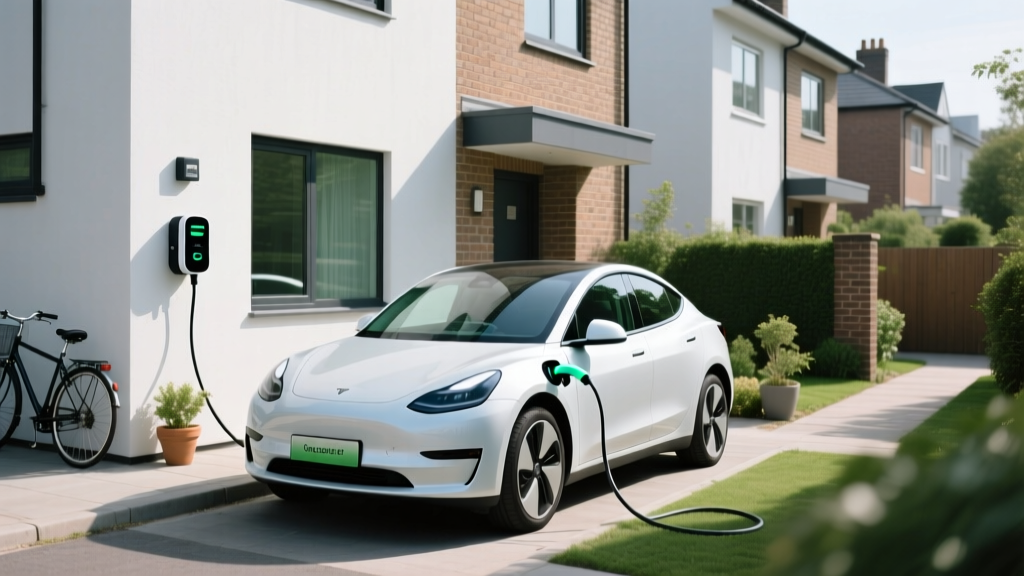
Terraced houses — the attached row homes common in older urban neighborhoods across the US (think Philadelphia, Baltimore, Boston, San Francisco's Victorians, and Chicago's greystones) — typically front directly onto the sidewalk with no off-street parking. That means no garage, no carport, and critically, no dedicated spot to install a Level 2 home charger. According to the US Department of Energy, roughly 80% of EV charging happens at home, which presumes off-street parking that terraced-house residents simply don't have.
This doesn't make EV ownership impossible — it makes it a logistics problem. The solution set includes public DC fast charging, workplace charging, municipal curbside chargers, and creative residential workarounds. Your optimal mix depends on your specific street, commute, and budget.
Your Charging Options Without a Driveway: Costs and Speeds
| Charging Method | Power (kW) | Miles Added/Hour | Typical Cost | Session Time (10–80%) |
|---|---|---|---|---|
| Workplace Level 2 | 7.2–19.2 kW | 25–65 mi/hr | Free–$0.15/kWh | N/A (charge all day) |
| Public Level 2 (curbside/parking garage) | 7.2–19.2 kW | 25–65 mi/hr | $0.20–$0.45/kWh | 4–8 hours |
| Lamppost/curbside Level 2 (municipal) | 3.6–7.2 kW | 12–25 mi/hr | $0.15–$0.30/kWh | 8–14 hours (overnight) |
| DC Fast Charger (50 kW) | 50 kW | ~150–180 mi/hr (peak) | $0.30–$0.55/kWh | 45–70 minutes |
| DC Fast Charger (150+ kW) | 150–350 kW | ~500–900 mi/hr (peak) | $0.35–$0.65/kWh | 18–30 minutes |
| Extension cord from home (Level 1)* | 1.2–1.4 kW | 3–5 mi/hr | $0.12–$0.18/kWh (residential rate) | 24+ hours (not practical for full charge) |
*Level 1 via an extension cord run to the curb is technically possible but presents serious tripping hazards, code violations in most municipalities, and potential liability. Check your local ordinances before considering this.
The key distinction to understand: kW (kilowatts) measures charging power — how fast energy flows into your battery. kWh (kilowatt-hours) measures battery capacity — the total energy stored. A 75 kWh battery charged at 50 kW won't fill in 1.5 hours because charging speed tapers significantly above 80% state of charge (SoC) to protect battery health. Expect real-world 10–80% DC fast-charge sessions to take the times listed above, not the theoretical maximum.
EV vs Gas vs Hybrid: Cost Comparison for Terraced-House Dwellers
Without cheap overnight home charging at residential electricity rates (~$0.14/kWh national average), the cost advantage of an EV narrows — but doesn't disappear. Here's a realistic 5-year comparison for a terraced-house resident driving 12,000 miles/year:
| Vehicle Type | Example Model | Energy/Fuel Cost | 5-Year Total | Per-Mile Cost |
|---|---|---|---|---|
| Gas sedan (28 MPG combined) | Toyota Camry LE | $3.35/gal avg | $7,179 | $0.120/mi |
| EV (public DCFC primary, 3.5 mi/kWh) | Hyundai Ioniq 6 SE | $0.42/kWh avg DCFC | $5,760 | $0.096/mi |
| EV (workplace L2 + DCFC mix) | Hyundai Ioniq 6 SE | $0.22/kWh blended | $3,017 | $0.050/mi |
| HEV hybrid (48 MPG combined) | Toyota Camry Hybrid LE | $3.35/gal avg | $4,188 | $0.070/mi |
| PHEV (30 mi EV + 48 MPG gas) | Toyota Prius Prime SE | Blended $0.28/mi-equiv | $5,200 | $0.087/mi |
Assumes 12,000 miles/year, 2026 national average gas price of $3.35/gal, DCFC average of $0.42/kWh, workplace charging at $0.08/kWh. Source: fueleconomy.gov, AAA fuel price tracker. Your local utility and charging-network pricing will vary.
The data makes one thing clear: an EV charged primarily on public DC fast chargers costs more per mile than a hybrid, but still saves versus a gas-only car. The real savings unlock when you can blend in cheaper workplace or municipal Level 2 charging. If your employer offers free or subsidized workplace charging, an EV becomes the cheapest option by a wide margin.
Real Costs of EV Ownership: Beyond the Charge Cable
Fueling is only one line item. Here's a complete ownership breakdown for a terraced-house EV buyer considering a 2026 Hyundai Ioniq 6 SE (EPA-estimated 361 miles range, 77.4 kWh battery, NMC chemistry):
| Cost Category | 2026 Ioniq 6 SE (EV) | 2026 Camry LE (Gas) |
|---|---|---|
| MSRP (base) | $42,750 | $28,700 |
| Federal §30D tax credit (if eligible) | –$3,750 to –$7,500* | $0 |
| Energy/fuel (5 years, 60k miles) | $3,017–$5,760 | $7,179 |
| Maintenance (5 years) | $1,800 (tires, cabin filter, wipers) | $3,600 (oil, brakes, filters, fluids) |
| Insurance (5-year avg) | $9,500 | $7,200 |
| Estimated 5-year depreciation | $18,500 | $10,800 |
| Total 5-year cost | $31,567–$37,810 | $36,679 |
*Federal §30D tax credit eligibility for 2026 depends on your modified adjusted gross income (AGI caps: $150K single, $300K joint), vehicle MSRP caps ($55K sedans, $80K SUVs/trucks), and battery critical-mineral and component sourcing requirements that tighten annually. Credit can now be transferred to the dealer as a point-of-sale discount. Always verify current eligibility at IRS.gov and consult a tax professional.
Key takeaways from this table:
- Insurance runs 20–35% higher for EVs due to higher repair costs and battery replacement risk. Get quotes before committing.
- Maintenance savings are real — no oil changes, no spark plugs, and regenerative braking extends brake-pad life to 80,000+ miles in typical driving.
- Depreciation remains the wild card. EV resale values have been volatile; the Ioniq 6 has held value better than some competitors, but faster-depreciating EVs can erase your fuel savings.
- The tax credit is not guaranteed. Battery sourcing requirements under §30D disqualified several popular models in 2025–2026. Check the current eligible-vehicle list before purchasing.
Best EV Models for Terraced-House Living in 2026
When you can't charge at home, three vehicle characteristics matter most: large battery (long range between charges), fast DC charging capability, and efficient consumption (more miles per kWh). Here are top picks:
Best Overall: Hyundai Ioniq 6 SE Long Range
- EPA range: 361 miles | Battery: 77.4 kWh (NMC) | Efficiency: 4.0 mi/kWh
- Peak DC charge rate: 240 kW (10–80% in ~18 minutes on a 350 kW charger)
- MSRP: $42,750 | §30D eligible: partial credit ($3,750) as of early 2026
- Why it works: Among the most efficient sedans on the market, meaning you extract more miles per charging session. The 800V architecture means genuinely fast DC sessions — critical when every charge is a public session.
Best SUV: Tesla Model Y Long Range (NACS)
- EPA range: 320 miles | Battery: ~78 kWh (NMC) | Efficiency: 3.6 mi/kWh
- Peak DC charge rate: 250 kW (10–80% in ~22 minutes at a V3/V4 Supercharger)
- MSRP: $46,630 | §30D eligible: $3,750 (sourcing-dependent)
- Why it works: Access to the Tesla Supercharger network — the most reliable and widespread DCFC network in the US with 6,000+ stations. For terraced-house owners who can't risk a broken charger, Supercharger uptime is a decisive advantage.
Budget Pick: Chevrolet Equinox EV 2LT
- EPA range: 319 miles | Battery: 85 kWh (NMC) | Efficiency: 3.5 mi/kWh
- Peak DC charge rate: 150 kW (10–80% in ~30 minutes)
- MSRP: $36,300 | §30D eligible: up to $7,500 (verify current sourcing status)
- Why it works: Lowest entry price with 300+ miles of range. Slower charging than Hyundai or Tesla, but the large battery means fewer sessions per week. A 319-mile EPA range realistically delivers 250–270 highway miles, enough for most drivers to charge just twice weekly.
Real-World Range Reality Check: EPA estimates assume a mix of city and highway driving at moderate temperatures. Expect to lose 15–30% of rated range in sustained highway driving at 75+ mph, and an additional 20–35% in freezing temperatures (below 32°F) due to battery chemistry limitations and cabin heating demands. A 361-mile EPA rating might deliver 240–260 real highway miles in winter. Plan your charging frequency around your worst-case range, not the sticker number.
Decision Framework: Should You Buy an EV in a Terraced House?
If-Then EV Decision Guide for Terraced-House Residents
IF you have workplace Level 2 charging (free or subsidized)
THEN buy a battery electric vehicle (BEV). You'll charge during work hours at the cheapest rates and rarely need public DCFC. Choose any EV with 250+ miles range. This is the ideal terraced-house EV scenario.
IF you have no workplace charging BUT there are 2+ reliable DC fast chargers (150+ kW) within a 10-minute walk
THEN buy a BEV with fast-charge capability (800V architecture preferred: Ioniq 5/6, Kia EV6/EV9, Porsche Taycan, Tesla). Budget $130–$200/month for public charging. Plan 2 sessions per week of 20–35 minutes each.
IF your neighborhood has municipal lamppost or curbside Level 2 chargers
THEN a BEV works well. These chargers are slow (3.6–7.2 kW) but ideal for overnight parking. An 8-hour overnight session adds 30–60 miles — enough for most daily commutes. Verify availability and reliability before committing.
IF you have no workplace charging, no nearby public chargers, and no curbside infrastructure
THEN a plug-in hybrid (PHEV) like the Toyota Prius Prime (44 miles EV range, 52 MPG combined on gas) or a conventional hybrid (HEV) is a more practical choice. You'll avoid range anxiety entirely while still reducing fuel consumption 30–60%.
IF you drive more than 250 miles per week and rely solely on public DCFC
THEN calculate your charging costs carefully. At $0.45/kWh and 3.5 mi/kWh efficiency, you'll spend ~$32/week on electricity — approaching gas-car fueling costs. A hybrid may be cheaper unless you can negotiate workplace charging access.
Common Misconceptions About EVs and Street Parking
| Myth | Fact |
|---|---|
| "You can't own an EV without a garage" | Tens of thousands of urban EV owners charge exclusively via public infrastructure and workplace chargers. It requires planning but is entirely viable. |
| "Running an extension cord to the curb is fine" | Most cities prohibit cords across public sidewalks due to tripping hazards and electrical code violations. Fines range from $50–$500, and you assume liability for any injuries. |
| "Public charging is always unreliable" | Network reliability varies enormously. Tesla Superchargers average 99%+ uptime. Electrify America and EVgo have improved to ~90–95% uptime in 2025–2026. Check PlugShare or ChargePoint app reviews for your specific local stations before buying. |
| "EV batteries won't last without gentle home charging" | Modern NMC and LFP batteries with active thermal management handle DC fast charging well. Hyundai/Kia, Tesla, and GM warranty their batteries for 8 years/100,000 miles with a 70% capacity-retention threshold. DOE research shows most EV batteries retain 85–90% capacity after 100,000 miles regardless of charging method. |
| "I'll save thousands going electric" | Without cheap home electricity rates, your per-mile energy savings shrink to $0.02–$0.05/mile versus gas. Factor in higher insurance, potential depreciation, and public-charging premiums. Total savings are real but smaller than driveway-charging scenarios. |
Practical Steps Before You Buy
- Map your charging ecosystem. Open PlugShare, ChargePoint, and EVgo apps. Count chargers within a 10-minute walk of your home and workplace. Note connector types (NACS, CCS1, CHAdeMO) and match them to your target vehicle.
- Test the route. Walk from your front door to the nearest DCFC at the time you'd normally charge (evening, weekend morning). Is it well-lit? Safe? Are all stalls operational?
- Talk to your employer. Ask HR or facilities about workplace charging — current availability and any plans to install chargers. Some companies receive utility rebates for EVSE installation.
- Check municipal plans. Many cities (Philadelphia, Boston, Portland, Austin) are actively deploying curbside Level 2 chargers in neighborhoods with high street-parking density. Your city's sustainability office can tell you if your block is in a planned rollout.
- Get insurance quotes. Before signing a purchase agreement, run quotes for the exact EV model. The $150–$250/month premium difference between EV and gas insurance can change your cost calculus.
- Verify §30D eligibility. Check the DOE's eligible vehicle list and confirm your income falls under the AGI caps. Remember: the credit can now be transferred to the dealer at point of sale, reducing your out-of-pocket cost immediately rather than waiting for tax filing.
Frequently Asked Questions
Can I install a curbside charger outside my terraced house?
In most US municipalities, you cannot install private charging equipment on a public sidewalk or curb without a permit. Some cities have pilot programs allowing residents to request curbside EVSE installation — check with your local department of transportation or sustainability office. Costs for municipal curbside chargers are typically borne by the city or a charging-network partner, not the resident.
Is a plug-in hybrid (PHEV) a better choice if I can't charge at home?
Often yes. A PHEV like the 2026 Toyota Prius Prime gives you 44 miles of electric-only range (if you can find occasional Level 2 charging) plus 52 MPG combined on gasoline. You never face range anxiety, and you still reduce fuel consumption significantly. If you cannot reliably charge an EV at least twice per week, a PHEV or HEV hybrid is the more pragmatic choice.
How much will public DC fast charging cost me per month?
At national average DCFC pricing of $0.38–$0.55/kWh and driving 1,000 miles/month in a vehicle averaging 3.5 mi/kWh, expect to spend $108–$157/month on public fast charging. That compares to roughly $120/month for gasoline in a 28 MPG sedan at $3.35/gal. The savings are marginal — workplace or curbside Level 2 charging at $0.15–$0.25/kWh is where real savings emerge.
Will frequent DC fast charging damage my battery?
Modern EV batteries with liquid thermal management handle regular DCFC well. Studies from the National Renewable Energy Laboratory (NREL) and real-world fleet data show minimal additional degradation from DC fast charging versus Level 2 charging when the battery is properly preconditioned. Most manufacturers warranty batteries for 8 years/100,000 miles at 70% capacity retention. Still, it's wise to keep daily charging between 20–80% SoC and use DCFC for the bulk of your charging only when necessary.
What if my neighborhood has no public chargers at all?
If you're in a charging desert — common in some suburban terraced-house neighborhoods and smaller cities — a hybrid or PHEV is strongly recommended over a BEV. Driving 10+ minutes out of your way to charge multiple times per week becomes a significant quality-of-life burden. Advocate with your city council and utility for public charger deployment; many utilities have equity-focused charging-infrastructure programs targeting underserved neighborhoods.
Are there any tax credits or rebates for public charging costs?
The federal §30D credit applies to the vehicle purchase, not ongoing charging costs. However, some states and utilities offer reduced electricity rates for EV owners or rebates for off-peak public charging. Check your state's energy office and local utility for specific programs. The Alternative Fuels Data Center maintains a searchable database of state and local EV incentives.