Quick Answer: In GTA Online, electric cars include the Coil Voltic, Coil Cyclone, Coil Brawler, Pegassi Tezeract, and Übermacht SC1. These in-game EVs offer instant torque, silent operation, and unique handling characteristics. While they don't require fuel stops, their in-game performance stats often exaggerate real-world EV capabilities. Below, we break down every electric vehicle in GTA, compare their stats, and explore how they stack up against real electric cars on the road today.
Every Electric Car in GTA Online: Complete Roster
Rockstar Games has steadily expanded the electric vehicle lineup in GTA Online since 2017. These vehicles are classified as electric within the game's mechanics—meaning they produce no engine noise (or minimal synthetic sound) and benefit from instant torque delivery. Here's the full roster as of 2026:
| Vehicle | Manufacturer (In-Game) | Top Speed (mph) | Acceleration (0-60) | Drive Type | Price ($) | Class |
|---|---|---|---|---|---|---|
| Coil Voltic | Coil | 126.25 | ~3.2s | RWD | 150,000 | Super |
| Coil Voltic (Rocket) | Coil | 130+ (boost) | ~2.0s (boost) | RWD | 3,750,000 | Super |
| Coil Cyclone | Coil | 123.50 | ~2.9s | AWD | 1,300,000 | Super |
| Coil Brawler | Coil | 112.50 | ~4.1s | AWD | 715,000 | Off-Road |
| Pegassi Tezeract | Pegassi | 125.50 | ~2.6s | AWD | 2,825,000 | Super |
| Übermacht SC1 | Übermacht | 121.25 | ~3.1s | RWD | 900,000 | Super |
| Karin Technical (Custom) | Karin | 100.00 | ~5.0s | AWD | 140,000 | Off-Road |
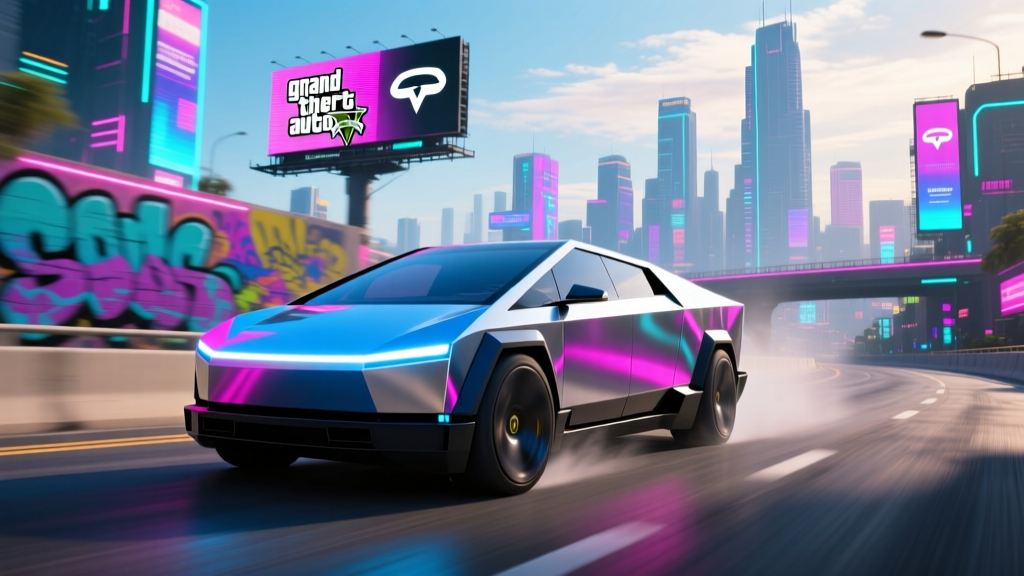
The in-game manufacturer Coil is Rockstar's fictional EV brand, modeled loosely after Tesla. Pegassi's Tezeract draws inspiration from Lamborghini's hybrid and electric concepts, while the Übermacht SC1 mirrors the design language of early 2010s electric supercar concepts.
How GTA's Electric Cars Compare to Real-World EVs
While GTA's electric cars are entertaining, their performance figures diverge significantly from real-world EVs. Let's compare the in-game stats with actual electric vehicles you can buy today:
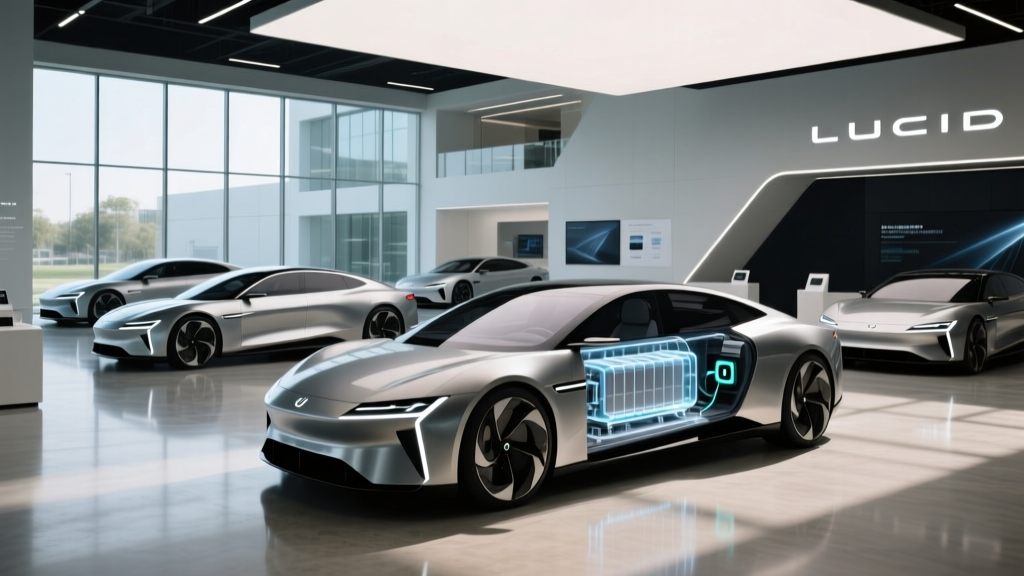
| Attribute | Coil Voltic (GTA) | Tesla Model S Plaid (Real) | Lucid Air Sapphire (Real) | Rimac Nevera (Real) |
|---|---|---|---|---|
| 0-60 mph | ~3.2s | 1.99s (rollout) | 3.3s | 1.85s |
| Top Speed | 126 mph | 200 mph | 205 mph | 258 mph |
| Horsepower | Not specified | 1,020 HP | 1,234 HP | 1,914 HP |
| EPA Range | N/A (game) | 396 mi | 427 mi | N/A (hypercar) |
| Battery | N/A | ~100 kWh (NMC) | 118 kWh (NMC) | 120 kWh (NMC) |
| Price | $150,000 (in-game) | $89,990 MSRP | $249,000 MSRP | $2,200,000 |
The irony: GTA's Voltic is actually slower than a real Tesla Model S Plaid, despite being categorized as a "Super" class vehicle. In reality, production EVs have far surpassed what GTA's developers imagined when they created these cars between 2013 and 2018. The EPA's official EV listings show dozens of models now exceeding 300 miles of range—something no in-game EV mechanic addresses.
In-Game Advantages: Why Drive Electric in GTA?
Choosing an electric car in GTA Online isn't about environmental consciousness—it's about tactical and performance advantages:
- Stealth: Electric vehicles produce minimal noise, making them ideal for covert missions and approaches where engine sound would attract NPC or player attention.
- Instant Torque: The game simulates EV torque delivery with aggressive off-the-line acceleration, giving you an edge in races with standing starts.
- No Fuel Stops: Unlike real-world EVs that require charging, GTA's electric cars have unlimited "range." You'll never need to stop at a gas station—a mechanic that only applies to certain mission-specific vehicles.
- AWD Traction: Most in-game EVs (Cyclone, Tezeract, Brawler) feature all-wheel drive, providing superior grip during wet-weather races and off-road terrain.
However, there are trade-offs. The Rocket Voltic's boost mechanic, while fast, makes the car notoriously difficult to control at high speed. The base Voltic's top speed of 126 mph is outclassed by many combustion-engine supercars in the game, such as the Ocelot Pariah (136 mph) and the Grotti X80 Proto (127 mph but with far better handling).
Cost Analysis: Are GTA's EVs Worth the In-Game Investment?
If you're spending in-game GTA$ on an electric vehicle, here's how the value proposition breaks down:
| Vehicle | Purchase Price | Performance Rating | Best Use Case | Value Score (1-10) |
|---|---|---|---|---|
| Coil Brawler | $715,000 | 6/10 | Off-road missions | 7 |
| Übermacht SC1 | $900,000 | 7/10 | Street racing, time trials | 6 |
| Coil Voltic (Base) | $150,000 | 5/10 | Budget supercar entry | 8 |
| Coil Cyclone | $1,300,000 | 8/10 | Racing, general use | 7 |
| Pegassi Tezeract | $2,825,000 | 9/10 | Top-tier racing | 5 |
| Rocket Voltic | $3,750,000 | 8/10 | Rocket boost racing | 4 |
The base Coil Voltic at $150,000 is arguably the best value—it's the cheapest "Super" class car in the game and a solid entry point for new players. The Tezeract, while fast, costs nearly 19x more for marginal performance gains. For context, you could buy a base Voltic and an Ocelot Pariah (combustion, ~$1.4M) and still spend less than a Tezeract.
Real-World EV Ownership: What GTA Doesn't Teach You
While GTA simplifies EV ownership to "buy and drive forever," real electric car ownership involves several considerations the game ignores entirely:
Charging Infrastructure
In the real world, EV owners need to plan around charging. According to the U.S. Department of Energy, Level 2 home charging adds roughly 25-30 miles of range per hour of charging. A typical overnight charge (8 hours) restores 200+ miles—enough for most daily driving. DC fast charging at public stations can add 150-250 miles in 20-30 minutes at stations delivering 150-350 kW peak power.
In GTA, there are no charging stations, no charging time, and no range limitations. This is a massive simplification. Real-world EV road trips require planning around networks like Tesla Supercharger, Electrify America, and EVgo—each with different connectors (NACS, CCS, CHAdeMO) and pricing structures.
Cold-Weather Range Loss
Real EVs lose 20-40% of their EPA-rated range in freezing temperatures due to battery chemistry limitations and cabin heating demands. An EV with a 300-mile EPA rating may deliver only 180-210 miles in sub-30°F weather. GTA's weather system has no impact on vehicle performance—your Voltic runs identically in Los Santos sunshine and in-game blizzard conditions.
Battery Degradation and Warranty
Every real EV battery degrades over time. Most manufacturers warrant their batteries for 8 years/100,000 miles with a capacity retention threshold of 70%. Tesla, Hyundai, and Ford all publish these terms. In GTA, your Coil Cyclone will perform identically on day 1 and day 1,000—no degradation curve exists.
Myths vs. Facts: Electric Cars in Gaming and Reality
| Myth | Fact |
|---|---|
| "EVs in games are faster than real EVs" | False. Real production EVs like the Model S Plaid (1.99s 0-60) and Rimac Nevera (1.85s) are faster than any in-game EV. |
| "Electric cars in GTA need fuel" | False. GTA's electric cars have unlimited range with no refueling or recharging mechanic. |
| "All Coil vehicles are electric" | True. Coil is the only exclusively electric manufacturer in GTA Online. |
| "Real EVs are silent" | Partially true. EVs are nearly silent at low speeds but produce tire and wind noise at highway speeds. Many now emit artificial pedestrian-warning sounds. |
| "EVs are heavier than gas cars" | True. Battery packs add 800-1,500 lbs compared to equivalent ICE vehicles, affecting handling and tire wear. |
Decision Framework: Which GTA Electric Car Should You Buy?
Choose the Coil Voltic (Base) if: You want the cheapest entry into the Super class, you're a new player on a budget, or you want a daily driver for free roam and casual racing.
Choose the Coil Cyclone if: You want the best all-around electric supercar in GTA, you need AWD for varied terrain, or you're willing to spend $1.3M for top-tier acceleration without the Rocket Voltic's handling issues.
Choose the Pegassi Tezeract if: You want the fastest-accelerating EV in the game (non-boost), you're a collector who values exclusivity, or you already own most other supercars and want to fill a gap.
Choose the Coil Brawler if: You need an off-road capable EV for missions and races, you enjoy the Trophy Truck aesthetic, or you want a versatile vehicle that handles both pavement and dirt.
Choose the Rocket Voltic if: You specifically want the rocket boost mechanic for time trials and stunt races, and you're willing to invest $3.75M plus the prerequisite base Voltic and workshop upgrades.
Skip electric entirely if: You prioritize top speed over acceleration—combustion supercars like the Ocelot Pariah, Grotti X80 Proto, and Pegassi Zentorno offer higher top speeds at comparable or lower prices.
Frequently Asked Questions
Are there any electric SUVs or sedans in GTA Online?
As of 2026, Rockstar has not added a dedicated electric SUV or sedan to GTA Online. The Coil lineup consists exclusively of sports cars, supercars, and one off-road vehicle. Players looking for a practical electric family hauler in-game are out of luck—unlike the real world, where EVs like the Tesla Model Y, Hyundai Ioniq 5, and Ford Mustang Mach-E dominate sales.
Does the Coil brand in GTA represent Tesla?
Coil is widely considered Rockstar's parody of Tesla, though the design language of individual Coil vehicles draws from various manufacturers. The Voltic resembles the original Tesla Roadster, while the Cyclone borrows from the Mission E concept (which became the Porsche Taycan). The brand's exclusive focus on electric powertrains mirrors Tesla's real-world positioning.
Can you charge or refuel any vehicle in GTA Online?
No. GTA Online has no fuel or charging mechanic for standard vehicles. The only refueling interaction occurs during specific heist missions where you must stop at designated points. This is a deliberate design choice to keep gameplay flowing without maintenance interruptions.
What's the fastest electric car in GTA Online?
The Rocket Voltic has the highest potential speed when using its rocket boost, but sustained top speed without boost belongs to the Pegassi Tezeract at approximately 125.5 mph. For comparison, the combustion-powered Ocelot Pariah reaches 136.25 mph—making it the fastest non-boost sports car in the game.
Do real-world EVs have the instant acceleration shown in GTA?
Yes—and often better. GTA's in-game EVs show 0-60 times in the 2.6-3.2 second range, which real EVs like the Tesla Model S Plaid (1.99s), Lucid Air Sapphire (3.3s), and Porsche Taycan Turbo S (2.4s) match or exceed. The key difference: real EVs sustain this performance across repeated launches thanks to advanced thermal management systems, while GTA's simplified physics don't model battery temperature or power tapering.