The Short Answer on Electric Cargo Trucks
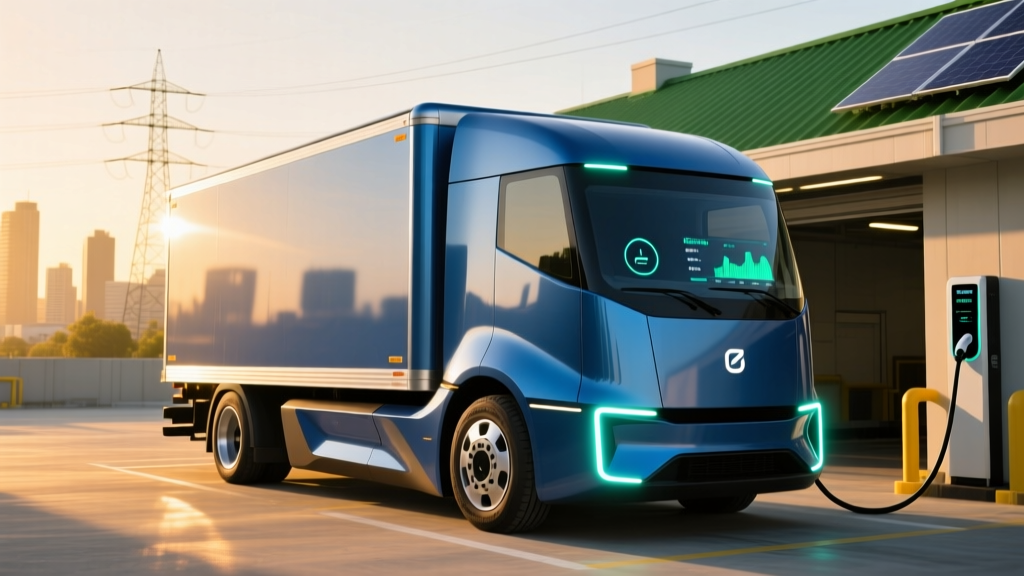
Electric cargo trucks in 2026 make financial sense for fleet and owner-operator routes under 150 miles per day with depot or home Level 2 charging. The Ford E-Transit leads with a ~$45,000 base price, 126 miles EPA range, and proven dealer support. The BrightDrop Zevo 600 offers up to 250 miles of range for longer last-mile routes, starting around $74,000. Compared to gas equivalents, expect 50–70% lower per-mile fuel costs and dramatically reduced maintenance, but plan for a $10,000–$25,000 higher upfront purchase price and a 30–40% range loss in sub-freezing weather. The federal §30D or §45W commercial clean vehicle credit can offset up to $7,500 (light-duty) or $40,000 (vehicles over 14,000 lbs GVWR), subject to income, MSRP caps, and battery-sourcing requirements.
The 2026 Electric Cargo Truck Landscape
The commercial EV van and light-duty truck market has matured past early-adopter growing pains. Ford's E-Transit is in its fourth model year with incremental battery and software improvements. GM's BrightDrop Zevo lineup (now also sold through Chevrolet commercial channels) fills the medium-range last-mile segment. Rivian's EDV (Electric Delivery Van), built primarily for Amazon, has limited availability to independent operators but sets the benchmark for purpose-built ergonomics. Meanwhile, startups like Canoo have largely exited the market, and the Mercedes-Benz eSprinter remains a premium-priced option for high-volume fleets.
For small business owners and independent contractors, the realistic choices narrow to three: the Ford E-Transit (short/medium range, lowest entry cost), the BrightDrop Zevo 600 (longer range, higher price), and the upcoming Ram ProMaster EV (Stellantis's entry, announced for late 2025/early 2026 availability). Heavy-duty electric pickups like the Ford F-150 Lightning and Chevrolet Silverado EV serve dual cargo/work roles but are covered in our dedicated pickup reviews.
Spec Comparison: Electric Cargo Trucks at a Glance
| Spec | Ford E-Transit (2026) | BrightDrop Zevo 600 | Mercedes-Benz eSprinter (2500) |
|---|---|---|---|
| Base MSRP | ~$45,000 (cutaway van) | ~$74,000 | ~$78,000 |
| Battery (usable) | 68 kWh (NMC) | 165 kWh (NMC) | 113 kWh (NMC) |
| EPA Range | 126 mi (low-roof van) | 250 mi (est.) | ~200 mi (est.) |
| Real-World Range (loaded, 70°F) | ~95–110 mi | ~190–220 mi | ~155–180 mi |
| Max Payload | 3,880 lbs (cargo van) | 2,500 lbs (cargo van) | 3,300 lbs |
| Max Cargo Volume | 487.3 cu ft (high-roof extended) | 615 cu ft | 533 cu ft |
| Peak DC Fast Charge | 115 kW | ~150 kW | ~115 kW |
| 10–80% DC Charge Time | ~45 min | ~60 min | ~55 min |
| Level 2 Charge Rate | 10.5 kW | 11.5 kW | 11 kW |
| Horsepower / Torque | 266 hp / 317 lb-ft | ~300 hp / ~400 lb-ft | 201 hp / 332 lb-ft |
| Battery Warranty | 8 yr / 100,000 mi | 8 yr / 100,000 mi | 8 yr / 100,000 mi |
Sources: Ford Commercial, fueleconomy.gov, manufacturer press materials. Real-world range estimates based on loaded operation at mixed city/highway speeds; expect 30–40% reduction below freezing.
Electric vs. Gas Cargo Trucks: The Real Cost Breakdown
The upfront price gap between electric and gas cargo vans is substantial — but so are the operating savings. Here's how a Ford E-Transit stacks up against a comparable gas-powered Ford Transit 250 over five years and 100,000 miles of commercial use:
| Cost Category (5 yr / 100K mi) | Ford E-Transit (EV) | Ford Transit 250 (Gas) |
|---|---|---|
| Purchase Price (base) | $45,000 | $38,500 |
| Federal Tax Credit (§45W commercial) | –$7,500* | $0 |
| Fuel / Electricity (100K mi) | $4,800 (at $0.14/kWh avg) | $14,200 (at $3.40/gal, 16 MPG) |
| Maintenance | $2,200 | $6,500 |
| Insurance (est. avg) | $9,500 | $8,200 |
| Total 5-Year Cost | $54,000 | $67,400 |
| Cost Per Mile | $0.54 | $0.67 |
*§45W commercial clean vehicle credit eligibility requires meeting battery component and critical mineral sourcing thresholds per IRS guidelines. Credit amount varies; consult a tax professional. Fleet buyers may qualify under §45W rather than §30D.
The bottom line: The E-Transit saves roughly $13,400 over five years despite costing $6,500 more upfront (after credit). The breakeven point arrives around year three for drivers covering 20,000+ miles annually. However, insurance premiums run 10–20% higher for EVs due to repair costs and battery replacement risk — factor this into your budget.
Charging Infrastructure: What Cargo Truck Buyers Must Plan For
Unlike passenger EVs that can rely on public fast-charging networks, electric cargo trucks live and die by depot or home charging. Here's why:
Level 2 (240V) depot charging is mandatory. A 68 kWh E-Transit battery takes roughly 6.5 hours on a 10.5 kW Level 2 charger — perfectly suited for overnight replenishment. The 165 kWh BrightDrop Zevo 600 needs 14+ hours on Level 2, meaning fleet operators with 250-mile daily routes must install multiple chargers or use opportunity charging during driver breaks.
DC fast charging is for emergencies, not daily use. Frequent DC fast charging accelerates battery degradation. Ford recommends limiting DC fast charging to no more than 20% of total charging events to preserve long-term battery health. At 115 kW peak, the E-Transit adds roughly 45 miles of range in 15 minutes — adequate for a midday top-up, not a primary strategy.
Home charging installation costs vary widely. For an owner-operator installing a single Level 2 charger at home or a small warehouse:
| Item | Typical Cost Range |
|---|---|
| Level 2 EVSE hardware (commercial-grade, 40–48A) | $600–$1,500 |
| Electrical panel upgrade (if needed, 200A service) | $1,500–$4,000 |
| Wiring, conduit, and electrician labor (50–100 ft run) | $1,200–$3,500 |
| Permit and inspection | $150–$500 |
| Total (single charger) | $3,450–$9,500 |
Fleet operators installing 5–10 chargers should budget for utility demand charges and potential transformer upgrades — costs that can exceed $50,000 for larger installations. Always consult a licensed electrician and your utility provider before committing.
Real-World Ownership: Range, Payload, and the Cold-Weather Reality
EPA range stickers on commercial vehicles are optimistic by design — they're tested under controlled conditions that don't reflect loaded, stop-and-go delivery routes. Here's what to actually expect:
Ford E-Transit: EPA 126 Miles vs. Reality
Loaded (2,000+ lbs cargo), 70°F, mixed city/highway: 95–110 miles
Loaded, 30°F, city stops with cabin heat: 70–85 miles
Empty, 70°F, 55 mph steady: 115–125 miles
Empty, 15°F, highway at 70 mph: 65–80 miles
Cold weather hits cargo trucks harder than passenger EVs. The large, uninsulated cargo area acts as a heat sink, and the frequent door-opening on delivery routes dumps warm cabin air repeatedly. If your daily route exceeds 80 miles in winter, the E-Transit's 126-mile EPA range is not sufficient — look at the BrightDrop Zevo 600 or plan a midday charge stop.
Payload trade-offs: Electric cargo trucks carry heavy battery packs (the E-Transit's battery weighs approximately 1,100 lbs), which reduces available payload compared to gas equivalents. The E-Transit's 3,880-lb max payload is roughly 500–700 lbs less than a comparable gas Transit 250. For routes hauling dense goods (liquids, metals, building materials), this matters. For parcel delivery and light freight, it's a non-issue.
Tax Credits and Incentives: What You Can Actually Claim
Federal incentives for commercial electric vehicles differ from the consumer §30D credit most buyers read about. Here's the framework:
§45W Commercial Clean Vehicle Credit (for businesses/fleets)
- Credit amount: Up to $7,500 for vehicles under 14,000 lbs GVWR; up to $40,000 for vehicles over 14,000 lbs GVWR
- Eligibility: Vehicle must be used for business; depreciable property
- Battery sourcing: Must meet critical mineral and battery component requirements (phasing in through 2029)
- No MSRP cap (unlike the consumer §30D credit)
- No buyer income cap (business entity)
- Point-of-sale transfer: Available starting 2024 — credit can be transferred to the dealer at purchase
- Key caveat: Sourcing requirements tighten annually; verify current-year eligibility on IRS.gov before purchasing
State and local incentives stack on top of federal credits. California's HVIP (Hybrid and Zero-Emission Truck and Bus Voucher Incentive Project) offers up to $60,000 for qualifying commercial EVs. New York's NYTVIP provides similar vouchers. Check your state's energy office or AFDC incentive database for current programs — these change frequently and often have limited funding windows.
Common Misconceptions About Electric Cargo Trucks
| Myth | Fact |
|---|---|
| "EV cargo trucks can't handle real workloads" | The E-Transit delivers 3,880 lbs payload and 317 lb-ft of instant torque — more low-end pulling power than the gas Transit's 3.5L V6. Towing is limited (~3,500 lbs), but for cargo delivery, EVs outperform gas in stop-and-go efficiency. |
| "Battery replacement will bankrupt you" | All major commercial EV vans carry 8-year/100,000-mile battery warranties with a 70% capacity retention guarantee. Real-world degradation data from early E-Transit fleets shows ~8–12% capacity loss at 80,000 miles — well within warranty. Out-of-warranty replacement runs $15,000–$25,000, but most fleets retire or refurbish vehicles before this point. |
| "You need DC fast chargers at every depot" | Level 2 overnight charging handles 80%+ of commercial routes. DC fast chargers cost 10–20× more to install and operate. They're useful for opportunity charging but not required for routes under 120 miles. |
| "Electric trucks don't work in cold climates" | They work — with planning. Expect 30–40% range loss below freezing. Fleets in Minnesota and Canada operate E-Transits year-round by reducing winter route lengths or adding midday charging. Battery preconditioning (available on the E-Transit via scheduled departure) mitigates charging-speed loss in cold weather. |
| "Maintenance savings are overstated" | EV cargo trucks eliminate oil changes, transmission fluid, spark plugs, exhaust system repairs, and timing belt replacements. Brake wear drops 60–80% thanks to regenerative braking. Fleet data consistently shows 40–60% lower maintenance costs per mile vs. gas equivalents. |
Decision Framework: Should You Buy an Electric Cargo Truck?
Choose an Electric Cargo Truck If:
- Your daily route is under 120 miles (E-Transit) or under 200 miles (BrightDrop Zevo 600) — including a 20% buffer for weather and detours
- You have access to overnight Level 2 charging at a depot, warehouse, or home
- You drive 15,000+ miles per year (the fuel/maintenance savings offset the higher purchase price within 3–4 years)
- Your cargo is parcels, food, or light freight (under 3,000 lbs typical load)
- You operate in a state with additional commercial EV incentives (CA, NY, CO, NJ)
- You qualify for the §45W commercial credit based on current battery-sourcing rules
Stick With Gas (or Wait) If:
- Your daily routes regularly exceed 150 miles with no midday charging opportunity
- You haul dense, heavy loads near the vehicle's max payload rating daily
- You operate in extreme cold (below 0°F regularly) and cannot reduce winter route lengths
- You lack access to any form of Level 2 charging and cannot install it
- You drive fewer than 10,000 miles per year (the savings won't justify the upfront premium)
- You need heavy towing capacity (5,000+ lbs) — electric cargo trucks currently max out around 3,500 lbs
First-Time EV Cargo Truck Buyer: What You Must Know
If you're transitioning a fleet or buying your first electric commercial vehicle, these five realities will determine your experience:
1. Route analysis comes before the purchase. Track your actual daily mileage for 30 days — including detours, returns, and worst-case scenarios. Add 25% as a buffer. If that number exceeds the real-world range of your chosen truck (not the EPA sticker), you'll need midday charging or a longer-range model.
2. Your electrician is as important as your dealer. A commercial Level 2 installation requires a dedicated 40–60A circuit, proper conduit, and potentially a panel upgrade. Get quotes from licensed electricians before ordering the vehicle. Budget $5,000–$10,000 per charger installation for commercial settings.
3. Fleet management software matters. Ford Pro and BrightDrop's fleet platforms provide real-time state of charge monitoring, route optimization for range, and scheduled preconditioning. These aren't luxuries — they're essential for multi-vehicle operations to avoid dead batteries and missed routes.
4. Insurance costs more — shop aggressively. Commercial EV insurance premiums run 10–20% higher than gas equivalents. Get quotes before purchasing. Some insurers (Progressive Commercial, Liberty Mutual) now offer EV-specific fleet policies that account for lower maintenance risk.
5. The used market is emerging. Early E-Transit fleet leases (2022–2023 models) are returning to market. A 2023 E-Transit with 40,000–60,000 miles can be found for $28,000–$35,000, and may still qualify for the used commercial EV credit (up to $4,000 or 30% of sale price, whichever is lower). This is the most cost-effective entry point for budget-conscious operators.
Frequently Asked Questions
Can I tow a trailer with an electric cargo truck?
The Ford E-Transit is rated for up to 3,500 lbs of towing (with the optional trailer tow package). The BrightDrop Zevo 600 has not published a formal tow rating as of early 2026. Towing significantly reduces range — expect a 30–50% reduction depending on trailer weight and aerodynamics. If regular towing is part of your workflow, an electric pickup like the F-150 Lightning (7,700-lb tow rating) may be a better fit.
How long do electric cargo truck batteries last?
Based on fleet data from 2022–2025 E-Transit deployments, NMC batteries in commercial vans lose approximately 8–15% capacity over 100,000 miles (roughly 4–5 years of typical commercial use). All major manufacturers warrant the battery for 8 years/100,000 miles with a minimum 70% capacity retention threshold. Many fleet operators report the battery outlasting the vehicle's useful commercial life.
What happens if I run out of charge on a delivery route?
Unlike a gas van where you can walk to a station with a jerry can, a depleted EV cargo truck requires a tow or mobile charging service. Ford Pro offers roadside assistance that includes flatbed towing to the nearest charger. Some fleet operators carry a portable Level 1 (120V) emergency charger that adds ~2–3 miles of range per hour — enough to limp to a nearby outlet in extreme situations. Route planning with a 20% range buffer prevents this scenario.
Are electric cargo trucks eligible for the $7,500 federal tax credit?
It depends on how you buy. If purchased for business use, the §45W commercial clean vehicle credit applies (up to $7,500 for vehicles under 14,000 lbs GVWR). This credit has no MSRP cap and no buyer income cap, but it does require meeting battery component and critical mineral sourcing rules that tighten each year. As of 2026, verify eligibility on IRS.gov or with a tax professional before assuming the full credit. The credit can be transferred to the dealer at point of sale, reducing your upfront cost immediately.
Do electric cargo trucks work for food delivery and refrigerated routes?
Yes, with caveats. Refrigeration units (reefers) draw additional power — typically 2–5 kW continuously — which reduces driving range by 15–30%. BrightDrop and Ford both offer upfit partnerships for refrigerated cargo configurations. Plan your route length accordingly, and ensure your Level 2 charger can handle both vehicle charging and any depot-side refrigeration needs simultaneously.