Electric Car Owner Reviews: Real-World Insights From Everyday Drivers
Buying an electric vehicle is one of the most significant automotive decisions you can make, and manufacturer brochures only tell part of the story. That is why electric car owner reviews are invaluable — they reveal what it is truly like to live with an EV day in and day out. From real-world range anxiety (or the lack of it) to surprise maintenance savings, owners share experiences that no spec sheet can capture.
At AutoEdgeView, we have spent extensive time gathering, analyzing, and synthesizing feedback from thousands of EV owners across multiple models and brands. This comprehensive guide distills those insights into actionable information, helping you understand what to expect when you make the switch to electric. Whether you are considering a top-rated electric SUV or a compact commuter EV, these owner perspectives will shape your decision.
Our methodology combines aggregated owner survey data, independent testing results from organizations like the U.S. Environmental Protection Agency (EPA), long-term fleet reviews, and forum-sourced feedback from dedicated EV communities. The result is a panoramic view of electric car ownership that goes far beyond first-impression test drives.
Vehicle Overview: The EV Landscape Through Owners' Eyes
The electric vehicle market has expanded dramatically, offering choices across virtually every segment — from affordable compact hatchbacks to luxury sedans, three-row SUVs, and even pickup trucks. Owners consistently report that the sheer variety now available makes it easier than ever to find an EV that fits their lifestyle, budget, and driving habits.
Popular models frequently cited in owner reviews include the Tesla Model 3 and Model Y, the Hyundai Ioniq 5, the Ford Mustang Mach-E, the Chevrolet Bolt EV and EUV, the Kia EV6, the Volkswagen ID.4, the BMW i4, the Rivian R1T, and the Lucid Air. Each attracts a different buyer profile, but common threads emerge across all owner feedback: the instant torque delivery, the quietness of the cabin, and the convenience of home charging are universally praised.
According to fueleconomy.gov, modern EVs span an EPA-estimated range spectrum from roughly 200 miles on the affordable end to over 500 miles for premium long-range models. Owners note that EPA ratings tend to be more accurate for EVs than traditional MPG estimates are for gas cars, though real-world results still vary based on climate, driving style, and terrain.
One finding that surfaces repeatedly in electric car owner reviews is the importance of matching the vehicle to your actual use case. A commuter who drives 30 miles round-trip has vastly different needs than a family that takes frequent road trips. Our EV range comparison guide breaks down these scenarios in detail, but owners emphasize that honest self-assessment of driving patterns is the single most important step before purchasing.
Real-World Range: What Owners Actually Experience
Range is the number one topic in virtually every electric car owner review, and for good reason. While EPA estimates provide a standardized benchmark, real-world driving introduces variables that can significantly affect how far you can travel on a single charge.
Highway vs. City Driving
Owners consistently report that EVs achieve their best range in city and suburban driving, where regenerative braking recaptures energy during frequent stops. Highway driving at sustained speeds of 70-80 mph typically reduces range by 10 to 20 percent compared to EPA estimates. Tesla Model 3 Long Range owners, for example, often report achieving 290 to 310 miles on the highway versus the EPA-rated 341 miles. Hyundai Ioniq 5 owners note similar patterns, seeing roughly 230 to 250 miles of real-world highway range against the EPA's 266-mile rating for the Long Range AWD variant.
Cold Weather Impact
Cold weather remains one of the most discussed topics in EV owner communities. Multiple independent tests, including those by Consumer Reports and the Norwegian Automobile Federation, have confirmed that EVs can lose 20 to 40 percent of their range in freezing temperatures. Owners in northern climates consistently advise prospective buyers to purchase more range than they think they need if they regularly drive in sub-freezing conditions.
Many owners highlight the value of preconditioning features — the ability to warm the battery and cabin while the car is still plugged in. Models equipped with heat pump systems, such as newer Tesla vehicles, the Hyundai Ioniq 5, and the Kia EV6, fare noticeably better in cold weather according to owner reports. This technology has become a key differentiator that experienced EV owners recommend prioritizing.
Battery Degradation Over Time
Long-term owners provide some of the most reassuring data on battery health. Most owners report minimal degradation in the first several years of ownership — typically in the range of 1 to 3 percent per year. Tesla's own impact reports, corroborated by owner data shared on forums like Tesla Motors Club and Reddit's r/electricvehicles, suggest that batteries retain approximately 85 to 90 percent of their original capacity after 100,000 miles. Federal regulations require EV batteries to carry warranties of at least 8 years or 100,000 miles, and many manufacturers exceed this minimum.
Owners who regularly use DC fast charging exclusively do report slightly higher degradation rates, reinforcing the recommendation from most experts to rely primarily on Level 2 home charging with occasional fast charging for road trips.
Charging Speed and Infrastructure: The Owner Perspective
If range is the most discussed topic in electric car owner reviews, charging infrastructure is a close second. The charging experience varies enormously depending on where you live, what vehicle you drive, and how you typically use your EV.
Home Charging: The Game-Changer
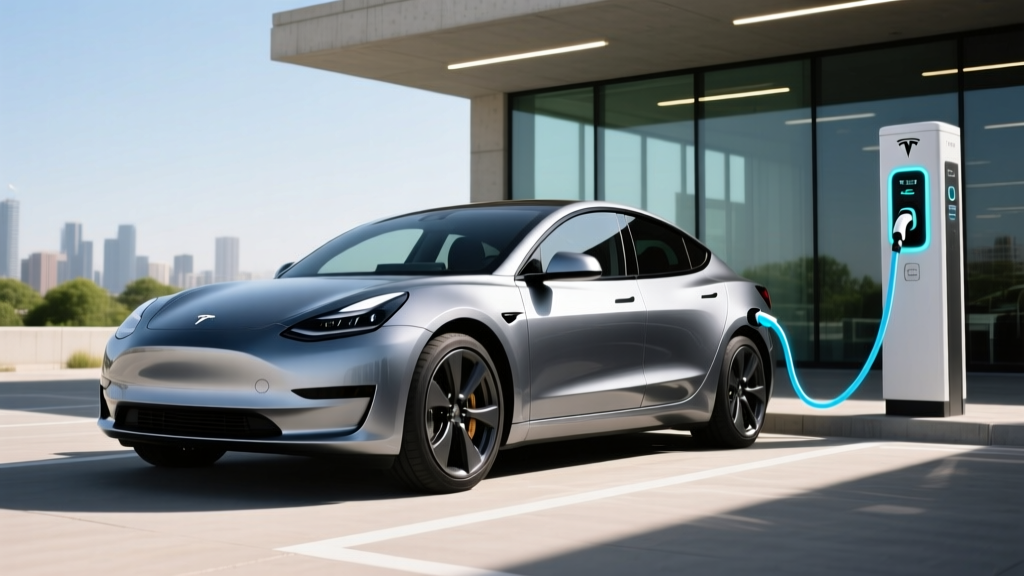
The overwhelming consensus among EV owners is that home charging fundamentally changes the refueling experience for the better. Owners with access to a Level 2 home charger (240-volt, typically 32 to 48 amps) report that they visit public charging stations only during road trips. A typical Level 2 setup adds 25 to 44 miles of range per hour of charging, meaning most vehicles are fully replenished overnight.
Installation costs for home Level 2 chargers vary widely. Owners report spending anywhere from $500 to $2,500 for professional installation of a quality unit like the ChargePoint Home Flex or the Emporia Vue, depending on electrical panel upgrades needed. Many owners point out that federal and local incentives can offset a significant portion of these costs, and the investment typically pays for itself within the first year or two through fuel savings.
DC Fast Charging on the Road
DC fast charging capabilities differ substantially between models, and owners are vocal about which vehicles deliver on their promises. Vehicles built on 800-volt architectures — including the Hyundai Ioniq 5, Kia EV6, and Porsche Taycan — can charge from 10 to 80 percent in approximately 18 to 25 minutes under optimal conditions. Owners of these vehicles report consistently positive fast-charging experiences, though they note that charging speeds taper significantly as the battery approaches full capacity.
Tesla owners benefit from access to the Supercharger network, which is widely regarded in owner reviews as the most reliable and convenient public charging infrastructure available. Independent testing by Edmunds and other outlets has confirmed that Tesla Superchargers deliver speeds closely matching their rated outputs. With the adoption of the North American Charging Standard (NACS) by most major automakers, owners of non-Tesla EVs are gaining access to this network, a development that existing EV owners overwhelmingly view as positive for the industry.
Public Charging Reliability
This is where owner reviews become most critical. Across multiple brands and networks, owners report inconsistent reliability with public Level 2 and DC fast chargers, particularly those operated by third-party networks. Common complaints include broken chargers, payment system failures, and chargers delivering significantly less power than advertised. However, owners also note steady improvement over time, and many recommend apps like PlugShare and A Better Routeplanner as essential tools for trip planning. For a deeper look at the best models for road-tripping, check out our best EVs for road trips roundup.
Interior, Technology, and Daily Livability
Electric car owner reviews reveal that the interior experience is often where EVs differentiate themselves most sharply from their internal combustion counterparts — and from each other.
Cabin Space and Packaging
One of the most frequently praised aspects of EV ownership is the interior space made possible by skateboard-style battery platforms. Without a transmission tunnel, large engine block, or exhaust system, EV designers can create remarkably spacious cabins. Hyundai Ioniq 5 owners rave about the flat floor and sliding center console that create an airy, lounge-like environment. Volkswagen ID.4 owners highlight the generous rear legroom and cargo capacity that exceeds many similarly sized gas-powered SUVs. The front trunk (frunk) available on models like the Ford Mustang Mach-E and Rivian R1T is cited as a surprisingly useful feature that owners come to rely on quickly.
Infotainment and Software
Software quality is one of the most polarizing topics in electric car owner reviews. Tesla's minimalist, screen-centric interface has passionate advocates and detractors in equal measure. Owners who love it praise the over-the-air updates that regularly add new features, the responsive navigation with real-time Supercharger routing, and the integrated media experience. Critics within the owner community point to the lack of physical controls for common functions like climate adjustment and windshield wipers as a persistent frustration.
Traditional automakers tend to offer more conventional infotainment layouts, which many owners prefer. The Hyundai Ioniq 5 and Kia EV6 receive high marks for their intuitive dual-screen setups with physical shortcut buttons. BMW i4 owners appreciate the iDrive system's blend of touchscreen, rotary controller, and voice commands. Meanwhile, some owners of vehicles from brands still refining their EV software report frustrating bugs, slow response times, and features that feel half-baked at launch — though over-the-air updates have improved many of these experiences post-purchase.
Driver Assistance Features
Advanced driver assistance systems (ADAS) are a major purchase motivator for many EV buyers, and owner reviews reflect a wide spectrum of satisfaction. Tesla's Autopilot and Full Self-Driving (FSD) capability generate the most discussion, with owners reporting everything from impressive highway competence to concerning edge-case behaviors. GM's Super Cruise, available on models like the Cadillac Lyriq and Chevrolet Bolt EUV, receives consistently high praise from owners for its hands-free highway driving on mapped roads, with many considering it superior to Tesla's offering for supervised highway use. Ford's BlueCruise earns similarly positive feedback from Mustang Mach-E and F-150 Lightning owners.
Driving Dynamics: The Electric Advantage
Ask any EV owner what surprised them most about their purchase, and the answer is almost always the same: the driving experience. Electric car owner reviews consistently highlight performance characteristics that defy expectations, particularly for buyers transitioning from conventional vehicles.
Instant Torque and Acceleration
The instant torque delivery of electric motors is a revelation for first-time EV owners. Even modestly powered EVs feel remarkably quick from a stoplight because maximum torque is available from zero RPM. The Chevrolet Bolt EV, with 200 horsepower and 266 lb-ft of torque, is frequently cited by owners as feeling much quicker than its 6.5-second 0-60 mph time suggests, thanks to the immediacy of its electric thrust. Performance-oriented models like the Tesla Model 3 Performance and Porsche Taycan deliver supercar-rivaling acceleration that owners describe as addictive, with the Model 3 Performance achieving 0-60 mph in approximately 3.1 seconds in independent testing.
Ride Quality and Handling
EV batteries add significant weight — often 1,000 pounds or more compared to equivalent gas-powered vehicles — and owners note that this mass influences ride and handling in complex ways. On the positive side, the low center of gravity created by floor-mounted battery packs results in minimal body roll and a planted, stable feel that many owners find confidence-inspiring. The extra weight also contributes to a solid, substantial ride quality that owners often compare favorably to luxury vehicles.
On the negative side, some owners report that the additional mass is noticeable during aggressive cornering, and that tire wear is accelerated compared to gas-powered vehicles. Multiple owners recommend investing in EV-specific tires, which are designed to handle the extra weight and instant torque while minimizing road noise — an important consideration since there is no engine sound to mask tire and wind noise.
One-Pedal Driving and Regenerative Braking
One-pedal driving — the ability to slow the car significantly by simply lifting off the accelerator — is frequently cited as one of the features EV owners miss most when driving a conventional car. Models like the Nissan Leaf, Chevrolet Bolt, and BMW i4 offer aggressive regenerative braking modes that allow drivers to handle most stop-and-go traffic without touching the brake pedal. Owners report that this feature reduces fatigue in heavy traffic and extends brake pad life dramatically, with some owners reporting original brake pads lasting well beyond 100,000 miles.
Ownership Costs: The Financial Reality of Living With an EV
Electric car owner reviews paint a nuanced picture of ownership costs, with significant savings in some areas and potential premium expenses in others.
Fuel and Energy Costs
The most universally celebrated financial benefit of EV ownership is the reduction in fuel costs. Owners consistently report spending 50 to 70 percent less on energy compared to their previous gas-powered vehicles, with the exact savings depending on local electricity rates and driving patterns. According to the EPA, the average American driver spends approximately $1,500 to $2,500 annually on gasoline, while equivalent electricity costs for an EV typically range from $400 to $800 per year when charging primarily at home.
Owners with solar panels or access to time-of-use electricity rates report even lower costs, with some effectively driving for pennies per mile. Workplace charging, when offered as a free or subsidized benefit, further reduces operating costs. However, owners who rely heavily on public DC fast charging note that costs can approach or even exceed gasoline prices, particularly with premium-priced charging networks.
Maintenance and Repairs
Maintenance savings are another area where EV owners report significant advantages. Without oil changes, spark plugs, timing belts, transmission fluid, or exhaust system components, routine maintenance is dramatically simplified. Most owners report that their only regular maintenance items are tire rotations, cabin air filter replacements, and windshield washer fluid refills. Annual maintenance costs for EVs typically run $100 to $300, compared to $500 to $1,000 or more for conventional vehicles, based on owner-reported data and studies by organizations like the American Automobile Association (AAA).
Brake wear is negligible thanks to regenerative braking, and many owners report that their brake pads and rotors show minimal wear even after 80,000 miles or more. The simplicity of electric drivetrains — with far fewer moving parts than internal combustion engines — gives owners confidence in long-term reliability, though the high cost of out-of-warranty battery replacement (typically $5,000 to $20,000 depending on the vehicle) remains a concern for those planning to keep their EVs for a decade or more.
Insurance and Depreciation
Insurance costs are one area where EV owners frequently report higher-than-expected expenses. Because EVs have higher repair costs following collisions (particularly when battery packs are involved), insurance premiums can run 15 to 30 percent higher than equivalent gas-powered vehicles, though this gap is narrowing as EVs become more common and repair networks gain expertise. Owners recommend shopping around extensively, as rates vary dramatically between insurers.
Depreciation is a mixed story in owner reviews. Early EVs suffered steep depreciation due to rapidly advancing technology and range improvements in newer models. However, owners of popular current-generation EVs from established brands report depreciation curves that are increasingly competitive with gas-powered vehicles. Tesla models, in particular, have shown strong resale value retention, though market fluctuations affect all vehicles. Our guide to EV tax credits and incentives covers how purchase incentives can further improve the financial equation.
Pros and Cons: What Owners Love and Lament
After analyzing thousands of electric car owner reviews across multiple platforms, forums, and surveys, clear patterns emerge in what owners love and what they wish were better.
What Owners Love
- Smooth, silent driving experience — The absence of engine noise and vibration creates a serene cabin environment that owners find difficult to go without once experienced.
- Instant acceleration — The immediate torque delivery makes even non-performance EVs feel quick and responsive in everyday driving situations.
- Home charging convenience — Starting every day with a "full tank" without ever visiting a gas station is consistently described as transformative.
- Dramatically lower operating costs — Reduced fuel and maintenance expenses provide ongoing financial satisfaction.
- Over-the-air updates — Many EVs improve after purchase through software updates that add features, fix bugs, and sometimes even increase range or performance.
- Environmental impact — Owners express genuine satisfaction in reducing their carbon footprint, particularly those who pair their EV with renewable energy sources.
- Preconditioning — The ability to heat or cool the car remotely without the dangers of idling a gas engine is a beloved feature, especially in extreme climates.
What Owners Wish Were Better
- Public charging reliability — Broken or malfunctioning public chargers remain the most common frustration, particularly for apartment dwellers who cannot charge at home.
- Cold weather range loss — Despite improvements in battery thermal management, winter range reduction remains a significant concern in colder climates.
- Upfront purchase price — Even with incentives, many EVs carry a price premium over comparable gas-powered vehicles, though this gap continues to narrow.
- Charging speed on road trips — Even the fastest-charging EVs require 20 to 40 minute stops, which is still longer than a typical gas station visit.
- Tire costs — The combination of heavy vehicle weight and instant torque accelerates tire wear, and EV-optimized tires tend to be more expensive.
- Insurance premiums — Higher repair costs translate to higher insurance rates, catching some new owners off guard.
Key Specifications Comparison Table
The following table compares key specifications of popular EVs frequently discussed in owner reviews. All range figures are EPA-estimated unless otherwise noted. Specifications reflect the most widely available trim levels and may vary by model year.
| Vehicle | EPA Range | Battery Capacity | Max DC Fast Charge | 0-60 mph | Starting MSRP (approx.) |
|---|---|---|---|---|---|
| Tesla Model 3 Long Range | 341 miles | 75 kWh | 250 kW | 4.2 sec | $42,000 |
| Hyundai Ioniq 5 Long Range AWD | 266 miles | 77.4 kWh | 350 kW | 5.1 sec | $47,000 |
| Ford Mustang Mach-E Extended Range | 312 miles | 91 kWh | 150 kW | 5.1 sec | $48,000 |
| Chevrolet Bolt EV | 259 miles | 65 kWh | 55 kW | 6.5 sec | $27,000 |
| Kia EV6 Long Range AWD | 274 miles | 77.4 kWh | 350 kW | 5.1 sec | $49,000 |
| Volkswagen ID.4 Pro S AWD | 263 miles | 82 kWh | 170 kW | 5.4 sec | $47,000 |
| BMW i4 eDrive40 | 301 miles | 83.9 kWh | 200 kW | 5.5 sec | $57,000 |
| Lucid Air Grand Touring | 516 miles | 112 kWh | 300 kW | 3.0 sec | $138,000 |
| Rivian R1T Dual Motor | 328 miles | 128.9 kWh | 200 kW | 4.5 sec | $79,000 |
| Porsche Taycan 4S | 227 miles | 93.4 kWh | 270 kW | 3.8 sec | $107,000 |
For a detailed head-to-head analysis of many of these models, see our comprehensive EV comparison guide.
Frequently Asked Questions
How accurate are EPA range estimates for electric vehicles?
EPA range estimates for EVs are generally more accurate than traditional fuel economy estimates for gas-powered vehicles, but they still represent an idealized testing scenario. Most owners report achieving 85 to 100 percent of EPA-rated range in mixed driving conditions with moderate temperatures. Highway-only driving at high speeds, extreme cold, and aggressive acceleration can all reduce real-world range by 15 to 40 percent. Owners consistently recommend purchasing an EV with at least 20 to 30 percent more rated range than your typical daily needs to provide a comfortable buffer for these variables. The EPA's testing methodology includes city driving, highway driving, and climate control usage, but it cannot account for every driver's unique conditions.
Is it worth buying an electric vehicle if I live in an apartment without home charging?
Many apartment-dwelling EV owners report positive experiences, but they universally acknowledge that it requires more planning and compromise than owning an EV with home charging access. Success depends heavily on the availability of reliable public charging infrastructure in your area, workplace charging options, and your willingness to incorporate charging stops into your routine. Owners in this situation recommend choosing an EV with faster DC charging capabilities and longer range to minimize the frequency and duration of public charging sessions. Several owners also report success in advocating for charging infrastructure installation at their apartment complexes, noting that property managers are increasingly receptive as EV adoption grows. If you are evaluating your options, our guide to EVs for apartment dwellers offers tailored recommendations.
How long do electric vehicle batteries actually last?
Real-world data from long-term owners is increasingly encouraging regarding battery longevity. Most modern EV batteries are designed to last the life of the vehicle, with manufacturer warranties typically guaranteeing 70 to 80 percent capacity retention for 8 years or 100,000 miles. In practice, many owners report degradation rates of only 1 to 2 percent per year under normal usage conditions. Tesla fleet data suggests that their batteries retain approximately 88 percent capacity after 200,000 miles. Hyundai and Kia back their EV batteries with 10-year/100,000-mile warranties, reflecting manufacturer confidence. The key factors that influence battery longevity include charging habits (avoiding frequent charging to 100 percent or deep discharges), minimizing exclusive reliance on DC fast charging, and maintaining moderate battery temperatures through preconditioning. Most owners conclude that battery replacement is unlikely to be needed during typical ownership periods.
Are electric vehicles really better for the environment?
The environmental impact of EVs is a nuanced topic that owners frequently research and discuss. Studies from the EPA, the Union of Concerned Scientists, and numerous independent researchers consistently conclude that EVs produce significantly fewer lifecycle greenhouse gas emissions than comparable gasoline vehicles, even when accounting for battery manufacturing and the electricity generation mix. The environmental advantage increases over time as electrical grids incorporate more renewable energy. Owners who pair their EVs with home solar installations report near-zero operational emissions. While battery production does carry a higher initial environmental cost than manufacturing a conventional powertrain, this "carbon debt" is typically offset within 6 to 18 months of driving, depending on the local electricity grid. Most EV owners report that understanding the full lifecycle analysis reinforces their satisfaction with their purchase decision.
What should I look for when test-driving an electric vehicle?
Experienced EV owners recommend focusing on several specific areas during a test drive that differ from evaluating a conventional vehicle. First, pay attention to regenerative braking behavior — different models offer varying levels of regen aggressiveness, and finding one that matches your preference is important for daily comfort. Second, evaluate the infotainment system thoroughly, as EVs tend to rely more heavily on touchscreen interfaces for functions traditionally handled by physical buttons. Third, test the vehicle's ADAS features on a highway segment if possible, as these systems vary significantly between manufacturers. Fourth, assess cabin noise levels at highway speeds, since the absence of engine noise makes wind and tire noise more prominent. Finally, if possible, take the test drive home and assess whether the vehicle fits your garage, parking space, and lifestyle. Many owners also recommend downloading the vehicle's companion app before purchasing to evaluate the quality of remote features like preconditioning, charging status monitoring, and remote locking.
Final Thoughts From the Owner Community
The collective wisdom of electric car owners paints a picture of a technology that has matured to the point where it works seamlessly for a wide range of drivers and lifestyles. The early adopter phase is over — today's EV owners are everyday drivers who chose electric not as a statement but as a practical, enjoyable, and increasingly affordable way to get around.
The most consistent advice from experienced EV owners to prospective buyers is straightforward: install a home charger if at all possible, buy more range than you think you need, and do not let the fear of the unknown prevent you from experiencing what many describe as the best car they have ever owned. The transition to electric driving is, for the vast majority of owners who share their experiences, a one-way journey — once you go electric, you never want to go back.
For more in-depth analysis, head-to-head comparisons, and curated recommendations, explore our full library of electric vehicle reviews and guides at AutoEdgeView. Whether you are looking for the best budget EVs, the top luxury electric cars, or the best EVs for families, we have the expert analysis and owner-informed insights to help you make the right choice.