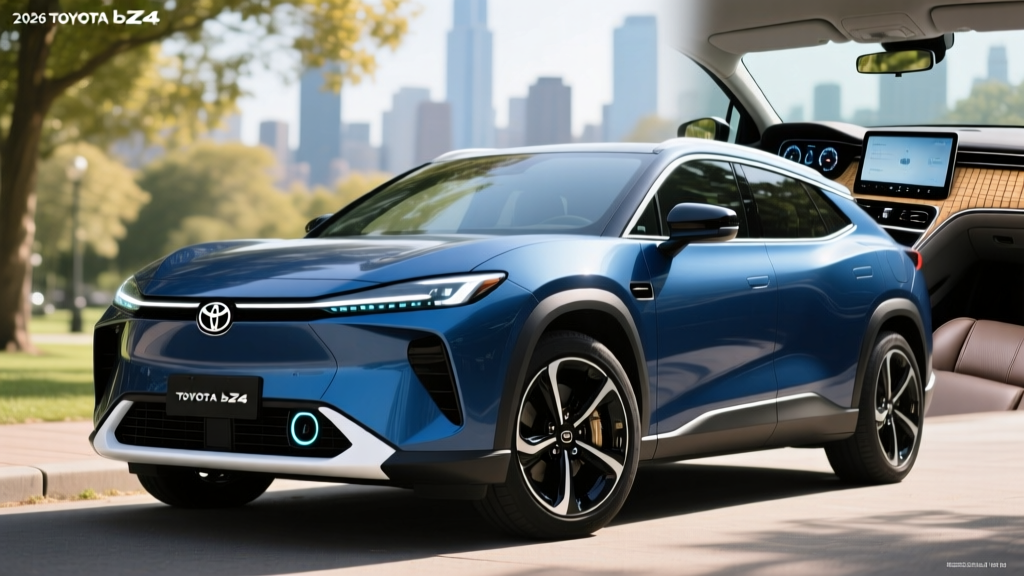
Bottom line on Toyota's electric car lineup: The 2026 Toyota bZ4X is the brand's only fully electric vehicle (BEV) sold in the U.S. It offers an EPA-estimated 252 miles of range (XLE FWD), a 71.4 kWh usable battery, and DC fast charging up to 150 kW (10–80% in ~30 minutes). Starting at $37,070, it qualifies for a partial or full §30D federal tax credit depending on your income, battery sourcing, and point-of-sale transfer eligibility. If you want Toyota reliability with zero range limits, the RAV4 Hybrid or RAV4 Prime PHEV remain strong alternatives.
What Toyota Electric Cars Can You Actually Buy?
As of the 2026 model year, Toyota's U.S. electric vehicle strategy centers on a single battery-electric model: the bZ4X, a compact crossover that competes with the Hyundai Ioniq 5, Volkswagen ID.4, and Tesla Model Y. Toyota has expanded the bZ family globally, but U.S. buyers currently have one BEV option across two trims (XLE and Limited) and two drivetrains (FWD and AWD).
Toyota's broader electrified lineup is far more extensive on the hybrid side. The RAV4 Hybrid, Camry Hybrid, Highlander Hybrid, Prius, and Prius Prime PHEV all carry the Toyota badge without requiring a plug (except the Prime). For many buyers researching a "Toyota electric car," a PHEV like the RAV4 Prime (42 miles of electric-only range) may actually fit daily driving needs better than a full BEV — especially without reliable home charging access.
bZ4X Specs: Range, Battery, and Charging Speed
| Spec | bZ4X XLE FWD | bZ4X XLE AWD | bZ4X Limited FWD | bZ4X Limited AWD |
|---|---|---|---|---|
| EPA Range | 252 mi | 228 mi | 236 mi | 222 mi |
| Battery (usable) | 71.4 kWh, lithium-ion (NMC chemistry) | |||
| Peak DC Fast Charge | 150 kW | 150 kW | ||
| 10–80% DCFC Time | ~30 minutes | |||
| Level 2 Charge Rate | 6.6 kW (~25 mi/hr) | |||
| Horsepower | 201 hp | 214 hp | 201 hp | 214 hp |
| 0–60 mph | 7.1 sec | 6.5 sec | 7.1 sec | 6.5 sec |
| MPGe (combined) | 131 | 119 | 126 | 114 |
| Base MSRP | $37,070 | $39,150 | $42,570 | $44,650 |
| Battery Warranty | 8 yr / 100,000 mi (70% capacity retention) | |||
Source: EPA fueleconomy.gov and Toyota USA specifications.
Real-world range reality: The EPA's 252-mile figure for the XLE FWD assumes a mix of city and highway driving at moderate temperatures. Expect ~210–230 miles on sustained highway trips at 70+ mph, and ~175–200 miles in freezing weather (below 32°F) due to cabin heating demands and reduced battery efficiency. The AWD trims lose roughly 20–30 miles of EPA range due to the second motor's weight and drag. Plan road trips around 180-mile legs to maintain a safe buffer.
Charging the bZ4X: Home, Public, and the Toyota Curve
The bZ4X uses the CCS1 connector for DC fast charging and the J1772 connector for Level 1/Level 2 AC charging. Toyota has not adopted the Tesla NACS port on the bZ4X as of 2026, though adapters for Supercharger access are available through Toyota dealerships.
| Level | Power | Connector | Miles Added/Hour | Use Case |
|---|---|---|---|---|
| Level 1 (120V) | ~1.4 kW | J1772 / NEMA 5-15 | ~4–5 mi/hr | Overnight trickle, emergencies |
| Level 2 (240V) | 6.6 kW | J1772 / NEMA 14-50 | ~25 mi/hr | Daily home charging, full charge in ~11 hrs |
| DC Fast Charge | 150 kW peak | CCS1 | ~140 mi in 15 min (peak) | Road trips, 10–80% in ~30 min |
A critical ownership note: the bZ4X's charging curve tapers significantly above 80% State of Charge. While Toyota advertises a 30-minute 10–80% time, pushing from 80% to 100% on DC fast charge can add another 25–35 minutes. For road trips, charge to 80% and move on — the last 20% is best reserved for overnight Level 2 sessions at home or your hotel.
At home, a full Level 2 installation (240V, 40-amp circuit with a quality EVSE like the ChargePoint Home Flex or Emporia Level 2) typically costs $800–$2,000 including equipment and electrician labor, depending on panel proximity and whether a 200-amp service upgrade is needed. Without a garage or driveway, public charging becomes your primary refueling method — a real cost and convenience factor discussed below.
bZ4X vs. Gas and Hybrid: Real Cost Comparison
Toyota buyers often cross-shop the bZ4X against the RAV4 Hybrid and RAV4 gas model. Here's how the numbers stack up over a typical 5-year, 75,000-mile ownership period.
| Cost Factor (5 yr / 75k mi) | bZ4X XLE FWD | RAV4 Hybrid XLE | RAV4 Gas LE (AWD) |
|---|---|---|---|
| Base MSRP | $37,070 | $33,425 | $30,025 |
| Fed. Tax Credit (§30D est.) | Up to $7,500* | $0 | $0 |
| Effective Purchase Price | ~$29,570* | $33,425 | $30,025 |
| Fuel/Energy Cost | ~$3,400 (home L2) | ~$5,800 (gas) | ~$7,100 (gas) |
| Maintenance (est.) | ~$1,200 | ~$2,800 | ~$3,200 |
| Insurance (avg.) | ~$8,500 | ~$7,200 | ~$6,800 |
| 5-Year Total (excl. depreciation) | ~$42,670* | ~$49,225 | ~$47,125 |
*Tax credit eligibility depends on buyer income caps ($150K single / $300K joint MAGI), MSRP caps ($80K SUVs), battery critical-mineral sourcing, and point-of-sale transfer rules under IRS §30D. Verify with a tax professional before purchase. Fuel costs assume $0.15/kWh home electricity and $3.50/gal gas at 40 MPG (hybrid) and 30 MPG (gas).
The bZ4X wins on energy and maintenance costs — no oil changes, no transmission fluid, regenerative braking extends pad life. However, EV insurance premiums run 15–25% higher than comparable gas vehicles due to battery replacement cost exposure and specialized repair requirements. If you cannot charge at home and must rely on public DC fast charging ($0.35–$0.55/kWh on networks like Electrify America or EVgo), your energy cost jumps to roughly $5,500–$7,000 over five years, erasing much of the fuel savings.
Decision Framework: Is the Toyota bZ4X the Right Electric Car for You?
Choose the bZ4X if:
- You have reliable Level 2 home charging (garage or driveway with 240V access)
- Your daily commute is under 80 miles round-trip (well within the ~210 real-world mile buffer)
- You qualify for the §30D tax credit (income and sourcing requirements met)
- You want a fully electric vehicle with Toyota's warranty network and dealer support
- You live in a moderate climate or accept 20–25% range loss in winter
Choose the RAV4 Prime PHEV instead if:
- You lack home charging but still want electric daily driving (42 miles EV-only, then hybrid)
- You frequently drive 300+ miles without stopping (no charging infrastructure needed)
- You want the most fuel-efficient Toyota without any range trade-offs
Choose the RAV4 Hybrid if:
- You want the lowest upfront cost with no charging infrastructure dependency
- You live in a charging desert or apartment without EVSE installation options
- You tow regularly (the bZ4X is not rated for towing; the RAV4 Hybrid tows up to 1,750 lbs)
Look outside Toyota if:
- You need 300+ miles of EPA range (consider Hyundai Ioniq 5 Long Range at 318 mi or Tesla Model Y at 320+ mi)
- You want NACS native charging for seamless Supercharger access without an adapter
- You need a third row (bZ4X is a 5-seat compact crossover)
Common Toyota EV Misconceptions, Corrected
| Myth | Fact |
|---|---|
| "Toyota doesn't make electric cars." | The bZ4X has been on sale since 2023 and continues for 2026. It's Toyota's first dedicated BEV platform (e-TNGA). Toyota has been slower than Hyundai or Tesla to scale EV production, but the bZ4X is widely available at U.S. dealers. |
| "EV batteries need replacing every few years." | Toyota warranties the bZ4X battery for 8 years / 100,000 miles with a 70% capacity retention guarantee. Industry data from Recurrent Auto shows most modern NMC lithium-ion packs retain 85–92% capacity at 100,000 miles. Full replacement (if needed out of warranty) costs approximately $8,000–$14,000 at current rates. |
| "The bZ4X can charge at any fast charger." | The bZ4X uses CCS1. It cannot natively plug into Tesla Superchargers (NACS) without Toyota's approved adapter. It also cannot use CHAdeMO stations (the older Nissan Leaf standard). Confirm connector compatibility on apps like PlugShare before traveling. |
| "252 miles of range means I can drive 252 miles." | EPA range is a laboratory estimate. Highway driving at 75 mph, cold weather below 32°F, mountain grades, and heavy HVAC use each reduce real range by 10–25%. Budget for 180–210 usable miles on road trips. |
| "I'll save $7,500 no matter what." | The §30D credit has income caps ($150K single / $300K joint), MSRP caps, and critical-mineral sourcing requirements that change annually. The bZ4X's credit eligibility depends on the specific model year's battery supply chain. Use the IRS VIN lookup tool and consult a tax professional. |
First-Time Toyota EV Buyer Checklist
If you're new to electric vehicles and considering the bZ4X, work through these practical steps before signing a purchase agreement:
- Verify home charging feasibility. A licensed electrician can assess your panel capacity (a 200-amp service is ideal; a 100-amp panel may require an upgrade costing $1,500–$3,500). Get a quote before committing to the car.
- Check your §30D eligibility. Confirm your modified adjusted gross income falls under IRS caps, and verify the specific VIN's battery sourcing qualifies. The point-of-sale transfer option lets you apply the credit as a down payment reduction at the dealer.
- Test the real charging speed. Visit a 150 kW+ CCS charger during your test drive. Precondition the battery (the bZ4X does this automatically when a charger is set in navigation) and confirm the charge curve meets your expectations.
- Get an insurance quote. EV premiums vary widely by carrier. State Farm, GEICO, and Progressive price EVs differently — shop at least three quotes before purchase.
- Map your road-trip corridors. Use PlugShare or A Better Routeplanner to confirm CCS charging coverage on your most common long-distance routes. The bZ4X's ~180-mile real-world highway range means stops every 2.5–3 hours.
- Compare the RAV4 Prime honestly. At $43,690 MSRP with 42 miles of EV range and 38 MPG combined as a hybrid, the RAV4 Prime PHEV may deliver 80% of the EV experience with zero range anxiety — and it qualifies for its own partial tax credit.
Frequently Asked Questions
Does Toyota make a fully electric SUV?
Yes. The 2026 Toyota bZ4X is a compact electric SUV (crossover) with 252 miles of EPA range (XLE FWD), 71.4 kWh battery, and starting at $37,070. It seats five and offers 56.9 cubic feet of cargo space with rear seats folded. Toyota has announced additional bZ-family EVs globally, but no larger electric SUV is currently on sale in the U.S.
How long does it take to charge a Toyota bZ4X at home?
On a 240V Level 2 charger at 6.6 kW, the bZ4X charges from empty to full in approximately 11 hours. Most owners plug in overnight and wake to a full battery. On a standard 120V Level 1 outlet, a full charge takes roughly 50+ hours — practical only for topping up, not for daily use if you drive more than 30 miles per day.
Is the Toyota bZ4X reliable compared to gas Toyotas?
Toyota's bZ4X carries the brand's standard 3-year/36,000-mile bumper-to-bumper warranty plus the 8-year/100,000-mile battery warranty. Early model years (2023–2024) saw a recall related to wheel hub bolts; the 2026 model has addressed this. BEVs have fewer moving parts than gas vehicles (no engine, transmission, or exhaust), which generally reduces long-term maintenance. However, Toyota's gas and hybrid powertrains have decades of reliability data behind them, while the bZ4X platform is still building its track record.
Can I charge the Toyota bZ4X at a Tesla Supercharger?
Not natively. The bZ4X uses the CCS1 connector, while Tesla Superchargers use the NACS connector. Toyota offers an approved NACS adapter through its dealer network that enables Supercharger access. Confirm adapter availability and compatibility with your specific model year before purchasing. Third-party adapters exist but may not carry Toyota's warranty endorsement.
What does it cost to replace the bZ4X battery?
Out-of-warranty battery replacement for the bZ4X is estimated at $8,000–$14,000 including parts and labor, based on current Toyota dealer pricing and industry averages for 71 kWh-class packs. Under warranty (8 yr/100,000 mi), Toyota covers replacement if capacity drops below 70%. Most modern lithium-ion EV batteries do not require replacement within the typical ownership period.