Quick Answer: Is an Electric Car Worth It in Nevada?
Yes — for most Nevada drivers, an EV makes strong financial and practical sense in 2026. Nevada's average residential electricity rate hovers around $0.13–$0.15/kWh (NV Energy), meaning a typical EV like the Tesla Model Y (75 kWh battery, ~320 miles EPA) costs roughly $10–$11 to fully charge at home, compared to $45–$55 to fill a comparable gas SUV at $3.80/gallon. The federal §30D tax credit can knock up to $7,500 off qualifying models (subject to MSRP caps, income limits, and battery-sourcing rules). However, Nevada's extreme summer heat, sparse rural charging outside the I-15/I-80 corridors, and potential home panel-upgrade costs are real factors you must budget for.
Nevada's EV Landscape in 2026: What You're Working With
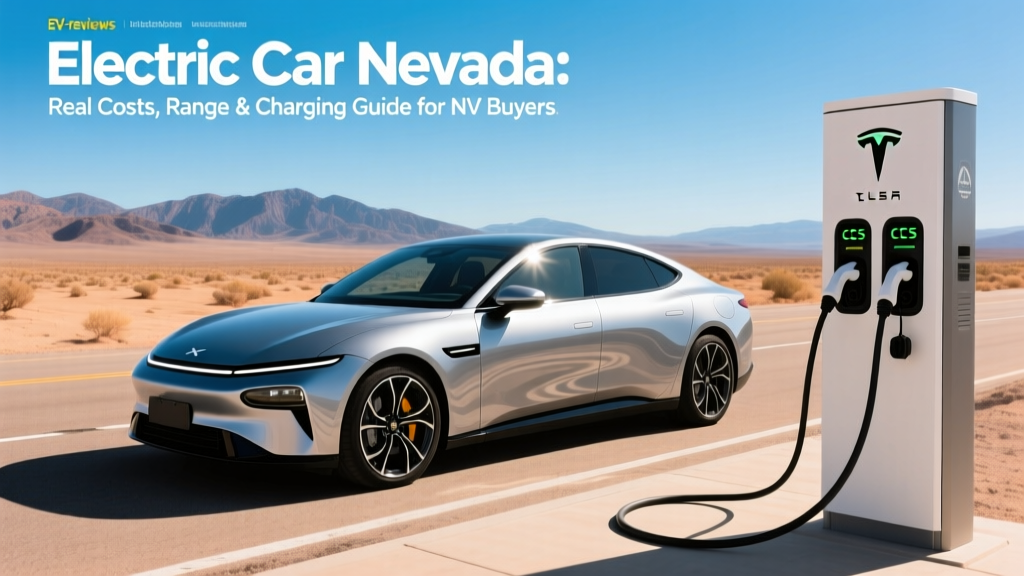
Nevada is simultaneously one of the best and most challenging states to own an electric car. The Las Vegas and Reno metro areas have robust public charging networks — Electrify America, Tesla Superchargers, and ChargePoint stations are plentiful along major corridors. But venture into rural Nevada (think Ely, Tonopah, or the stretches of US-95 between towns), and you'll encounter genuine charging deserts where 100+ miles can separate DC fast chargers.
The state's climate is the defining variable. Summer temperatures in southern Nevada routinely exceed 110°F, which affects both battery efficiency and long-term degradation. Northern Nevada around Reno and Tahoe sees real winters where sub-freezing temps can reduce range by 15–30%. This isn't a dealbreaker — it's a planning variable.
Nevada also offers a state-level EV incentive: a reduced registration fee structure compared to some states, though the state does not currently offer a direct purchase rebate on top of the federal credit. Always verify current state incentives through the Alternative Fuels Data Center, as legislation changes.
Real-World Range in Nevada Heat: What the EPA Sticker Doesn't Tell You
The EPA range estimate on a window sticker assumes moderate temperatures and mixed driving. In Nevada's conditions, expect deviations.
| Condition | Typical Range Impact | Example: 320-mi EPA Vehicle |
|---|---|---|
| Mild day, mixed driving (60–70°F) | 0 to -5% | ~305–320 miles |
| Highway at 75+ mph (I-15 to LA) | -10 to -15% | ~270–290 miles |
| Summer heat, A/C running (105°F+) | -8 to -15% | ~270–295 miles |
| Winter cold, heater on (Reno, 25°F) | -15 to -30% | ~225–270 miles |
| Mountain elevation gain (Hwy 395) | -10 to -20% (recouped on descent via regen) | Variable |
Modern EVs with active thermal management — liquid-cooled battery packs with heat pumps — handle Nevada heat far better than early-generation models. The Tesla Model Y, Hyundai Ioniq 5, and Ford Mustang Mach-E all precondition their batteries to protect against thermal stress. Still, parking in shade or a garage during July/August extends long-term battery health.
Desert Heat Battery Tip: LFP (lithium iron phosphate) batteries, found in standard-range Tesla Model 3/Y and some Rivian configurations, tolerate heat and high state-of-charge storage better than NMC chemistries. If your daily commute is under 200 miles and you regularly park in 110°F heat, an LFP-equipped EV may degrade more slowly over 8–10 years.
Charging in Nevada: Home Setup, Public Networks, and Rural Reality
Charging access determines whether an EV is a joy or a headache. Here's how Nevada breaks down.
Home Charging (Where 80%+ of Charging Happens)
If you own a home with a garage or carport, a Level 2 (240V) home charger is the single best EV investment. In Nevada, expect these costs:
| Item | Cost Range | Notes |
|---|---|---|
| Level 2 charger unit (40–48A) | $350–$700 | ChargePoint Home Flex, Emporia, Wallbox |
| Electrician labor (standard install) | $500–$1,500 | Short run from panel to garage |
| Electrical panel upgrade (if needed) | $1,500–$3,500 | Older homes with 100A service may need 200A |
| Permit & inspection | $100–$300 | Varies by Clark County / Washoe County |
| Total (typical, no panel upgrade) | $950–$2,500 | |
| Total (with panel upgrade) | $2,450–$6,000 |
A 48-amp Level 2 charger delivers roughly 11.5 kW of power, adding about 35–44 miles of range per hour depending on the vehicle's efficiency. Overnight (8 hours), that's 280–350 miles — more than enough for virtually any Nevada driver's daily needs.
Important: Always hire a licensed Nevada electrician for the install. NV Energy may offer time-of-use (TOU) rate plans that make overnight charging even cheaper — check current rate schedules on their site.
Public DC Fast Charging
Along I-15 (Las Vegas to the California border) and I-80 (Reno corridor), DC fast chargers are plentiful. Tesla Superchargers (now open to NACS-equipped non-Teslas via adapter or native NACS), Electrify America, and EVgo stations offer 150–350 kW peak rates.
| Connector | Networks | Vehicles Using It |
|---|---|---|
| NACS (Tesla-style) | Tesla Supercharger, Electrify America (expanding), others | All Tesla models; Ford, GM, Rivian, Hyundai/Kia 2025+ models |
| CCS1 | Electrify America, EVgo, ChargePoint | VW ID.4, BMW iX, older Ford/GM/Hyundai models |
| CHAdeMO | Limited (legacy) | Nissan Leaf (discontinued), older Mitsubishi |
Rural Nevada warning: If you regularly drive routes like US-95 north of Las Vegas, US-50 ("The Loneliest Road"), or NV-375, plan meticulously. Use apps like PlugShare or A Better Routeplanner to map charger locations. Some rural towns have only a single Level 2 charger at a hotel or casino — not a DC fast charger. A PHEV may be a smarter choice for frequent rural travelers.
EV vs. Gas vs. Hybrid: Nevada Cost Comparison with Real Numbers
Let's compare three realistic options for a Nevada family: a battery-electric SUV, a conventional hybrid, and a gas-only midsize SUV. We'll use a 15,000-mile/year driving pattern with 80% home charging for the EV.
| Category | EV (e.g., Tesla Model Y LR) | Hybrid (e.g., Toyota RAV4 Hybrid) | Gas (e.g., Toyota RAV4 AWD) |
|---|---|---|---|
| Base MSRP (2026) | $44,990 | $33,500 | $30,500 |
| Federal tax credit (§30D) | Up to -$7,500* | $0 | $0 |
| Effective purchase price | ~$37,490* | $33,500 | $30,500 |
| Fuel/energy cost per mile | $0.04–$0.05 | $0.09–$0.10 | $0.14–$0.16 |
| Annual fuel/energy (15k mi) | $600–$750 | $1,350–$1,500 | $2,100–$2,400 |
| 5-year fuel/energy total | $3,000–$3,750 | $6,750–$7,500 | $10,500–$12,000 |
| Maintenance (5-year) | $1,000–$1,500 | $2,500–$3,500 | $3,000–$4,000 |
| 5-year total operating cost | $4,000–$5,250 | $9,250–$11,000 | $13,500–$16,000 |
| 5-year total (purchase + operating) | $41,490–$42,740* | $42,750–$44,500 | $44,000–$46,500 |
*Tax credit eligibility depends on MSRP caps ($55,000 for SUVs), buyer income limits ($300k MFJ / $150k single), and battery critical-mineral sourcing requirements. Verify current eligibility at IRS.gov §30D. Point-of-sale transfer available at participating dealers.
The math is clear: even with a higher sticker price, the EV reaches cost parity or beats the gas SUV within 3–4 years in Nevada, thanks to cheap home electricity and minimal maintenance (no oil changes, no transmission fluid, far less brake wear due to regenerative braking).
Nevada-Specific Ownership Costs: Insurance, Registration, and Hidden Factors
Beyond the purchase and fueling equation, Nevada EV owners should budget for:
- Insurance: EVs typically cost 15–25% more to insure than gas equivalents due to higher repair costs and specialized parts. In Nevada, expect annual premiums of $1,800–$2,800 for a Model Y or Ioniq 5, depending on your driving record and ZIP code. Get quotes before purchasing.
- Registration: Nevada charges an additional $130 EV registration surcharge on top of standard fees (as of recent legislation), intended to offset lost gas-tax revenue. This is modest compared to some states but factors into the TCO.
- Tire replacement: EVs are heavier and deliver instant torque, wearing tires 20–30% faster than gas cars. Budget $800–$1,400 for a set of EV-optimized tires every 30,000–40,000 miles.
- Battery warranty: Federal law mandates a minimum 8-year/100,000-mile battery warranty. Most manufacturers (Tesla, Hyundai, Ford, VW) cover the pack to 70% capacity retention over that period. Replacement outside warranty runs $10,000–$20,000+ depending on the pack, but catastrophic failure is rare — most EV batteries degrade 10–15% over 150,000+ miles based on current fleet data.
Common Nevada EV Misconceptions — Fact-Checked
| Myth | Fact |
|---|---|
| "The heat will destroy the battery." | Modern EVs have active liquid cooling. Data from Phoenix and Las Vegas fleets show LFP and well-managed NMC packs retaining 85–90% capacity after 100k+ miles in desert heat. Park in shade when possible and avoid routinely charging to 100% in summer. |
| "I can't drive from Vegas to Reno on a charge." | Correct — it's ~450 miles. But with DC fast chargers in Tonopah, Hawthorne, and Carson City (check PlugShare for current status), the trip requires one 20–30 minute stop. Most EV road trippers charge while eating or stretching. |
| "Charging takes too long." | At home, you plug in at night and wake up full — zero time spent. On road trips, 150–250 kW DC chargers add 150–200 miles in 15–20 minutes. Peak charge rates are not sustained — expect the charge curve to taper above 80% SoC. |
| "EVs are worse for the environment because of Nevada's coal power." | NV Energy's grid is ~60%+ renewable/natural gas (and climbing). Even on a dirtier grid, EVs produce significantly fewer lifecycle emissions per mile than gas cars, per EPA and DOE analysis. See fueleconomy.gov for upstream emissions data by ZIP code. |
| "I need a Tesla to use Superchargers." | As of 2025–2026, Ford, GM, Rivian, Hyundai, Kia, and others have adopted the NACS connector or offer adapters, granting access to Tesla's Supercharger network. The charging landscape is converging on NACS as the North American standard. |
Your Nevada EV Decision Framework
Choose a Battery EV (BEV) If:
- You have access to home or workplace Level 2 charging
- Your daily driving is under 200 miles round-trip
- You mostly drive in Las Vegas, Reno, Henderson, or along I-15/I-80 corridors
- You want the lowest per-mile operating cost and minimal maintenance
- You qualify for the §30D tax credit (check income and MSRP limits)
Choose a Plug-In Hybrid (PHEV) If:
- You frequently drive rural Nevada routes with sparse charging
- You can't install a Level 2 charger at home (apartment, older wiring)
- You want electric-only commuting (25–45 miles) with gas backup for road trips
- You're not ready to plan charging stops on longer drives
Stick With a Hybrid (HEV) or Gas Car If:
- You have zero access to any charging (no home, no workplace, no reliable public)
- Your budget is strictly under $28,000 and you buy used (though the used-EV credit of up to $4,000 exists)
- You regularly tow heavy loads over 300+ miles (towing cuts EV range 30–50%)
First-Time Nevada EV Buyer Checklist
- Confirm home charging feasibility. Check your electrical panel (100A vs. 200A service), measure the run from panel to parking spot, and get at least two electrician quotes.
- Research §30D tax credit eligibility. The credit is not universal — MSRP must be under $55,000 for SUVs/pickups ($25,000 for sedans), your AGI must be under the income caps, and the battery must meet critical-mineral and component sourcing thresholds. Use the IRS VIN-check tool at fueleconomy.gov.
- Test-drive in conditions you'll actually experience. Drive the EV on the highway at 75 mph, test the A/C in summer, and try regenerative braking modes (one-pedal driving takes 1–2 days to adjust to).
- Get insurance quotes before signing. The 15–25% premium bump is real and varies by model. A Model Y may cost significantly more to insure than a VW ID.4 in the same ZIP.
- Download PlugShare and A Better Routeplanner. Before your first road trip, map the chargers. Know whether your car uses NACS or CCS and whether you need an adapter.
- Set a charging routine. Charge to 80% daily (or 100% for LFP batteries, per manufacturer guidance). Use scheduled charging during NV Energy off-peak hours for the lowest rate.
Frequently Asked Questions
Does Nevada offer a state EV tax credit or rebate?
Nevada does not currently offer a direct state-level purchase rebate for EVs. The primary incentive is the federal §30D tax credit (up to $7,500 for new, up to $4,000 for used EVs). Some NV Energy programs may offer TOU rate discounts or charger rebates — check their current offerings. Local utility incentives change frequently, so verify before purchasing.
How does extreme Las Vegas summer heat affect EV range and battery life?
Expect 8–15% range reduction in sustained 105°F+ heat due to A/C load and thermal management draw. Battery degradation is mitigated by active liquid cooling in all modern EVs. Long-term data from hot-climate fleets shows well-managed packs retaining 85–90%+ capacity after 100,000 miles. Avoid routinely storing the car at 100% charge in peak summer — 80% is the sweet spot for NMC batteries.
Can I drive an EV from Las Vegas to Lake Tahoe without issues?
Yes, with one planned charge stop. Las Vegas to South Lake Tahoe is ~350 miles. A 320-mile-range EV will need a 15–25 minute DC fast charge roughly halfway (Tonopah or Hawthorne area, depending on route). Elevation gain approaching Tahoe will consume extra energy, but regenerative braking recoups much of it on descents. Precondition your battery before the fast-charge stop for optimal speed.
What's the cheapest EV to own in Nevada right now?
The Chevrolet Equinox EV (starting ~$33,000, EPA 319 miles) and the Tesla Model 3 RWD (~$38,990, EPA 272 miles) are among the lowest total-cost options when the §30D credit applies. For a compact SUV, the Hyundai Kona Electric (~$32,975, EPA 261 miles) is also competitive. Always calculate your personal TCO using your electricity rate, annual mileage, and insurance quotes.
Do I need to worry about the Nevada EV registration surcharge?
Nevada charges an additional annual EV registration fee (approximately $130) to offset lost gas-tax revenue. This is relatively modest — equivalent to roughly one tank of gas — and should not deter an EV purchase given the per-mile fuel savings.